ON THIS PAGE
Progress0%






Our Global Presence :





Tokenization has moved from a niche blockchain concept to a serious commercial strategy. Today, organizations across finance, real estate, commodities, and technology are actively building business models around money from Tokenization, using digital tokens to unlock value that was previously illiquid, inaccessible, or inefficient to trade. Rather than simply experimenting with blockchain, businesses are now designing revenue systems that rely on tokenized ownership, programmable assets, and automated settlement.
As the token economy matures, the question has shifted from what is tokenization to how to make money from tokenization. This article examines the comprehensive landscape of tokenization-driven revenue, elucidating how companies structure profitable models, which asset classes yield the highest returns, and how supporting infrastructure, platforms, and services contribute to long-term monetization. We unpack each layer carefully, building from fundamentals to advanced use cases, while showing how tokenization has become a scalable business engine.
Tokenization is the process of converting ownership rights in an asset into digital tokens on a blockchain. These tokens represent a claim on real-world or digital value and can be transferred, traded, or programmed with rules. When done correctly, tokenization reduces friction, increases transparency, and expands access.
From a business standpoint, tokenization creates monetization opportunities in three major ways. First, it allows assets to be fractionalized, opening them to a broader investor base. Second, it automates transactions using smart contracts, reducing operational costs. Third, it enables the development of entirely new products and services built around token issuance, management, and trading.
This combination explains why tokenization companies are no longer limited to crypto-native startups. Traditional enterprises, financial institutions, and asset managers are now building tokenized offerings as core revenue streams.
Related Read: How Is Digital Silver Tokenization Attractive to Today’s Investors
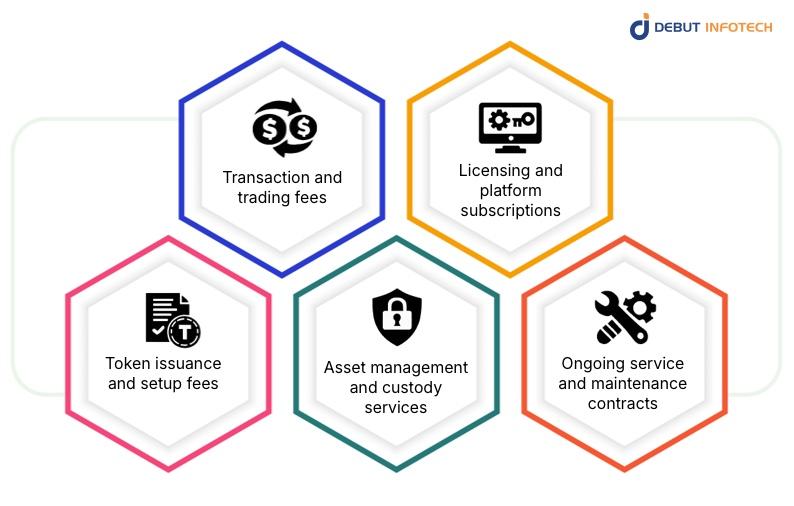
At its core, how to make money from tokenization comes down to control over access, infrastructure, and asset flow. Businesses earn revenue by positioning themselves at key points in the tokenization lifecycle—either at creation, transaction, management, or long-term operation. Instead of relying on a single income stream, most tokenization models combine multiple revenue channels.
Below is a clearer breakdown of the main ways businesses generate income from tokenization.
Token issuance and setup fees: This is often the first monetization point. Businesses charge fees to convert assets into digital tokens. These fees typically cover asset evaluation, smart contract creation, compliance checks, and onboarding. For complex assets, such as real estate or funds, issuance fees can be substantial.
Transaction and trading fees: Once tokens are live, platforms earn revenue every time tokens are transferred or traded. Even small per-transaction fees add up as trading volume increases. This model works especially well for marketplaces and exchanges that support active secondary markets.
Asset management and custody services: Tokenized assets still need secure storage, reporting, and lifecycle management. Companies offering digital custody, compliance monitoring, and investor reporting charge recurring management fees. This creates a steady income similar to traditional asset management but with greater automation.
Licensing and platform subscriptions: Businesses that build tokenization platforms or infrastructure often license their technology to other companies. Clients pay recurring subscription fees based on usage, number of assets, or features. This model provides predictable revenue and scales with clients’ growth.
Ongoing service and maintenance contracts: Tokenized systems require continuous updates to ensure security, address regulatory changes, and enhance performance. Companies generate long-term income by offering technical support, upgrades, and system optimization through maintenance contracts.
What makes tokenization different from many traditional models is how these revenue streams stack together. A single tokenized asset can generate income during issuance, produce recurring fees through trading and management, and continue earning revenue throughout its lifecycle through automation and ongoing services. This layered structure is what makes tokenization a sustainable and scalable business opportunity.
The tokenization of real world assets (RWAs) has become the most commercially viable segment of the market. RWAs include real estate, commodities, metals, funds, invoices, and even intellectual property. These assets already have established value, making them attractive for token-based transformation.
By converting RWAs into digital tokens, businesses unlock liquidity. Assets that once took months to sell can now be traded in minutes. Fractional ownership also increases participation, which drives higher transaction volume and fee generation.
Companies that specialize in structuring, issuing, and managing these tokens earn recurring revenue by acting as intermediaries between asset owners and investors.
Real estate is one of the strongest examples of tokenization-driven income. A real estate tokenization platform allows property owners to divide assets into digital shares that investors can buy and trade. This dramatically lowers entry barriers and increases liquidity.
Businesses operating on these platforms generate revenue in several ways. They charge onboarding fees to tokenize properties, collect transaction fees on secondary trading, and earn management fees for handling compliance, reporting, and investor relations. Many platforms also integrate smart contracts in real estate to automate rent distribution and dividend payouts, further reducing costs and improving margins.
For developers and operators, tokenized real estate becomes a long-term revenue asset rather than a one-time sale.
Beyond residential and commercial property, companies now tokenize real estate commodities such as land, infrastructure projects, and energy-linked properties. These hybrid assets blend real estate value with commodity exposure, creating diversified investment products.
Businesses monetize these structures by packaging assets into themed offerings and charging premium fees for access. Because these tokens often attract institutional investors, margins tend to be higher and contracts longer-term.
Tokenized money represents fiat or fund-backed value issued on a blockchain. This includes stablecoins, tokenized deposits, and investment vehicles such as a tokenized money market fund. These products bridge the gap between traditional finance and decentralized systems.
Businesses earn money by managing reserves, charging redemption and transaction fees, and offering value-added services like yield optimization and reporting. Tokenized funds also reduce settlement times, enabling operators to scale more quickly with fewer intermediaries.
As regulatory clarity improves, tokenized financial products are expected to become one of the most reliable sources of recurring revenue from tokenization.
Metal tokenization focuses on assets such as gold, silver, and industrial metals. Each token represents ownership of a specific quantity stored in verified vaults. This model appeals to investors seeking stability with digital flexibility.
Companies monetize metal tokenization through storage fees, issuance costs, trading spreads, and custody services. Because physical backing is required, trust and transparency become premium services that justify higher pricing.
For businesses, metal-backed tokens offer predictable income streams tied to tangible value.
Smart contracts are crucial to the profitability of tokenization. They automate compliance checks, payments, voting rights, and asset transfers. By reducing manual processes, smart contracts lower operational costs and increase scalability.
Businesses that design efficient contract logic gain competitive advantages. In sectors such as real estate and funds, automation directly translates into higher margins and faster settlements, thereby reinforcing profitability.
Tokenization businesses that invest in compliance and transparency tend to outperform their competitors. Regulatory alignment fosters trust, attracts institutional clients, and facilitates access to broader markets.
Companies monetize trust by offering premium compliance features, audit services, and reporting tools. In many cases, regulatory readiness becomes a differentiator that justifies higher fees.
Also Read: Securities, Commodities, and Real Estate Tokenization: Key Differences
Not every company needs to issue tokens to make money from tokenization. Tokenization infrastructure providers build the foundational tools that power the ecosystem. This includes blockchain frameworks, compliance modules, custody solutions, and lifecycle management systems.
Infrastructure companies typically operate on subscription or licensing models. They charge businesses for access to APIs, dashboards, and security layers. Because infrastructure is deeply embedded, customer churn is low, making this one of the most sustainable tokenization business models.
A white label tokenization platform enables enterprises to launch branded tokenization solutions without developing technology from scratch. These platforms offer customizable interfaces, backend systems, and regulatory tooling.
Vendors earn money through setup fees, monthly subscriptions, and usage-based pricing. For clients, white label solutions accelerate time to market. For providers they create scalable revenue with minimal marginal cost per customer.
This model has become particularly popular among financial institutions and asset managers new to the concept of okenization.
Tokenization as a Service abstracts technical complexity for businesses that want results without managing blockchain infrastructure. TaaS providers handle everything from asset assessment and smart contract deployment to compliance and ongoing maintenance.
Revenue comes from bundled service packages, long-term support contracts, and customization fees. This approach mirrors traditional SaaS models but applies them to digital asset creation.
For enterprises, TaaS reduces risk. For providers, it creates predictable income and deep client relationships.
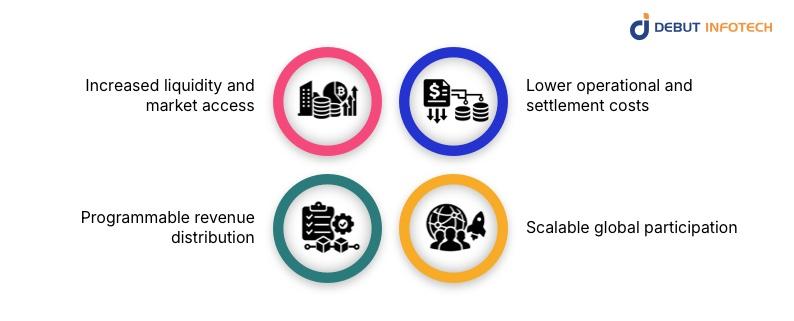
Tokenization offers clear advantages that directly support revenue growth and operational efficiency. These benefits are not theoretical. They address long-standing business limitations in terms of liquidity, cost, scale, and control, which is why tokenization is increasingly becoming a core part of business strategy.
Together, these benefits explain why tokenization is no longer viewed as a short-term innovation. By improving liquidity, reducing costs, automating revenue flows, and enabling global scale, tokenization has become a practical and sustainable foundation for modern business models.
As infrastructure matures and regulations stabilize, money from tokenization will increasingly come from mainstream adoption rather than early experimentation. Financial institutions, enterprises, and governments are already moving assets on-chain, expanding the total addressable market.
Businesses that position themselves early—either as asset issuers, infrastructure providers, or service partners—stand to benefit from compounding revenue as tokenized ecosystems grow.
An assset tokenization development company focuses on building custom tokenization solutions tailored to specific industries or assets. These firms work closely with clients to design token economics, smart contracts, and user experiences.
Their monetization model typically includes development fees, consulting retainers, and post-launch support contracts. As tokenized platforms scale, development partners often continue earning revenue through upgrades and expansion projects.
This makes development expertise a long-term income source rather than a one-off service.
Debut Infotech works with businesses exploring token-based models by delivering secure, scalable, and compliant tokenization solutions. From platform architecture to smart contract development, we help organizations design systems that generate sustainable revenue rather than short-term experiments.
Our experience across various asset classes enables us to align technical implementation with business strategy, ensuring that tokenized products are built for growth and monetization.
Tokenization has evolved into a practical and scalable way for businesses to generate value. By transforming assets into programmable digital tokens, companies unlock new revenue streams across real estate, finance, commodities, and infrastructure. Whether through platforms, services, or development expertise, the opportunities to earn money from tokenization are expanding rapidly.
For organizations ready to move beyond experimentation, partnering with experienced teams makes a measurable difference. Debut Infotech continues to support businesses in building tokenization solutions that are secure, compliant, and commercially viable. As adoption accelerates, those who invest in strong foundations today will be best positioned to capture long-term value tomorrow.
Generating revenue from tokenization involves converting assets into digital tokens and monetizing them through issuance fees, transaction fees, asset management services, or platform subscriptions. Businesses earn at multiple stages of an asset’s lifecycle, from initial token creation to ongoing trading and management.
Businesses typically start by identifying assets that benefit from liquidity and fractional ownership. From there, they choose the right tokenization model, whether through platforms, services, or infrastructure, and ensure compliance. A clear strategy aligned with long-term business goals is essential.
Real estate, commodities, metals, funds, and financial instruments are among the most effective assets to tokenize. These assets already have established value, making them suitable for digital ownership models and attractive to investors seeking tokenized exposure.
A real estate tokenization platform earns revenue through property onboarding fees, transaction fees on token trades, and ongoing management services. Many platforms also use smart contracts in real estate to automate income distribution, which improves efficiency and profitability.
Tokenized money and products like a tokenized money market fund allow businesses to offer faster settlement, improved transparency, and programmable financial products. Revenue typically comes from management fees, transaction costs, and value-added financial services.
Yes. Tokenization as a Service is designed for businesses that want to enter the token economy without managing blockchain infrastructure themselves. Service providers handle the technical and compliance layers, allowing companies to focus on commercialization and growth.
An Assset Tokenization Development Company helps businesses design, build, and scale custom tokenization solutions. These partners align technology with business objectives, reduce implementation risks, and support long-term revenue generation through ongoing optimization and upgrades.

Our Latest Insights
USA
2501 Chatham, Rd Suite R Springfield, IL 62704
+1-708-515-4004
info@debutinfotech.com
UK
7 Pound Close, Yarnton, Oxfordshire, OX51QG
+44-770-304-0079
info@debutinfotech.com
Canada
154 Eden Oak Trail, Kitchener, ON N2A 0H9
+1-708-515-4004
info@debutinfotech.com
INDIA
Sector 101-A, Plot No: I-42, IT City Rd, JLPL Industrial Area, Mohali, PB 140306
9888402396
info@debutinfotech.com