ON THIS PAGE
Progress0%






Our Global Presence :





Enterprise systems sit at the center of how large organizations operate, connect teams, and scale operations without losing control. Understanding what is enterprise software development starts with recognizing its role in building secure, integrated, and high-performance applications that support complex business processes across departments. The market reflects this importance.
According to Statista, global enterprise software revenue is projected to reach $271.8 billion by 2025, led by CRM solutions. It is expected to grow to $376.4 billion by 2028, driven by a steady 6.73% CAGR.
Adoption remains strong across industries, with Gartner reporting that over 70% of large organizations rely on ERP systems to manage core operations. This guide breaks down models, processes, challenges, benefits, trends, and costs shaping enterprise software today.
Enterprise software development refers to the structured process of designing, building, deploying, and maintaining large-scale software systems used by organizations to manage core operations. These applications support critical functions across departments, including finance, operations, human resources, supply chain, and customer engagement. The emphasis is on reliability, scalability, security, and seamless integration with existing systems. Unlike consumer software, enterprise solutions are built to support complex workflows, high user volumes, and strict compliance requirements.
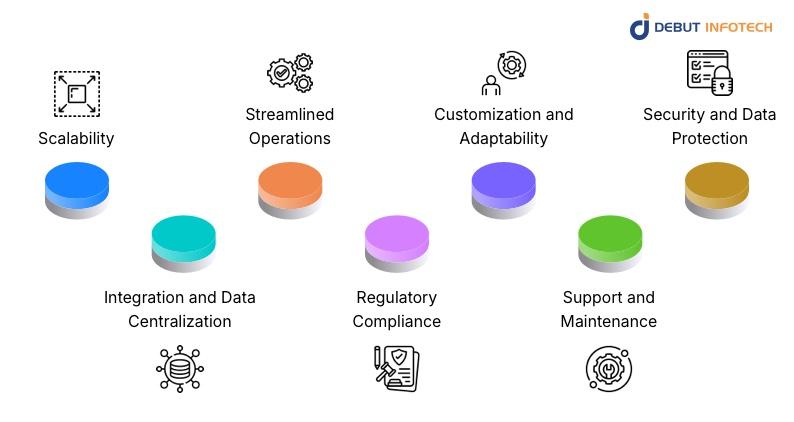
Well-designed enterprise software delivers measurable long-term value.
Software development for enterprises is built to grow with the organization. It supports increasing users, data volumes, and operational demands without major redesigns, ensuring consistent performance and allowing businesses to expand capabilities smoothly as requirements evolve.
Enterprise software centralizes data from multiple departments into a single system. This reduces silos, improves data accuracy, and enables real-time information sharing, helping teams collaborate effectively and make decisions based on consistent, reliable data.
By automating workflows and standardizing processes, enterprise software reduces manual tasks and operational delays. This improves efficiency, minimizes errors, and allows teams to focus on strategic activities that directly support business growth.
Enterprise systems can be designed to meet industry regulations and internal governance standards. Built-in audit trails, reporting tools, and access controls simplify compliance management and reduce the risk of penalties or operational disruptions.
Custom enterprise software development aligns with specific business processes and workflows. This adaptability allows organizations to modify features as needs change, ensuring long-term relevance without forcing teams to adjust to rigid, off-the-shelf solutions.
Ongoing support and maintenance keep enterprise software stable and secure. Regular updates, performance monitoring, and issue resolution reduce downtime, extend system lifespan, and help organizations adapt to evolving operational requirements.
Enterprise software includes robust security measures to protect sensitive data. Encryption, access controls, monitoring, and regular updates reduce exposure to threats while supporting compliance and maintaining trust across business operations.
Enterprise projects rely on proven development models that align technology delivery with business goals. The choice of model influences flexibility, risk management, and delivery speed. Here are the popular types of enterprise software development models:
The Waterfall model follows a structured, sequential approach where each phase is completed before the next begins. Requirements are defined upfront, making planning and documentation straightforward. This model suits enterprise projects with stable scopes, fixed budgets, and strict regulatory demands, where predictability, traceability, and formal approvals matter more than rapid change or iterative feedback.
The Prototyping model focuses on building early working versions of the software to validate requirements and user expectations. Stakeholders interact with prototypes and provide feedback before full development begins. This approach reduces misunderstandings, improves usability, and minimizes rework. It is particularly effective for enterprise projects with unclear requirements or complex user workflows.
Agile methods rely on incremental development, short delivery cycles, and continuous collaboration between business and technical teams. Features are developed, tested, and refined in iterations, allowing enterprise systems to adapt to changing requirements. Agile supports faster time-to-value, improved transparency, and better alignment with evolving business priorities across large organizations.
Enterprise software solutions are categorized based on the business functions they support. Each type addresses specific operational needs while contributing to overall organizational efficiency.
CRM software centralizes customer data, communication history, sales activities, and support interactions across teams. It improves visibility into customer journeys, strengthens relationship management, and supports data-driven sales strategies. Enterprise CRMs also integrate with marketing, analytics, and service platforms, enabling consistent customer experiences across multiple touchpoints and departments.
ERP systems unify core business functions such as finance, procurement, inventory, manufacturing, and operations into a single platform. They eliminate data silos, standardize processes, and improve operational transparency. Enterprise ERP solutions support compliance, reporting, and scalability, making them critical for organizations managing complex, multi-departmental workflows and large transaction volumes.
Business Intelligence software converts raw enterprise data into actionable insights through dashboards, reports, and analytics enterprise software development tools. It supports strategic planning, performance tracking, and forecasting by enabling decision-makers to analyze trends and metrics in real time. BI systems integrate data from multiple sources, improving accuracy, visibility, and confidence in business decisions.
Supply Chain Management software oversees procurement, production planning, inventory control, logistics, and distribution activities. It improves coordination between suppliers, manufacturers, and distributors while reducing delays and operational inefficiencies. Enterprise supply chain systems enhance demand forecasting, cost control, and resilience, helping organizations respond effectively to market fluctuations and disruptions.
Human Resource Management software centralizes employee records, payroll, recruitment, performance management, and compliance processes. It improves workforce visibility, reduces administrative overhead, and supports regulatory adherence. Enterprise HR systems also enable data-driven talent decisions, better employee engagement, and scalable people operations across geographically distributed teams and large workforces.
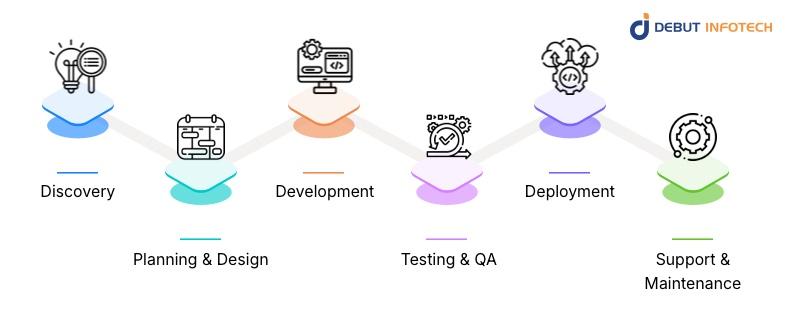
A structured development enterprise software process ensures predictable delivery, reduced risk, and long-term system stability.
Discovery defines business objectives, user needs, technical constraints, and success metrics before development begins. Stakeholders collaborate to clarify scope, risks, timelines, and budget expectations. This phase includes requirement workshops, system audits, and feasibility analysis. Clear discovery reduces uncertainty, aligns teams, and prevents costly changes later by establishing a shared understanding of what the enterprise system must deliver.
Planning and design translate requirements into detailed system architecture, workflows, and user interfaces. Technical decisions around scalability, security, integrations, and data models are finalized.
When you hire web developers, design artifacts help them and stakeholders throughout implementation. A thorough planning stage minimizes rework, improves estimation accuracy, and ensures the software can support future growth, operational demands, and long-term maintainability goals.
During development, engineering teams build the enterprise application in accordance with approved designs and technical standards. This includes backend services, databases, APIs, integrations, and user interfaces.
Code quality, documentation, and version control are enforced to support collaboration. Iterative builds and reviews help maintain alignment with requirements and performance expectations. Security practices are embedded throughout the implementation phases.
Testing and quality assurance validate that the software meets functional, performance, security, and compliance requirements. Test cases cover individual components, system integrations, and user workflows. Automated and manual testing identify defects early. Thorough QA reduces production risks, improves reliability, and confirms the system can perform under real operational loads across varied environments and usage scenarios.
Deployment introduces the enterprise software into the production environment in a controlled manner. Activities include configuration, data migration, infrastructure setup, and access management. Rollout strategies may involve phased releases to limit disruption. Careful deployment planning ensures business continuity, system stability, and a smooth transition for end users and operational teams across departments and locations globally.
Support and maintenance focus on sustaining performance, security, and usability after deployment. Teams monitor systems, resolve issues, apply updates, and optimize functionality. This phase accommodates changing business needs, regulatory updates, and scaling requirements.
Proactive maintenance extends software lifespan, reduces downtime, and preserves long-term value from the enterprise investment while supporting continuous improvement initiatives and user satisfaction.
Enterprise development presents technical and operational challenges that require careful planning.
Security is a critical challenge of enterprise software development in cloud because enterprise systems store sensitive business, customer, and operational data. Threats include unauthorized access, data breaches, and compliance failures.
Custom software development services should implement a robust security architecture, access controls, encryption, and regular audits to protect businesses’ assets while maintaining system availability and trust.
Third-party integration introduces complexity due to varying technologies, data formats, and reliability standards. Enterprise systems often rely on external vendors, legacy platforms, and APIs. Poor integration can cause downtime or data inconsistency, making careful planning, testing, and monitoring essential for maintaining operational stability across connected business systems.
Frequent changes in business processes, regulations, or market conditions place pressure on enterprise software. Systems must adapt without disrupting operations. Rigid architectures increase costs and delays. Flexible design, modular components, and iterative delivery help organizations respond efficiently while preserving system reliability and user confidence levels.
Data storage is challenging due to growing data volumes, performance expectations, and compliance obligations. Enterprise systems must ensure availability, backup, and recovery while protecting sensitive information. Poor data management affects analytics and operations, making scalable storage architectures and governance policies essential for long-term reliability requirements.
Microservices architecture divides enterprise systems into independent services that can be developed, deployed, and scaled separately. This approach improves system resilience, simplifies updates, and reduces the impact of failures. It also supports faster innovation by allowing teams to work in parallel without disrupting the entire application environment.
Security should be embedded throughout the development lifecycle rather than treated as an afterthought. This includes secure architecture design, code reviews, access controls, encryption, and regular testing.
Proactive security practices reduce vulnerabilities, protect sensitive data, and support regulatory compliance across complex enterprise environments.
A cloud-native approach leverages containerization, managed services, and elastic infrastructure to improve scalability and availability. Enterprise systems benefit from faster deployments, better resource utilization, and easier maintenance.
Cloud-native design also supports disaster recovery, global access, and long-term cost optimization strategies.
Choosing the right enterprise software development company is critical for enterprise success. Skilled architects, developers, QA engineers, and DevOps specialists ensure quality, security, and scalability.
Domain expertise and clear communication reduce risks, improve decision-making, and support long-term system sustainability and maintainability.
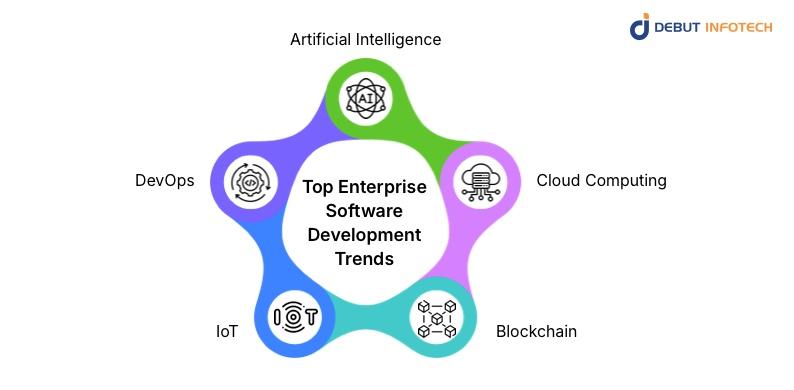
Artificial Intelligence is increasingly embedded in enterprise software to automate processes, enhance analytics, and support decision-making. AI enables predictive insights, intelligent recommendations, and anomaly detection across operations.
As data volumes grow, AI-driven systems help organizations improve efficiency, reduce manual effort, and gain competitive advantages through smarter automation.
Cloud computing continues to reshape enterprise software by enabling flexible, scalable, and resilient systems. Organizations adopt hybrid and multi-cloud strategies to balance control and agility.
Cloud platforms support rapid deployment, global accessibility, and cost efficiency, making them central to modern enterprise architectures and long-term digital growth.
Blockchain technology is gaining traction in enterprise environments for secure data sharing, transaction traceability, and auditability. It is particularly valuable in industries requiring transparency and trust. Blockchain reduces reliance on intermediaries, strengthens data integrity, and supports compliance-driven workflows across distributed business networks.
The Internet of Things connects physical devices to enterprise systems, enabling real-time data collection and monitoring. IoT-driven enterprise software supports predictive maintenance, operational optimization, and improved asset management.
As connected devices increase, enterprises gain deeper visibility into processes, performance, and environmental conditions across operations.
DevOps practices integrate development and operations to improve collaboration, automation, and delivery speed. Continuous integration and deployment reduce release risks while improving reliability.
In enterprise software, DevOps supports faster innovation, better system stability, and consistent performance across complex infrastructures and distributed teams.
The cost of developing enterprise software (similar to web app development cost) depends on scope, technical depth, and long-term requirements.
Smaller internal systems typically range from $40,000 to $80,000, while mid-sized platforms often fall between $100,000 and $300,000.
Large, multi-module enterprise solutions with advanced security, integrations, and scalability can exceed $500,000, particularly for regulated or global deployments.
The number of features, workflows, and interconnected modules directly affects development effort. Complex business logic, cross-department dependencies, and multi-role access structures increase planning, engineering, testing time, and overall project duration, driving higher development and maintenance costs.
Advanced UI and UX design requires research, prototyping, usability testing, and refinement. Custom interfaces, accessibility requirements, and multi-device support demand additional design and development effort, increasing timelines while improving usability, adoption rates, and long-term system effectiveness.
Integrating external systems, legacy platforms, or custom APIs adds technical complexity. Each integration requires mapping data structures, handling errors, ensuring security, and ongoing maintenance, all of which increase development time and introduce additional testing and support overhead.
Enterprise-grade security involves encryption, access controls, audits, and compliance checks. Industries with strict regulations require additional safeguards, documentation, and testing. These measures extend development timelines while reducing risk, protecting data, and supporting long-term regulatory compliance.
Development costs vary by region due to differences in labor markets and the availability of expertise. Teams in North America and Western Europe typically charge higher hourly rates. At the same time, other regions may reduce costs, sometimes requiring additional coordination and project management effort.
Debut Infotech provides enterprise software development services that are designed to handle scale, security, and long-term business demands.
We combine deep technical expertise with a structured delivery approach, supporting organizations across architecture design, system integration, and modernization. Our teams focus on building reliable, adaptable platforms that align with operational goals, regulatory requirements, and future expansion.
The result is enterprise software that remains stable under pressure and flexible enough to evolve as business priorities change.
Enterprise systems play a defining role in how organizations manage scale, complexity, and change. Understanding what is enterprise software development helps clarify why structured processes, strong security, and long-term planning matter.
From development models and software types to challenges, trends, and costs, each element shapes system reliability and business outcomes.
When approached with the right strategy and expertise, enterprise software becomes a stable foundation that supports growth, efficiency, and adaptability over time.
A. An enterprise software developer designs, builds, and maintains large-scale applications used across organizations. They focus on security, scalability, integrations, and compliance. The job involves working with stakeholders, handling complex workflows, and supporting long lifecycles, upgrades, and performance demands that consumer or small-business apps rarely face.
A. Agile methodologies speed up enterprise software development by breaking work into short cycles, called sprints. Teams ship usable features faster, gather feedback early, and adjust priorities without derailing timelines. This reduces risk, cuts rework, improves visibility, and helps enterprises respond quickly to changing business needs.
A. Enterprise software experience refers to hands-on work with large, mission-critical systems. It includes managing complex data, integrations, security requirements, user roles, and performance at scale. This experience also means understanding long deployment cycles, cross-team collaboration, compliance rules, and supporting thousands or millions of users reliably.
A. Enterprise software development technologies cover backend frameworks, databases, cloud platforms, and integration tools. Common examples include Java, .NET, Python, microservices, APIs, SQL, and NoSQL databases, containerization, and cloud services. Teams also rely on DevOps, automation, security tooling, and monitoring systems for reliability at scale in an enterprise.
A. Enterprise software development targets large organizations with complex processes, strict security requirements, and extensive integrations. Regular software development often focuses on simpler apps with fewer users and shorter lifecycles. Enterprise projects demand scalability, compliance, customization, long-term support, and coordination across multiple teams and departments, as well as company-wide initiatives.

Our Latest Insights
USA
2501 Chatham, Rd Suite R Springfield, IL 62704
+1-708-515-4004
info@debutinfotech.com
UK
7 Pound Close, Yarnton, Oxfordshire, OX51QG
+44-770-304-0079
info@debutinfotech.com
Canada
154 Eden Oak Trail, Kitchener, ON N2A 0H9
+1-708-515-4004
info@debutinfotech.com
INDIA
Sector 101-A, Plot No: I-42, IT City Rd, JLPL Industrial Area, Mohali, PB 140306
9888402396
info@debutinfotech.com