ON THIS PAGE
Progress0%






Our Global Presence :




Fintech Software Development drives the digital transformation of financial services by combining software engineering with financial domain expertise. The global fintech software market reached around USD 67.7 billion in 2024 and is set to grow further as institutions adopt digital platforms for payments, lending, and compliance automation.
Fintech adoption is rising rapidly, with more than 80% of consumers projected to use fintech services by 2025, reflecting broad user trust in digital financial tools.
At the same time, AI’s role in fintech is expanding fast, with the AI-in-fintech segment estimated at USD 27.9 billion in 2026 as firms use predictive analytics and automation across risk, compliance, and customer engagement.
In this guide, we will break down key solution types, core features, development practices, major trends, and how to set up or choose a development partner.
Fintech software development refers to building digital systems that deliver financial services through software. This includes payment platforms, banking apps, lending systems, investment tools, and back-office compliance solutions.
The goal is simple: make financial services faster, more accessible, and easier to manage without compromising security or regulatory standards. Fintech software sits at the intersection of finance, technology, and regulation, so development requires both technical depth and domain knowledge.
Related read: Finding the Right Fintech Software Development Company for Your Business
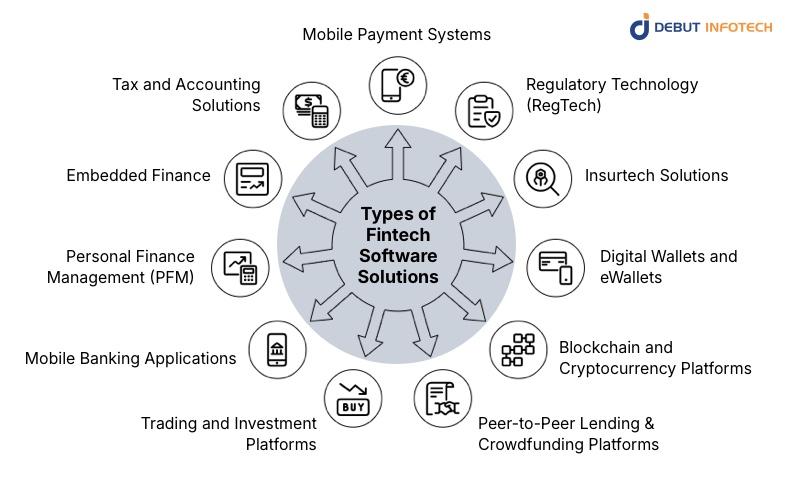
Here are the various types of fintech software development solutions:
Mobile payment systems enable users to make instant transactions on smartphones or other connected devices. They support peer-to-peer transfers, merchant payments, QR codes, and contactless payments while relying on encryption, tokenization, and real-time settlement for security.
RegTech software automates regulatory compliance processes like KYC, AML screening, transaction monitoring, and reporting. These systems reduce manual effort, improve audit readiness, and help financial institutions adapt faster to changing regulatory requirements across regions.
Insurtech solutions digitize insurance operations, including policy issuance, underwriting, claims management, and customer engagement. By using automation and data analytics, they shorten processing cycles, reduce fraud, and improve pricing accuracy for insurers and policyholders.
Digital wallets store payment credentials, balances, and sometimes digital assets in a secure digital environment. They enable fast payments, fund transfers, and transaction tracking while supporting integrations with banks, merchants, and third-party financial services.
These platforms support cryptocurrency trading, wallets, smart contracts, and decentralized financial services. They rely on distributed ledgers to ensure transparency and immutability while integrating compliance layers to meet regulatory and security requirements.
P2P lending and crowdfunding platforms connect borrowers directly with lenders or investors. The software manages credit assessment, loan matching, repayments, and disclosures, helping reduce intermediary costs while expanding access to funding opportunities.
Trading and investment platforms provide users access to financial markets through web or mobile applications. They require real-time data feeds, low-latency execution, risk controls, and portfolio management tools to support both retail and professional investors.
Mobile banking applications deliver core banking services, including account management, payments, transfers, and card controls. These apps focus on reliability, security, and intuitive workflows to replicate branch-level services through digital-first experiences.
PFM software helps users monitor income, expenses, savings, and financial goals in one place. By aggregating transaction data and categorizing spending, these tools provide visibility into financial habits and support better decision-making.
Embedded finance solutions integrate financial services directly into non-financial platforms like e-commerce or SaaS products. They allow businesses to offer payments, lending, or insurance without building a standalone financial infrastructure from scratch.
Tax and accounting fintech solutions automate bookkeeping, tax calculations, invoicing, and reporting. They are designed to improve accuracy, reduce manual errors, and ensure compliance while supporting individuals, startups, and enterprises managing complex financial records.
Also Read: How to Choose the Right Tech Stack for a Web DevelopmentProject
Security and compliance form the foundation of any financial software system. This includes data encryption, secure authentication, role-based access control, audit logs, and regular vulnerability testing. The system must also align with applicable regulations, such as KYC, AML, PCI DSS, and regional financial laws, to maintain trust and operational continuity.
Effective customer support features help resolve issues quickly and maintain user confidence. Financial software should include in-app chat, ticketing systems, dispute management, and escalation workflows. These tools enable support teams to track issues, respond consistently, and address sensitive financial matters without exposing user data or disrupting core services.
Personalization improves usability by tailoring dashboards, alerts, recommendations, and notifications to each user’s behaviour. Financial software that adapts to spending habits, risk profiles, or usage patterns keeps users engaged longer. This also helps businesses deliver relevant insights, reduce user friction, and encourage repeat interactions across financial touchpoints.
Strong functionality must be paired with a clear and predictable user experience. Financial software should support core actions without unnecessary steps, load quickly, and handle errors transparently. Consistent layouts, simple navigation, and clear confirmations help users complete sensitive financial tasks with confidence and reduce reliance on support.
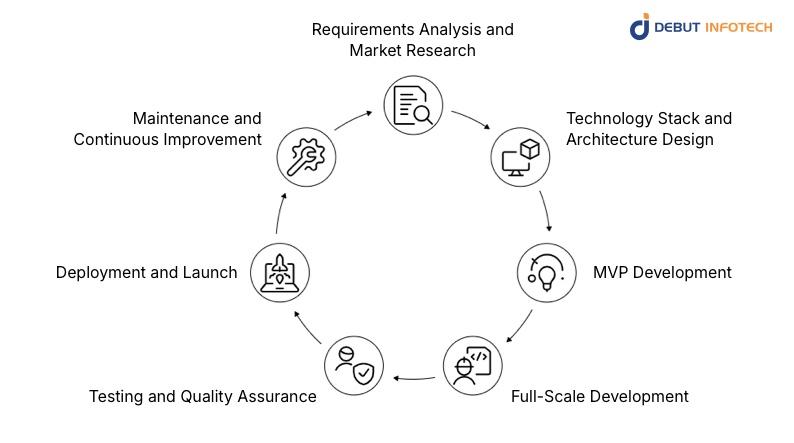
This stage focuses on defining business goals, user needs, regulatory scope, and technical constraints. Fintech software developers analyze market demand, competitor offerings, and compliance requirements while documenting functional and non-functional requirements. Clear alignment at this point reduces scope creep, improves estimates, and sets realistic expectations for stakeholders and fintech software development companies.
At this stage, teams select programming languages, frameworks, databases, APIs, and infrastructure based on scalability, security, and compliance needs. Architecture decisions cover data flows, integrations, and deployment models. Well-planned architecture supports performance, simplifies future upgrades, and helps manage long-term operational and maintenance costs.
MVP development focuses on building the core features needed to validate the product idea with real users. The goal is to release quickly while maintaining basic security and compliance. Feedback collected during this phase helps refine functionality, confirm market fit, and guide priorities for full-scale development.
Full-scale custom fintech software development expands the product by adding advanced features, integrations, and performance enhancements. Fintech software development services focus on stability, scalability, and security hardening. This stage also includes preparing documentation, refining workflows, and aligning the product with regulatory requirements before wider market exposure.
Testing and quality assurance ensure the software performs reliably under real-world conditions. This includes functional testing, security assessments, performance testing, and compliance validation. Identifying issues early reduces production risks, protects user data, and ensures financial transactions behave as expected across devices and environments.
During deployment and launch, the software is released into production environments with monitoring, backup, and rollback strategies in place. Teams validate configurations, confirm compliance readiness, and track early performance metrics. A controlled launch helps minimize disruptions while ensuring users experience a stable and secure platform.
After launch, ongoing maintenance focuses on updates, security patches, performance tuning, and feature enhancements. User feedback and system metrics guide improvements. Continuous iteration helps the platform remain compliant, competitive, and reliable while adapting to evolving regulations and changing customer expectations.
Security should be addressed at the architecture level, not added later. This includes secure APIs, encrypted data storage, access controls, and monitoring from day one. Early security planning reduces rework, lowers breach risk, and simplifies compliance as the platform scales.
Fintech software should be designed to accommodate regulatory updates without major rewrites. Configurable compliance rules, modular reporting tools, and adaptable workflows help teams respond faster to policy changes while avoiding system downtime or rushed development fixes.
Scalability planning ensures the platform can handle growing users, transactions, and integrations. Using cloud infrastructure, modular services, and load-tested components helps avoid performance bottlenecks. It reduces long-term infrastructure costs as demand increases.
A modular, API-first approach simplifies integrations with banks, payment gateways, and third-party services. It also allows teams to update or replace components independently, reducing deployment risk and improving long-term maintainability.
Continuous testing helps catch issues before they reach users. A dedicated software development team would test functionality, security, performance, and edge cases, such as failed transactions or high-traffic spikes. This improves reliability and protects both users and business operations.
AI and predictive analytics are increasingly used for fraud detection, credit scoring, customer support automation, and financial forecasting. These systems analyze large datasets in real time, helping businesses reduce risk, improve decision-making, and deliver more accurate, personalized financial services at scale.
Open ecosystems enable financial services to be integrated directly into non-financial platforms through APIs. Embedded finance allows businesses to offer payments, lending, or insurance within existing products, creating new revenue streams while reducing user friction and dependence on standalone financial applications.
Digital identity solutions and biometric verification methods are improving onboarding speed and security. Facial recognition, fingerprint scanning, and document verification reduce fraud while simplifying user registration. These tools help fintech platforms meet compliance requirements without adding unnecessary steps to the user experience.
Green fintech focuses on building financial tools that support sustainability goals. This includes carbon tracking, sustainable investment products, and transparent ESG reporting. Financial software increasingly helps users and institutions measure environmental impact while aligning financial decisions with long-term sustainability objectives.
Low-code and no-code platforms are gaining traction for internal rapid web application development tools and rapid prototyping. They reduce development time by enabling faster configuration and deployment, allowing teams to test ideas, automate workflows, and respond to business needs without extensive custom development.
Finding skilled professionals with experience in fintech, security, and AI remains difficult. AI-enabled fintech software development teams must balance deep technical expertise with regulatory awareness. As AI adoption grows, maintaining model accuracy, transparency, and responsible usage adds complexity to hiring, training, and long-term workforce planning.
Rapid innovation can lead teams to ship complex features before validating real user demand. Overengineering increases maintenance costs and regulatory exposure. Fintech products must balance experimentation with discipline, ensuring new capabilities are stable, compliant, and clearly aligned with business and customer needs.
Many fintech platforms rely on integrations with legacy banking systems, payment processors, and third-party APIs. These dependencies often introduce latency, inconsistent data formats, and reliability issues. Managing integrations requires careful coordination, robust error handling, and continuous monitoring to prevent service disruptions.
Trust is central to financial software adoption. Users expect clear interfaces, predictable workflows, and transparent communication during errors or delays. Poor usability or unclear messaging can undermine confidence quickly, even if the underlying technology is sound and compliant with security standards.
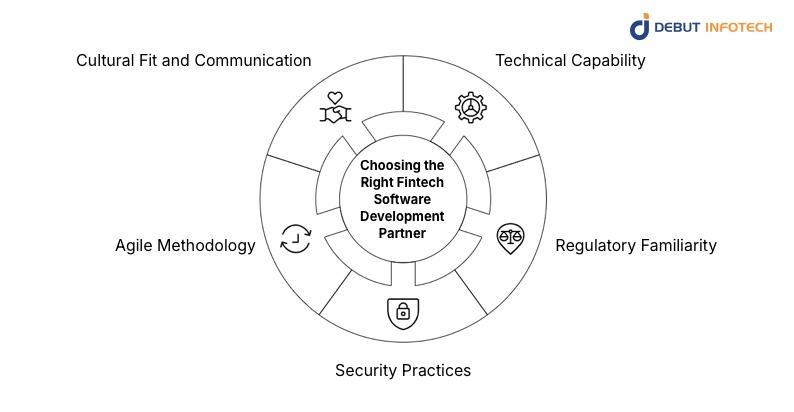
A strong fintech software development company demonstrates experience building secure, scalable financial systems. This includes knowledge of cloud infrastructure, APIs, data security, and performance optimization. Proven delivery across similar projects reduces risk and ensures the team can handle complex financial workflows reliably.
Regulatory familiarity ensures the partner understands compliance requirements relevant to the product. This includes KYC, AML, data protection, and industry standards. A knowledgeable partner helps avoid costly rework by embedding compliance into system design and development from the earliest stages.
Security practices should be well-documented and consistently applied. The right partner follows secure coding standards, regular testing, and incident response planning. Transparent security processes help protect sensitive financial data and demonstrate accountability to regulators, stakeholders, and end users.
An agile development approach supports iterative delivery and faster feedback cycles. Partners using agile practices can adapt to evolving requirements, regulatory changes, and market feedback without disrupting progress. This flexibility improves time-to-market while maintaining quality and alignment with business priorities.
Cultural fit and communication style affect project success as much as technical skills. A reliable fintech development outsourcing partner communicates clearly, documents decisions, and aligns with internal workflows. Strong collaboration reduces misunderstandings, accelerates problem resolution, and builds long-term working relationships based on trust.
Debut Infotech works with fintech teams that need more than clean code. As a top-tier custom software development company, we build secure, compliant, and scalable financial platforms across payments, banking, wallets, and embedded finance.
Our strength lies in combining deep technical execution with practical regulatory awareness. From early-stage MVPs to mature fintech products, we focus on long-term system reliability, audit readiness, and real-world performance, helping businesses ship financial software that users and regulators can trust.
Fintech Software Development has become essential to modern financial services, enabling secure, compliant, user-centric platforms across payments, banking, lending, and analytics. By understanding solution types, core features, development stages, and upcoming trends, businesses can align products with real user needs and regulatory demands.
Navigating challenges and selecting the right partner further increases success prospects. The tools built today will shape how people and institutions interact with money in the decade ahead.
A. Most fintech projects start with discovery and compliance planning, then move into UX design, development, testing, and deployment. Security reviews and regulatory checks run throughout. After launch, teams handle monitoring, updates, and scaling. Skipping steps usually leads to delays, failed audits, or unstable systems later on.
A. Timelines depend on scope and complexity. A basic fintech app may take three to four months. Mid-level platforms often require 6 to 9 months. Large-scale, regulated systems can run for 12 months or more, especially when approvals, integrations, and security audits are involved in early planning.
A. Fintech software development costs vary widely. Simple MVPs usually cost between $30,000 and $50,000. More advanced platforms with strong security, compliance, and integrations often cost $100,000 to $300,000 or more. Final pricing depends on features, region, and long-term maintenance needs, as part of product lifecycle planning.
A. Look for teams with proven fintech experience, not just general software skills. Check past projects, security practices, and knowledge of regulations. Clear communication matters too. A good partner explains trade-offs, flags risks early, and supports the product after launch with reliable updates, scaling, and maintenance.
A. Regulations vary by region but often include PCI DSS, GDPR, PSD2, AML, and KYC rules. These shape how data is stored, processed, and shared. Ignoring compliance can block launches or lead to heavy fines, so legal input is part of technical planning for fintech teams worldwide.

Our Latest Insights
USA

2501 Chatham, Rd Suite R Springfield, IL 62704
+1-708-515-4004
info@debutinfotech.com
UK

7 Pound Close, Yarnton, Oxfordshire, OX51QG
+44-770-304-0079
info@debutinfotech.com
Canada

154 Eden Oak Trail, Kitchener, ON N2A 0H9
+1-708-515-4004
info@debutinfotech.com
INDIA

Sector 101-A, Plot No: I-42, IT City Rd, JLPL Industrial Area, Mohali, PB 140306
9888402396
info@debutinfotech.com

9001:2015
Quality Certified

ISO 27001
Security Certified

A+ Rating
Accredited Business

Certik
Security & Audit


Copyright © 2026, Debut Infotech. All rights reserved. | Privacy Policy