ON THIS PAGE
Progress0%




Our Global Presence :


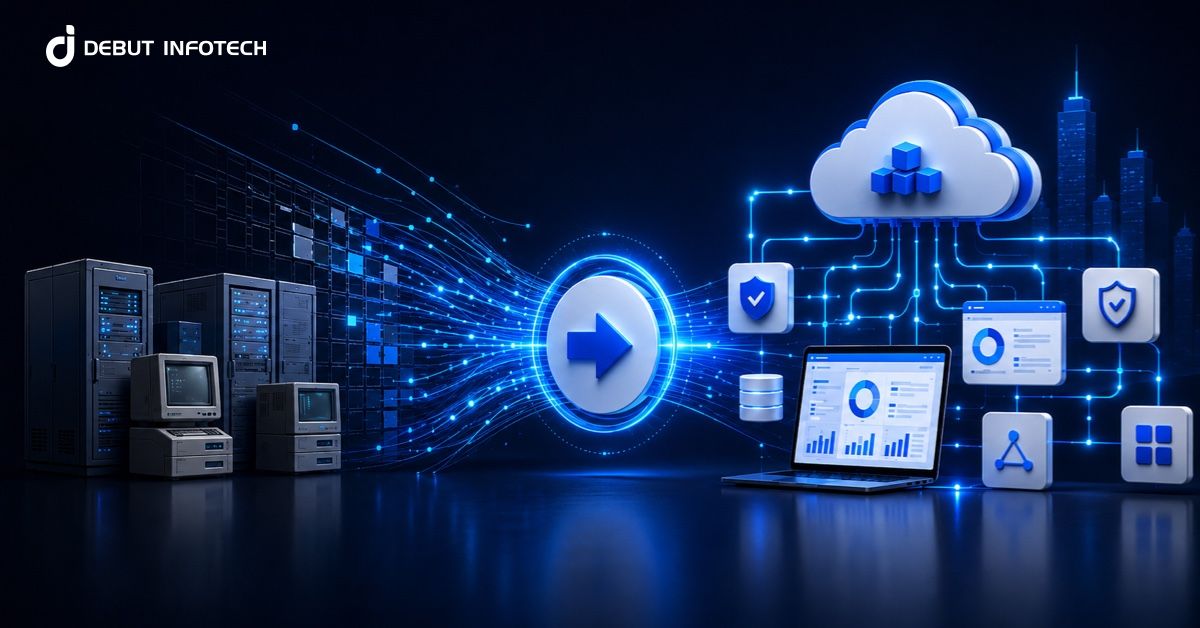


Legacy systems still power core business operations, yet they come with growing limitations that slow innovation and increase risk. Research shows that up to 70–80% of IT budgets are spent maintaining legacy systems, leaving little room for innovation. Furthermore, around 70% of legacy modernization projects fail or underdeliver, often due to poor planning and complexity.
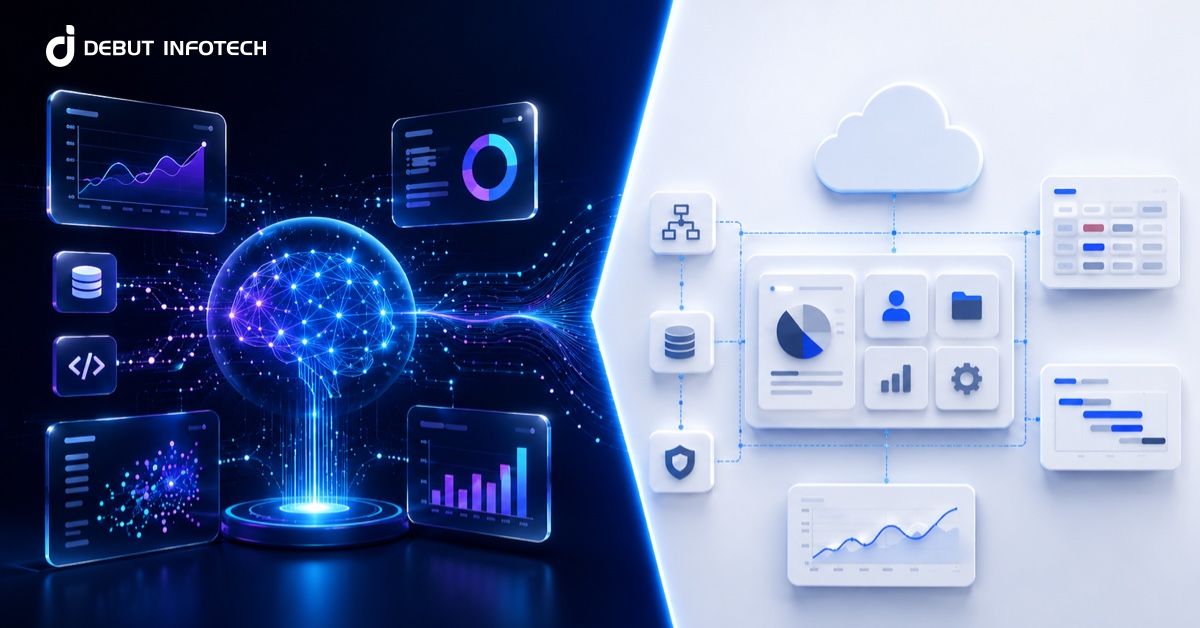
Legacy modernization addresses this gap by transforming outdated systems into scalable, secure, and efficient platforms that align with current business needs. It covers everything from infrastructure upgrades to architectural redesign and cloud migration.
When executed with a clear strategy, legacy modernization reduces operational drag, improves system reliability, and unlocks new capabilities. For organizations looking to remain competitive, it shifts technology from a maintenance burden into a foundation for growth, agility, and long-term performance.
In this guide, we will explain the challenges legacy systems pose, the benefits of legacy modernization, strategies, risks, and best practices for enterprises.
Legacy systems often sit at the center of critical operations, but they rarely age gracefully. What once delivered stability can turn into a constraint on growth, security, and efficiency. Organizations that delay modernization usually encounter compounding technical and operational issues that affect both internal teams and end users.
Older systems demand constant attention. Maintenance costs rise as patches, fixes, and workarounds stack up. Infrastructure becomes harder to support, and vendors may no longer provide updates. What looks like “keeping things running” gradually turns into a cost-heavy exercise with little strategic value.
Legacy platforms were not built for modern ecosystems. Connecting them to APIs, cloud services, or newer applications often requires custom connectors or middleware. This slows down innovation and makes even small upgrades feel like major engineering efforts.
Frequent downtime, inconsistent performance, and limited fault tolerance are common. As systems age, failure points increase. This affects productivity and can disrupt customer-facing services.
Legacy systems typically rely on fixed infrastructure. Scaling them to meet growing demand is difficult and expensive. Businesses that expand quickly often find their systems holding them back.
Security threats evolve faster than legacy systems can handle. Outdated encryption, unsupported software, and missing security updates expose organizations to risk. Compliance also becomes harder to maintain.
Interfaces tend to be outdated and unintuitive. Employees spend more time navigating systems than completing tasks. Customers notice slow, clunky interactions, which impact satisfaction and retention.
Fewer developers specialize in outdated technologies. Hiring becomes difficult, and internal knowledge often depends on a shrinking group of experienced staff. This creates long-term operational risk.
Legacy system modernization is the structured process of upgrading or transforming outdated software, infrastructure, and architectures to meet current operational, security, and performance standards. It may involve migrating to cloud environments, redesigning system components, or replacing obsolete technologies entirely.
The goal is to retain critical business logic while improving scalability, reliability, and integration capabilities. When done properly, modernization reduces technical debt, strengthens system resilience, and positions the organization to support future growth, innovation, and evolving regulatory requirements without recurring disruption.
Modernization is not just a technical upgrade. It is a strategic move that directly impacts efficiency, innovation, and long-term growth.
Modernized systems handle workloads faster and more reliably, reducing latency and operational bottlenecks. Optimized architectures and automation minimize manual intervention, allowing teams to focus on higher-value tasks.
Infrastructure improvements, especially through cloud adoption, ensure better resource allocation, consistent uptime, and smoother execution of business processes across departments and applications without frequent disruptions.
Modern platforms support faster development cycles through modular architectures, APIs, and DevOps practices. This allows teams to introduce new features, services, or integrations without major system overhauls.
Businesses gain the flexibility to test ideas, respond to market demands, and adjust strategies quickly, thereby strengthening competitiveness and supporting continuous improvement across digital products and services.
Upgraded systems include modern security frameworks, regular patching mechanisms, and stronger data protection measures. This reduces exposure to cyber threats and vulnerabilities tied to outdated technologies.
Compliance becomes easier to manage, as modern platforms are designed to align with regulatory standards, audit requirements, and industry best practices, ensuring consistent protection of sensitive data and operational integrity.
Although modernization requires upfront investment, it reduces long-term operational costs tied to maintenance, downtime, and inefficient infrastructure. Cloud-based models lower hardware expenses and improve resource utilization.
Over time, improved system reliability and productivity contribute to stronger returns, making modernization a financially sound decision for organizations aiming to optimize both cost control and performance outcomes.
Modern interfaces, faster response times, and reliable system performance directly improve how users interact with applications. Employees benefit from streamlined workflows and reduced system friction, which increases productivity.
Customers experience smoother, more responsive services, which strengthens satisfaction, trust, and retention, especially in competitive markets where usability and speed influence decision-making.
Modern systems integrate seamlessly with analytics tools, enabling real-time data processing and reporting. Organizations gain clearer visibility into operations, customer behavior, and performance metrics. This supports informed decision-making and strategic planning.
Improved data accessibility also allows teams to identify trends, optimize processes, and uncover growth opportunities that were previously hidden within fragmented or outdated systems.
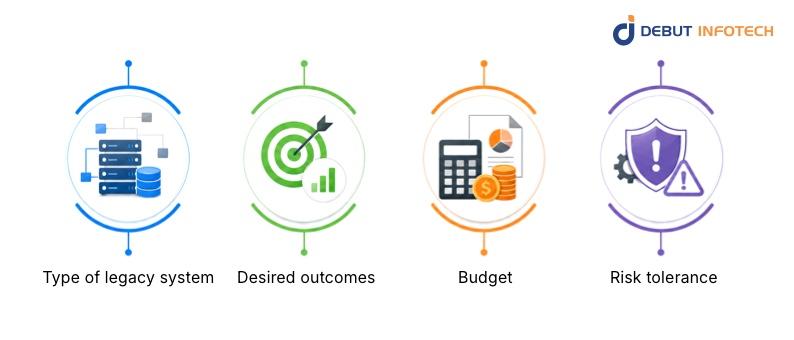
Choosing the right approach for legacy infrastructure modernization requires a clear understanding of technical and business priorities. Decisions made at this stage influence cost, risk, and long-term value.
The structure, age, and complexity of the legacy system directly influence the modernization path. Monolithic applications with tightly coupled components require different approaches compared to modular or service-based systems.
Understanding dependencies, data flows, and integration points helps determine whether incremental updates, partial legacy application transformation, or complete replacement will deliver the most practical and sustainable outcome.
Clear objectives guide every modernization decision. Organizations must define whether they aim to improve performance, reduce operational costs, enhance user experience, or enable innovation. Without well-defined outcomes, modernization efforts can lose direction.
Aligning technical changes with business priorities ensures that the selected strategy delivers measurable value and supports both short-term improvements and long-term goals.
Budget planning goes beyond initial investment. It includes infrastructure upgrades, licensing, development, testing, and ongoing maintenance. Some strategies demand higher upfront costs but reduce long-term expenses, while others prioritize speed at the expense of higher initial spending.
A realistic financial assessment helps balance custom software development cost, risk, and expected returns, ensuring the modernization effort remains sustainable and aligned with organizational resources.
Every modernization approach carries a level of operational and technical risk. Organizations must evaluate how much disruption they can accommodate during the transition. High-risk strategies, such as full system replacement, may deliver stronger long-term benefits but require careful planning.
Lower-risk approaches allow gradual change, reducing immediate impact while extending timelines and potentially limiting the scope of improvements.
A detailed system assessment ensures informed decision-making and reduces unexpected challenges during execution.
Existing hardware plays a significant role in determining the feasibility of modernization. Organizations need to assess server capacity, storage systems, and network performance.
Aging infrastructure may limit scalability and increase maintenance costs. Evaluating whether to upgrade, replace, or migrate to cloud environments helps ensure the system can support future workloads, performance demands, and operational efficiency without recurring bottlenecks.
Outdated development frameworks often restrict flexibility, limit integration options, and slow down feature development. Evaluating the current framework helps identify compatibility issues with modern tools and platforms.
Transitioning to supported, widely adopted frameworks improves developer productivity, enables easier maintenance, and ensures the system can evolve alongside changing technical requirements and business needs without repeated rework.
The runtime environment includes operating systems, middleware, and supporting services that enable applications to function. Older environments may lack support, security updates, or compatibility with modern technologies. Assessing this layer ensures that applications can run efficiently and securely. Upgrading or replacing the runtime environment improves performance, reliability, and integration capabilities across the broader system landscape.
Business logic represents the core rules and processes that drive system functionality. It is often deeply embedded and highly customized, making it one of the most critical components to evaluate. Understanding how this logic interacts with other system parts ensures it can be preserved or improved during modernization, preventing disruptions while maintaining consistency in business operations and decision-making processes.
Different systems require different approaches. The right strategy depends on complexity, goals, and available resources.
Encapsulation keeps the legacy system intact while exposing its functionality through APIs or service layers. This allows modern applications to interact with older systems without modifying their core structure. It is a practical option for extending system usability, enabling integration, and supporting gradual modernization while minimizing disruption to existing operations and preserving critical business processes.
Full replacement involves building an entirely new system to replace the legacy application. This approach removes technical limitations and allows organizations to adopt modern architectures, tools, and practices. While it requires significant investment, time, and planning, it delivers maximum flexibility, improved performance, and long-term scalability, free from the constraints of outdated technology.
Rehosting, often referred to as “lift and shift,” moves an existing application to a new infrastructure, typically a cloud environment, without major code changes. This approach improves system availability and reduces reliance on outdated hardware. It is a fast, cost-effective application modernization strategy that delivers immediate infrastructure benefits while leaving deeper application improvements for future phases.
Replatforming involves migrating applications to a new platform while making targeted optimizations to improve performance and efficiency. It allows organizations to benefit from modern infrastructure capabilities without a full system overhaul. This strategy strikes a balance between speed and improvement, enabling better scalability, reduced operational costs, and enhanced system reliability with manageable levels of change.
Re-architecting focuses on redesigning the system’s structure to align with modern architectural patterns such as microservices or modular designs. This approach improves scalability, flexibility, and maintainability. It requires a deep understanding of the system and careful planning, but it enables organizations to support continuous innovation, integrate new technologies, and respond effectively to evolving business demands.
Refactoring improves the internal structure of existing code without altering its external behavior. The goal is to enhance readability, maintainability, and performance while reducing technical debt. This approach allows teams to gradually modernize the system, making future updates easier and less risky, while preserving the original functionality that supports core business operations.
A hybrid approach combines multiple modernization strategies to address different components of a legacy system. For example, critical modules may be re-architected while others are rehosted or encapsulated. This method provides flexibility, allowing organizations to prioritize high-impact areas, manage risk effectively, and achieve steady progress without committing to a single, large-scale transformation upfront.
Related Read: How to Choose the Right Tech Stack for a Web Development Project
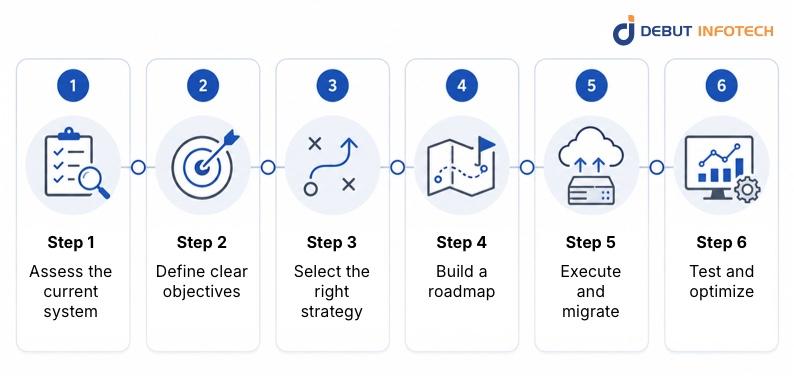
A structured approach reduces risk and ensures measurable progress.
Begin with a detailed evaluation of the existing system, including architecture, dependencies, performance issues, and security gaps. This assessment should identify bottlenecks, outdated components, and areas of high maintenance cost. A clear understanding of the current state provides the foundation for informed decisions and helps avoid unexpected complications during the modernization process.
Establish specific, measurable goals that align with business priorities. These may include improving system performance, reducing operational costs, enhancing user experience, or enabling scalability.
Clear objectives guide decision-making, help prioritize efforts, and ensure all stakeholders share a common understanding of what success looks like throughout the modernization journey.
Choose a legacy system upgrade approach based on system complexity, budget, timeline, and risk tolerance. Whether it involves rehosting, refactoring, or full replacement, the selected strategy must align with defined objectives. Careful evaluation ensures the approach delivers the intended benefits while minimizing disruption to business operations and maintaining system stability during the transition.
Develop a structured plan outlining phases, timelines, resource allocation, and key milestones. A clear roadmap helps coordinate teams, manage dependencies, and track progress. It also allows for adjustments as challenges arise, ensuring the modernization effort stays aligned with business goals while maintaining control over scope, cost, and overall execution.
Implement the chosen strategy in controlled phases to reduce risk and maintain continuity. This includes migrating applications, data, and infrastructure while ensuring minimal disruption to operations. Proper execution requires coordination across teams, strong testing practices, and contingency planning to address issues quickly and maintain system reliability throughout the transition process.
After implementation, conduct thorough testing to validate performance, security, and functionality. Identify and resolve issues before full deployment of custom software solutions.
Continuous monitoring and optimization ensure the system performs efficiently under real-world conditions. This step helps maintain long-term stability, improve user experience, and ensure the modernization effort delivers consistent and measurable business value.
Enterprise system modernization offers clear benefits, but the process also presents practical challenges that require careful management.
Legacy systems often include undocumented features, tightly coupled components, and hidden dependencies. The complexity of digital transformation legacy systems increases the risk of errors during modernization. Even small changes can have unexpected effects on other parts of the system. Managing this risk requires detailed analysis, careful planning, and thorough testing to avoid disruptions and maintain operational continuity.
Modernization projects can be resource-intensive, requiring significant investment in technology, talent, and infrastructure for enterprise software development. Limited budgets and tight timelines may force organizations to prioritize certain areas over others. This can lead to partial implementations or delays, making it important to balance cost considerations with long-term value and strategic objectives.
Employees and stakeholders may be hesitant to adopt new systems or processes, especially when they are familiar with existing workflows. This resistance can slow down implementation and reduce the effectiveness of modernization efforts. Clear communication, training, and involvement of key stakeholders help build confidence and encourage smoother adoption across the organization.
Migrating large volumes of data from legacy systems to modern platforms is a complex task. Data must be accurately transferred, cleaned, and validated to prevent loss or corruption. Integration with other systems adds another layer of difficulty, requiring careful mapping and testing to ensure seamless communication and consistent data flow across applications.
Many legacy systems are deeply interconnected with other applications and processes. These dependencies can create challenges when attempting to modify or replace individual components.
A change in one system may affect multiple others, making it essential to identify and manage these relationships carefully to avoid cascading failures during modernization.
Modernization requires a mix of legacy system knowledge and expertise in modern technologies. Finding professionals with both skill sets can be difficult. Organizations may need to invest in training or rely on external partners or custom software development firms. Without the right expertise, projects risk delays, inefficiencies, and suboptimal outcomes, limiting the benefits of modernization.
Organizations operating in regulated industries must ensure that modernization efforts comply with all legal and compliance requirements. Changes to systems, data handling, and processes must align with regulations. Failure to meet these requirements can result in penalties, legal risks, and reputational damage, making compliance a critical consideration throughout the transformation process.
Overlapping dependencies across multiple legacy systems can significantly complicate modernization efforts. These interconnections often lack proper documentation, making it difficult to isolate components for upgrade or replacement. Careful mapping, analysis, and staged implementation are required to manage these dependencies effectively and ensure system stability during and after the transition.
Successful modernization depends on disciplined execution and informed decision-making.
Start with a thorough audit of existing systems, including architecture, performance, dependencies, and security posture. Identify outdated components, recurring issues, and areas driving high maintenance costs. This assessment provides a clear baseline, helping teams prioritize modernization efforts and make informed decisions that reduce risk and align technical improvements with business requirements.
Modernization should be guided by business objectives, not just technical concerns. Identify key goals such as improving efficiency, enhancing customer experience, or enabling scalability.
Aligning system upgrades with these priorities ensures that the effort delivers measurable value, supports growth, and avoids unnecessary changes that do not contribute to overall organizational success.
Selecting appropriate technologies and experienced partners is critical to successful modernization. Evaluate tools, platforms, and vendors based on reliability, scalability, and long-term support. Working with skilled partners reduces implementation risk, accelerates timelines, and ensures best practices are followed, resulting in a smoother transition and stronger overall system performance.
Breaking modernization into smaller, manageable phases reduces risk and allows for better control over the process. Each phase can be tested, validated, and refined before moving forward. This approach minimizes disruption to daily operations, enables continuous feedback, and ensures that progress is steady while maintaining system stability throughout the transition.
Focus on components that deliver the greatest value when improved, such as performance bottlenecks, critical user-facing features, or security vulnerabilities. Prioritizing high-impact areas ensures early benefits, builds momentum, and demonstrates measurable progress. This targeted approach helps justify continued investment and keeps stakeholders engaged throughout the modernization process.
Engaging stakeholders across business and technical teams helps align efforts and reduces resistance. Input from leadership, developers, and end users helps identify priorities, potential risks, and practical requirements. Continuous involvement improves decision-making, encourages adoption, and ensures the modernized system meets both operational needs and user expectations effectively.
Introducing modern systems requires teams to adapt to new tools, processes, and workflows. Providing structured training and ongoing support ensures users can operate systems efficiently. This reduces errors, improves productivity, and increases confidence in the new environment. Well-prepared teams are more likely to adopt changes successfully and sustain long-term system performance.
Continuous evaluation is necessary to track progress, measure performance, and identify areas for improvement. Regular reviews help ensure the modernization effort remains aligned with business goals and technical expectations. They also provide opportunities to adjust strategies, address emerging challenges, and maintain control over costs, timelines, and overall project outcomes.
Legacy modernization is no longer optional for organizations that want to stay efficient, secure, and competitive. Outdated systems limit growth, increase risk, and slow decision-making. A structured approach, backed by the right strategy and expertise, turns legacy constraints into opportunities for performance, scalability, and innovation. Businesses that invest in legacy modernization position themselves to respond faster, operate smarter, and deliver better outcomes across operations and customer experiences.
Debut Infotech supports businesses through every stage of legacy modernization, from system assessment to full transformation. As a top-rated software development company, our team focuses on practical execution, helping organizations upgrade infrastructure, improve performance, and reduce risk without disrupting operations.
With proven experience, we deliver modernization solutions that align technology with business goals and long-term growth.
A. Modernization strategies can either stabilize or disrupt operations, depending on how they’re handled. Done right, they reduce downtime, improve system reliability, and make scaling easier. Phased rollouts, backups, and fallback plans keep things running during changes. Rush it, though, and you risk outages, broken workflows, and frustrated users.
A. Most enterprises don’t rip everything out at once. They move in stages. First, they assess what still works, then break systems into smaller parts, often using APIs or microservices. Data is migrated carefully and tested along the way. Hybrid setups are common before fully switching over to modern architectures.
A. Effective modernization starts with knowing what you’re dealing with. Teams audit existing systems, decide what to keep, rebuild, or replace, then prioritize high-impact areas. Automation, cloud adoption, and modular design go a long way. It’s less about flashy upgrades and more about steady, controlled improvements that actually stick.
A. Legacy modernization starts with a clear audit. Figure out what still delivers value and what’s holding things back. Then pick an approach: rehost, refactor, or rebuild. Most teams go step by step, not all at once. APIs, legacy to cloud migration, and modular updates help reduce risk while keeping systems usable.
A. Costs vary a lot. It depends on system complexity, data volume, and the depth of the changes. A simple lift-and-shift is cheaper, while a full rebuild costs more. There’s also a hidden cost in downtime, retraining, and testing. Most companies treat it as a long-term investment, not a quick spend.
A. Timelines range from a few months to a couple of years. Smaller upgrades or rehosting projects move faster. Full transformations take longer, especially with large datasets and complex dependencies. Many enterprises break the work into phases, so progress happens steadily without freezing day-to-day operations or delaying releases.
A. The biggest risks are downtime, data loss, and integration issues. Legacy systems often have hidden dependencies so that changes can break things unexpectedly. Poor planning can also lead to budget overruns. Teams usually reduce risk through testing, backups, and phased rollouts rather than switching everything in one go.
A. Legacy modernization improves performance, security, and flexibility. Systems become easier to scale and cheaper to maintain over time. It also helps teams ship updates faster and integrate with newer tools. On top of that, modern systems tend to offer better user experiences, which matters more than most teams expect.

Our Latest Insights
USA

2501 Chatham, Rd Suite R Springfield, IL 62704
+1-708-515-4004
info@debutinfotech.com
UK

7 Pound Close, Yarnton, Oxfordshire, OX51QG
+44-770-304-0079
info@debutinfotech.com
Canada

154 Eden Oak Trail, Kitchener, ON N2A 0H9
+1-708-515-4004
info@debutinfotech.com
INDIA

Sector 101-A, Plot No: I-42, IT City Rd, JLPL Industrial Area, Mohali, PB 140306
9888402396
info@debutinfotech.com

9001:2015
Quality Certified

ISO 27001
Security Certified

A+ Rating
Accredited Business

Certik
Security & Audit


Copyright © 2026, Debut Infotech. All rights reserved. | Privacy Policy