





11+
Years of Blockchain Expertise
150+
Team Of Skilled Engineers
$26.6M+
Raised by Our Clients
500+
Enterprise-Grade Solutions Delivered
50+
DeFi & Digital Asset Deployments
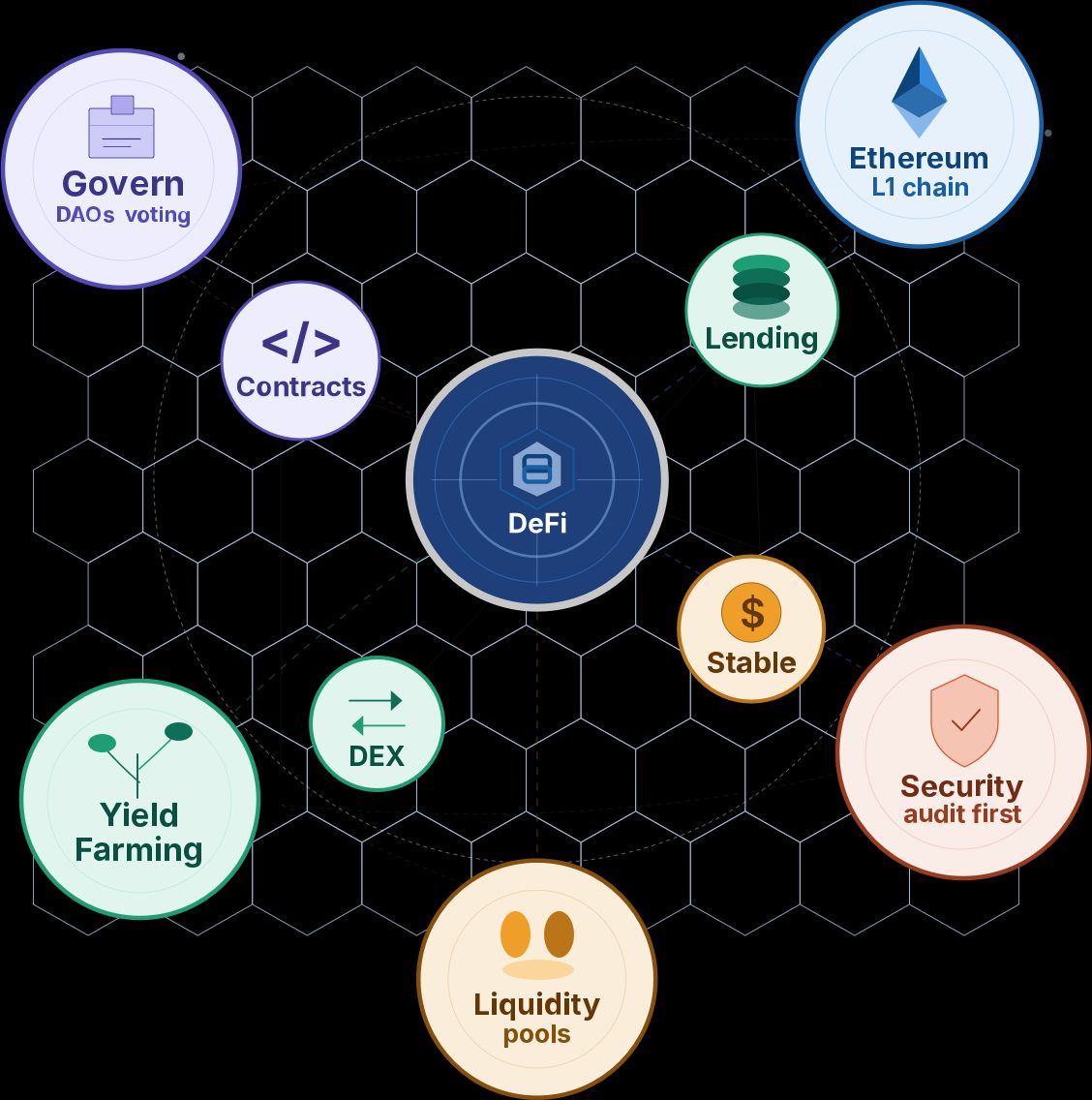
The DeFi Landscape: Opportunity, Complexity, and What It Takes to Execute
Decentralized Finance (DeFi) vs. Traditional Finance (TradFi): Key Differences
Traditional financial infrastructure was built on centralized control, restricted access, and layered intermediation — inefficiencies that DeFi eliminates at the protocol level. Today, with the global DeFi market on track to expand from $23.92 million to nearly $945.59 million by 2035 at a CAGR of 39.88%, the window for strategic entry is narrowing. Enterprises and investors that move now capture protocol ownership, liquidity advantages, and ecosystem influence — before mainstream adoption erases the first-mover edge.
| Parameter | Traditional Financial Infrastructure (TradFi) | Decentralized Finance Infrastructure (DeFi) |
|---|---|---|
| Intermediaries | Centralized Relies on banks, clearinghouses, custodians, and legal authorities at every transaction layer. | Eliminated Eliminates intermediaries through self-executing smart contracts and decentralized protocols. |
| Transaction Cost | High High and non-negotiable — fees are set by intermediaries and compounded across multiple processing layers. | Minimal Minimal and market-determined — costs reflect only network computation, with no rent-seeking middlemen. |
| Settlement Speed | T+1 to T+3 Constrained by institutional operating hours, cross-border settlements typically require T+1 to T+3 cycles. | Near-instant Protocol-driven and near-instantaneous — finality achieved within seconds, independent of geography or time zones. |
| Access & Eligibility | Permissioned Subject to extensive pre-qualification, credit scoring, KYC/AML procedures, and jurisdictional restrictions. | Permissionless Permissionless by design — accessible to any participant with a compatible wallet, regardless of geography or credit history. |
| Asset Custody | Custodial Assets are held and controlled by financial institutions; users bear counterparty and custodial risk. | Non-custodial Non-custodial — users retain full sovereignty over their assets through private key ownership. |
| Transparency | Opaque Opaque — fee structures, fund flows, and operational logic are proprietary and largely inaccessible to end users. | Fully auditable Fully auditable — all transactions, protocol rules, and smart contract logic are immutably recorded on a public ledger. |
| Interoperability | Fragmented Fragmented — legacy infrastructure and proprietary systems create significant integration friction. | Composable Composable by architecture — DeFi protocols interoperate natively across platforms and blockchain networks. |
| Regulatory Framework | Mature Mature and well-defined — governed by established bodies including SEC, FINRA, FCA, and equivalent regional authorities. | Evolving Evolving — regulatory clarity varies by jurisdiction; compliance obligations depend on protocol design and asset classification. |
| Resilience & Downtime | Vulnerable Vulnerable to single points of failure, maintenance windows, and institutional insolvency. | Always on Operated by distributed node networks — no central point of failure and continuous 24/7 availability. |
DeFi Development Services for Secure, Compliant Financial Infrastructure
With over 11 years of experience in blockchain engineering and more than 500 complex technology engagements, we help businesses navigate the full DeFi lifecycle with structured, outcome-driven services designed for enterprises, fintech innovators, and institutional investors. Whether you are entering the DeFi space for the first time or scaling an existing protocol, our engagements are built around measurable outcomes at every stage.

DeFi Consulting & Strategy
We assess your market positioning, define a viable protocol architecture, map compliance obligations, and design tokenomics aligned with your business model. You receive an investment-grade technical roadmap that eliminates ambiguity and minimizes execution risk before development begins.

DeFi Architecture & Prototyping
We design a scalable, security-first system architecture and build a working proof-of-concept to validate your protocol's technical and commercial feasibility. You gain clarity on build complexity, cost exposure, and go-to-market sequencing before committing to full-scale development.

DeFi Application Development
Our engineers handle the complete DeFi application development lifecycle, covering smart contracts, front-end interfaces, back-end infrastructure, API layers, and oracle integrations. You receive a production-ready DeFi solution built to institutional performance and security standards.

Security Auditing & Compliance Integration
We conduct independent smart contract audits, penetration testing, and vulnerability assessments alongside KYC/AML framework integration and regulatory compliance mapping across SEC, FINRA, GDPR, and MiCA. You go live with verified security and documented compliance coverage.


Support, Maintenance & Protocol Evolution
We provide continuous L1–L3 post-deployment support, smart contract upgrade management, performance monitoring, and iterative feature development to keep your protocol competitive, compliant, and operationally resilient as the market evolves.
Right Expertise. Right Architecture. Right Results.
The gap between a DeFi platform that scales and one that gets exploited isn't luck — it's the engineering decisions made before a single line of code is written. We bring battle-tested smart contract architecture, liquidity-aware design, and end-to-end delivery to every protocol we build.
Smart contracts built to survive adversarial conditions
Architecture designed for liquidity depth from day one
Audit-ready code shipped on time, every time
Debut Infotech's Featured Projects
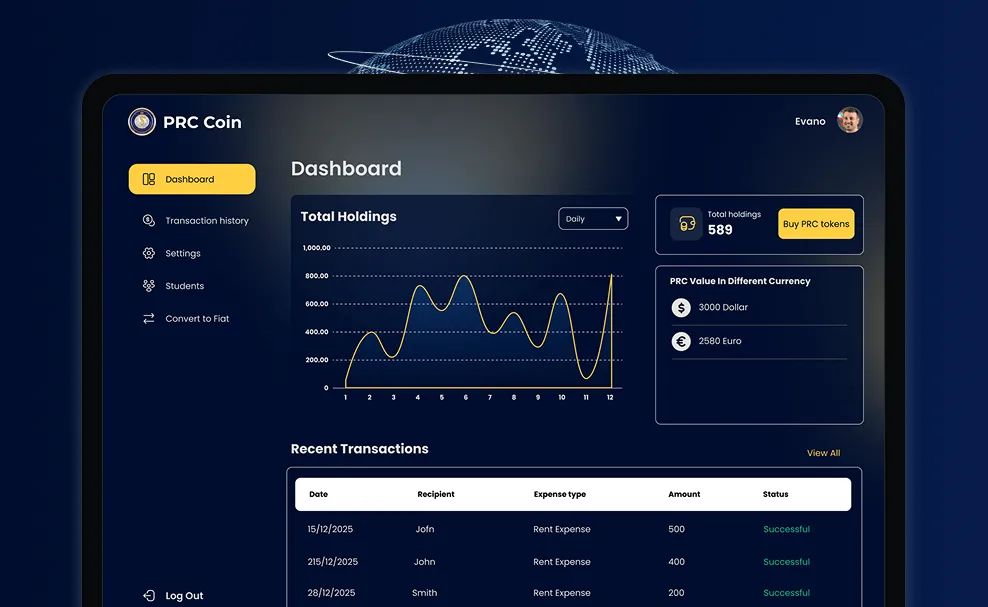
PRC – A Blockchain-Based Exchange and ICO Platform for Real Estate Finance
12K+
Registered Investors
3-in-1 Platform
ICO + Exchange + Payment Ecosystem

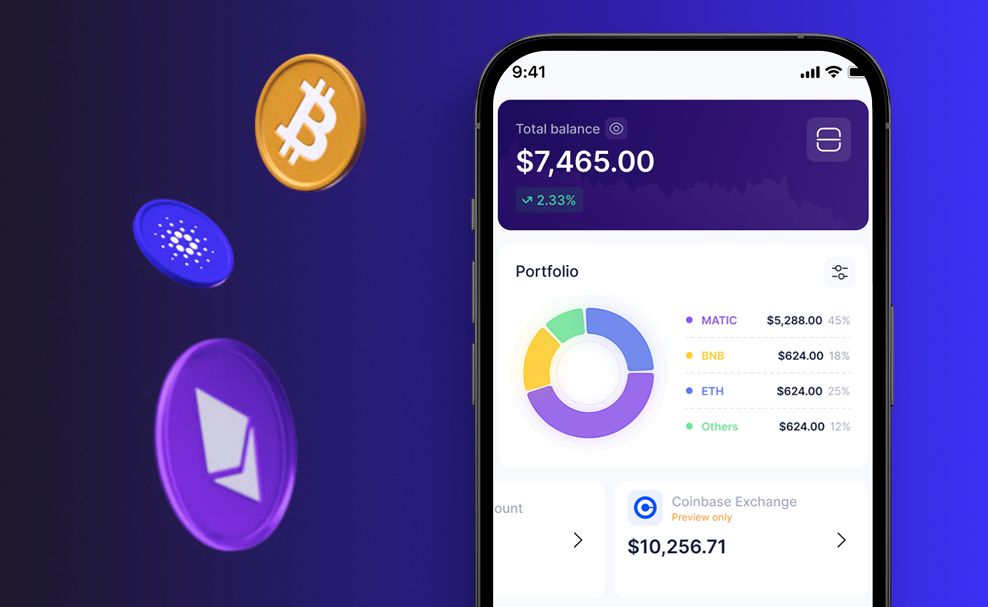
An Enterprise Crypto Suite for Secure Trading
$12B
in cumulative trading volume
2nd Largest
Canada's crypto exchange by volume


A Blockchain Based Solution For Coffee Supply Chain
$2M
Funding Received
18K+
Producers & Co-Ops



A Blockchain-Based Diamond Traceability Solution
$20M
funding received
50
Top companies worldwide


Transforming Healthcare Delivery Through Outcome-Based Blockchain Infrastructure
25K+
Patient Records Managed
50+
Healthcare Stakeholders Integrated
What Our Clients Say

Bilal Hammoud
Founder of NDAX
Working with Debut Infotech has been a game-changer for NDAX. Their unparalleled expertise in blockchain and fintech development allowed us to build a seamless, robust platform that enhances user experience and security. Their team's dedication, innovative approach, and attention to detail were evident throughout the project. Debut Infotech consistently exceeded our expectations, ensuring NDAX's position as a leading crypto trading platform. I highly recommend Debut Infotech to any enterprise seeking top-notch development services.

Haider Rafique
CMO, OKX
Working with Debut Infotech on our white label crypto exchange was a great experience. Their team demonstrated strong expertise in blockchain, delivering a secure, scalable, and user-friendly platform tailored to our needs. Communication was transparent and responsive, and they ensured the project was completed on time with excellent post-launch support. I highly recommend their services for anyone looking to build a crypto exchange.
Bilal Hammoud
Founder of NDAX
Working with Debut Infotech has been a game-changer for NDAX. Their unparalleled expertise in blockchain and fintech development allowed us to build a seamless, robust platform that enhances user experience and security. Their team's dedication, innovative approach, and attention to detail were evident throughout the project. Debut Infotech consistently exceeded our expectations, ensuring NDAX's position as a leading crypto trading platform. I highly recommend Debut Infotech to any enterprise seeking top-notch development services.
Haider Rafique
CMO, OKX
Working with Debut Infotech on our white label crypto exchange was a great experience. Their team demonstrated strong expertise in blockchain, delivering a secure, scalable, and user-friendly platform tailored to our needs. Communication was transparent and responsive, and they ensured the project was completed on time with excellent post-launch support. I highly recommend their services for anyone looking to build a crypto exchange.
Bilal Hammoud
Founder of NDAX
Working with Debut Infotech has been a game-changer for NDAX. Their unparalleled expertise in blockchain and fintech development allowed us to build a seamless, robust platform that enhances user experience and security. Their team's dedication, innovative approach, and attention to detail were evident throughout the project. Debut Infotech consistently exceeded our expectations, ensuring NDAX's position as a leading crypto trading platform. I highly recommend Debut Infotech to any enterprise seeking top-notch development services.
Haider Rafique
CMO, OKX
Working with Debut Infotech on our white label crypto exchange was a great experience. Their team demonstrated strong expertise in blockchain, delivering a secure, scalable, and user-friendly platform tailored to our needs. Communication was transparent and responsive, and they ensured the project was completed on time with excellent post-launch support. I highly recommend their services for anyone looking to build a crypto exchange.
DeFi Solutions We Engineer for Enterprise-Grade Execution
Building a DeFi protocol demands more than smart contract development. It requires liquidity architecture, compliance integration, cross-chain connectivity, and user-facing interfaces working as a unified system. Our DeFi engineering practice delivers each of these components through structured, outcome-driven engagements. The solutions below represent what enterprises, fintech firms, and institutional investors commission when execution precision is non-negotiable.
Decentralized Exchange (DEX) Platforms
Non-custodial trading infrastructure built for high-volume, permissionless token exchange across multiple blockchain networks. Our approach to DeFi exchange development focuses on deep liquidity, transparent pricing, and scalable protocol architecture.
- AMM and order book protocol architecture
- Liquidity pool design and incentive modeling
- Multi-token swap engine with gas optimization
- On-chain governance and fee distribution modules
DeFi Lending & Borrowing Platforms
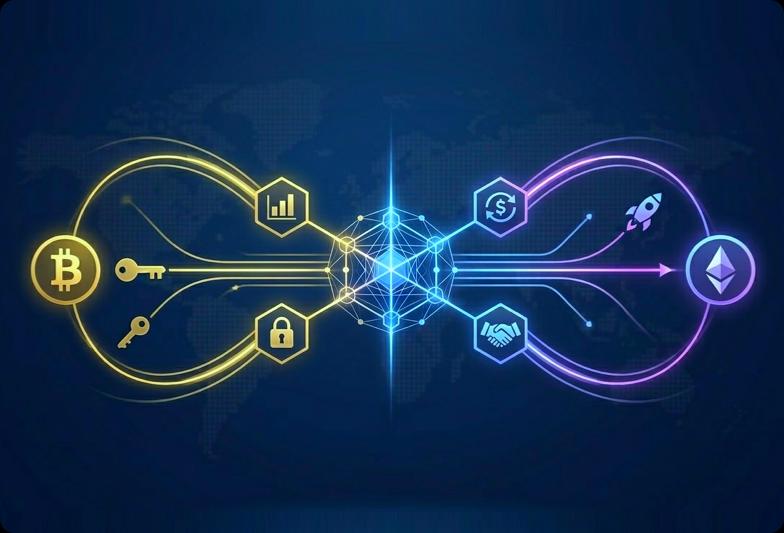
DeFi Lending & Borrowing Platforms
Collateralized lending infrastructure that enables permissionless credit access, algorithmic interest rate management, and automated liquidation without banks, credit checks, or intermediaries.
- Collateral management and liquidation engine design
- Algorithmic interest rate modeling and oracle integration
- Flash loan architecture and under-collateralized lending frameworks
- KYC/AML-integrated compliance layer for regulated environments
Decentralized Exchange (DEX) Platforms
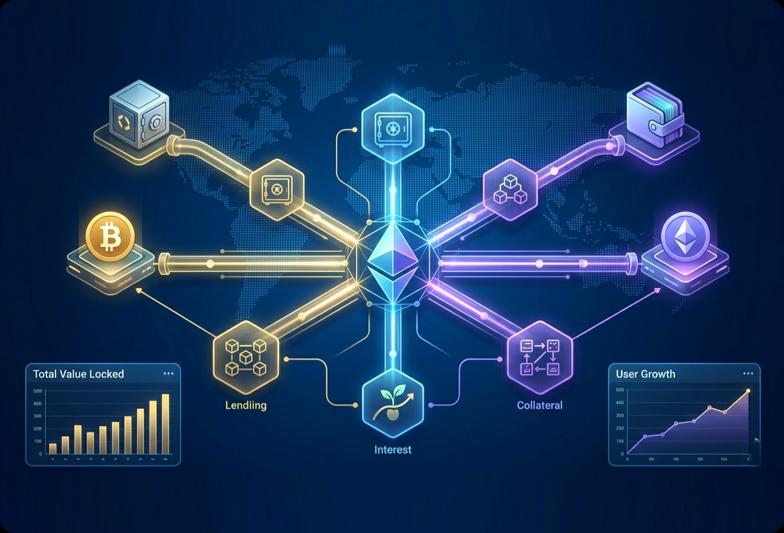
Non-custodial trading infrastructure built for high-volume, permissionless token exchange across multiple blockchain networks. Our approach to DeFi exchange development focuses on deep liquidity, transparent pricing, and scalable protocol architecture.
- AMM and order book protocol architecture
- Liquidity pool design and incentive modeling
- Multi-token swap engine with gas optimization
- On-chain governance and fee distribution modules
DeFi Lending & Borrowing Platforms
Collateralized lending infrastructure that enables permissionless credit access, algorithmic interest rate management, and automated liquidation without banks, credit checks, or intermediaries.
- Collateral management and liquidation engine design
- Algorithmic interest rate modeling and oracle integration
- Flash loan architecture and under-collateralized lending frameworks
- KYC/AML-integrated compliance layer for regulated environments
DeFi Staking & Restaking Platforms
DeFi Staking & Restaking Platforms
Proof-of-Stake infrastructure that enables token holders to earn protocol rewards through staking, liquid staking derivatives, and EigenLayer-compatible restaking mechanisms.
- Validator onboarding, delegation logic, and reward distribution
- Liquid staking token issuance and redemption mechanism
- Restaking protocol integration with slashing protection modules
- Staking dashboard and governance participation interfaces

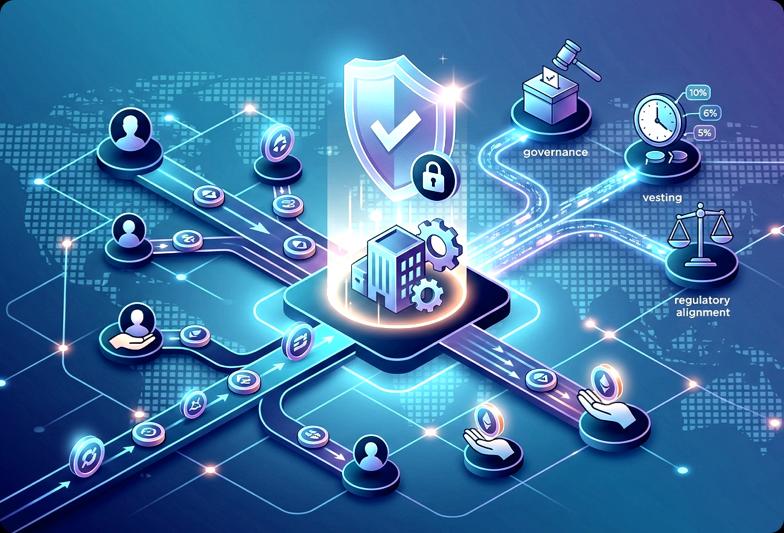
Decentralized Crowdfunding Platforms
Decentralized Crowdfunding Platforms
Blockchain-native fundraising infrastructure enabling transparent, token-based capital formation for projects, startups, and institutional issuers, aligned with DeFi token development strategies.
- Smart contract-based milestone funding and escrow automation
- Token allocation, vesting schedule, and contributor wallet management
- On-chain governance for fund utilization and stakeholder voting
- IDO, ICO, and STO regulatory framework alignment
DeFi Staking & Restaking Platforms
Proof-of-Stake infrastructure that enables token holders to earn protocol rewards through staking, liquid staking derivatives, and EigenLayer-compatible restaking mechanisms.
- Validator onboarding, delegation logic, and reward distribution
- Liquid staking token issuance and redemption mechanism
- Restaking protocol integration with slashing protection modules
- Staking dashboard and governance participation interfaces
Decentralized Crowdfunding Platforms
Blockchain-native fundraising infrastructure enabling transparent, token-based capital formation for projects, startups, and institutional issuers, aligned with DeFi token development strategies.
- Smart contract-based milestone funding and escrow automation
- Token allocation, vesting schedule, and contributor wallet management
- On-chain governance for fund utilization and stakeholder voting
- IDO, ICO, and STO regulatory framework alignment
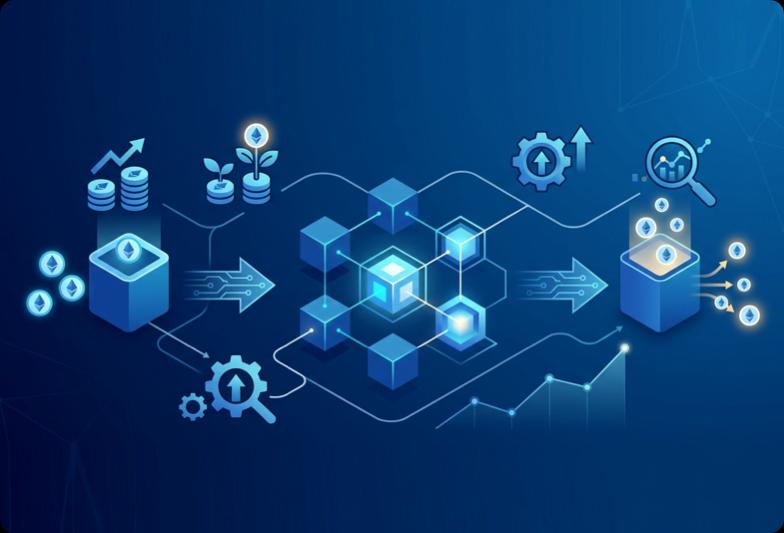
Yield Farming & Liquidity Protocol Platforms
Yield Farming & Liquidity Protocol Platforms
High-performance infrastructure supporting DeFi yield farming strategies, enabling users to optimize returns and contribute liquidity across decentralized markets.
- Multi-protocol yield aggregator and auto-compounding strategy design
- Liquidity mining program and reward token emission scheduling
- Risk-tiered vault systems with smart contract capital allocation
- Real-time APY tracking and performance analytics interfaces
Decentralized Derivatives Trading Platforms
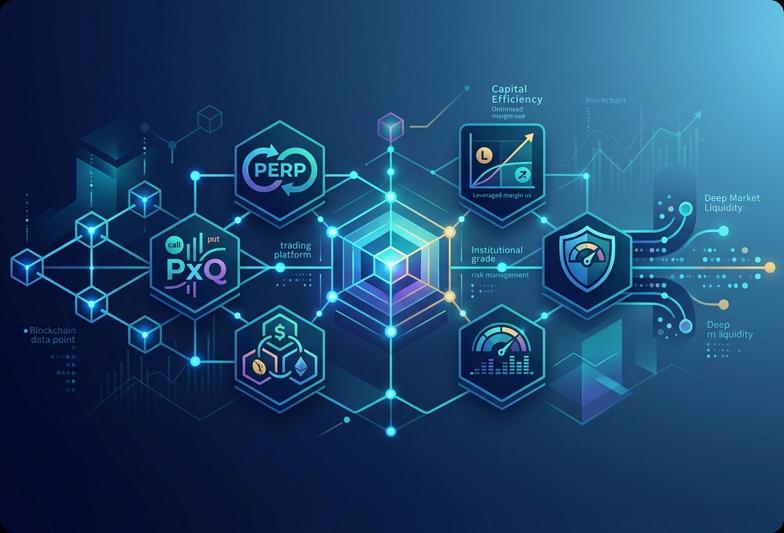
Decentralized Derivatives Trading Platforms
On-chain derivatives infrastructure supporting perpetual contracts, options, and synthetic assets engineered for capital efficiency, institutional-grade risk management, and deep market liquidity.
- Perpetual futures engine with funding rate and margin management
- Options protocol with on-chain settlement and expiry automation
- Synthetic asset issuance and collateralization ratio management
- Risk engine, liquidation infrastructure, and position monitoring
Yield Farming & Liquidity Protocol Platforms
High-performance infrastructure supporting DeFi yield farming strategies, enabling users to optimize returns and contribute liquidity across decentralized markets.
- Multi-protocol yield aggregator and auto-compounding strategy design
- Liquidity mining program and reward token emission scheduling
- Risk-tiered vault systems with smart contract capital allocation
- Real-time APY tracking and performance analytics interfaces
Decentralized Derivatives Trading Platforms
On-chain derivatives infrastructure supporting perpetual contracts, options, and synthetic assets engineered for capital efficiency, institutional-grade risk management, and deep market liquidity.
- Perpetual futures engine with funding rate and margin management
- Options protocol with on-chain settlement and expiry automation
- Synthetic asset issuance and collateralization ratio management
- Risk engine, liquidation infrastructure, and position monitoring
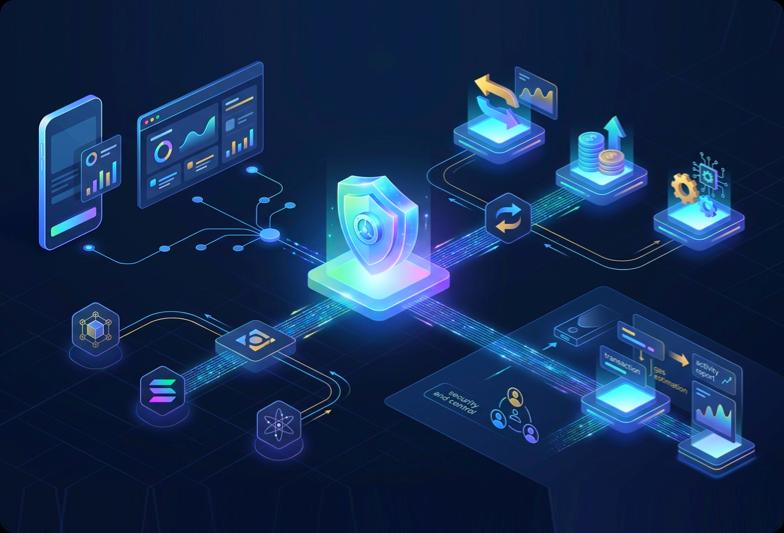
Non-custodial, multi-chain wallet infrastructure engineered for secure asset management, seamless DeFi protocol interaction, and institutional-grade key custody across web and mobile environments.
- Multi-chain architecture supporting EVM, Solana, and Cosmos ecosystems
- Hardware wallet integration and multi-signature authorization
- In-wallet DeFi access for swapping, staking, lending, and yield farming
- Transaction simulation, gas estimation, and on-chain activity reporting
Cross-Chain Bridging Solutions
Cross-Chain Bridging Solutions
Secure interoperability infrastructure that enables frictionless asset transfers, liquidity migration, and protocol connectivity across heterogeneous blockchain networks.
- Lock-and-mint and burn-and-release bridge architecture
- Multi-validator consensus and fraud-proof security layer integration
- Cross-chain liquidity aggregation and routing optimization
- Bridge monitoring, anomaly detection, and incident response systems

DeFi Wallet Development
Non-custodial, multi-chain wallet infrastructure engineered for secure asset management, seamless DeFi protocol interaction, and institutional-grade key custody across web and mobile environments.
- Multi-chain architecture supporting EVM, Solana, and Cosmos ecosystems
- Hardware wallet integration and multi-signature authorization
- In-wallet DeFi access for swapping, staking, lending, and yield farming
- Transaction simulation, gas estimation, and on-chain activity reporting
Cross-Chain Bridging Solutions
Secure interoperability infrastructure that enables frictionless asset transfers, liquidity migration, and protocol connectivity across heterogeneous blockchain networks.
- Lock-and-mint and burn-and-release bridge architecture
- Multi-validator consensus and fraud-proof security layer integration
- Cross-chain liquidity aggregation and routing optimization
- Bridge monitoring, anomaly detection, and incident response systems
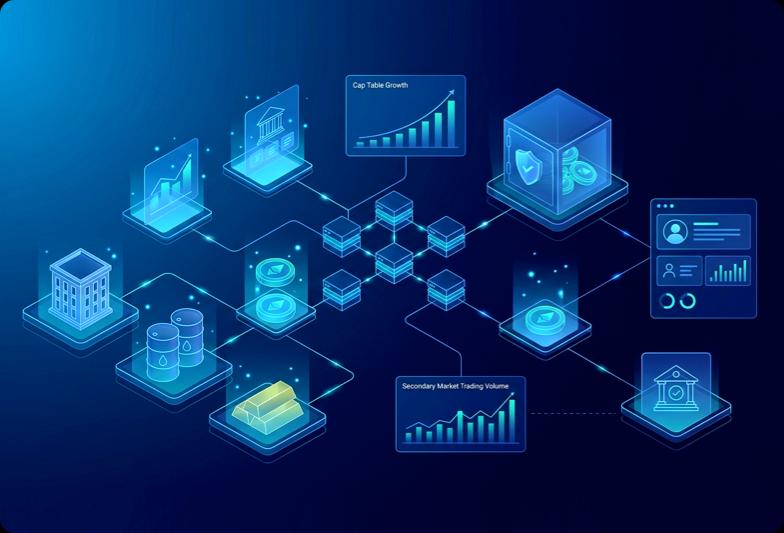
Regulated infrastructure for the issuance, management, and secondary trading of tokenized real-world assets built for private markets, institutional investors, and compliance-first environments.
- Real estate, equity, bond, and commodity tokenization frameworks
- STO-compliant issuance and digital securities lifecycle management
- Investor onboarding, cap table automation, and ownership governance
- Secondary market integration and compliance reporting modules
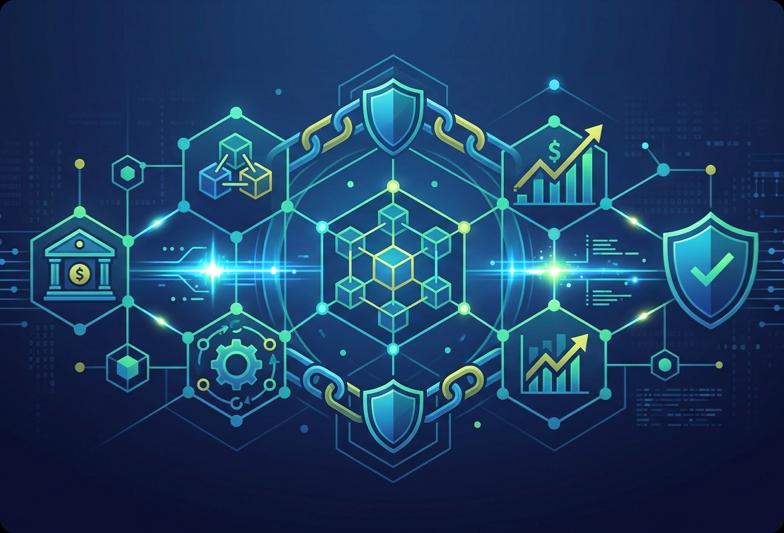
DeFi Smart Contract Development & Auditing
DeFi Smart Contract Development & Auditing
The programmable backbone of every DeFi protocol — engineered for security, efficiency, and audit readiness from the first line of code to mainnet deployment.
- Custom smart contract architecture for lending, DEX, staking, and derivatives logic
- Formal verification, unit testing, and third-party audit preparation
- Gas optimisation and contract upgradeability pattern implementation
- Multi-signature governance, access control, and emergency pause mechanisms
Asset Tokenization Platforms
Regulated infrastructure for the issuance, management, and secondary trading of tokenized real-world assets built for private markets, institutional investors, and compliance-first environments.
- Real estate, equity, bond, and commodity tokenization frameworks
- STO-compliant issuance and digital securities lifecycle management
- Investor onboarding, cap table automation, and ownership governance
- Secondary market integration and compliance reporting modules
DeFi Smart Contract Development & Auditing
The programmable backbone of every DeFi protocol — engineered for security, efficiency, and audit readiness from the first line of code to mainnet deployment.
- Custom smart contract architecture for lending, DEX, staking, and derivatives logic
- Formal verification, unit testing, and third-party audit preparation
- Gas optimisation and contract upgradeability pattern implementation
- Multi-signature governance, access control, and emergency pause mechanisms
Why Choose Debut Infotech For DeFi Development Services?
If you are evaluating DeFi development services, the real question is not capability but execution certainty under financial and regulatory pressure. At Debut Infotech, we engineer decentralized financial infrastructure designed for institutional reliability, compliance alignment, and measurable performance outcomes.

Early Blockchain Adopters
Active in blockchain development since 2015, contributing to early enterprise implementations and evolving alongside the ecosystem.

IBM & Enterprise Blockchain Engagement
Hands-on participation in IBM blockchain initiatives with exposure to Hyperledger Fabric, Corda frameworks, and regulated enterprise network models.
Creators of FabDep (Fabric Deployer)
Developed FabDep, an internal framework that streamlines Hyperledger Fabric deployment and reduces enterprise network setup complexity.
Proven Experience Since 2015
We have been delivering blockchain development solutions since 2015, building smart contracts, token ecosystems, decentralized exchanges & platforms operating in live environments. This sustained experience strengthens architecture planning, threat anticipation, and upgrade governance, ensuring DeFi platforms remain stable, adaptable, and production-ready over time.
We have been delivering blockchain development solutions since 2015, building smart contracts, token ecosystems, decentralized exchanges & platforms operating in live environments. This sustained experience strengthens architecture planning, threat anticipation, and upgrade governance, ensuring DeFi platforms remain stable, adaptable, and production-ready over time.
Deep Protocol Engineering Expertise
Our teams operate at the smart contract and protocol layer, designing liquidity models, governance logic, and tokenomics structures aligned with sustainable incentives. We follow secure SDLC practices, structured code reviews, deterministic testing, and deployment controls to ensure consistent execution across complex decentralized infrastructures.
Compliance-Aligned Development Practices
We design DeFi systems with awareness of SOX, HIPAA, SEC regulatory guidance, CCPA, and GDPR requirements where applicable. Our frameworks incorporate audit readiness, structured reporting mechanisms, data protection controls, and traceable transaction records, supporting enterprises operating within regulated financial and data environments.
Advanced Cryptographic Foundations
Security is enforced through established cryptographic algorithms, including SHA-1, SHA-2 with SHA-256, SHA-3, and MD5 for legacy interoperability. We implement hashing mechanisms, digital signatures, encryption protocols, and secure key management practices to maintain transaction integrity and strengthen distributed trust models.
Embedded Risk Mitigation Controls
Rather than relying solely on external audits, we integrate risk mitigation strategies directly into protocol architecture. This includes oracle dependency assessments, flash-loan exploit safeguards, upgrade-safe contract structures, and treasury control frameworks, reducing exposure to operational and financial vulnerabilities.
Your DeFi Protocol Deserves More Than Generic Development.
The difference between a protocol that captures market share and one that stalls at deployment comes down to one decision — who builds it. Work with a team that brings protocol-grade expertise, security-first engineering, and institutional-level execution to every DeFi engagement.
Zero compromise on smart contract security and audit readiness
Protocols engineered to attract and retain on-chain liquidity
From concept to mainnet — delivered with precision
Partner with Debut Infotech and Launch Your DeFi Platform Like the Popular Ones
The growing prominence of DeFi development platforms in the current crypto market has inspired many entrepreneurs to consider launching their own applications. If you're one of them, why not consider building a DeFi platform similar to a leading one in the industry with us?

Uniswap

Aave

Maker

SushiSwap

Convex Finance

Yearn Finance

Compound Finance

Polkaswap

InstaDApp

YouHodler

Terra
Uniswap
Aave
Maker
SushiSwap
Convex Finance
Yearn Finance
Compound Finance
Polkaswap
InstaDApp
YouHodler
Terra
Uniswap
Aave
Maker
SushiSwap
Convex Finance
Yearn Finance
Compound Finance
Polkaswap
InstaDApp
YouHodler
Terra
Uniswap
Aave
Maker
SushiSwap
Convex Finance
Yearn Finance
Compound Finance
Polkaswap
InstaDApp
YouHodler
Terra
Tools & Technologies We Use To Develop DeFi Solutions
Building a robust DeFi platform demands the right technology foundation — one engineered for security, scalability, and regulatory compliance. The tools and technologies selected for your solution directly determine its performance under load, resistance to vulnerabilities, and capacity to evolve as decentralized finance markets and compliance landscapes continue to mature.
Blockchain Frameworks & Networks

Ethereum

BNB Chain

Solana

Polygon

Avalanche

Polkadot

Arbitrum

Optimism

Base
Smart Contract Programming Languages
Smart Contract Development & Testing Frameworks
Blockchain Oracles & Data Feeds
Blockchain Cloud Services
Front-End Programming Languages & Frameworks
Decentralized Storage & Database
Security & Audit Tools
Wallet & Integration
Ethereum
BNB Chain
Solana
Polygon
Avalanche
Polkadot
Arbitrum
Optimism
Base

Solidity

Rust

Vyper

Move

Yul

Cairo

Ink!

Hardhat

Truffle

Foundry

Brownie

Remix IDE

Tenderly

Ganache

Chainlink

Band Protocol

API3

Pyth Network

Tellor

AWS Blockchain

Microsoft Azure

Google Cloud Blockchain

Chainstack

Alchemy

Infura

Moralis

QuickNode

React.js

Next.js

Vue.js

Angular

TypeScript

Web3.js

Ethers.js

IPFS

Filecoin

Arweave

The Graph

Ceramic Network

OrbitDB

MythX

Slither

Echidna

OpenZeppelin

CertiK

Manticore

MetaMask

WalletConnect

Coinbase Wallet

Gnosis Safe

Web3Auth

Privy

RainbowKit
Compliance-Ready DeFi Solutions Built for Regulatory Alignment
We understand regulatory exposure, and we design DeFi platforms that meet institutional standards while minimizing risk. Our solutions combine technical rigor with regulatory alignment, ensuring your platform is trusted, auditable, and ready for regulated participation.

Built to Support KYC / AML Integration

Permissioned Pools for Controlled Institutional Access

DAO Governance Designed for Legal Wrapper Compatibility

Token Models Aligned with Regulatory Expectations

Multi-Jurisdiction Deployment Preparedness

Governance & Treasury Controls Supporting Compliance Needs

Data Handling Aligned with GDPR, CCPA & Privacy Regulations

Audit Trails Designed for SOX & Financial Reporting Requirements

Role-Based Access and Multi-Signature Controls

Real-Time Monitoring and Anomaly Detection Support
Meet Our Experts

We've stepped into enough mid-crisis blockchain engagements to know exactly where things break down. Scope that was never properly defined. Architecture decisions rushed under deadline pressure. Integration dependencies nobody accounted for until they became blockers. The process we run today exists because of those lessons — and it's why our clients reach production without the chaos that derails most enterprise blockchain programs.
Daljit Singh
Director of Operations, Debut Infotech
Enterprise-Grade DeFi Development Process and Governance Framework
As an experienced DeFi development company, we do not treat DeFi development as a linear checklist of deliverables. It is an engineering cycle that moves from business clarity to protocol architecture, to controlled mainnet deployment, and then to continuous optimization under live market conditions.
Step 1: We Start With the Business Model, Not the Blockchain
Step 2: We Define the Regulatory and Compliance Perimeter
Step 3: We Validate the Opportunity Before Writing a Line of Code
Step 4: We Architect the Protocol and Define the Roadmap
Step 5: We Design for the User Before We Build for the Protocol
Step 6: We Develop With Quality Running in Parallel, Not After
Step 7: We Audit the Smart Contracts Before They Are Immutable
Step 8: We Deploy to Production With Infrastructure Security in Place
Step 9: We Optimize Continuously After Launch
Before selecting a protocol or token standard, we break down how value moves inside your ecosystem.
• Who exchanges value, and under what conditions?
• Where does reconciliation fail or create operational drag?
• Which compliance obligations govern your user base and jurisdiction?
• What financial logic needs to be automated, and what should remain off-chain?
We also define tokenomics modeling, incentive design, liquidity bootstrapping strategy, and core risk parameters such as collateral ratios, liquidation thresholds, and volatility buffers.
This phase often surfaces that the core challenge is not the absence of blockchain, but fragmented coordination across systems, unclear token utility, misaligned incentives, or unresolved compliance exposure. That clarity shapes every architectural decision that follows.
DeFi operates across jurisdictions with overlapping and rapidly evolving regulatory frameworks. Before architecture begins, we map the full compliance landscape relevant to your solution.
• Which SEC regulations apply to your token structure or exchange mechanism?
• Do KYC and AML obligations apply at the protocol or application layer?
• Are GDPR, CCPA, or financial data residency requirements relevant to your user base?
• Does your platform require SOX-aligned audit trails or HIPAA-adjacent data handling?
We also define governance controls, including multi-signature treasury structures, timelock mechanisms, and role-based access policies to align protocol operations with regulatory accountability expectations.
Compliance is not retrofitted at launch. It is embedded into smart contract logic, data architecture, access control design, and treasury governance from the outset.
• Once business intent and compliance boundaries are clear, we validate whether the DeFi opportunity justifies the build. We deliver a structured business case that covers the following.
• Competitor and protocol landscape analysis
• Projected development costs and timeline
• ROI and NPV modeling
• Token economic modeling, incentive emission schedules, and liquidity strategy design
• A quantified risk register covering operational, adoption, liquidity, smart contract, and regulatory dimensions
This gives you and your stakeholders a defensible foundation before any capital is committed to development.
Architecture in DeFi is where the most consequential decisions are made. At this stage, we establish the following.
• Optimal blockchain network selection based on throughput, cost, and composability requirements
• Smart contract architecture using modular design patterns and upgradeable proxy frameworks (UUPS or Transparent)
• Gas optimization strategy and formalized testing standards targeting >90% unit and integration coverage
• Data flow mapping between on-chain and off-chain components
• Oracle integration strategy for external data dependency management
• Full project roadmap with milestones, team composition, KPIs, and cost breakdown by stage
• Risk mitigation plan covering technical, operational, financial parameters, and market-side exposures
A technically sound DeFi protocol that users cannot navigate confidently will not achieve adoption.
• Wallet connection and authentication flows
• Liquidity provision and position management interfaces
• Transaction confirmation and gas cost visibility
• Error recovery and failure state communication
• Multi-wallet compatibility and cross-device responsiveness
We design with DeFi-native user behavior and governance transparency in mind, ensuring treasury controls, timelocks, and upgrade mechanisms are clearly communicated in the interface.
Development is not a hand-off from build to test. Quality assurance runs in parallel within a CI/CD automation environment. We concurrently deliver:
• Front-end interfaces built for DeFi-native user interactions
• Back-end infrastructure for off-chain data processing and system coordination
• Smart contracts developed using modular architecture, gas-optimized patterns, and upgradeable proxy structures
• Unit, integration, and fuzz testing targeting >90% coverage against formal specifications
• Custom Oracle development for reliable external data feeds
• APIs enabling third-party system integration
Full integrations between application components verified before staging deployment
• Before mainnet deployment, every contract undergoes a rigorous, multi-layered security process.
• Formal pre-audit code freeze and internal security audit
• Automated vulnerability detection using Slither, MythX, and Echidna
• Manual code review by senior smart contract security engineers
• Formal verification where protocol value or complexity warrants mathematical assurance
• External third-party audit coordination for high-value protocols
• Bug bounty program structuring prior to or immediately following mainnet launch
All findings are fully remediated and re-verified before deployment proceeds.
Deployment is a controlled, security-first transition. Before go-live, we establish:
• Multi-signature treasury setup and timelock-governed upgrade controls
• Firewalls, intrusion detection, and prevention systems
• SIEM integration for real-time security event monitoring
• Intelligent on-chain fraud detection mechanisms
• API authorization controls and rate limiting
• Defined incident response playbooks and escalation procedures
• Compliance verification procedures aligned to applicable regulatory requirements
• User onboarding materials and system administrator documentation
Our post-launch engagement is built around continuous improvement.
• Real-time monitoring of protocol performance, treasury movements, and on-chain activity
• Governance oversight of timelock changes and multi-sig operations
• Regular security and compliance audits on defined review cycles
• Infrastructure scaling to support transaction growth
• Protocol upgrades, additional asset support, and expanded DeFi service layers
• Cross-chain expansion, liquidity rebalancing strategies, and governance mechanism evolution
DeFi App Development Cost & Timeline
For teams looking to validate their DeFi concept before full-scale development, an MVP build focused on core protocol functionality, basic smart contract logic, and a functional user interface typically ranges from:
Estimated Cost by DeFi Product Type
How Protocol Complexity Impacts DeFi Cost?
Compressed timelines without sufficient audit coverage remain the leading cause of protocol exploits — and post-breach recovery costs consistently outweigh the savings:
Blockchain Network Selection & DeFi Cost Implications
Ready to Build Your DeFi Solution?
Every DeFi project carries its own protocol complexity, compliance perimeter, and go-to-market timeline. The fastest way to understand your development scope and cost is to align your business model, regulatory obligations, and technical architecture upfront.



FAQs on DeFi Development Services
What does DeFi development do?
DeFi development involves building decentralized financial applications on blockchain networks that operate without traditional intermediaries. Through smart contracts, these platforms automate financial processes including lending, borrowing, trading, and yield generation — executing transactions transparently and in real time. For businesses, this translates to reduced settlement costs, eliminated counterparty risk, and access to global liquidity pools.
Which blockchain networks do you support for DeFi development?
We develop DeFi solutions across Ethereum, BNB Chain, Solana, Polygon, Avalanche, Arbitrum, Optimism, Polkadot, and Base. Network selection is driven by your protocol's throughput requirements, transaction cost tolerance, composability needs, and scalability roadmap — not a default preference. For DeFi protocols requiring multi-ecosystem access, we architect cross-chain solutions using established bridge frameworks that maintain security without compromising performance.
How do you ensure the security of DeFi smart contracts?
Security is embedded into every development stage, not reviewed at the end. Smart contracts are continuously tested throughout development and undergo a multi-layered audit before mainnet deployment — combining automated analysis via Slither, MythX, and Echidna with manual review by senior smart contract engineers. We audit for reentrancy, access control flaws, oracle manipulation, integer overflow, and flash loan vulnerabilities. All findings are fully remediated before deployment proceeds.
Can you build a DeFi platform that is compliant with SEC, GDPR, and AML regulations?
Yes. Before development begins, we map the full compliance perimeter applicable to your platform — covering SEC token classification requirements, AML and KYC obligations, GDPR and CCPA data handling standards, and SOX audit trail requirements where applicable. Compliance logic is embedded directly into smart contract design and data architecture from the outset, not retrofitted at launch.
What is the difference between building on an existing DeFi protocol and developing a custom DeFi solution?
Building on an existing protocol — such as forking Uniswap or Aave — offers faster deployment with battle-tested base-layer code, suited for use cases that align closely with established protocol mechanics. Custom DeFi development gives full control over protocol logic, tokenomics, and governance architecture, and is the right choice when your use case or compliance requirements cannot be served by existing templates. We evaluate both paths against your business model and recommend accordingly.
Do you provide smart contract auditing as part of your DeFi development service?
Yes. Smart contract auditing is a standard component of every engagement, not an optional add-on. Our audit process combines automated static analysis with manual review by senior smart contract security engineers, covering the full spectrum of known DeFi vulnerability classes. For protocols managing significant on-chain liquidity or with institutional security requirements, we additionally facilitate independent third-party audits before mainnet deployment.
Can you integrate our DeFi platform with existing enterprise systems such as ERP, treasury, or CRM software?
Yes. We develop custom APIs that connect DeFi application layers to ERP platforms, treasury management systems, CRM software, and corporate finance infrastructure. When real-time external data is required within smart contract logic, we build and integrate custom oracle solutions that securely bridge on-chain and off-chain environments. Every integration is designed with data integrity, latency tolerance, and failure recovery in mind.
How do you handle smart contract upgrades after the DeFi platform has gone live?
Upgradeability is planned before development begins, not after. We architect upgrade pathways into the protocol from the outset using proxy contracts, modular contract design, and governance-controlled upgrade mechanisms. Post-deployment, all upgrade proposals go through a defined review, testing, and re-audit cycle before execution — ensuring changes are transparent, secure, and aligned with the protocol's governance framework.
Do I need both a token and an exchange for my DeFi project?
If you are planning to launch a scalable DeFi product, combining token creation with an exchange layer can significantly strengthen your business model. Through DeFi token development, you can establish monetization, incentives, and governance mechanisms, while DeFi exchange development enables trading, liquidity access, and user participation. Partnering with an experienced team ensures both components are designed for security, performance, and long-term growth.
What ongoing support and maintenance do you offer after DeFi platform deployment?
Our post-deployment engagement covers real-time protocol and infrastructure monitoring, rapid incident response, regular security and compliance audits, and infrastructure scaling as transaction volume grows. We also continue to evolve the protocol with new asset support, additional service layers such as staking and decentralized insurance, and cross-chain expansion — ensuring the platform remains secure and competitive over time.


