ON THIS PAGE
Progress0%





Our Global Presence :





Agentic AI coding tools represent a shift from AI that assists developers to AI that actively executes development work.
Most coding tools respond only when prompted. Agentic AI coding tools can understand objectives, break them into tasks, write and modify code, and iterate with minimal guidance.
This matters because software teams are under constant pressure. Developers balance feature delivery, bug fixes, reviews, and system maintenance at the same time.
That pressure leads to context switching and delayed feedback. Progress slows as work moves between tools, teams, and approval steps.
This article explains how agentic AI coding tools are changing software development today. It focuses on what’s working in real teams, where the limits are, and why human control remains essential.
Without further ado, let’s get started!
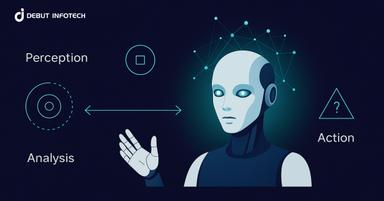
Agentic AI coding tools are built to act, not just respond. Traditional AI assistants wait for a prompt and return suggestions. Agentic tools work toward a goal. They can plan tasks, write and update code, run tests, debug issues, and repeat the process with limited human input.
This is possible because AI coding agent tools operate across real development environments. They break work into steps, use IDEs and terminals, retain context across actions, and evaluate whether the outcome actually solves the problem.
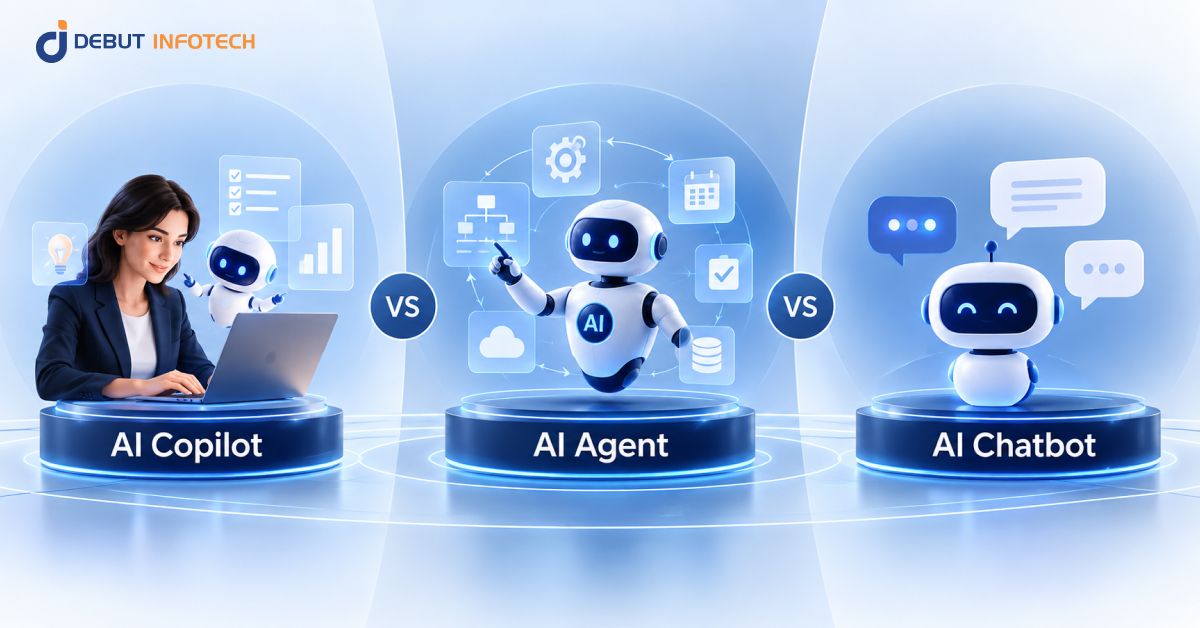
That’s the key difference from standard AI copilots. Copilots are reactive and stop at suggestions. Agentic tools are proactive and multi-step, pushing work forward without needing constant direction.
Read this Article: Agentic AI vs. AI Agents: Understanding the Key Differences
For software teams, this changes daily workflows. Developers use less time on tools and more on results reviewing, making decisions and evolving the whole system.
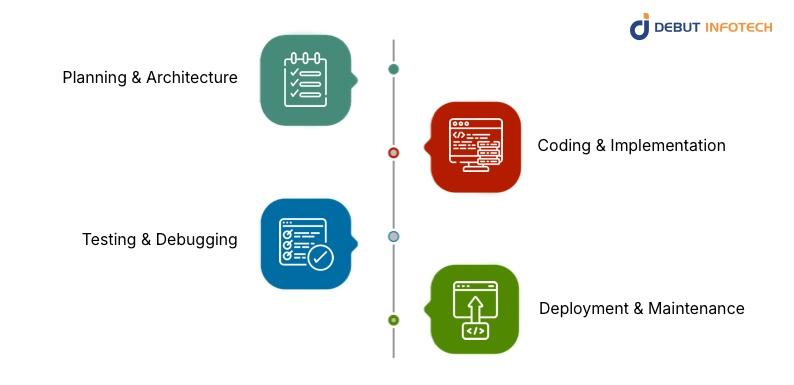
Planning & Architecture
AI agents aid in transforming ideas into technical designs. Rather than manually decomposing product requirements, AI agents are able to form structured task flows describing what should be built and in what sequence.
They also expose architectural risks at an early stage and allow developers an opportunity to avoid design errors before even a single line of code is written. This saves time and provides less rework in the future.
Coding & Implementation
AI agents do not just give suggestions on code. They are able to create complete modules, or incorporate them into existing projects, and make sure that there is a uniform coding standard throughout the codebase.
This method minimizes redundant workload, maintains project structure, and enables developers to deal with more intricate, innovative tasks rather than basic implementation.
Testing & Debugging
AI agents create smarter and faster testing. They are able to automatically generate test cases, detect regressions, and point out possible bugs in the code.
They do not only identify problems, they frequently provide remedies in a well-articulated way, and the developers can see why some change is necessary and how they can make it effective.
Deployment & Maintenance
AI agents do not stop assisting software once it is live. They keep check of any errors in logs, offer patches on vulnerabilities, and help in refactoring as the project continues.
Through ongoing system inspection, AI agents can assist teams to have cleaner, more trusted software and less effort on maintaining it over time.
Agentic AI coding tools are autonomous systems that go beyond code suggestions. They learn the context of projects, plan multi-tasking, edit various files, test, and repeat to reach an objective with limited human interventions.
These tools can usually be classified into three according to the interaction that developers have with the tools.
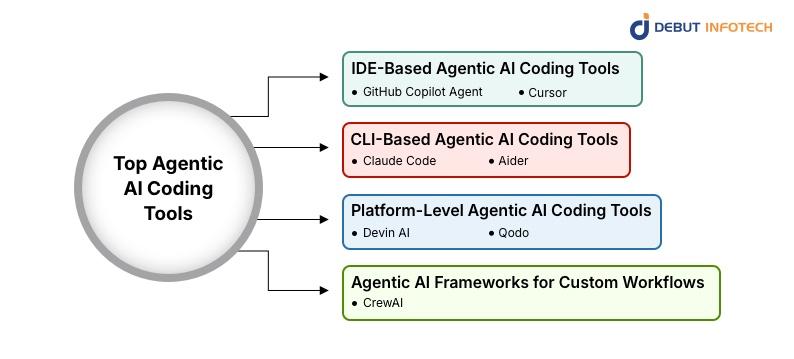
IDE-Based Agentic AI Coding Tools
These tools work directly inside the developer’s editor and feel like an extension of the coding workflow.
Best for: Developers who want agentic behavior without leaving their IDE.
CLI-Based Agentic AI Coding Tools
These tools operate through the command line and are designed for power users.
Best for: Engineers who prefer terminal-driven, review-first workflows.
Platform-Level Agentic AI Coding Tools
These tools aim to automate entire development tasks or projects.
Best for: Teams looking to offload large portions of development work.
Agentic AI Frameworks for Custom Workflows
These tools enable teams to build their own autonomous agents.
Best for: Organizations building custom agentic systems tailored to their workflows.
| Tool / Platform | Interface | Autonomy Level | Best Use Case |
| GitHub Copilot Agent | IDE | Medium–High | Repo-wide coding tasks |
| Cursor | IDE | High | Large codebase edits |
| Claude Code | CLI | Medium–High | Planned, stepwise execution |
| Aider | CLI | Medium | Controlled git-based changes |
| Devin AI | Platform | Very High | End-to-end task automation |
| Qodo | Platform | Medium–High | Code quality and testing |
| CrewAI | Framework | Configurable | Custom agent workflows |
Key Takeaway:
Not all agentic AI coding tools solve the same problem. Some are used to improve individual productivity, and others are intended to automate whole development processes. The appropriate decision will be determined by the extent of autonomy your team is willing to surrender to as well as the quality of your governance procedures.
The use of agentic AI coding tools has its obvious benefits in software development, but it also needs to be managed.
Key Benefits
Current Limitations
Agentic AI coding tools are changing what developers actually do day to day.
Rather than composing each line of code, developers now dedicate more time to overseeing the work of AI and inspecting solutions as well as managing workflows. Their role shifts from execution to decision-making.
New skills are becoming essential. Developers need prompt engineering, system thinking, and strong code review and governance abilities to ensure AI-generated code is reliable and secure.
For junior developers, agentic AI accelerates learning. They can see working examples and experiment faster but without careful oversight, there’s a risk of understanding only surface-level concepts.
The current AI trends are influencing the way teams develop and sustain software. Collaboration between multiple agents is now a norm where coding, testing, and security agents collaborate to facilitate the development.
The workflows of development are changing to AI-native. Activities that previously took hours such as creation of tests or inspection of code can now occur concurrently enabling the developers to concentrate on decision making at higher levels.
Developers are moving up to become system architects and decision makers. They do not need to write each line, instead, they direct AI tools, control quality, and supervise the work of complex projects.
Now more than ever, ethics, accountability, and governance are very essential. Teams should combine governance policies with human review to make AI outputs trustworthy and aligned with business priorities.
For CTOs, CIOs, and digital leaders, adopting agentic AI coding tools is no longer an experiment, it’s a strategic decision to:
In the case of modern software creation by organizations, the key is to find a responsible way to integrate agentic AI coding tools into secure and compliant software development processes with scalable growth in the long term.
Also Read : How AI Agents Are Transforming The Software Development Industry
If your organization is evaluating how to design, deploy, and govern autonomous AI agents within production environments, the real question isn’t whether agentic AI is powerful — it’s how to implement it responsibly and at scale.
As an AI agent development company with deep experience in enterprise software architecture, Debut Infotech works alongside CTOs, product leaders, and engineering teams to design secure, auditable, and performance-ready AI agents tailored to real operational workflows.
Our AI consultants help you define system architecture, model governance, prompt engineering standards, and integration strategies that align with your DevOps pipelines and compliance requirements. When you hire AI agent developers from our team, you gain structured implementation frameworks — not isolated experiments.
We build AI agents that support code generation, task orchestration, workflow automation, and intelligent decision-making — all engineered for scalability, observability, and long-term maintainability.
From proof-of-concept to enterprise rollout, we ensure your AI adoption strategy is disciplined, measurable, and aligned with business outcomes.
If you’re ready to transition from experimentation to structured AI agent deployment, let’s design your roadmap.
A. No, developers are not being replaced with agentic AI coding tools. They are transforming the way developers work.
Developers are now shifting to orchestration, validation, as well as problem-solving roles, instead of writing every line of code manually. AI manages repetitive performance, whereas human beings steer decisions and results.
This forms a powerful human-AI cooperation. In projects, developers that use agentic AI coding tools can work at greater speed and handle more complex systems with less difficulty, and have better consistency across the project.
Developers who know how to utilize these tools properly have the future. The emphasis also becomes on the high-level design, critical thinking, and system ownership rather than repetitive tasks.
A. In the agentic AI era, developers are no longer focused only on writing code. They are now being transformed to create, lead and monitor smart systems.
Rather than performing all the work manually, developers currently design workflows that can be performed by AI on their own. This involves the establishment of objectives, boundaries, and evaluation of results.
The fundamental set of skills extends further than the simple API integration. The developers must come up with systems capable of reasoning, planning and performing tasks on their own, and still working in line with human intentions.

Our Latest Insights
USA
2501 Chatham, Rd Suite R Springfield, IL 62704
+1-708-515-4004
info@debutinfotech.com
UK
7 Pound Close, Yarnton, Oxfordshire, OX51QG
+44-770-304-0079
info@debutinfotech.com
Canada
154 Eden Oak Trail, Kitchener, ON N2A 0H9
+1-708-515-4004
info@debutinfotech.com
INDIA
Sector 101-A, Plot No: I-42, IT City Rd, JLPL Industrial Area, Mohali, PB 140306
9888402396
info@debutinfotech.com