ON THIS PAGE
Progress0%


Our Global Presence :



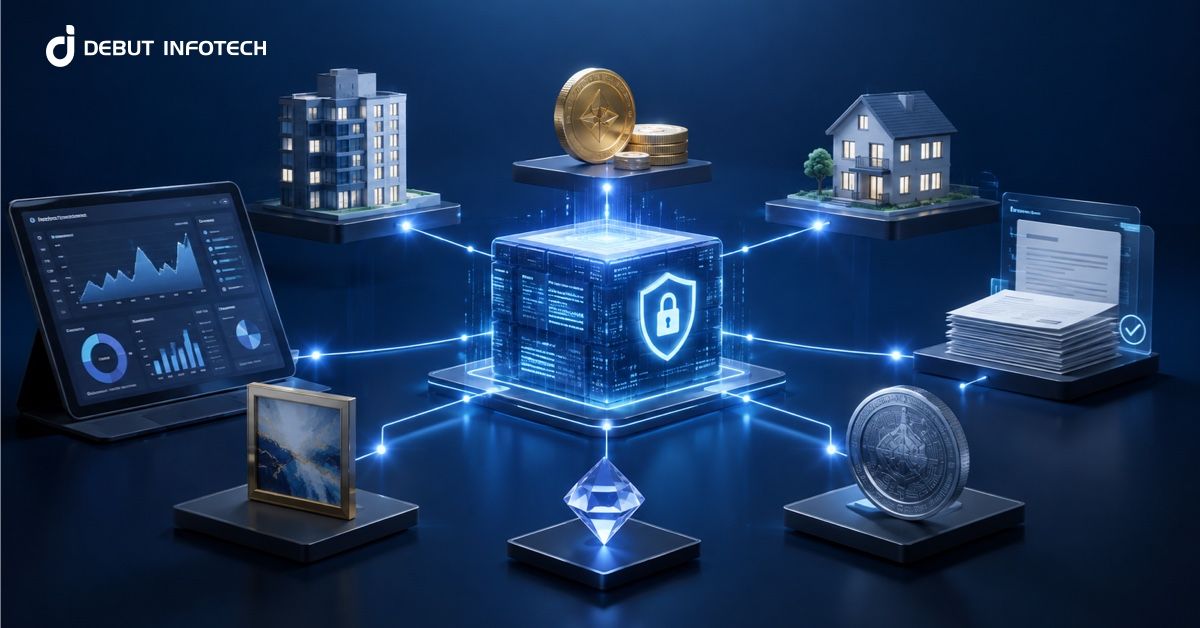


Blockchain asset management modernizes traditional operations by replacing fragmented record-keeping with a shared ledger, smart contracts, and tokenization to improve transparency, settlement speed, and operational efficiency.
Tokenization expands liquidity and investor access by enabling fractional ownership of real estate, private equity, commodities, and other real-world assets while maintaining regulatory compliance.
Enterprise adoption depends on secure architecture including smart contracts, digital identity, oracle networks, MPC/HSM-based custody, and integration with existing ERP, banking, and portfolio management systems.
Implementation success requires careful technology and compliance decisions, from selecting blockchain platforms like Ethereum or Hyperledger Fabric to choosing token standards such as ERC-1400 or ERC-3643 for regulated assets.
Regulatory alignment and interoperability remain critical challenges, making governance, KYC/AML automation, trusted oracle data, and cross-chain compatibility essential for scalable deployments.
Blockchain delivers measurable business value through near real-time settlement, automated compliance, immutable audit trails, reduced reconciliation costs, and improved reporting for financial institutions and asset-intensive enterprises.
Long-term enterprise strategy should prioritize phased implementation, partnering with experienced blockchain development teams to balance security, compliance, scalability, and integration while preparing for AI-powered analytics and expanding real-world asset (RWA) tokenization.
Asset management has become significantly more complex as organizations diversify portfolios across traditional securities, private markets, real estate, infrastructure, commodities, and digital assets.
At the same time, stricter regulations, rising operational costs, and increasing investor expectations are forcing firms to rethink how they record ownership, settle transactions, and maintain compliance. Legacy systems that rely on multiple intermediaries and disconnected databases are struggling to keep pace.
Blockchain is emerging as a practical solution rather than an experimental technology. Instead of maintaining separate records across custodians, administrators, brokers, and clearing houses, blockchain enables authorized participants to access a shared ledger that records transactions in near real time. Smart contracts automate business rules, while tokenization creates new opportunities for liquidity and broader investor participation.
For banks, investment firms, asset managers, insurers, and enterprises managing high-value assets, blockchain offers more than operational efficiency. It creates a foundation for transparent ownership, programmable compliance, faster settlements, and stronger auditability.
As institutional adoption accelerates, blockchain asset management is becoming an important part of long-term digital transformation strategies.
This guide explains how blockchain asset management works, why traditional systems fall short, its core components, benefits, enterprise use cases, supporting technologies, implementation challenges, and the steps organizations should follow to build a secure, compliant blockchain asset management platform.
Blockchain asset management is gaining momentum as financial institutions increasingly tokenize real-world assets (RWAs) to improve settlement, transparency, and operational efficiency.
As blockchain infrastructure matures and regulatory frameworks evolve, tokenization is moving from pilot projects to enterprise adoption across capital markets.
McKinsey estimates the market capitalization of tokenized assets could reach around $2 trillion by 2030 in its base-case scenario, driven by adoption across bonds, mutual funds, exchange-traded funds, private credit, and securitized assets.
According to Boston Consulting Group (BCG), tokenized real-world assets (excluding stablecoins and repos) are projected to grow from under $25 billion today to approximately $14 trillion by 2030, highlighting the long-term potential of blockchain-based financial infrastructure.
BCG also reports that tokenized U.S. Treasuries reached $13.6 billion in April 2026, increasing 170% year over year, reflecting accelerating institutional demand for blockchain-based investment products.
Some notable industry developments include:
| Market Trend | Why It Matters |
| Rapid growth of tokenized real-world assets | Expands liquidity for traditionally illiquid investments |
| Rising institutional blockchain adoption | Major banks and asset managers are moving pilot projects into production. |
| Increased regulatory clarity | Jurisdictions are introducing clearer frameworks for digital assets. |
| Growth of enterprise blockchain platforms | More organizations are integrating blockchain with existing financial systems. |
| Expansion of digital custody services | Institutional investors now have access to regulated custody infrastructure. |
Major institutions including BlackRock, Franklin Templeton, and JPMorgan have already launched blockchain-based investment products, signaling that tokenization is becoming an integral part of modern asset management rather than a niche innovation.
Blockchain asset management is the use of blockchain technology to create, manage, transfer, monitor, and secure financial or physical assets through a distributed digital ledger.
It combines tokenization, smart contracts, digital identity, and cryptographic security to streamline ownership management, transaction processing, compliance, and reporting.
Unlike traditional enterprise asset management systems that depend on multiple databases maintained by different organizations, blockchain establishes a single shared source of truth. Every authorized participant accesses the same transaction history, reducing reconciliation efforts and improving transparency throughout an asset’s lifecycle.
Blockchain asset management solutions extend beyond cryptocurrencies. Organizations can tokenize and manage a wide range of assets, including:
| Asset Category | Examples |
| Financial Assets | Stocks, bonds, treasury funds, ETFs |
| Private Markets | Private equity, venture capital, private credit |
| Real Estate | Residential, commercial, industrial properties |
| Infrastructure | Energy projects, transportation assets |
| Commodities | Gold, silver, oil, agricultural products |
| Intellectual Property | Royalties, patents, licensing rights |
| Alternative Assets | Fine art, luxury goods, collectibles |
| Carbon Assets | Carbon credits and sustainability certificates |
By digitizing ownership and automating business rules, blockchain enables organizations to improve liquidity, reduce administrative overhead, and increase investor confidence while maintaining regulatory compliance.
Traditional asset management relies on fragmented systems, manual reconciliation, multiple intermediaries, and delayed reporting. These processes increase operational costs, slow transaction settlement, limit liquidity, and make compliance more difficult.
Blockchain technology in asset management addresses many of these inefficiencies by creating a shared, transparent, and programmable infrastructure for managing assets.
In traditional financial markets, executing a trade does not immediately finalize ownership.
After a transaction is matched, brokers, custodians, clearing houses, and settlement agents independently update their records before ownership officially changes hands. This reconciliation process often takes two or more business days, depending on the market.
Every additional intermediary increases operational complexity. Institutions must resolve discrepancies, investigate failed trades, and manage settlement risks before transactions become final. These manual processes consume significant time and resources, particularly for organizations handling thousands of daily transactions.
Blockchain replaces much of this workflow with a shared ledger that updates ownership records as transactions are validated. Instead of reconciling multiple databases after execution, participants work from the same synchronized record.
Most asset managers rely on separate systems maintained by custodians, administrators, brokers, transfer agents, and regulators. Because each organization maintains its own database, information must be continually exchanged and verified.
Maintaining multiple versions of the same records increases costs and creates opportunities for inconsistencies. Even minor data mismatches can trigger investigations, reporting delays, or compliance issues.
A shared blockchain ledger removes much of this duplication. Authorized participants access the same transaction history, significantly reducing reconciliation efforts while improving transparency across the investment lifecycle.
Many high-value investments remain difficult to trade. Commercial real estate, infrastructure projects, private equity, fine art, and private credit often require large minimum investments and lengthy holding periods.
Limited secondary markets restrict investor flexibility. Buyers and sellers may wait weeks or months before completing transactions, reducing capital efficiency and limiting market participation.
Tokenization divides ownership into smaller digital units that can be transferred more efficiently.
Fractional ownership lowers investment barriers and creates opportunities for broader participation while improving liquidity for traditionally illiquid assets.
International transactions frequently involve correspondent banks, foreign exchange providers, clearing networks, and regional settlement systems. Every intermediary adds processing time, operational costs, and potential points of failure.
Cross-border settlements can also be affected by differing banking hours, regulatory requirements, and currency conversion processes. These factors create delays that reduce operational efficiency and tie up working capital.
Blockchain enables participating institutions to exchange tokenized assets using shared digital infrastructure, reducing settlement times and minimizing reliance on multiple intermediaries while improving transaction visibility.
Financial institutions perform Know Your Customer (KYC) and Anti-Money Laundering (AML) checks before allowing customers to invest or transact. However, intermediaries often repeat similar verification procedures independently.
Repeating compliance processes increases onboarding costs, delays transactions, and creates a poor customer experience. Organizations also spend considerable resources maintaining separate compliance records.
Blockchain-based identity frameworks can allow verified credentials to be securely reused across approved participants.
Combined with smart contracts, compliance rules can be enforced automatically before transactions are executed, reducing manual intervention while maintaining regulatory standards.
Traditional audit reporting often depends on assembling records from multiple internal systems after transactions have already occurred. This process can be time-consuming, particularly during regulatory reviews or financial audits.
Delayed reporting also limits operational visibility. Decision-makers may rely on historical information rather than accessing real-time portfolio activity, ownership changes, or compliance status.
Blockchain creates an immutable transaction history that updates continuously as new events occur. Authorized auditors and regulators can review timestamped records directly from the shared ledger, simplifying reporting, improving transparency, and reducing the effort required to verify transaction histories.
Table: Traditional Asset Management Challenges and Their Business Impact
| Challenge | Business Impact |
| Post-trade reconciliation | Slower settlements and higher operational costs |
| Siloed record-keeping | Duplicate data and frequent reconciliation |
| Illiquid assets | Limited investor participation and reduced liquidity |
| Cross-border settlement | Higher fees and longer transaction times |
| Redundant compliance | Increased onboarding costs and slower approvals |
| Retroactive reporting | Delayed audits and limited operational visibility |
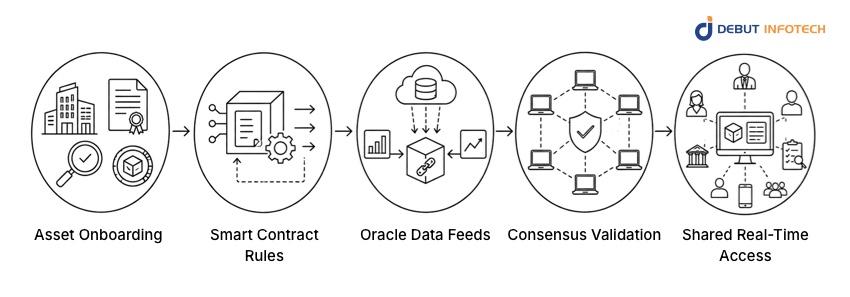
Blockchain asset management works by creating a digital representation of an asset on a blockchain, applying programmable rules through smart contracts, validating every transaction using a consensus mechanism, and maintaining a shared ledger that authorized participants can access in near real time. This approach reduces manual reconciliation, strengthens transparency, and automates many operational processes throughout an asset’s lifecycle.
Every blockchain asset lifecycle management process begins with asset onboarding. Before an asset can be traded or managed digitally, it must be identified, verified, and represented on the blockchain. This applies to financial instruments, real estate, commodities, infrastructure assets, private equity holdings, and other real-world assets.
During onboarding, organizations perform due diligence to confirm ownership, legal status, valuation methodology, and regulatory classification. These checks determine whether the asset should be treated as a security, utility token, payment instrument, or another regulated financial product. The outcome influences the token standard, compliance requirements, and governance model used throughout the asset’s lifecycle.
Once verified, the asset receives a unique digital identity on the blockchain. This identity links the tokenized asset to supporting documentation, ownership history, valuation records, and compliance metadata. Instead of relying on disconnected records across multiple systems, participants reference one authoritative digital representation.
After onboarding, smart contracts define how the asset behaves. These self-executing programs automate business rules that would traditionally require manual intervention from administrators, custodians, or transfer agents.
Smart contracts can manage ownership transfers, dividend distributions, coupon payments, investor eligibility, redemption processes, and voting rights. Every transaction follows predefined conditions, reducing the risk of inconsistent execution or administrative errors.
Compliance requirements can also be embedded directly into the contract. For example, transfers may only be allowed between verified investors, ownership limits can be enforced automatically, and restricted jurisdictions can be blocked before a transaction is completed. This shifts compliance from a reactive process to a proactive control built into the asset itself.
Most enterprise assets depend on information that exists outside the blockchain. Market prices, net asset values (NAV), interest rates, exchange rates, reserve balances, and asset condition reports all originate from external systems.
Oracle networks bridge this gap by securely delivering verified off-chain data to blockchain applications. Instead of manually updating smart contracts, trusted oracle providers continuously supply relevant information that contracts use to execute business logic.
Consider a tokenized treasury fund. Its daily NAV must reflect current portfolio values before investors subscribe or redeem shares. Oracle feeds automate these updates, allowing transactions to use accurate pricing while reducing operational delays.
Every blockchain transaction must be validated before it becomes part of the permanent ledger. Consensus mechanisms allow network participants to agree that a transaction is legitimate without relying on a single centralized authority.
The validation model depends on the blockchain asset management architecture. Public networks commonly use Proof of Stake (PoS). At the same time, permissioned enterprise platforms often rely on Practical Byzantine Fault Tolerance (PBFT), Raft, or similar consensus algorithms that prioritize speed, governance, and controlled participation.
Once consensus is reached, the transaction becomes part of the blockchain’s immutable history. Because each participant works from the same verified ledger, disputes over ownership or transaction records become significantly less common.
The final stage is continuous access to a synchronized ledger shared by authorized participants.
Asset managers, custodians, regulators, auditors, administrators, and investors can retrieve information from the same trusted source rather than maintaining separate copies of transaction records.
This shared visibility reduces reconciliation work, improves reporting accuracy, and enables near real-time monitoring of asset ownership, transaction history, and compliance status. Organizations spend less time verifying data and more time acting on it.
The result is a more connected operational model. Instead of passing information between multiple intermediaries, participants collaborate using a single source of truth that updates automatically as transactions occur.
Table: Blockchain Asset Management Workflow
| Stage | Purpose | Business Outcome |
| Asset onboarding | Verify and digitize the asset | Trusted digital identity |
| Smart contracts | Automate ownership and business rules | Reduced manual processing |
| Oracle feeds | Supply verified external data | Accurate pricing and valuation |
| Consensus validation | Confirm transaction legitimacy | Trusted transaction records |
| Shared ledger | Provide synchronized data access | Faster reporting and no reconciliation |
A blockchain asset management platform combines multiple technologies that work together to secure ownership records, automate transactions, enforce compliance, and integrate with enterprise systems. Each component serves a distinct purpose, but their combined functionality enables organizations to manage assets more efficiently than traditional infrastructure.
Distributed ledger technology is the foundation of the entire platform. Instead of storing records in a single centralized database, blockchain distributes identical copies of transaction data across participating nodes.
Every validated transaction becomes part of a shared history that authorized participants can access. This removes the need for institutions to reconcile independent databases after every trade.
Because records cannot be altered without network consensus, distributed ledgers strengthen trust between organizations that may not fully trust one another while supporting transparent regulatory oversight.
Smart contracts automate the operational rules governing digital assets. They execute predefined instructions automatically whenever specified conditions are met.
These contracts can handle subscriptions, redemptions, dividend payments, collateral management, compliance checks, investor voting, and ownership transfers without requiring continuous manual oversight.
Automation also reduces operational risk. Since contracts execute according to predefined logic, organizations minimize inconsistencies that often arise from manual processing.
Digital identity frameworks establish who is allowed to participate within the blockchain ecosystem. Rather than verifying users repeatedly across multiple institutions, verified credentials can be securely linked to blockchain identities.
This simplifies investor onboarding while supporting regulatory requirements such as KYC, AML, sanctions screening, and accredited investor verification.
Strong identity management also improves security by ensuring only authorized participants can own, transfer, or manage regulated assets.
Consensus algorithms determine how network participants agree on valid transactions before they are permanently recorded.
Public blockchains typically prioritize decentralization, whereas enterprise platforms balance security with transaction speed and governance. Permissioned consensus models generally process transactions more efficiently because participation is restricted to approved organizations.
Selecting the appropriate consensus mechanism depends on transaction volume, regulatory requirements, privacy needs, and network governance.
The tokenization layer converts physical or financial assets into blockchain-based digital tokens representing ownership rights or economic value.
Each token can include embedded information about ownership, compliance rules, transfer restrictions, dividend rights, or redemption mechanisms. This creates programmable assets that support automation throughout their lifecycle.
Tokenization also enables fractional ownership, making traditionally inaccessible investments available to a broader range of qualified investors.
The asset registry maintains comprehensive records describing every tokenized asset managed on the platform.
It typically stores information such as:
A centralized registry built on blockchain improves consistency because all participants reference the same verified asset information instead of maintaining separate internal records.
Blockchain platforms rarely operate in isolation. Most enterprises continue using portfolio management systems, core banking platforms, ERP software, CRM applications, custody platforms, and reporting tools.
APIs allow blockchain infrastructure to exchange information with these existing systems without requiring organizations to replace their entire technology stack.
This integration approach reduces implementation risk while enabling organizations to modernize operations incrementally.
Decision-makers require more than transaction records. They also need meaningful operational insights.
Analytics dashboards provide visibility into:
Real-time analytics support faster decision-making because information becomes available immediately rather than after manual reconciliation or batch reporting.
Security protects every component within the blockchain asset management software. It extends beyond blockchain encryption to include identity controls, custody infrastructure, network security, and operational governance.
A comprehensive security layer typically includes:
Enterprise security should protect both digital assets and the systems interacting with them. Even the strongest blockchain cannot compensate for weak key management or inadequate operational controls.
Table: Core Components of a Blockchain Asset Management System
| Component | Primary Function | Business Value |
| Distributed Ledger | Shared transaction records | Transparency and reconciliation reduction |
| Smart Contracts | Business process automation | Faster operations |
| Digital Identity | User verification | Regulatory compliance |
| Consensus Mechanism | Transaction validation | Trusted records |
| Tokenization Layer | Digital asset creation | Improved liquidity |
| Asset Registry | Asset metadata management | Consistent records |
| APIs & Integrations | Connect enterprise systems | Operational continuity |
| Analytics Dashboard | Performance monitoring | Better decision-making |
| Security Layer | Protect assets and infrastructure | Enterprise-grade resilience |
Blockchain asset management improves how organizations issue, manage, transfer, and monitor assets by reducing operational friction and increasing transparency. It enables faster settlements, stronger compliance, better liquidity, and more efficient collaboration between market participants. These advantages help financial institutions lower costs while creating a more secure and scalable operating model.
Traditional asset transactions typically settle two or three business days after execution. During this period, brokers, custodians, clearing houses, and settlement agents verify transaction details before ownership officially changes. This delay increases counterparty risk and ties up capital that could otherwise be deployed elsewhere.
Blockchain for enterprise asset management significantly shortens this process by recording ownership changes on a shared ledger once transactions satisfy predefined validation rules. Participants no longer wait for multiple organizations to reconcile separate databases before finalizing settlement.
Faster settlement improves liquidity management and reduces settlement risk. Financial institutions can recycle capital more quickly, investors gain faster access to assets, and operational teams spend less time resolving failed or delayed trades.
Many high-value assets remain inaccessible because they require substantial upfront capital. Commercial buildings, infrastructure projects, private equity funds, and fine art often have high investment thresholds that exclude many investors.
Tokenization helps address this challenge by dividing ownership into smaller digital units. Rather than purchasing an entire asset, investors can acquire fractional ownership represented by blockchain-based tokens.
Greater accessibility expands the potential investor base while improving liquidity for assets that traditionally lacked active secondary markets.
Asset owners also benefit from more flexible fundraising options without changing the underlying economic value of the asset.
Traditional asset management depends on multiple institutions maintaining separate transaction records. Every transfer requires matching and verifying information across independent databases, creating duplicate work and increasing operational costs.
Blockchain replaces these disconnected systems with a shared decentralized ledger accessible to authorized participants. Everyone references the same transaction history, reducing reconciliation efforts and minimizing inconsistencies between organizations.
This shared source of truth improves operational efficiency and strengthens confidence in reported data. Internal teams, auditors, regulators, and investors can all work from consistent records instead of reconciling multiple versions of the same information.
Regulatory compliance traditionally involves numerous manual checks throughout an asset’s lifecycle. Institutions repeatedly verify investor eligibility, ownership restrictions, sanctions lists, and jurisdictional requirements before approving transactions.
Smart contracts allow many of these rules to be embedded directly into blockchain applications. Transactions that violate predefined compliance conditions can be automatically rejected before execution rather than identified during later reviews.
This automation reduces administrative workloads while improving consistency. Organizations spend less time reviewing routine transactions and can focus compliance resources on higher-risk activities that require human judgment.
Every transaction recorded on a blockchain receives a timestamp and becomes part of an immutable ledger.
Rather than assembling audit evidence from multiple internal systems, organizations maintain a continuously updated transaction history that authorized stakeholders can review.
This simplifies internal audits, regulatory reporting, and dispute resolution. Auditors spend less time requesting supporting documentation because transaction records are already organized within a verifiable history.
Better auditability also improves blockchain asset governance. Decision-makers gain greater confidence that ownership records, transaction histories, and compliance activities accurately reflect operational reality.
Traditional investment structures often depend on several intermediaries, including brokers, transfer agents, custodians, and administrators. While these institutions continue to play important roles, blockchain can simplify many operational processes that previously required extensive coordination.
Asset Tokenization lowers investment thresholds by enabling fractional ownership, making selected asset classes accessible to a wider pool of eligible investors. This can increase market participation while helping issuers attract capital from a more diverse investor base.
Broader participation also supports healthier markets. Increased liquidity, more efficient trading, and improved transparency create conditions that benefit both issuers and investors over the long term.
Table: Benefits of Blockchain Asset Management
| Benefit | Traditional Approach | Blockchain Approach |
| Settlement | T+2/T+3 processing | Near real-time settlement |
| Liquidity | Large minimum investments | Fractional ownership |
| Record Management | Multiple databases | Single shared ledger |
| Compliance | Manual verification | Automated smart contract rules |
| Auditing | Historical reconciliation | Immutable transaction history |
| Investor Access | Limited participation | Broader eligible investor access |
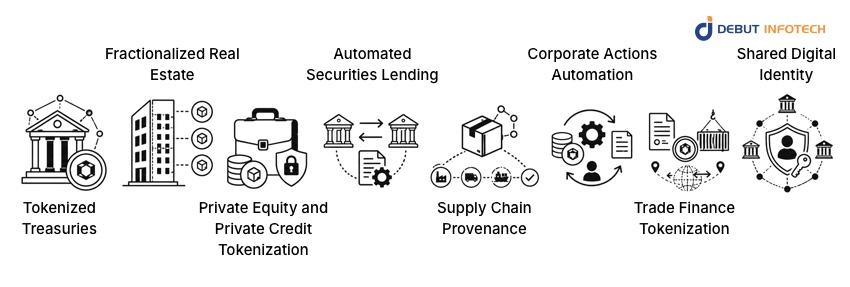
Blockchain asset management has evolved beyond pilot projects. Financial institutions, investment firms, asset managers, governments, and multinational enterprises are deploying blockchain to modernize capital markets, improve operational efficiency, and unlock new investment opportunities.
While implementation varies by industry, the underlying objective remains the same: create more transparent, efficient, and programmable asset ecosystems. Here are some blockchain asset management use cases:
Government securities have become one of the fastest-growing categories of tokenized real-world assets. Instead of holding treasury funds exclusively through conventional infrastructure, institutions increasingly issue blockchain-based representations that allow qualified investors to subscribe, redeem, and transfer ownership more efficiently.
A well-known example is BlackRock’s BUIDL fund, which tokenizes exposure to U.S. Treasury assets while maintaining institutional-grade governance and custody. Similar initiatives from Franklin Templeton and other asset managers demonstrate growing confidence in blockchain-based fund administration.
Tokenized treasuries improve operational efficiency while providing investors with faster settlement, transparent ownership records, and continuous portfolio visibility.
Commercial real estate has traditionally required significant capital commitments and lengthy transaction processes. Real world asset tokenization allows property ownership to be divided into smaller digital units that represent proportional ownership interests.
Asset managers can raise capital from a broader pool of qualified investors while simplifying ownership administration. Investors gain exposure to premium real estate without purchasing an entire building or participating in complex ownership structures.
Fractional ownership also creates opportunities for secondary trading, improving liquidity in a market that has historically been difficult to enter and exit.
Private market investments typically involve long holding periods and limited exit opportunities. Investors often wait years before realizing returns because secondary markets remain relatively illiquid.
Blockchain enables ownership interests in private equity and private credit funds to be represented digitally. Subject to applicable regulations and transfer restrictions, tokenization can support more efficient secondary transactions between approved investors.
Increased liquidity benefits both fund managers and investors by creating additional flexibility while maintaining regulatory oversight.
Securities lending requires careful management of collateral, loan terms, repayments, and counterparty obligations. Many of these processes still depend on manual reconciliation between participating institutions.
Smart contracts automate collateral management by monitoring predefined conditions and executing transactions when contractual requirements are satisfied. This reduces administrative overhead and improves operational consistency.
Automation also enhances transparency because every lending transaction, collateral adjustment, and repayment event is recorded on a shared ledger that authorized participants can verify.
Blockchain asset management for supply chain extends beyond financial securities. Organizations increasingly tokenize commodities and asset-backed goods to improve supply chain visibility and establish verifiable ownership records.
Commodity producers, logistics providers, and distributors can record product origin, transportation milestones, quality inspections, and ownership transfers on blockchain. This creates a transparent history that supports product authenticity and regulatory compliance.
For industries like mining, agriculture, and energy, stronger provenance reduces fraud while improving confidence among buyers, investors, and regulators.
Corporate actions such as dividend distributions, coupon payments, shareholder voting, stock splits, and redemptions often require coordination between multiple intermediaries.
Smart contracts automate these activities using predefined rules. Once triggering conditions are satisfied, payments or ownership updates can be executed without extensive manual processing.
Automation reduces administrative costs while improving accuracy and ensuring investors receive timely distributions according to established governance rules.
Trade finance frequently involves invoices, letters of credit, receivables, and shipping documentation exchanged across several organizations operating in different jurisdictions.
Tokenizing these financial assets enables participating institutions to transfer ownership more efficiently while maintaining transparent records of payment obligations and supporting documentation.
Shorter settlement times and improved visibility help businesses access working capital faster while reducing documentation errors and administrative delays.
Financial institutions routinely repeat investor identity verification because each organization maintains separate onboarding processes. This increases operational costs and delays customer access to financial products.
Blockchain-based digital identity frameworks allow verified credentials to be securely reused across participating institutions, subject to regulatory approval and governance requirements.
Shared identity reduces redundant KYC procedures, accelerates onboarding, and improves customer experience without weakening compliance standards.
Table: Enterprise Blockchain Asset Management Use Cases
| Use Case | Primary Benefit | Typical Users |
| Tokenized treasuries | Faster settlement and transparency | Asset managers, banks |
| Fractional real estate | Improved liquidity | Real estate firms, investors |
| Private equity tokenization | Secondary market access | Fund managers |
| Securities lending | Automated collateral management | Investment banks |
| Supply chain provenance | Asset traceability | Manufacturers, commodity firms |
| Corporate actions | Automated distributions | Public companies |
| Trade finance | Faster cross-border transactions | Banks, exporters |
| Shared digital identity | Simplified KYC | Financial institutions |
Traditional asset management depends on multiple intermediaries, separate record-keeping systems, and manual operational processes.
Blockchain asset management replaces much of this complexity with a shared ledger, programmable smart contracts, and automated compliance controls.
While both models aim to protect assets and facilitate investment, blockchain improves efficiency, transparency, and scalability across the blockchain asset management lifecycle.
Blockchain should not be viewed as a complete replacement for existing financial infrastructure. Many organizations adopt hybrid operating models where blockchain integrates with custody platforms, portfolio management systems, and regulatory reporting tools. This approach allows enterprises to modernize operations while preserving established governance processes.
Table: Blockchain Asset Management vs. Traditional Asset Management
| Feature | Traditional Asset Management | Blockchain Asset Management |
| Settlement Speed | T+2 or T+3 settlement cycles | Near real-time settlement |
| Record-Keeping | Multiple independent databases | Shared distributed ledger |
| Ownership Verification | Manual reconciliation | Cryptographically verified records |
| Liquidity | High minimum investment thresholds | Fractional ownership through tokenization |
| Compliance | Repeated manual KYC and AML checks | Compliance rules embedded in smart contracts |
| Transparency | Periodic reporting | Continuous access to transaction history |
| Audit Trail | Compiled after transactions occur | Immutable, timestamped ledger |
| Cross-Border Transactions | Multiple intermediaries and settlement delays | Streamlined digital transfers |
| Operational Costs | Higher due to reconciliation and administration | Lower through automation |
| Scalability | Limited by manual workflows | Supports higher transaction volumes through automation |
The most significant difference lies in how information is managed. Traditional systems require every participant to maintain separate records and reconcile them after transactions.
Blockchain enables participants to operate from the same trusted dataset, reducing delays and improving operational consistency without compromising governance.
Modern blockchain asset management platforms combine several technologies to create secure, compliant, and scalable digital asset ecosystems.
Blockchain provides the core infrastructure, while complementary technologies such as zero-knowledge proofs, AI analytics, oracle networks, interoperability protocols, and cloud services extend the platform’s capabilities for enterprise use.
The blockchain platform forms the foundation of every asset management solution. Choosing the right infrastructure depends on regulatory requirements, transaction volume, privacy expectations, interoperability needs, and governance preferences.
Public blockchains such as Ethereum provide strong security, extensive developer ecosystems, and mature token standards. Solana offers high throughput and low transaction costs, making it attractive for applications requiring frequent asset transfers.
Permissioned platforms such as Hyperledger Fabric and R3 Corda are designed for enterprise collaboration. They provide controlled network participation, stronger privacy controls, and governance models that align with regulated financial institutions.
Table: Choosing the Right Blockchain Platform
| Platform | Best For | Key Strength |
| Ethereum | Tokenized securities, RWAs | Mature ecosystem and security |
| Solana | High-volume transactions | Speed and low fees |
| Hyperledger Fabric | Enterprise asset management | Permissioned governance |
| R3 Corda | Banking and financial services | Privacy-focused architecture |
Financial institutions often need to prove regulatory compliance without exposing confidential customer information. Traditional verification methods usually require organizations to disclose more information than necessary.
Zero-knowledge proofs (ZKPs) allow one party to prove that specific conditions have been satisfied without revealing the underlying data. For example, an investor can demonstrate eligibility to purchase a regulated blockchain asset security without exposing sensitive personal information.
This technology strengthens privacy while helping organizations comply with data protection regulations.
Blockchain generates enormous volumes of transaction data. AI and machine learning help organizations transform this information into actionable insights by identifying patterns that would be difficult to detect manually.
Asset managers use AI to monitor portfolio risk, identify suspicious transactions, forecast liquidity needs, and detect operational anomalies. Machine learning models continuously improve as additional blockchain data becomes available.
Combining blockchain with AI enables organizations to move from reactive reporting toward proactive decision-making supported by real-time analytics.
Enterprises increasingly manage digital assets across multiple blockchain networks. Without interoperability, assets remain confined to individual ecosystems, reducing flexibility and limiting collaboration.
Technologies such as Chainlink CCIP and LayerZero enable secure communication between different blockchain networks. These protocols allow tokenized assets, messages, and transaction instructions to move across supported chains while preserving security and data integrity.
Cross-chain connectivity reduces vendor lock-in and gives organizations greater flexibility when expanding digital asset strategies across different blockchain environments.
Building blockchain infrastructure from scratch requires significant investment in networking, security, governance, and ongoing maintenance. Blockchain-as-a-Service platforms reduce this complexity by providing managed infrastructure through cloud providers.
Services such as AWS Managed Blockchain and Microsoft Azure allow organizations to deploy blockchain networks more quickly while benefiting from enterprise-grade monitoring, scalability, and operational support.
BaaS is particularly attractive for enterprises that want to accelerate deployment without maintaining every component of the underlying infrastructure themselves.
Blockchain platforms rarely replace existing enterprise systems entirely. Instead, they exchange data with portfolio management software, ERP platforms, payment systems, customer databases, custody platforms, and regulatory reporting solutions.
APIs and middleware provide standardized communication between blockchain applications and legacy infrastructure. This allows organizations to modernize gradually rather than rebuilding their technology stack from the ground up.
Well-designed integration layers reduce implementation risk while ensuring blockchain becomes part of a broader digital transformation strategy instead of operating as an isolated system.
Table: Technologies Supporting Blockchain Asset Management
| Technology | Primary Purpose | Enterprise Benefit |
| Ethereum, Solana, Hyperledger, Corda | Blockchain infrastructure | Secure digital asset management |
| Zero-Knowledge Proofs | Privacy-preserving verification | Stronger compliance and confidentiality |
| AI and Machine Learning | Analytics and risk monitoring | Smarter operational decisions |
| Cross-Chain Protocols | Multi-network communication | Greater interoperability |
| Blockchain-as-a-Service | Managed blockchain infrastructure | Faster deployment |
| APIs and Middleware | Enterprise integration | Seamless connectivity with existing systems |
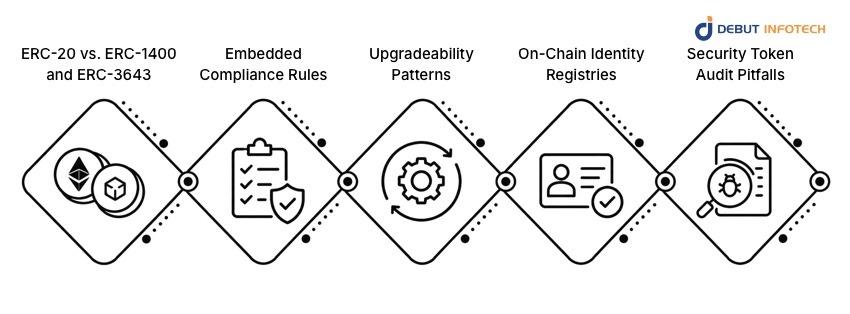
Token standards define how digital assets behave on a blockchain, while smart contract architecture determines how those assets enforce ownership, compliance, governance, and transfer rules.
Selecting the appropriate standard is critical because regulatory requirements differ significantly between payment tokens, utility tokens, and tokenized securities.
ERC-20 remains the most widely used token standard for fungible digital assets. It supports basic functions such as transferring tokens, checking balances, and approving transactions. However, it was not designed specifically for regulated financial products.
Security token standards such as ERC-1400 and ERC-3643 introduce additional functionality tailored to institutional asset management. These standards support investor verification, transfer restrictions, partitioned ownership, document management, and compliance controls required for regulated securities.
Organizations issuing tokenized equities, bonds, private funds, or real estate typically benefit from security token standards because they align more closely with regulatory expectations.
One of blockchain’s greatest advantages is the ability to embed compliance directly into digital assets. Rather than relying solely on manual reviews, smart contracts automatically evaluate whether transactions satisfy predefined regulatory conditions.
Examples include:
Automated compliance reduces operational complexity while improving consistency across every transaction.
Financial regulations continue to evolve. Smart contracts therefore require mechanisms that allow organizations to update business logic without disrupting existing assets or investor ownership records.
Proxy contract architectures separate application logic from stored data. This design allows authorized administrators to upgrade contract functionality while preserving asset balances and transaction history.
Proper governance remains essential. Every upgrade should follow clearly defined approval processes, security reviews, and independent audits to prevent unauthorized modifications.
Regulated assets cannot usually be transferred freely between anonymous participants. Organizations must verify who owns assets and whether transfers satisfy applicable legal requirements.
On-chain identity registries maintain verified investor credentials that smart contracts reference before approving transactions. Instead of performing identity verification repeatedly, authorized participants can reuse validated credentials across supported applications.
This approach accelerates onboarding while strengthening compliance and reducing administrative workloads.
Security token smart contracts introduce greater complexity than standard ERC-20 tokens because they incorporate compliance rules, governance mechanisms, and permission controls.
Common audit issues include:
Comprehensive smart contract audits should evaluate both technical security and regulatory functionality. A contract that executes correctly from a programming perspective may still fail to satisfy legal or compliance requirements.
Table: Token Standards Comparison
| Token Standard | Typical Use Case | Compliance Support |
| ERC-20 | Fungible utility or payment tokens | Limited |
| ERC-1400 | Regulated security tokens | High |
| ERC-3643 | Institutional tokenized assets | High with identity integration |
Blockchain records transactions securely, but it cannot verify external information on its own. Asset prices, net asset values (NAV), reserve balances, interest rates, and legal ownership records all exist outside the blockchain. Oracle networks and proof-of-reserve mechanisms bridge this gap by supplying verified off-chain data that smart contracts can trust and act upon.
Blockchains are intentionally isolated from external systems to preserve security and consensus. While this design protects the integrity of the ledger, it also means blockchain applications cannot independently determine whether an asset’s market value has changed, whether a reserve account remains fully funded, or whether a property valuation has been updated.
For blockchain asset management for enterprises, this limitation presents a significant challenge. Tokenized assets derive their value from real-world assets whose prices fluctuate continuously. Without reliable external data, smart contracts cannot accurately calculate portfolio values, process subscriptions and redemptions, or trigger corporate actions.
Closing the off-chain data gap is essential for institutional adoption. Organizations need confidence that the information driving automated decisions reflects current market conditions and verified asset records.
Oracle networks securely deliver external information to blockchain applications. Rather than relying on a single data provider, institutional-grade oracle solutions aggregate information from multiple trusted sources before transmitting it on-chain.
Oracle feeds commonly provide:
Consider a tokenized bond fund. Before processing investor subscriptions, the smart contract needs the latest NAV. Oracle networks automatically retrieve verified pricing information and make it available on-chain, allowing transactions to execute using current valuations instead of outdated estimates.
Tokenized assets should accurately represent the underlying assets they claim to mirror. Proof of Reserve (PoR) provides cryptographic or independently verified evidence that sufficient reserves exist to back issued tokens.
Depending on the asset class, reserve verification may involve:
Regular reserve verification strengthens investor confidence by demonstrating that issued tokens remain fully supported by underlying assets. It also improves transparency during regulatory reviews and financial audits.
Oracle networks become part of the blockchain application’s trust model. If incorrect information reaches a smart contract, automated decisions based on that information may also become incorrect.
Potential risks include:
These risks become particularly important for high-value institutional assets where inaccurate pricing could affect investment decisions, collateral calculations, or regulatory reporting.
Enterprise platforms therefore treat oracle security with the same importance as smart contract security, implementing multiple safeguards to maintain data integrity.
Institutional blockchain platforms rarely depend on a single oracle provider. Instead, they aggregate data from several independent sources and compare results before updating blockchain applications.
Common design practices include:
These safeguards improve reliability while reducing the likelihood that a single faulty data source will influence critical financial operations.
As tokenized assets continue expanding into regulated financial markets, resilient oracle architectures will become an increasingly important component of enterprise blockchain infrastructure.
Table: Oracle and Off-Chain Data Components
| Component | Purpose | Enterprise Value |
| Oracle Network | Deliver verified external data | Accurate smart contract execution |
| NAV Feed | Update portfolio valuations | Correct subscriptions and redemptions |
| Market Price Feed | Reflect current asset prices | Reliable portfolio management |
| Proof of Reserve | Verify asset backing | Investor confidence |
| Multi-Source Validation | Reduce manipulation risk | Higher operational resilience |
Blockchain asset management offers significant operational advantages, but blockchain asset management implementation is not without challenges. Organizations must navigate evolving regulations, integrate with legacy systems, secure digital assets, manage reliable external data, and ensure interoperability across different blockchain networks. Addressing these issues early reduces implementation risk and improves long-term success.
Digital asset regulations continue to evolve across global markets. Although many jurisdictions now recognize tokenized assets, the legal requirements governing issuance, custody, investor eligibility, and reporting still vary considerably.
Organizations operating internationally may need to comply with multiple regulatory frameworks simultaneously. For example, requirements under the European Union’s Markets in Crypto-Assets Regulation (MiCA) differ from guidance issued by the U.S. Securities and Exchange Commission (SEC), the Monetary Authority of Singapore (MAS), and Dubai’s Virtual Assets Regulatory Authority (VARA).
Successful blockchain asset management platforms are designed with regulatory flexibility in mind. Configurable compliance rules and jurisdiction-specific governance models make it easier to adapt as regulations evolve.
Most financial institutions have invested heavily in core banking systems, portfolio management platforms, custody infrastructure, customer relationship management software, and regulatory reporting tools. Replacing these systems entirely is rarely practical.
Blockchain solutions must therefore integrate with existing technology rather than operate independently. This requires well-designed APIs, middleware, and data synchronization processes that allow information to flow securely between legacy infrastructure and blockchain applications.
Organizations that plan integration early experience smoother deployments and avoid creating isolated blockchain environments that duplicate existing operational processes.
Blockchain can guarantee the integrity of information recorded on-chain, but it cannot guarantee that external data is correct before it enters the network. Asset prices, NAV calculations, reserve balances, and property valuations all originate from off-chain sources.
If these inputs are inaccurate or delayed, smart contracts may execute transactions using incorrect information. This creates financial, operational, and regulatory risks.
High-quality oracle networks, independent data validation, and redundant information sources reduce these risks while improving confidence in automated decision-making.
Digital assets ultimately depend on cryptographic keys. If private keys are lost, stolen, or compromised, organizations may lose access to valuable assets regardless of how secure the blockchain itself remains.
Institutional custody therefore extends beyond simple wallet management. Enterprise-grade platforms typically combine Hardware Security Modules (HSMs), Multi-Party Computation (MPC), role-based access controls, disaster recovery procedures, and governance policies to protect digital assets.
Strong custody architecture is no longer optional. It has become a baseline requirement for institutional blockchain adoption, particularly for organizations managing regulated financial assets.
Many blockchain ecosystems continue to operate independently. Assets issued on one network may not communicate seamlessly with applications running on another.
This fragmentation can limit liquidity, complicate cross-platform asset transfers, and increase integration costs for enterprises managing assets across multiple blockchain environments.
Interoperability standards and cross-chain communication protocols are gradually addressing these challenges. Organizations should nevertheless evaluate interoperability capabilities carefully when selecting blockchain platforms for long-term deployment.
Table: Blockchain Asset Management Challenges
| Challenge | Business Impact | Mitigation Strategy |
| Regulatory fragmentation | Compliance complexity | Configurable governance and legal review |
| Legacy integration | Slower implementation | APIs and middleware |
| Off-chain data reliability | Incorrect automated decisions | Multi-source oracle architecture |
| Custody risk | Potential asset loss | MPC, HSM, multi-signature controls |
| Interoperability | Limited ecosystem connectivity | Cross-chain protocols and open standards |
Choosing the right blockchain asset management platform requires balancing regulatory requirements, operational needs, security expectations, and long-term scalability.
The most suitable solution is not necessarily the one with the largest feature set, but the one that aligns with your organization’s assets, compliance obligations, and technology ecosystem.
Start by confirming that the platform supports the regulatory framework governing your assets. Token standards, investor controls, reporting capabilities, and governance features should align with the jurisdictions in which your organization operates.
Evaluate how digital assets are protected. Look for enterprise-grade capabilities such as Hardware Security Modules, Multi-Party Computation, multi-signature approvals, key recovery processes, and role-based access controls.
Determine whether the platform supports trusted oracle providers capable of delivering NAV data, market prices, proof-of-reserve information, and other external data your assets require.
A modern asset management platform should integrate with existing enterprise applications while supporting future expansion across multiple blockchain networks. Open APIs and cross-chain compatibility reduce long-term migration risks.
Assess the provider’s experience with regulated blockchain deployments. Independent security audits, successful enterprise implementations, and long-term support capabilities are strong indicators that the platform can meet institutional requirements.
Vendor Evaluation Checklist
| Evaluation Area | Key Questions |
| Compliance | Does it support applicable regulations and token standards? |
| Security | Does it offer MPC, HSM, audits, and governance controls? |
| Integration | Can it connect to existing enterprise systems? |
| Oracle Support | Does it integrate with trusted data providers? |
| Scalability | Can it support future growth and new asset classes? |
| Vendor Experience | Has the provider delivered comparable enterprise projects? |
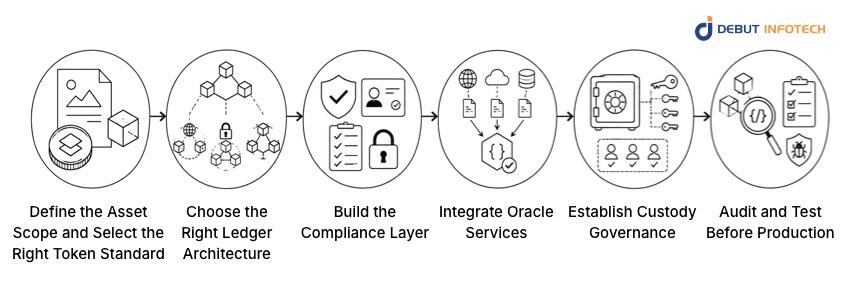
Developing a blockchain asset management solution requires more than selecting a blockchain platform.
Organizations need a well-defined strategy covering asset classification, regulatory compliance, system architecture, security, integrations, and governance.
A structured blockchain asset management platform development process reduces implementation risk and helps ensure the platform can scale as business requirements evolve.
The first step is determining which assets will be managed on the platform. Different asset classes have different legal, operational, and technical requirements. A tokenized government bond requires a different framework from tokenized real estate or private equity.
Once the asset class is defined, select a token standard that aligns with regulatory obligations and business objectives. ERC-20 may be sufficient for simple fungible assets, while regulated financial instruments often require standards such as ERC-1400 or ERC-3643 that support identity verification, transfer restrictions, and compliance controls.
Establishing the correct legal and technical foundation early prevents costly redesigns later in the project.
The blockchain architecture should reflect the organization’s operational and regulatory needs. Public blockchains offer transparency and broad ecosystem support, while permissioned networks provide greater privacy and governance. Hybrid models combine the strengths of both approaches.
Key considerations include:
Selecting the appropriate architecture at the outset creates a stable foundation for future expansion and interoperability.
Compliance should be embedded into the platform rather than treated as a separate operational process. Smart contracts can enforce business rules before transactions are executed, reducing manual intervention and improving consistency.
A robust compliance blockchain asset management framework typically includes:
Integrating these controls directly into smart contracts enables organizations to maintain regulatory standards while improving operational efficiency.
Most enterprise assets depend on reliable external information. Oracle integrations provide the pricing, valuation, reserve, and market data required for smart contracts to operate accurately.
During development, teams should determine:
Reliable oracle architecture is particularly important for regulated financial products where inaccurate data could affect pricing, investor reporting, or automated settlements.
Custody is one of the most critical aspects of decentralized asset management. Even the most secure blockchain cannot protect assets if private keys are poorly managed.
Before deployment, organizations should establish governance covering:
Strong custody governance protects digital assets while satisfying institutional security expectations and regulatory requirements.
Comprehensive testing is essential before launching any blockchain asset management platform. Functional testing alone is not sufficient. Security, performance, compliance, and integration testing should all be completed before production deployment.
A complete validation programme typically includes:
Independent security audits provide additional assurance that contracts behave as intended and reduce the likelihood of vulnerabilities reaching production environments.
Table: Blockchain Asset Management Development Roadmap
| Phase | Primary Objective | Deliverables |
| Asset Definition | Identify assets and regulations | Asset model, token standard |
| Architecture Design | Select blockchain infrastructure | Network architecture |
| Compliance Development | Automate regulatory controls | Smart contract compliance layer |
| Oracle Integration | Connect external data | Price feeds, NAV, reserve verification |
| Custody Implementation | Secure digital assets | MPC, HSM, governance policies |
| Testing & Audit | Validate platform readiness | Audit reports, production approval |
Building an enterprise-grade blockchain asset management platform requires expertise across blockchain engineering, cybersecurity, compliance, cloud infrastructure, systems integration, and financial regulations.
Most organizations have strong internal technology teams, but few possess deep experience across all of these specialised areas.
Partnering with an experienced blockchain software development company helps reduce implementation risk while accelerating delivery.
Smart contracts manage valuable assets and automate business-critical processes. Even minor coding errors can introduce operational or security risks.
Experienced blockchain development companies follow secure development practices, conduct internal code reviews, and coordinate independent security audits to identify vulnerabilities before deployment.
Building every component from scratch increases development time and project costs. Established blockchain providers often maintain reusable frameworks for tokenization, digital identity, wallet integration, compliance management, and enterprise APIs.
Leveraging proven components allows organizations to focus on business-specific requirements rather than rebuilding foundational infrastructure.
Compliance requirements vary by jurisdiction and asset class. Development partners with experience across regulated industries can help organizations design platforms that support applicable legal and reporting obligations.
This expertise reduces the likelihood of costly redesigns caused by overlooked regulatory requirements during implementation.
Enterprise blockchain solutions rarely operate in isolation. Integration with custody providers, oracle networks, identity platforms, ERP systems, portfolio management software, and payment infrastructure is essential.
Blockchain asset management software development companies with established integration experience can streamline implementation while reducing technical complexity.
Launching the platform is only the beginning. Blockchain networks, regulations, security standards, and enterprise requirements continue to evolve.
Long-term support typically includes:
Ongoing maintenance helps ensure the platform remains secure, compliant, and aligned with changing business needs.
Blockchain asset management is entering a new phase of institutional adoption. The focus is shifting from pilot programmes to production-scale platforms that support regulated financial products, tokenized real-world assets, and enterprise-grade digital infrastructure.
Several emerging trends are expected to shape the next generation of asset management solutions.
Tokenized government securities have become one of the fastest-growing segments of the real-world asset market. Asset managers are increasingly using blockchain to issue and manage treasury-backed investment products because they combine relatively low risk with improved operational efficiency.
As institutional confidence grows, tokenized treasuries are likely to become a standard gateway for broader blockchain adoption across traditional financial markets.
Governments and financial regulators continue to develop more comprehensive frameworks for digital assets. As regulations mature, financial institutions will have greater certainty around issuance, custody, reporting, and investor protection.
Greater legal clarity should encourage wider institutional participation while promoting higher standards across the blockchain ecosystem.
The future of blockchain asset management will involve multiple interconnected blockchain networks rather than isolated ecosystems.
Standardised interoperability protocols will allow assets to move securely across public and permissioned networks, enabling broader market participation and reducing operational fragmentation.
Decentralised finance is gradually expanding beyond digital-native assets. Tokenized bonds, treasury funds, private credit, and real estate are increasingly being explored as collateral within regulated financial applications.
As governance and compliance frameworks mature, enterprises may benefit from new liquidity opportunities while maintaining appropriate risk controls.
Institutional investors increasingly expect enterprise-grade custody as a baseline capability rather than a competitive differentiator.
Technologies such as MPC, HSMs, hardware-backed wallets, and advanced governance controls are becoming standard components of digital asset infrastructure.
Artificial intelligence will play an increasingly important role in analysing blockchain transaction data. Advanced analytics platforms can monitor portfolios continuously, identify unusual activity, detect emerging risks, and support predictive decision-making.
Combining AI with blockchain enables organisations to move beyond historical reporting towards continuous, data-driven portfolio management and risk oversight.
Table: Future Trends Shaping Blockchain Asset Management
| Trend | Expected Impact |
| Growth of tokenized treasuries | Increased institutional participation |
| Regulatory maturity | Greater legal certainty and compliance |
| Cross-chain interoperability | Improved ecosystem connectivity |
| DeFi and RWA convergence | Expanded liquidity opportunities |
| Institutional custody | Stronger security and governance |
| AI-powered analytics | Smarter portfolio and risk management |
Blockchain asset management is reshaping how organisations manage ownership, settlement, compliance, and reporting across both financial and physical assets. By combining distributed ledgers, smart contracts, tokenization, and trusted external data, enterprises can reduce operational inefficiencies, improve transparency, and unlock new sources of liquidity without compromising governance.
Successful implementation depends on more than adopting blockchain technology. Organizations need the right token standards, secure custody architecture, reliable oracle integrations, interoperable infrastructure, and a compliance framework that aligns with applicable regulations. When these elements work together, blockchain becomes a practical foundation for modern asset management rather than a standalone technology initiative.
Whether you’re tokenizing investment funds, digitizing real estate, modernizing trade finance, or building enterprise asset platforms, partnering with an experienced blockchain development company can significantly reduce implementation risk.
Debut Infotech helps enterprises design, develop, and deploy secure blockchain asset management solutions tailored to regulated industries. From tokenization and smart contract development to custody integration, interoperability, and long-term platform support, our team delivers scalable solutions that help organizations modernize asset management with confidence.
Blockchain manages assets by recording ownership, transfers, and transaction history on a shared digital ledger. Every update is time-stamped and visible to authorized participants, making records easier to track and verify. It also supports tokenization, which simplifies buying, selling, and transferring physical or digital assets.
Blockchain secures digital assets through encryption, decentralized data storage, and immutable transaction records. Once information is added, it cannot be changed without network agreement. This reduces fraud, prevents unauthorized tampering, and gives businesses a transparent record of every asset transaction and ownership change.
Enterprises are adopting blockchain asset management to improve operational efficiency and strengthen trust in asset records.
It helps automate workflows, reduces manual reconciliation, and provides real-time visibility across complex asset portfolios. These benefits make it easier to manage assets securely at scale.
Enterprises are adopting blockchain asset management to improve operational efficiency and strengthen trust in asset records.
It helps automate workflows, reduces manual reconciliation, and provides real-time visibility across complex asset portfolios. These benefits make it easier to manage assets securely at scale.
Blockchain asset management is used across finance, real estate, healthcare, manufacturing, logistics, energy, and supply chain operations. These industries rely on it to track ownership, manage high-value assets, reduce fraud, improve transparency, and streamline transactions involving physical and digital assets.
Smart contracts automate asset management by executing predefined rules without manual intervention. They can approve transfers, release payments, verify ownership, and enforce agreements automatically when conditions are met. This reduces delays, lowers administrative costs, and minimizes the risk of human error.
Our Latest Insights
USA
2501 Chatham, Rd Suite R Springfield, IL 62704
+1-708-515-4004
info@debutinfotech.com
UK
7 Pound Close, Yarnton, Oxfordshire, OX51QG
+44-770-304-0079
info@debutinfotech.com
Canada
154 Eden Oak Trail, Kitchener, ON N2A 0H9
+1-708-515-4004
info@debutinfotech.com
INDIA
Sector 101-A, Plot No: I-42, IT City Rd, JLPL Industrial Area, Mohali, PB 140306
9888402396
info@debutinfotech.com