ON THIS PAGE
Progress0%






Our Global Presence :





Film tokens are becoming a new financial and structural layer in the global film ecosystem. Blockchain-based models are providing filmmakers and investors with new methods to collect funds, track ownership, and share profits as they seek ways to avoid centralized finance and distribution. These developments are more than just technical improvements; they represent a broader transformation in how creative ventures are funded, managed, and presented to audiences.
In the traditional film industry, funding and distribution are often controlled by a small number of studios, financiers, and intermediaries. This concentration limits access, slows cross-border investment, and leaves many creators underfunded or excluded. Tokenization in film introduces programmable ownership, transparent revenue sharing, and global participation, creating a foundation that could reshape the future for filmmaking.
For decades, film financing has followed a familiar structure. Production companies pitch projects to studios, private investors, or distributors. Funding decisions are centralized, negotiations are opaque, and creative control often shifts away from filmmakers once financing is secured.
Distribution follows a similar pattern. Films are distributed through tightly controlled channels, including theatrical releases, licensing agreements, and streaming deals. Revenue reporting is delayed, contracts are complex, and profit participation is often unclear to contributors.
While this model has produced global successes, it has also created inefficiencies. Capital access is limited, and smaller creators struggle to compete; international investors face barriers due to geography and regulation. These limitations set the stage for tokenization in film.
The film industry is undergoing a structural transition as blockchain introduces new ways to finance, manage, and distribute creative projects. Film tokens sit at the center of this shift, connecting real-world filmmaking with programmable digital ownership and participation models.
Film tokens are blockchain-based digital assets that represent financial or participatory rights tied to a film project. These rights may include revenue sharing, ownership stakes, access privileges, or governance participation, depending on the token’s structure.
Unlike speculative crypto assets, film tokens are linked to real-world creative output. Their value connects to production milestones, distribution performance, and audience engagement, making them practical tools rather than purely financial instruments.
By digitizing film-related rights, tokenization creates a programmable framework where funding, ownership, and distribution rules are enforced automatically through smart contracts.
Tokenization in film is not about replacing creativity with technology; it’s about enhancing it. It is about redesigning the financial infrastructure that supports the filmmaking industry. Tokenization enables fractional participation, transparent accounting, and automated execution across the film lifecycle.
This structure enables creators to raise capital directly from their supporters while maintaining creative control. Investors gain clearer visibility into how funds are used and how returns are distributed, reducing long-standing imbalances in the traditional film industry.
The creation and distribution of film tokens play a major role in their long-term success. Crypto distribution models define who participates, how value flows, and how incentives remain aligned throughout a project’s lifecycle.
Crypto distribution models outline the process by which film tokens are created, allocated, circulated, and ultimately retired. These models determine who receives tokens, under what conditions, and how value flows through the ecosystem over time.
Common approaches include early supporter allocations, public token sales, contributor incentives, and reserve pools for future growth. Each serves a different strategic purpose depending on funding needs and audience engagement goals.
Well-designed distribution models prioritize fairness, sustainability, and long-term alignment between filmmakers, investors, and communities.
Token minting is the process of creating film tokens on a blockchain. It establishes total supply and lays the foundation for the token lifecycle. Early decisions made at this stage directly affect scarcity, valuation, and long-term stability.
Early allocations often reward creators, early backers, and development contributors. Public participation may follow through broader sales. Clear allocation strategies reduce confusion and build trust, especially when tokens are tied to creative projects.
Tokenized funding models offer alternatives to traditional film financing by enabling direct participation from global supporters. These approaches reshape how capital is raised while preserving creative independence and transparency.
ICO development has evolved beyond early speculative use cases. In film token ecosystems, ICO-style mechanisms are used to raise funds for production and marketing while distributing tokens to supporters.
This approach enables global participation without relying on institutional gatekeepers. However, it requires careful structuring to align with legal and regulatory frameworks and to protect both creators and investors.
When implemented responsibly, ICO-based funding can support independent films that might otherwise struggle to secure financing.
Security tokens represent regulated financial interests such as equity or revenue shares. In film tokenization, they are often used to formalize ownership and profit participation.
While security tokens involve stricter compliance requirements, they offer stronger legal clarity and enforceable rights. Balancing regulatory compliance with creative flexibility remains a key challenge in this area.
Technology underpins every film token ecosystem. Smart contracts and decentralized applications provide the automation, transparency, and usability required to manage funding, ownership, and engagement at scale.
Smart contract development is central to film token ecosystems. Smart contracts automate processes such as fund release, revenue distribution, and enforcement of rights.
Once deployed, these contracts execute predefined rules without manual intervention. This reduces disputes, administrative delays, and overhead while ensuring transparent payouts tied to agreed criteria.
Decentralized applications act as the interface between users and blockchain systems. In film token projects, dApps may manage investor dashboards, governance voting, content access, or royalty tracking.
These applications improve usability and make tokenized platforms accessible to non-technical users. As user experience improves, dApps will play an increasingly important role in adoption.
The token lifecycle includes minting, circulation, utility usage, and eventual retirement. Managing this lifecycle carefully is essential for maintaining trust and long-term value.
Some projects design utility-based lifecycles where token functionality changes as the film progresses from production to distribution. Clear lifecycle planning prevents oversupply and misaligned expectations.
Token burning permanently removes tokens from circulation. In film ecosystems, burning may occur after revenue milestones or project completion.
When planned responsibly, token burning can stabilize value and reward long-term participation. Poorly planned burning mechanisms, however, can create confusion or unintended market effects.
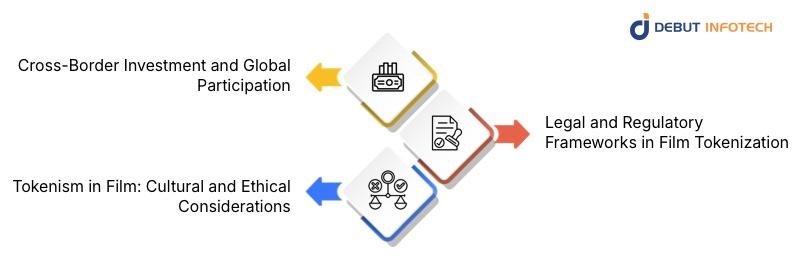
While tokenization enables global participation, it also introduces regulatory and ethical responsibilities. Sustainable film token ecosystems strike a balance between accessibility, compliance, and cultural sensitivity.
Film tokens facilitate cross-border investment by allowing participation without the need for traditional banking intermediaries. Investors from various regions can directly support projects through blockchain networks.
This global access expands funding opportunities and diversifies audience engagement, a challenge that has long been a hurdle in traditional film financing.
Legal and regulatory frameworks influence the structure and distribution of film tokens. Requirements vary by jurisdiction and depend on whether tokens are classified as utility or security assets.
Compliance considerations include investor eligibility, disclosure obligations, and taxation. Successful projects integrate regulatory planning from the outset rather than treating it as an afterthought.
Tokenism in film has both cultural and financial dimensions. Tokenization should not become a superficial trend that excludes creators or audiences lacking technical access.
Ethical implementation prioritizes inclusivity, transparency, and creative integrity. Responsible models empower filmmakers instead of recreating centralized control under a new label.
Related Read: What are the Types of Tokens in Blockchain
Successful film token initiatives depend on strong technical execution and ongoing support. Development frameworks, tooling, and experienced teams play a critical role in turning token concepts into reliable platforms.
White label asset tokenization enables film producers to launch token platforms without having to build infrastructure from scratch. These solutions offer ready-made frameworks for issuance, compliance, and management.
They reduce development time and technical risk while allowing branding and customization, making them a practical entry point for many creators.
Token development services cover design, creation, and deployment, including standards such as ERC20 token development and BEP20 token models. Technical decisions have a direct impact on scalability, interoperability, and security.
Working with experienced token development companies reduces execution risk and ensures long-term reliability.
When projects choose to hire token developers, they must evaluate both technical expertise and industry understanding. Film token initiatives require a sensitivity to creative workflows alongside proficiency in blockchain.
Strong communication and transparency are essential for successful collaboration and long-term support.
As the film token ecosystem evolves, market maturity is becoming a critical differentiator. Early interest in film tokens was often driven by novelty and short-term opportunity, but long-term success now depends on sustainability, governance, and real-world execution. Understanding how value is created and preserved over time helps both creators and investors navigate this emerging space more responsibly.
Discussions about the best film tokens are increasingly extending beyond surface-level performance. Mature projects prioritize long-term value creation, transparent economics, and realistic growth expectations rather than short-lived hype. As industry standards and best practices continue to develop, it becomes easier to distinguish meaningful, well-structured initiatives from experimental or promotional efforts that lack durability.
At the same time, interest in film tokens for investment continues to grow, bringing greater attention to the associated investment risk. Tokenized film projects involve creative uncertainty, financial exposure, and operational execution challenges. Careful evaluation of token structure, governance mechanisms, lifecycle planning, and regulatory alignment is essential before participating. Informed and cautious engagement supports healthier ecosystems and contributes to the gradual maturation of tokenized filmmaking markets.
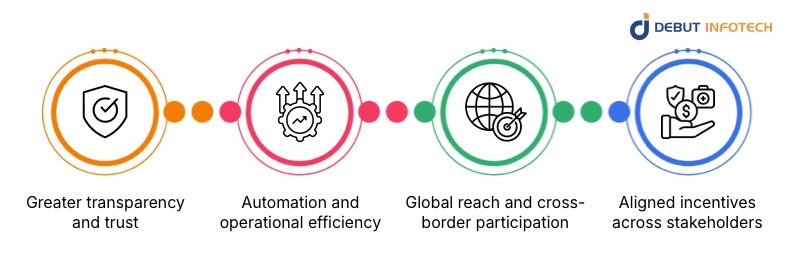
Tokenized film distribution introduces structural advantages that enhance the financing, management, and distribution of films to audiences.
Well-designed tokenized distribution models prioritize sustainability, focusing on long-term growth rather than short-term speculation.
While film tokenization offers clear benefits, its adoption comes with important challenges that must be addressed thoughtfully.
Adoption of film tokenization will be gradual. Sustainable growth relies on collaboration, responsible design, and the continuous refinement of both technology and governance models.
Also Read: Token Development Cost Breakdown: Easy Guide
The future for filmmaking will likely involve a blend of traditional and tokenized models. Tokenization does not eliminate studios or distributors but introduces alternatives that increase flexibility.
As tools mature, tokenization may become a standard option for independent and mid-scale productions. This evolution supports diversity, innovation, and global participation.
Technology becomes an enabler rather than a replacement for creativity.
At Debut Infotech, we approach film tokenization as a strategic infrastructure challenge, not a trend-driven experiment. We design secure, compliant token systems that align with creative and financial goals.
Our expertise spans smart contract development, crypto token development services, and white label asset tokenization. We help creators and platforms build sustainable ecosystems rather than short-lived campaigns.
By combining technical depth with industry understanding, we support responsible innovation in film finance.
Film tokens and crypto distribution models represent a meaningful evolution in how creative projects are financed and distributed. By combining tokenization, smart contracts, and decentralized infrastructure, filmmakers gain new tools to access capital, engage audiences, and retain creative control. These models address long-standing limitations of the traditional film industry while opening pathways for global participation.
At Debut Infotech, we see film tokenization as part of a broader shift toward transparent, programmable finance. As legal frameworks mature and technical standards improve, tokenized film ecosystems will become more reliable and accessible. When implemented responsibly, film tokens can support a more inclusive, efficient, and sustainable future for the filmmaking industry.
Film tokens are blockchain-based digital assets linked to film projects. They can represent revenue rights, ownership stakes, access privileges, or governance participation, depending on how the token is structured and distributed.
Crypto distribution models define how film tokens are minted, allocated, circulated, and managed over time. These models determine who receives tokens, how value flows, and how incentives remain aligned throughout the token lifecycle.
In the traditional film industry, funding and distribution are controlled by centralized entities. Tokenization in film allows creators to raise capital directly, automate revenue sharing, and enable global participation through transparent, programmable systems.
Some film tokens may qualify as security tokens if they represent ownership or profit-sharing rights. In such cases, they must comply with applicable legal and regulatory frameworks, which vary by jurisdiction.
Smart contracts automate key processes, including fund allocation, revenue distribution, and governance rules. Through smart contract development, film token projects reduce manual intervention, increasing transparency and trust.
Film tokens carry creative, financial, and execution risks. Investors should evaluate the token lifecycle, distribution model, legal compliance, and project fundamentals before considering the purchase of film tokens.
Experienced token development companies provide token development services, technical architecture, and compliance-aware implementation. Working with the right partner helps ensure secure execution and long-term sustainability.

Our Latest Insights
USA
2501 Chatham, Rd Suite R Springfield, IL 62704
+1-708-515-4004
info@debutinfotech.com
UK
7 Pound Close, Yarnton, Oxfordshire, OX51QG
+44-770-304-0079
info@debutinfotech.com
Canada
154 Eden Oak Trail, Kitchener, ON N2A 0H9
+1-708-515-4004
info@debutinfotech.com
INDIA
Sector 101-A, Plot No: I-42, IT City Rd, JLPL Industrial Area, Mohali, PB 140306
9888402396
info@debutinfotech.com