ON THIS PAGE
Progress0%






Our Global Presence :


Businesses are constantly transforming the way they buy, sell, and invest in real assets thanks to industrial asset tokenization. Organizations can make assets such as real estate, commodities, infrastructure, and machinery more liquid, transparent, and accessible by turning them into digital tokens on blockchain networks. Tokenizing real-world assets enables businesses to demonstrate ownership rights digitally. This enables investing in small amounts, conducting transactions safely, and managing assets more efficiently.
As blockchain technology gets better, more and more industries are looking into how tokenization may help them upgrade their old processes. The businesses that are collaborating with efficient development partners such as Debut Infotech are leveraging the blockchain technology to develop scalable tokenization systems that have the potential to sustain digital asset ecosystems. A number of industries are tokenizing things in 2026 to make things easier, open new avenues of investments and new digital markets.
This article looks at 10 industries benefiting from tokenization. It shows how tokenization of industrial assets is changing traditional markets and opening up new opportunities for firms and investors.
The process of converting physical or financial assets into digital tokens that exist in the blockchain is called industrial asset tokenization. The tokens represent a portion or part of ownership in any entity such as real estate, goods or infrastructure projects.
You may safely store, trade, or move these industrial tokens using blockchain technology. The approach lets companies break up big assets into smaller digital shares that investors can buy and sell simply.
For instance, investors can buy fractional ownership of a commercial property instead of the whole thing using tokenized shares. This method makes it easier for investors to get in and out of the market.
Companies that hire an experienced Asset tokenization development company can develop platforms that enable smart contracts, asset digitization, and blockchain-based asset management systems.
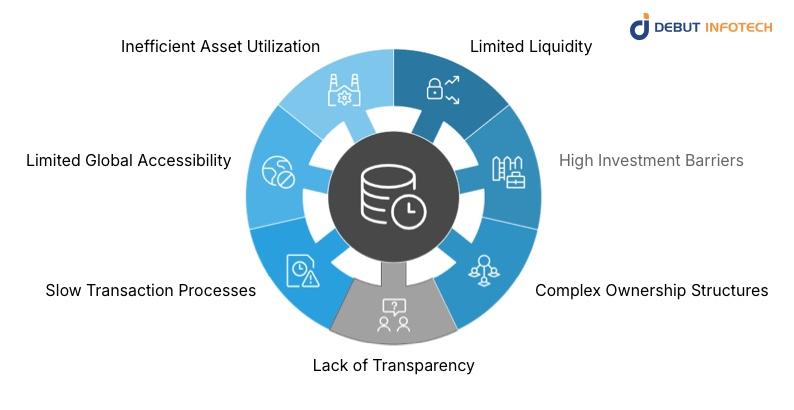
Many sectors had trouble managing, trading, and making money off of physical assets before industrial asset tokenization came around. In the past, traditional asset management systems were generally slow, costly, and only available to a small number of institutional investors. These problems kept firms from getting the most out of their assets and made it harder for more people to participate in the market.
Before tokenization became a useful solution, these were some of the biggest problems that industries had to deal with.
Real estate, infrastructure, and heavy machinery, are just a few examples of industrial assets that are naturally illiquid. In many cases, selling these assets meant giving up full ownership, which may take months or even years,, depending on the market.
Because there wasn’t enough cash flow, investors couldn’t get out of their positions soon. Because of this, a lot of people who may have invested stayed away from these markets because they required long holding periods.
Most of the time, traditional asset markets need a lot of money to invest. For instance, buying commercial real estate, industrial equipment, or infrastructure assets usually costs millions of dollars.
This high cost of entry limited investment options to big companies, institutional investors, and those with a lot of money. These marketplaces weren’t very open to smaller investors.
Industrial assets may have sophisticated ownership structures that involve several parties, legal agreements, and financial middlemen.
To keep track of various ownership structures, a lot of paperwork and legal supervision were needed. This made transactions take longer and cost firms more money to run.
Previously, the tendency of asset management systems was to use centralized recordkeeping that might create issues and make it difficult to view all of them by the stakeholders.
There were cases where investors could not establish who owned a given asset or what transactions transpired and the financial performance. This may lead to arguments, fraud or loss of investor confidence.
Typically, asset transfers needed multiple steps, such as checking the legality, going through banking processes, getting regulatory clearances, and reviewing documents.
These steps made transactions take a long time and not work well. Cross-border investments were especially hard because they required more than one bank and set of rules.
A lot of asset markets were only available in certain places. International investors often had to deal with regulatory issues, currency problems, and complex regulations for following the law.
Because of this limited access, people from all over the world couldn’t participate, and many industries lost out on possible investment opportunities.
In other fields, firms didn’t have good means to make money off of important assets like machinery, infrastructure, or real estate, thus they stayed underused.
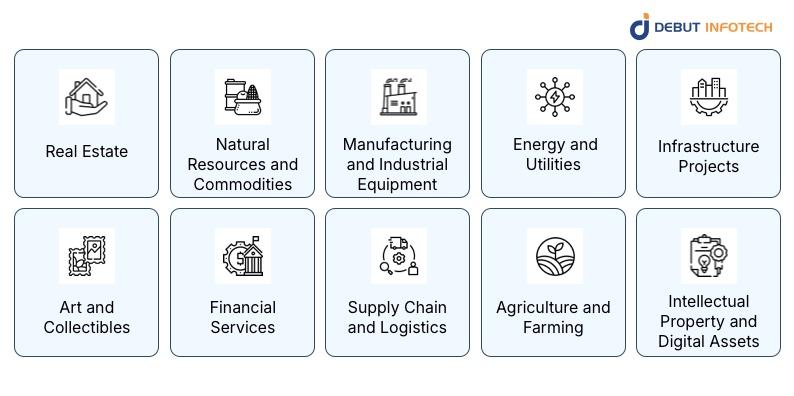
Real estate is widely considered one of the industries best positioned to benefit from tokenization.
Investing in real estate the old-fashioned way usually means putting down a lot of money and dealing with complicated ownership structures. Tokenization lets property owners break up their assets into smaller digital shares, which makes it possible to invest in tiny amounts.
Investors can purchase and sell property shares online through a tokenized real estate marketplace. This lowers transaction costs and makes the market more liquid.
For instance, a $10 million commercial property can be broken up into thousands of digital tokens. People who want to invest can buy smaller shares without having to buy the whole property.
This method also makes investing in other countries easier because investors may buy and sell property without having to deal with complicated legal issues.
Many organizations who are building platforms for real estate tokenization are partnering with blockchain experts like Debut Infotech to make safe digital property ecosystems.
The tokenization of manufacturing assets is also having a big effect on the commodity markets.
Digital tokens that stand for real-world reserves can be used to represent physical goods like gold, oil, and farm produce.
Investors can trade fractional shares of valuable metals through metal tokenization without having to store or move physical objects.
Tokenization makes trade easier by letting businesses tokenize real estate commodities and other resource-based assets.
This method can make prices more clear and cut down on waste in traditional commodities trading systems.
Investing in industrial machinery and manufacturing assets incurs high costs, and their full potential often goes untapped.
Tokenization lets firms break up ownership of big pieces of equipment into smaller shares that more than one investor or company can possess.
As an example, a company might buy an equipment in the production process which is costly, but allowing the investors to pay and at the same time receive a portion of the profit the equipment generates.
This strategy will allow companies to access money without necessarily relying on traditional loans or venture funding to do so.
Manufacturing businesses are finding new methods to make money from their infrastructure as industrial asset tokenization and use cases grow.
For the purpose of managing infrastructure and renewable energy assets, the energy industry is looking into blockchain-based tokenization models more and more.
Investors can buy fractional shares of energy production facilities by tokenizing solar farms, wind power installations, and energy grids.
People who own tokens may get money back based on the energy that is made and sold to customers.
This method makes it easier for renewable energy projects to get money and lets investors back projects that build infrastructure that lasts. Many tokenization companies are now building blockchain systems just for tokenizing energy assets.
Major infrastructure development projects are costly and involve billions of dollars of funding and require a lengthy construction process.
Unlike conventional financing, tokenization allows investors to contribute smaller sums of money by holding digital assets.
Tokenizing things like highways, airports, and telecommunications networks can bring in money from all around the world.
Using smart contracts, blockchain-based tokenization systems may also keep track of income streams and automatically share profits.
Tokenization as a Service platforms are widely used by businesses that are looking at these solutions to make development and deployment easier.
Since its inception, the art sector has had very high entrance barriers. A tiny group of rich investors often owns valuable paintings, sculptures, and artifacts.
Tokenization breaks these assets up into digital shares, which lets more than one investor own high-value pieces of art.
For instance, a well-known painting worth millions of dollars could be split up into thousands of tokens that stand for little parts of ownership.
This method makes it easier for people to enter the art market and opens up new ways for them to buy and sell art.
It also lets collectors get money without having to sell all of their paintings.
The financial services industry is one of the first to use blockchain technology, and industrial asset tokenization is a big part of changing how people invest.
Banks and investment firms are looking at how to tokenize real-world assets to make bonds, private equity funds, and structured investment products digital. Institutions can make these assets more liquid and speed up settlement by turning them into blockchain-based tokens.
Tokenization also makes it easier to invest across borders. Investors can buy digital tokens that stand for shares in financial assets without having to go through the long processes that come with investing in other countries.
Tokenized assets can also be traded on blockchain-based platforms that are always open, giving investors more options for when and how to trade.
A lot of banks work with specialized tokenization companies to construct secure systems that let them issue and manage digital assets.
Manufacturers, distributors, logistics providers, and retailers are all involved in global supply chains. It might be hard to keep track of who owns what and manage assets across various networks.
Tokenization makes it easier to keep track of supply chain assets by making digital copies of items, equipment, and transportation infrastructure.
You might utilize industrial tokens on a blockchain to show things like shipping containers, cargo shipments, and warehousing inventory. These tokens show who owns an asset and where it is moving in the supply chain in real time.
Smart contracts may also handle payments and delivery confirmations automatically, which cuts down on costs and delays at the office.
Companies are looking into industrial asset tokenization and its possible uses. At the same time, supply chain systems are becoming clearer and more efficient.
Tokenization is also helpful for the agriculture industry. Farming often needs a lot of money to buy land, equipment, and grow crops.
Farmers and agricultural businesses can get money by turning lands, crop yields, or agricultural equipment into digital assets through tokenization.
Investors can buy fractional shares of these assets, which lets them take part in agricultural operations without having to manage farmland personally.
For instance, a big farm might tokenize its land and let investors make money based on how many crops it grows or how much the property goes up in value.
Tokenization also makes things more open by putting records of ownership and agricultural output data on a blockchain network.
As farming technology gets better, tokenized farming assets may become a key part of the global food supply chain.
You can also use blockchain technology to make digital media, patents, copyrights, trademarks, and other types of intellectual property into tokens.
Intellectual property rights can be turned into digital tokens that show ownership or income participation by creators and innovators.
This lets artists, inventors, and content creators make money from their work in new ways while still keeping control of their intellectual property.
For instance, a music producer could turn the royalties on a song into tokens that investors could buy to get a piece of the future cash streams.
Tokenization can also aid with licensing agreements and make it easier to pay royalties automatically with smart contracts.
These innovations are attracting tokenization for industry influencers, entrepreneurs, and creative professionals seeking alternative funding models.
Read this blog: Diverse Tokenization Use Cases Across Industries
| Industry | Tokenized Asset Type | Key Benefit |
| Real Estate | Property shares | Fractional ownership |
| Commodities | Gold, oil, metals | Improved liquidity |
| Manufacturing | Machinery, equipment | Asset monetization |
| Energy | Solar, wind assets | Easier project funding |
| Infrastructure | Roads, airports | Global investment access |
| Agriculture | Farmland, crops | Transparent investment tracking |
| Financial Services | Bonds, funds | Faster transactions |
The benefits of industrial asset tokenization are becoming clearer as more businesses start adopt blockchain technology.
Businesses commonly use Tokenization as a Service to easily add these features.
In the coming years, industrial asset tokenization is likely to grow very quickly as more businesses start to use blockchain. New tokenization platforms are being developed to help with digitizing assets, trading, following the rules, and managing investors. Using a white label tokenization platform technology can also help businesses start markets faster.
More and more, banks, asset managers, and governments are looking into tokenization as a way to modernize the financial system. Tokenized assets may also work with DeFi platforms, which could lead to new ways to lend, borrow, and invest.
As these initiatives get more advanced, businesses will need competent blockchain experts to make sure their systems are safe. Many companies work with companies like Debut Infotech or hire dedicated development team specialists to speed up the creation of tokenization platforms.
Tokenization of real world assets is changing how businesses and investors deal with real-world assets. Organizations may open up new levels of liquidity, transparency, and accessibility by turning physical and financial assets into digital tokens on the blockchain.
Many industries that are best suited to benefit from tokenization are already looking into the possibilities that blockchain technology offers. These include real estate, commodities, agriculture, and intellectual property. Tokenized assets will become more and more essential in current financial ecosystems as the global digital economy keeps changing.
Companies that want to get into this sector are working with professional development companies like Debut Infotech to create tokenization solutions that can grow and support safe asset digitization and global trading platforms.
Industrial asset tokenization is the process of converting physical or financial assets into blockchain-based digital tokens. These tokens represent ownership or investment rights and can be traded or transferred securely on blockchain networks.
Industries such as real estate, energy, agriculture, infrastructure, and financial services are among the sectors experiencing major benefits from tokenization. These industries often deal with high-value assets that can become more accessible and liquid when divided into digital tokens.
Tokenization improves liquidity by dividing large assets into smaller digital shares that can be easily bought and sold. This allows investors to trade portions of an asset rather than waiting for the entire asset to change ownership.
Industrial tokens are digital assets created on blockchain networks that represent ownership or participation in industrial resources or infrastructure. These tokens can be used to track ownership, enable investment opportunities, and facilitate secure transactions involving real-world assets.
Asset tokenization relies on blockchain technology, smart contracts, and secure digital wallets to function effectively. These technologies ensure that transactions are transparent, tamper-proof, and automatically executed based on predefined conditions.
Tokenization platforms are specialized systems that allow businesses to create, manage, and trade tokenized assets. They typically include features such as smart contract integration, compliance tools, and digital asset marketplaces.
Businesses can begin a tokenization project by identifying suitable assets and developing a blockchain-based tokenization strategy. Many organizations partner with experienced development firms such as Debut Infotech to build secure and scalable tokenization platforms

Our Latest Insights

USA

2501 Chatham, Rd Suite R Springfield, IL 62704
+1-708-515-4004
info@debutinfotech.com
UK

7 Pound Close, Yarnton, Oxfordshire, OX51QG
+44-770-304-0079
info@debutinfotech.com
Canada

154 Eden Oak Trail, Kitchener, ON N2A 0H9
+1-708-515-4004
info@debutinfotech.com
INDIA

Sector 101-A, Plot No: I-42, IT City Rd, JLPL Industrial Area, Mohali, PB 140306
9888402396
info@debutinfotech.com

9001:2015
Quality Certified

ISO 27001
Security Certified

A+ Rating
Accredited Business

Certik
Security & Audit


Copyright © 2026, Debut Infotech. All rights reserved. | Privacy Policy