ON THIS PAGE
Progress0%






Our Global Presence :


Tokenized luxury goods are transforming how high-end brands and investors think about ownership, authenticity, and market access. By using blockchain to represent physical luxury items as digital tokens, brands can verify provenance, enhance resale markets, and unlock new investment avenues. The broader tokenized asset market grew to an estimated $2.3 billion in 2023, with luxury assets making up roughly 15 % of the volume and expected to expand rapidly.
Fashion and luxury applications reached about $3.69 billion in 2025, highlighting strong adoption and consumer demand for digital ownership models. As tokenized luxury assets gain traction, they offer improved transparency, fractional ownership options, and liquidity opportunities previously unavailable in traditional markets.
This guide breaks down the concept, benefits, challenges, real use cases, and implementation advice for brands and investors navigating this emerging space.
Tokenized luxury goods are high-value physical assets represented digitally on a blockchain through tokens. Each token serves as a verified digital record tied to a specific item, whether a watch, artwork, handbag, or collectable. This digital representation can confirm authenticity, track ownership history, and, in some cases, enable fractional ownership.
Tokenization of real world assets does not replace the physical product. It adds a secure digital layer that enhances traceability, transparency, and trust across the luxury value chain.
When implemented correctly, tokenization delivers practical advantages that extend beyond technology, improving trust, access, and operational efficiency for both luxury brands and consumers.
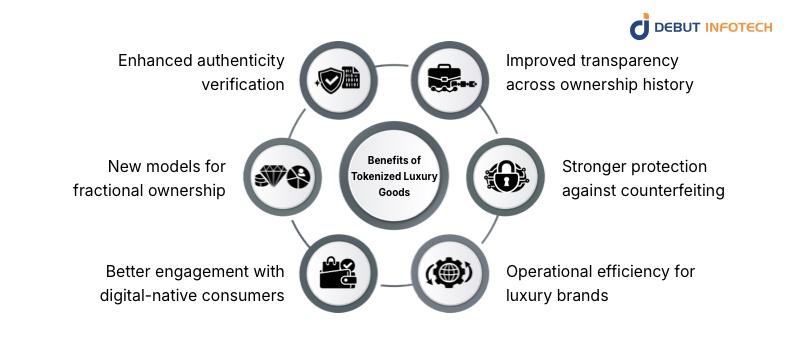
Tokenization creates a permanent, tamper-resistant digital record that links each luxury item to verifiable production and ownership data. This allows buyers, resellers, and brands to confirm authenticity instantly, reducing reliance on paper certificates and minimizing disputes during resale, inheritance, or insurance processes.
Each ownership transfer is recorded on the blockchain, creating a transparent and traceable history for every asset. This transparency strengthens trust in secondary markets, simplifies due diligence for buyers, and enables brands to maintain long-term visibility into how their products circulate after initial sale.
Tokenization enables high-value luxury assets to be divided into digital shares, lowering entry barriers for collectors and investors. This approach expands market participation, improves liquidity, and allows brands and tokenization platforms to reach new audiences without compromising the exclusivity of the underlying physical asset.
By assigning a unique digital token to each physical item, luxury tokenization makes duplication significantly harder. Counterfeit goods lack a valid blockchain record, allowing buyers and marketplaces to verify legitimacy instantly and helping brands protect reputation, pricing integrity, and long-term consumer confidence.
Tokenized luxury goods align with the expectations of digitally fluent buyers who value transparency, digital access, and verifiable ownership. Tokens can also unlock added experiences, updates, or services, creating ongoing engagement beyond the point of sale and strengthening long-term brand relationships.
Automated verification, ownership tracking, and transfer processes reduce administrative overhead for brands. Tokenization limits manual record-keeping, reduces reliance on intermediaries, and streamlines after-sales services, resale validation, and warranty management while maintaining consistent data accuracy across global markets.
Despite its promise, tokenization of luxury goods presents structural, technical, and adoption challenges that must be addressed thoughtfully to protect brand reputation and ensure long-term sustainability.
The absence of shared technical and operational standards creates fragmentation across token platforms. This limits interoperability, complicates cross-brand collaboration, and increases integration costs. Brands risk building isolated systems that struggle to communicate with partners, marketplaces, or future industry-wide infrastructures.
How to mitigate the risk
Brands should participate in industry alliances and adopt open, widely supported token standards. Collaborating with peers, technology providers, and standards bodies helps align data models and protocols. This approach reduces long-term integration friction and supports interoperability as tokenized ecosystems mature.
Luxury brands often rely on legacy systems built for physical supply chains rather than blockchain workflows. Integrating tokenization can disrupt operations, require process redesign, and strain internal teams unfamiliar with decentralized technologies, leading to implementation delays and inconsistent execution across departments.
How to mitigate the risk
A phased integration strategy reduces complexity. Starting with limited product lines or specific use cases allows teams to adapt gradually.
Partnering with experienced tokenization companies and aligning tokenization initiatives with existing workflows ensures smoother adoption without undermining core business operations.
Many luxury buyers lack a clear understanding of tokenization, digital ownership, or blockchain value. This knowledge gap can create skepticism, reduce adoption, and weaken perceived benefits. Without clarity, consumers may view luxury tokens as unnecessary or disconnected from the physical product experience.
How to mitigate the risk
Brands should prioritize clear, accessible education through onboarding guides, in-store explanations, and digital content. Simplifying technical concepts and focusing on practical benefits builds confidence. User-friendly interfaces and consistent messaging help consumers understand value without requiring deep technical knowledge.
Tokenized luxury goods operate across jurisdictions with differing legal interpretations of digital assets. Unclear classification around ownership rights, resale, and taxation increases compliance risk. Regulatory uncertainty can slow deployment and expose brands to legal challenges or enforcement actions.
How to mitigate the risk
Early legal assessment is critical. Brands should work with legal advisors to map regulatory obligations across target markets. Designing token structures that align with existing consumer protection and asset ownership laws reduces exposure while allowing flexibility as regulatory frameworks evolve.
Although blockchains offer strong security, associated applications, wallets, and user interfaces can introduce vulnerabilities. Storing sensitive consumer or product data improperly may raise privacy concerns and damage trust, especially in a sector where discretion and data protection are highly valued.
How to mitigate the risk
Security-focused design is essential. Brands should limit sensitive data stored on-chain, rely on encrypted off-chain storage, and use audited smart contracts. Regular security testing and clear privacy policies help protect user data while maintaining transparency and system integrity.
Read this blog: Risk Management in RWA Tokenization
A structured approach helps brands move from experimentation to execution, ensuring tokenization initiatives are technically sound, compliant, and aligned with existing business operations.
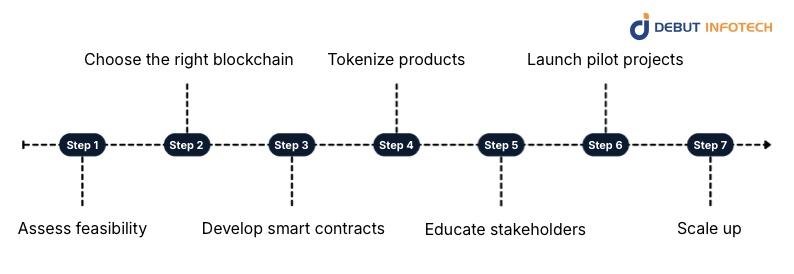
Begin by evaluating whether tokenization aligns with the brand’s product value, customer expectations, and operational maturity. This includes assessing asset uniqueness, resale demand, legal constraints, and internal readiness. A feasibility assessment helps determine realistic use cases and prevents investing in misaligned or premature tokenization initiatives.
Select a blockchain that supports security, scalability, and long-term reliability. Consider transaction costs, network stability, developer support, and interoperability with other platforms. The chosen blockchain should align with expected transaction volumes while ensuring consistent performance and data integrity across global luxury supply chains.
Smart contracts define ownership rights, transfer rules, and lifecycle events for tokenized goods. These contracts must be precise, auditable, and aligned with business logic. Well-designed smart contracts reduce manual intervention, limit disputes, and ensure consistent execution of ownership transfers, resale conditions, and verification processes.
Each luxury item is assigned a unique digital token linked directly to its physical counterpart. This process involves embedding identifiers, associating metadata, and securely recording details on the blockchain. Accurate tokenization ensures authenticity, traceability, and reliable linkage between digital records and physical assets.
Internal teams, partners, and customers must understand how tokenization works and why it matters. Education should focus on practical benefits, usage scenarios, and security assurances. Clear communication reduces resistance, improves adoption, and ensures stakeholders engage confidently with tokenized luxury products across channels.
Pilot programs allow brands to test tokenization in controlled environments. Limited launches help identify technical gaps, operational friction, and user behavior patterns. Insights from pilots guide refinement, reduce large-scale risk, and provide measurable evidence of value before broader implementation decisions are made.
Scaling should follow validated success from pilot phases. Expansion involves refining infrastructure, improving user experience, and aligning tokenization with broader brand strategy. A measured scale-up supports sustainable growth, consistent quality, and long-term adoption while maintaining trust among consumers and partners.
Several luxury and art-focused organizations already apply tokenization in practical ways, offering useful reference points for how digital ownership can function at scale.
LVMH’s Aura Blockchain issues digital certificates of authenticity for luxury products across brands such as Louis Vuitton and Dior. These certificates store verified information on origin, materials, and ownership history. Aura strengthens trust, supports resale markets, and enables brands to maintain visibility throughout a product’s lifecycle.
Masterworks applies tokenization to fine art by allowing investors to purchase fractional shares of high-value artworks. Each artwork is securitized and divided into digital shares, improving access and liquidity. This model demonstrates how tokenization can broaden participation while preserving asset custody and professional management.
Breitling issues digital passports for its watches, linking each timepiece to a blockchain-based ownership record. These passports store authentication details, service history, and ownership transfers. The system enhances trust in resale markets, simplifies after-sales services, and reinforces transparency across the watch’s lifespan.
Read this blog: Diverse Tokenization Use Cases Across Industries
Successful tokenization depends on strategic planning, measured execution, and ongoing refinement rather than speed, making discipline and clarity essential throughout implementation.
Consumer trust depends on understanding. Explain how tokenization works, what ownership means digitally, and how blockchain adds value to authenticity and resale. Education should focus on benefits, not technology. Clear explanations across online, in-store, and post-purchase touchpoints improve adoption and long-term confidence.
Pilot projects allow brands to validate assumptions without large-scale risk. Testing tokenization on limited collections helps uncover technical issues, operational gaps, and customer responses. Insights from pilots guide refinement, support internal alignment, and provide evidence-based justification before committing to broader implementation efforts.
Tokenization is not static. Market expectations, regulations, and technology evolve continuously. Regular reviews ensure smart contracts, platforms, and processes remain aligned with business goals. Ongoing refinement helps brands stay compliant, relevant, and competitive while avoiding technical debt or outdated implementation choices.
The blockchain selected must support long-term growth, high transaction integrity, and strong security standards. Scalability ensures consistent performance as adoption increases. Security protects brand reputation and customer trust.
A well-chosen white label tokenization platform balances cost, reliability, developer support, and interoperability across ecosystems.
Complex systems discourage adoption. Tokenized luxury experiences should feel intuitive for buyers, sellers, and internal teams. Simple wallets, clear dashboards, and seamless verification tools reduce friction. A strong user experience ensures tokenization enhances the luxury journey rather than introducing confusion or unnecessary barriers.
Tokenization introduces new ownership, resale, and engagement possibilities that traditional models may not support. Clinging to legacy approaches limits value creation. Brands should rethink pricing, lifecycle management, and post-sale engagement to fully capture the opportunities enabled by digital ownership and verified provenance.
Consumer behavior reveals how tokenization performs in real settings. Feedback helps identify usability issues, misunderstood features, and unmet expectations. Actively collecting and applying insights improves system design, strengthens trust, and ensures tokenization aligns with how luxury buyers actually interact with digital ownership tools.
Premature scaling increases operational and reputational risk. Tokenization requires stable infrastructure, trained teams, and transparent processes. Gradual expansion allows issues to be addressed early. A measured approach protects brand credibility while ensuring systems perform reliably as demand and transaction complexity increase.
Collaboration supports shared standards, interoperability, and broader market acceptance. Working with other luxury brands, platforms, and consortia reduces fragmentation and accelerates ecosystem maturity. Collective efforts strengthen resale markets, simplify integrations, and help tokenization become a trusted industry-wide capability rather than isolated experiments.
Tokenized assets should function across platforms, marketplaces, and services. Poor interoperability limits liquidity and long-term usefulness. Designing tokens with open standards ensures flexibility, future integration, and resilience. Interoperability protects investments by allowing assets to move as technologies and ecosystems evolve.
Debut Infotech is a reliable asset tokenization development company that works with brands to turn asset tokenization from concept into production-ready systems. Our team focuses on secure smart contracts, scalable blockchain architecture, and compliance-aware design suited for high-value assets.
Our approach emphasizes clarity, reliability, and long-term usability rather than experimentation for its own sake. By aligning technical execution with real business workflows, we help organizations introduce tokenization confidently, without disrupting brand integrity or customer trust.
Tokenized luxury goods bridge physical prestige and digital ownership, reshaping authentication, market access, and investment strategies.
By understanding their advantages and challenges, brands and investors can leverage tokenization to expand liquidity, strengthen trust, and unlock broader participation in high-value markets.
With thoughtful execution and consumer education, tokenized luxury goods could become a durable pillar of modern asset innovation.
A real luxury item gets verified, then linked to a blockchain token. That token records ownership and transaction history. When the token changes hands, ownership updates automatically. The physical item stays stored, insured, or managed by a trusted custodian tied to the token system.
Resale depends on platform liquidity and buyer interest. Many marketplaces allow instant or near-instant token trading. Popular brands and rare items sell faster. Niche pieces may take longer, but blockchain settlement still makes transfers quicker than traditional luxury resale channels.
Yes, there are risks. Platform failure, regulatory changes, low resale demand, or custody issues can affect value. Smart contract bugs are another concern. Buyers should review storage terms, legal ownership rights, and exit options before committing money to tokenized luxury assets.
Ethereum is common, but other networks like Polygon and private blockchains are also used. Brands often choose chains with lower fees, better scalability, or controlled access. The choice affects transaction costs, speed, and the ease with which tokens integrate with wallets and marketplaces.
Authenticity starts with physical verification by experts or brand partners. Once confirmed, the item gets linked to a unique blockchain token. That record cannot be altered, making it easy to trace ownership history and spot fake or duplicated items across secondary markets.
They can be, but it depends on the asset and market demand. Rare watches, art, and collectibles may hold or grow in value. Prices still fluctuate, and liquidity varies by platform. It works best for buyers who understand both luxury markets and the basics of blockchain.

Our Latest Insights

USA

2501 Chatham, Rd Suite R Springfield, IL 62704
+1-708-515-4004
info@debutinfotech.com
UK

7 Pound Close, Yarnton, Oxfordshire, OX51QG
+44-770-304-0079
info@debutinfotech.com
Canada

154 Eden Oak Trail, Kitchener, ON N2A 0H9
+1-708-515-4004
info@debutinfotech.com
INDIA

Sector 101-A, Plot No: I-42, IT City Rd, JLPL Industrial Area, Mohali, PB 140306
9888402396
info@debutinfotech.com

9001:2015
Quality Certified

ISO 27001
Security Certified

A+ Rating
Accredited Business

Certik
Security & Audit


Copyright © 2026, Debut Infotech. All rights reserved. | Privacy Policy