ON THIS PAGE
Progress0%






Our Global Presence :





Maintaining the worth of a digital asset is not easy, particularly in crypto. When excess coins enter the market, scarcity is completely lost, and confidence is usually the next to follow. No wonder, both investors and blockchain projects are concerned with the oversupply itself and the silent way it is diluting the value of a token.
This is where token burning comes into the picture. Projects willingly eliminate some of the tokens permanently rather than keeping the surplus coins in circulation. An ultimate reduction in supply permanently, tends to restore equilibrium, enhance scarcity, and promote long-term value, especially of cryptocurrencies minted or mined in large amounts.
Done right, token burning isn’t just a price tactic. It’s a supply-control mechanism designed to align incentives, strengthen token economics, and build trust with the community.
Token burning is simply the process of taking tokens out of circulation so they can never be used again. This is done through a token burn mechanism that sends those tokens to a special blockchain address with no access keys. Once they’re sent there, they’re effectively gone forever.
Some crypto projects burn tokens occasionally, while others do it on an ongoing basis. In some instances, communities are even involved in voluntarily burning minor portions of their holdings simultaneously. These individual burns can seem inconsequential, but when they are combined, they can importantly decrease the overall supply.
Burning in other ecosystems occurs automatically in the background. An example is Ethereum which burns part of ETH each time a transaction is done. The majority of users do not put much of a thought on it, but this small cut in the supply gradually transforms the supply over time. The goal isn’t quick price spikes, it’s maintaining a healthier balance between supply and real network demand.
One of such crypto concepts that seem complicated initially but is rather simple in reality is token burning. Rather than circulating every token indefinitely, a project deliberately destroys some of the tokens so as to regulate supply. The most common way to do this is by sending tokens to a wallet address that can’t be accessed. Once they’re sent there, they’re gone permanently.
How this works in practice depends on a project’s tokenomics. Some projects give users an easy way to participate through official burn tools. A good example is Shiba Inu, which introduced a portal to engage in a voluntary burn, where community members destroy tokens at the same time, and all are visible on the blockchain.
Other projects handle burns through smart contracts. With Binance Coin, tokens can be burned using a built-in function that first checks whether the tokens exist in a wallet and then removes them from circulation. After the burn, the total supply is automatically updated and visible on-chain.
It’s important to pause before burning any tokens. Once a burn is executed, those tokens can’t be recovered. That’s why most projects clearly outline their burn rules and schedules, so users understand exactly what’s happening.
In some cases, token burning happens automatically in the background. A small portion of tokens may be destroyed during transactions or network activity, gradually reducing supply over time without any manual action from users.
Crypto projects burn tokens for one simple reason which is to keep their token economy from getting out of balance. When supply grows faster than demand, inflation sets in, and each token gradually loses its impact. That’s where burning a token in crypto becomes a practical tool rather than a marketing move.
Projects can reduce inflation, add real scarcity, and reward those who are willing to believe in the project over time by causing the permanent removal of tokens out of circulation. The burning of tokens is also a good indicator that the team is not just focusing on short-term profits but on long-term sustainability.
Still, burning only does its job when the token actually has a purpose. Without real usage and demand, reducing supply alone won’t create lasting value, it just shrinks numbers on a dashboard.
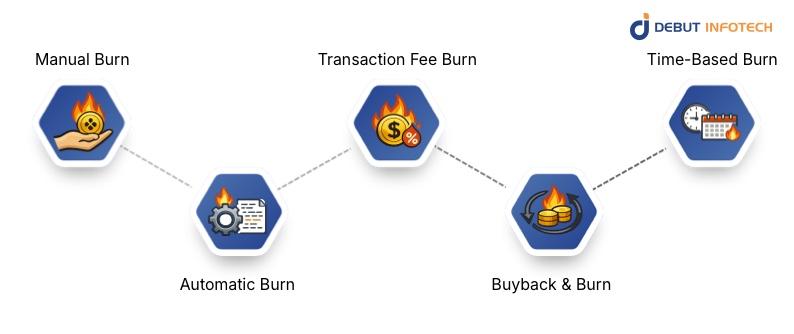
Burning of tokens may occur in various forms based on the life cycle of a project, its objectives and the position of the token within the token lifecycle. The following is a breakdown of each technique:
A manual burn is an occurrence that happens when a project team resolves to withdraw tokens in circulation themselves. They transfer a certain amount of tokens to a wallet that is sent to a burn address which will never be opened again. Early stage projects tend to use manual burns to control supply and show interest to the investors. The point here is transparency. Investors should ensure that the burn has actually occurred.
Smart contracts process automatic burns and execute the burn process according to set rules without human involvement. This approach is common in DeFi protocols and other decentralized projects since it brings about uniformity and elimination of human error or manipulation. It makes the token lifecycle more predictable.
In a transaction fee burn, a minimal amount of each transaction is burnt off forever. Ethereum’s EIP-1559 and Binance Coin (BNB) are notable examples. This approach correlates the scarcity of tokens with network usage, that is, the more people are on the network, the larger the number of tokens burned, which is a natural way to manage supply.
In buyback and burn, the project buys back tokens in the market before burning them. This is usually used in the case of exchange tokens or platforms which gain income in their own token. The project demonstrates the trust it has in its token by taking active measures to reduce the supply, and thus contributing to the balance within the market.
Time-based burns are based on a constant routine, e.g., daily or monthly or annual. It is a predictable approach applied to long-term projects to control supply. Planned burns assist investors in creating stability and planning the lifecycle of the tokens.
When it comes to token burning, it is not just a theory, but a strategy that most crypto projects employ to control the supply, preserve balance and ensure long-term value. Let’s explore how some popular cryptocurrencies handle it.
Ethereum
Ethereum implemented the EIP-1559 upgrade in 2021 that altered its fee system and included a mechanism of burning. With this, a part of each transaction fee or gas is forever taken out of circulation. This gradual burning, in conjunction with the addition of new tokens to the network by the process of token minting, contributes towards the non-increase in the quantity of ETH over time. As of mid 2023 more than 3.4 million ETH have been burned demonstrating that burns are designed in a way that supports the management of token supply.
Shiba Inu
Shiba Inu (SHIB) is recognised due to its huge token burns. In 2022, the project launched a burn portal, letting the community actively destroy tokens. But the story goes back further, just a year after SHIB launched, its creators sent 50% of the total supply to Ethereum cofounder Vitalik Buterin. He burned more than 400 trillion SHIB and gave some to charity. This demonstrates the ability of token burning to be used together with community participation and social impact.
Binance Coin
Binance Coin (BNB) uses an Auto-Burn system combined with a quarterly “Pioneer Burn” program. Based on network activity, price, and new blocks, a portion of BNB is automatically burned each quarter. Burns are also caused by transaction fees on the BNB Smart Chain. As of April 2023, Binance had already burned its 23rd quarterly burn, and its total net worth was permanently reduced by more than 2 million BNB. These automated burns make investors have predictability and transparency.
Sweat Coin
Sweat Coin takes a community-first approach. Holders vote on whether tokens should be burned or distributed. Recently, 150,000 SWEAT token holders voted and had 40 million tokens burned and 59 million were shared with the community. The model demonstrates that the process of token burning can be synchronised with token minting and governance, providing actual power to people possessing the tokens.
The question that is on the minds of many is whether or not burning tokens can actually shift the price of a cryptocurrency. In a project, the tokens are permanently destroyed once they are transferred to a burn token address. A decrease in supply will cause scarcity, and in some cases, the remaining tokens will gain value. In a layman language, token burning is used to achieve a balance of supply and demand.
However, one should have realistic expectations. There are various factors that affect prices such as sentiment in the market, fundamentals of a project, general trends of crypto, and perception of the investors. Burning of tokens does not necessarily result in a price increase, but the planned burns are usually accompanied by evident market movements.
Concisely, token burning is an intelligent methodology to control supply and to promote tokenomics, yet it is merely one aspect of the larger puzzle to cryptocurrency prices.
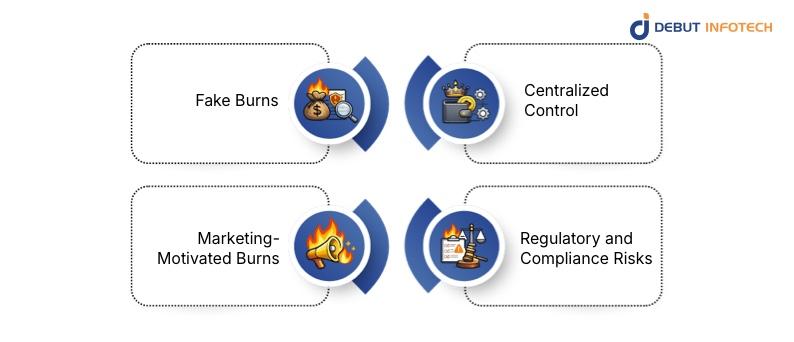
The concept of burning tokens is not merely knowing that the tokens are burned up. There are several risks and misconceptions that both investors and developers should be aware of:
In case you are engaged in the ERC20 Token development, it is necessary to confirm all burns on blockchain explorers, such as Etherscan. Ensuring that tokens are indeed taken out of circulation will guarantee transparency, investor confidence and increase the validity of your project.
Token burning is not the quick-fix to an overnight rise in prices, but when wisely applied, it may assist in controlling supply and prove beneficial in long-run value. The point is that it is necessary to understand why tokens are burned and whether the project behind them is really useful.
If you’re researching a cryptocurrency or planning to launch one, take time to review its burn mechanism and overall tokenomics, it makes a real difference over time.
For teams building tokens the right way, Debut Infotech is a trusted token development company, helping businesses create transparent, well-structured burn models that support sustainable growth.
Looking to launch a token with a smart burn strategy? Debut Infotech can help you build it with confidence.
To burn a token is to permanently withdraw the token into circulation by sending it to an unreachable burn address. After being burnt, the token is lost and cannot be used again.
By reducing total supply, token burning can create scarcity and, in some cases, support the value of remaining tokens, similar to a stock buyback.
This process is irreversible and can happen automatically through transaction fees or manually as part of a project’s tokenomics strategy.
No. Burned crypto is permanently gone and cannot be recovered. When tokens are burned they are sent to a special burn address, normally referred to as a black hole wallet. No one can get the funds back because this address contains no private keys. When tokens get to this address, they are destroyed. The overall supply decreases, scarcity grows and the process is irreversible.
In most instances burning tokens is aimed at price support rather than price reduction. The decreased supply of tokens results in scarcity, since the burning of tokens can result in increased value of the remaining tokens. With that said, the price effect is not assured. It is determined by the variables such as demand, market sentiment, real use, and the scale of the burn. A strategically planned burn may indicate a long-term commitment and occasionally result in price upsurge. But it’s not a magic fix. Any price gains made by burning tokens are usually temporary, if a project has weak fundamentals or is not in demand by the end user.

Our Latest Insights
USA
2501 Chatham, Rd Suite R Springfield, IL 62704
+1-708-515-4004
info@debutinfotech.com
UK
7 Pound Close, Yarnton, Oxfordshire, OX51QG
+44-770-304-0079
info@debutinfotech.com
Canada
154 Eden Oak Trail, Kitchener, ON N2A 0H9
+1-708-515-4004
info@debutinfotech.com
INDIA
Sector 101-A, Plot No: I-42, IT City Rd, JLPL Industrial Area, Mohali, PB 140306
9888402396
info@debutinfotech.com