ON THIS PAGE
Progress0%






Our Global Presence :




Navigating crypto starts with a wallet — a tool that stores your keys and lets you send, receive, and manage digital assets.
With over 820 million active cryptocurrency wallets worldwide in 2025, users are increasingly engaging with blockchain networks directly rather than through third parties.
Mobile wallets lead adoption, accounting for roughly 72% of wallet usage globally, making ease of access a core factor for new users.
Beginners face a range of choices, from custodial software wallets to offline cold storage, each with different levels of security, convenience, and control. Understanding these differences helps new users protect funds and make informed decisions. This guide explains why a wallet matters, how to choose one, and which options are best for people just starting out.
A crypto wallet is a digital tool that lets you store, send, receive, and manage cryptocurrencies. It does not hold coins in a physical sense. It stores private keys that prove ownership and authorize transactions on the blockchain. Without a wallet, interacting with crypto networks is not possible in any meaningful way.
A crypto wallet plays a central role in how users interact with digital assets.
A crypto wallet gives you direct control over your digital assets by managing the private keys that authorize transactions. This removes reliance on exchanges, reduces counterparty risk, and ensures you can access funds independently, even if a platform freezes accounts, suffers downtime, or shuts down unexpectedly.
Every blockchain transaction requires cryptographic authorization, which a wallet provides through private keys. Without a wallet, sending or receiving crypto is impossible. A properly secured wallet ensures transactions are signed safely, prevents unauthorized access, and reduces exposure to fraud, phishing attempts, or accidental asset transfers.
Crypto wallets act as verifiable proof that you own specific blockchain assets. Ownership is tied to private keys, not user accounts. This structure allows trustless verification across networks and ensures assets remain under your control regardless of exchanges, applications, or top cryptocurrency companies involved in transactions.
A crypto wallet enables participation beyond basic transfers. It allows interaction with decentralized applications, token swaps, staking services, NFT platforms, and governance systems. Without a wallet, users are locked out of most blockchain-based services and cannot fully engage with crypto ecosystems.
Storing assets in a personal wallet reduces exposure to centralized failures, exchange hacks, and regulatory freezes. While wallets require personal responsibility, they eliminate single points of failure tied to third-party platforms, offering a more resilient way to manage digital assets long term.
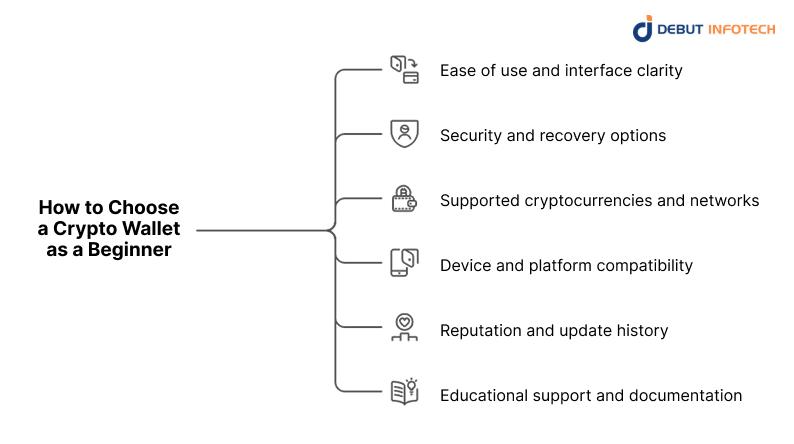
Selecting a wallet involves trade-offs between ease of use, security responsibility, and long-term flexibility. Beginners benefit from understanding these factors early to avoid costly missteps.
Beginners should prioritize the best crypto wallets with clean interfaces, clear navigation, and simple transaction flows. A wallet that explains actions, confirms steps, and avoids clutter reduces user errors. Early mistakes often come from confusion, not technical complexity, so usability directly affects asset safety.
A beginner-friendly wallet must offer strong security features, including encrypted key storage and clear recovery phrase guidance. The setup process should explain backup responsibilities in plain terms. If recovery steps feel unclear or rushed, the risk of permanent asset loss increases significantly.
Not all wallets support the same assets or blockchains. Beginners should confirm that a wallet supports the major cryptocurrencies they plan to use now and in the future. Limited support can force unnecessary migrations, increase fees, or create confusion when assets cannot be accessed within one wallet.
Wallets differ across mobile, desktop, browser, and hardware formats. Beginners should choose wallets compatible with the devices they use daily. Poor platform fit leads to neglected security updates, weak passwords, or reliance on insecure devices, all of which increase long-term risk.
A wallet’s track record matters. Beginners should look for active development, regular security updates, and transparent communication from the provider. Abandoned wallets or infrequent updates increase vulnerability. Community feedback and long-standing usage offer practical signals of reliability.
Clear guides, in-app tips, and accessible documentation help beginners build confidence. Wallets that explain fees, confirmations, and risks reduce trial-and-error learning. Strong educational support shortens the learning curve and lowers the chance of costly mistakes during early crypto use.
The best crypto wallet app for beginners depends on the user’s needs, usage, asset value, and comfort level. Software wallets suit users who are learning transactions and basic storage, while hardware wallets fit those prioritizing security. The best option balances ease of use, clear recovery processes, strong security practices, and support for commonly used cryptocurrencies.
Crypto wallets differ based on who controls private keys. Understanding custody models helps beginners decide how much responsibility and independence they are comfortable managing.
A custodial wallet is managed by a third-party provider that holds and secures private keys on behalf of the user. These centralized wallets are commonly offered by exchanges and platforms focused on convenience. Users access funds through accounts rather than keys, making onboarding simple but increasing dependence on the provider’s security, policies, and operational stability.
Pros
Cons
A non-custodial wallet gives users full control over their private keys and assets without relying on intermediaries. Ownership is entirely self-managed, meaning access depends on securely stored recovery phrases. These decentralized wallets align closely with blockchain principles but require users to take full responsibility for security, backups, and transaction accuracy at all times.
Pros
Cons
Wallets also differ by connectivity. Hot and cold wallets serve distinct purposes, and beginners should understand when convenience outweighs security and when it does not.
A hot wallet is a software-based wallet connected to the internet, typically accessed through a mobile app, desktop app, or browser extension. It is designed for frequent transactions and day-to-day use. Beginners often start with hot wallets because setup is quick, interfaces are intuitive, and sending or receiving crypto feels similar to online banking.
Pros
Cons
A cold wallet stores private keys offline, typically via a hardware device or physical medium. Because it remains disconnected from the internet, it significantly reduces the risk of hacking or remote attacks. Cold wallets suit beginners who plan to hold crypto long term and want stronger protection, even if it means slower access and additional setup steps.
Pros
Cons
Not all wallets suit first-time users. The following options are commonly recommended because they balance usability, security, and feature depth without demanding advanced technical knowledge.
Trust Wallet is a mobile-based, non-custodial wallet designed for simplicity and broad asset support. It is one of the easiest crypto wallet for beginners, supporting thousands of cryptocurrencies across multiple blockchains and includes built-in access to decentralized applications.
Beginners often prefer Trust Wallet because setup is fast, the interface is clean, and private keys remain fully under user control without complex configuration.
Key Features
Pros
Cons
Coinbase Wallet is a non-custodial wallet offered separately from the Coinbase exchange. It allows beginners to control private keys while benefiting from a familiar interface. The wallet supports major cryptocurrencies, NFTs, and decentralized applications. Its guided setup and clear transaction prompts make it approachable, though users should understand it operates independently from exchange accounts.
Key Features
Pros
Cons
MetaMask is a widely used software wallet focused on Ethereum and compatible blockchains. It operates as a browser extension and mobile app, allowing users to interact with decentralized applications directly. Beginners often encounter MetaMask when exploring DeFi or NFTs. While powerful, it requires careful attention to network settings, gas fees, and permissions to avoid confusion or mistakes.
Key Features
Pros
Cons
Ledger Nano S is a hardware wallet designed for offline storage of private keys. It connects to a computer or mobile device only when signing transactions, keeping keys isolated from the internet. Beginners who plan to hold crypto long term often choose Ledger for its strong security model. Setup takes more effort, but it significantly reduces exposure to online attacks.
Key Features
Pros
Cons
BitPay is a software wallet focused on practical crypto spending and payments. It supports major cryptocurrencies and allows users to pay merchants directly from the wallet. Beginners who want to use crypto beyond holding may find BitPay appealing due to its straightforward transaction flow. However, it offers limited access to advanced decentralized finance features.
Key Features
Pros
Cons
Exodus is a software wallet available on desktop and mobile, known for its polished design and ease of navigation. It supports multiple cryptocurrencies and includes built-in exchange features. Beginners often appreciate the clear layout and visual portfolio tracking. While user-friendly, Exodus is closed-source, which may concern users who prioritize full transparency.
Key Features
Pros
Cons
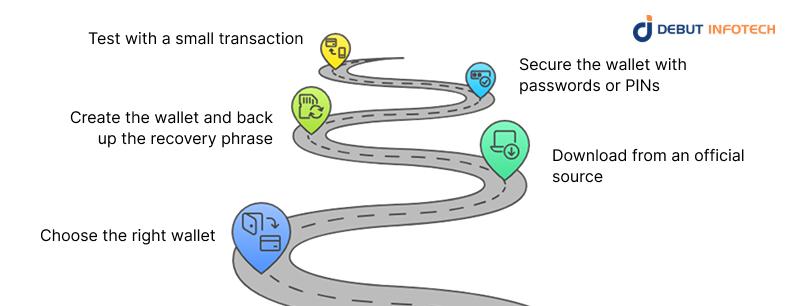
Start by selecting a wallet that fits your device, experience level, and intended use. Beginners should focus on ease of navigation, clear instructions, and support for popular cryptocurrencies. Choosing a wallet that matches daily habits reduces mistakes during setup and early transactions.
Always download wallet software from the official website or from verified app stores. Avoid links shared through ads, emails, or social media. Fake wallets often mimic real ones and are designed to steal private keys immediately after installation.
During setup, the wallet will generate a recovery phrase. Write it down offline and store it securely. This phrase is the only way to restore access if the device is lost, damaged, or reset.
Set a strong password, PIN, or biometric lock if available. This adds a second layer of protection against unauthorized access. Avoid reusing passwords from other apps, and do not store sensitive credentials in screenshots or cloud storage.
Before moving large amounts, send or receive a small test transaction. This helps confirm that the wallet is set up correctly and that you understand how addresses, confirmations, and fees work without risking meaningful funds.
Your recovery phrase is the master key to your wallet and funds. Store it offline in multiple secure locations, never digitally. Anyone with this phrase can access your assets. No legitimate white label crypto wallet provider or support team will ever request it.
Set a strong password or PIN that is not reused anywhere else. Enable biometric security where available. Weak or repeated credentials make wallets easier to compromise. Avoid saving passwords in browsers, screenshots, or cloud services that could be accessed if devices are breached.
Public Wi-Fi networks and shared computers increase the risk of interception and exposure to malware. Perform transactions only on trusted networks and personal devices. If travel is unavoidable, use secure connections and avoid signing transactions when privacy or network integrity cannot be confirmed.
Wallet updates often fix security vulnerabilities and improve protection against emerging threats. Delaying updates leaves wallets exposed to known exploits. Enable automatic updates when possible and ensure your operating system and antivirus tools are up to date to reduce attack surfaces.
Begin with small amounts until you fully understand how your wallet works. Testing transactions, fees, and recovery processes early prevents costly errors later. Confidence should come from experience, not assumptions, especially when managing irreversible blockchain transactions.
Designing a crypto wallet for beginners requires more than basic functionality. Debut Infotech offers top-tier crypto wallet development services. We focus on usability, security, and clarity from the first interaction. Our company builds crypto wallets with simplified onboarding, clear recovery flows, and intuitive interfaces that reduce early mistakes.
Each solution balances self-custody principles with practical guidance, helping new users store, send, and manage digital assets confidently without being overwhelmed by technical complexity.
Choosing the right Crypto Wallet for Beginners shapes how you interact with digital assets, balancing ease, security, and control. Whether you opt for a hot wallet, a cold storage device, or something in between, understanding the differences and steps to secure your wallet ensures safer, more confident participation in crypto.
As adoption grows and features evolve, your wallet remains the gateway to managing, transacting, and engaging with blockchain networks every day.
A. For beginners, software wallets are usually the easiest starting point. Mobile and web wallets offer simple setup, clean interfaces, and quick access. Hardware wallets add extra security later. The best choice depends on how often you trade, how much you hold, and how comfortable you feel managing security.
A. Yes, many crypto wallets for beginners support multiple cryptocurrencies in one place. These multi-asset wallets let users store Bitcoin, Ethereum, and other tokens in a single wallet. This reduces app switching, simplifies portfolio tracking, and makes learning crypto less overwhelming during the early stages for new users everywhere.
A. The cost to develop a crypto wallet for beginners typically ranges from $30,000 to $80,000. Pricing depends on platform choice, security depth, supported coins, and design quality. Adding features such as hardware wallet integration, compliance tooling, or analytics can increase costs for growing product teams.
A. Crypto wallet development usually takes between three and six months for a beginner-focused product. Timelines depend on features, supported blockchains, security testing, and compliance needs. A basic wallet launches faster, while advanced options like multi-chain support, staking, or custom UX extend development time slightly more.
A. A crypto wallet for beginners should focus on clarity and safety. Key features include easy onboarding, seed phrase backups, biometric login, clear transaction previews, and simple fee settings. Built-in tutorials, alerts, and customer support also help new users avoid costly errors while gaining confidence fast.

Our Latest Insights
USA

2501 Chatham, Rd Suite R Springfield, IL 62704
+1-708-515-4004
info@debutinfotech.com
UK

7 Pound Close, Yarnton, Oxfordshire, OX51QG
+44-770-304-0079
info@debutinfotech.com
Canada

154 Eden Oak Trail, Kitchener, ON N2A 0H9
+1-708-515-4004
info@debutinfotech.com
INDIA

Sector 101-A, Plot No: I-42, IT City Rd, JLPL Industrial Area, Mohali, PB 140306
9888402396
info@debutinfotech.com

9001:2015
Quality Certified

ISO 27001
Security Certified

A+ Rating
Accredited Business

Certik
Security & Audit


Copyright © 2026, Debut Infotech. All rights reserved. | Privacy Policy