ON THIS PAGE
Progress0%






Our Global Presence :


The way companies handle money has changed significantly due to blockchain technology and digital payment systems. One of the major changes in the cryptocurrency and blockchain sector as a whole is the rise of the wallet-as-a-service model. This development allowed companies to add wallets to their websites without building them themselves.
Companies of all sizes are now using wallet-as-a-service to make it easier to manage and move money. As more people use cryptocurrencies and digital payments, wallet-as-a-service is becoming part of how money works today. In this article, we will talk about what wallet-as-a-service is, why it is important, and how it is used.
Wallet as a service is a solution that lets companies create and use digital wallets without building them from scratch. These wallets can be used for cryptocurrency, digital assets, and regular money transactions, depending on the company’s needs.
So, instead of building a wallet from scratch, these companies will use wallet-as-a-service providers to customize and add wallet features to their apps, websites, or platforms.
With WaaS, businesses can focus on their core business without worrying about wallet complexities.
WaaS providers operate via APIs and SDKs that developers can integrate into their applications.
This seamless process makes WaaS ideal for businesses that want to offer embedded wallets without technical complexity.
A good WaaS platform includes various key features to support its functionality.
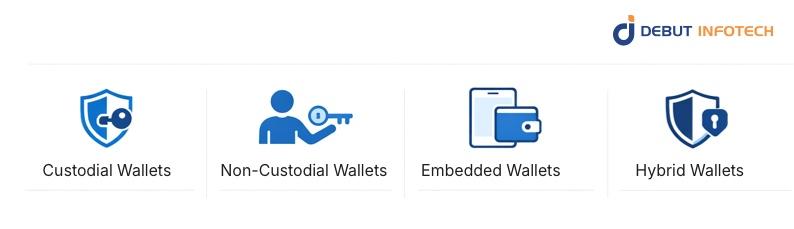
WaaS services usually offer multiple wallet options to meet the needs of different businesses. Each wallet option provides varying degrees of control, security, and ease of use.
In this wallet option, the service provider is responsible for the user’s private keys. The user does not have control over the keys. This wallet option is usually chosen by exchanges and businesses that provide the crypto payment gateway services. This wallet provides ease of use and eliminates the risk of losing the user’s keys.
In this wallet option, the user maintains control over the private keys. This wallet provides the highest degree of security. This wallet option aligns with the principles of blockchain technology, as the user is solely responsible for managing and securing the wallet.
Embedded wallets are integrated into the application. Users can access and utilize digital assets without the need for external wallets. This offers the highest level of ease of use and enables the business to engage the user.
A hybrid wallet combines both custodial and non-custodial wallet approaches. This approach enables businesses to provide users with flexibility in wallet management. This is crucial in ensuring that users have a safe and efficient experience.
There are many benefits to adopting and integrating a wallet-as-a-service platform for businesses looking to enter the world of digital assets.
| Feature | WaaS | Traditional Development |
| Development Time | Fast | Slow |
| Cost | Lower | High |
| Scalability | High | Limited |
| Maintenance | Managed by the provider | Managed in-house |
| Security | Built-in | Requires custom implementation |
| Customization | Moderate | High |
WaaS clearly offers a more efficient and cost-effective approach for most businesses.
WaaS is widely used by companies and industries for its versatility and scalability. It helps companies and businesses deliver a better user experience and more efficient financial interactions through wallet integration. It helps companies and businesses deliver a better user experience and more efficient financial interactions through wallet integration.
Cryptocurrency exchanges are using Wallet-as-a-Service to efficiently and securely manage user wallets. It helps companies and businesses streamline user wallet management.
Fintech applications are using Wallet-as-a-Service to efficiently and securely manage user wallets. It helps companies and businesses streamline user wallet management.
Companies and gaming platforms are using Wallet-as-a-Service to efficiently and securely manage user wallets. It helps companies and businesses streamline user wallet management.
Companies and e-commerce platforms are using Wallet-as-a-Service to efficiently and securely manage user wallets. It helps companies and businesses streamline user wallet management.
Companies and DeFi platforms are using Wallet-as-a-Service to efficiently and securely manage user wallets. It helps companies and businesses streamline user wallet management.
Companies use wallets to store reward points, tokens, and digital incentives. This improves customer engagement by providing a seamless and transparent way to manage rewards.
Different organizations across sectors are embracing wallet-as-a-service to remain competitive in the current digital, decentralized economy. In this regard, WaaS helps organizations meet customers’ changing needs for seamless, secure, and instant financial services. The platform enables organizations to add digital wallet services to their businesses.
Apart from these benefits, WaaS enables organizations to scale up and reach more customers without issues. Several top cryptocurrency companies in the sector make use of WaaS to efficiently manage operations and provide innovative financial services to customers.
WaaS is greatly influencing the development of crypto wallet development services for organizations. In this regard, WaaS helps organizations avoid the need to develop complex systems. Developing wallets is complex and time-consuming. However, with the emergence of WaaS, organizations can now make the most out of the ready-to-use infrastructure. In this regard, organizations can avoid building wallets from scratch and make the most of the ready-to-use infrastructure.
Instead of developing wallets from scratch, organizations can:
This helps organizations avoid the risks and complexities involved in the development process. The emergence of WaaS is highly beneficial for organizations planning to develop an Ordinal wallet development platform.
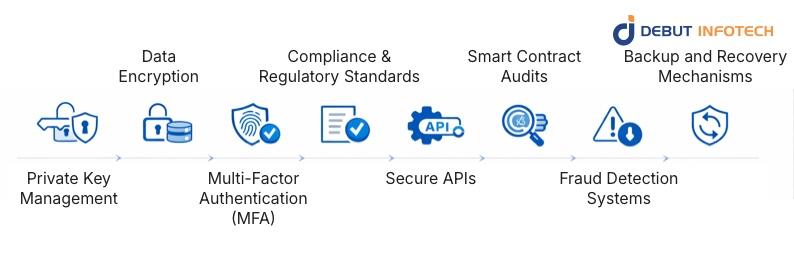
Security is one of the most critical aspects when implementing wallet as a service solutions. Since digital wallets handle sensitive financial data and private keys, even minor vulnerabilities can lead to significant losses.
Below are the key security considerations businesses must address:
1. Private Key Management: Private keys are the foundation of any wallet system. Businesses must decide between custodial (provider-managed keys) and non-custodial (user-managed keys) models. Secure key storage methods such as Hardware Security Modules (HSMs) and multi-party computation (MPC) should be prioritized.
2. Data Encryption: All sensitive data, including transaction details and user information, should be encrypted both at rest and in transit. Strong encryption protocols ensure data remains secure even if intercepted.
3. Multi-Factor Authentication(MFA): Adding MFA significantly enhances security by requiring multiple verification steps before granting access. This reduces the risk of unauthorized account access.
4. Compliance & Regulatory Standards: WaaS platforms must comply with global standards such as KYC (Know Your Customer) and AML (Anti-Money Laundering). Compliance not only enhances trust but also ensures legal operation across regions.
5. Secure APIs: Since WaaS relies heavily on APIs, securing these endpoints is essential. Implement rate limiting, authentication tokens, and API gateways to prevent misuse.
6. Smart Contract Audits: If your platform interacts with blockchain smart contracts, regular audits are necessary to identify vulnerabilities and bugs.
7. Fraud Detection Systems: Advanced monitoring tools can detect suspicious activities in real time and prevent fraudulent transactions.
8. Backup and Recovery Mechanisms: Secure backup systems ensure users can recover wallets in case of lost credentials or system failures.
By prioritizing these security measures, businesses can build trust and ensure safe transactions within their WaaS ecosystem.
While wallets-as-a-service offer numerous benefits, businesses should also consider some challenges.
The future of wallet as a service is closely tied to the growth of blockchain, fintech, and digital payments.
Key Trends to Watch:
Selecting the right WaaS provider is crucial for long-term success.
Businesses investing in ewallet app development should prioritize providers that align with their long-term goals.
| Feature | WaaS | Traditional Wallets |
| Deployment Speed | Fast | Slow |
| Infrastructure | Managed | Self-managed |
| Cost | Lower upfront | High initial investment |
| Security | Provider-managed | Fully user/business managed |
| Maintenance | Minimal | High |
WaaS does not operate in isolation. It integrates with several components of the blockchain ecosystem:
This integration makes WaaS a powerful tool for building comprehensive digital platforms.
Wallet as a service is redefining how businesses approach digital asset management by eliminating the need for complex infrastructure and enabling rapid deployment. With features like embedded wallets, scalable architecture, and built-in security, WaaS empowers businesses to deliver seamless financial experiences while reducing development time and cost.
As the digital economy continues to evolve, adopting WaaS can provide a significant competitive advantage. By choosing the right provider, prioritizing security considerations, and aligning with future trends, businesses can build robust, scalable, and user-friendly wallet solutions that meet the demands of modern users.
Wallet-as-a-service is a cloud-based solution that enables businesses to create and manage digital wallets without building infrastructure from scratch. It enables seamless integration of wallet functionality into apps and platforms using APIs.
Security considerations include private key management, data encryption, multi-factor authentication, and regulatory compliance. Businesses must also ensure secure APIs, fraud detection systems, and reliable backup mechanisms to protect user assets.
Wallet-as-a-Service eliminates the need to build wallet infrastructure from scratch by offering ready-to-use, cloud-based solutions. In contrast, traditional wallet development requires significant time, resources, and ongoing maintenance.
Yes, most modern WaaS platforms support both cryptocurrencies and fiat currencies. This flexibility allows businesses to offer diverse payment options and cater to a wider audience.
Embedded wallets can be highly secure when implemented with proper encryption, authentication, and compliance measures. Their security largely depends on the WaaS provider and the safeguards integrated into the system.
Industries such as fintech, e-commerce, gaming, healthcare, and real estate can benefit from WaaS solutions. These platforms enable seamless transactions, digital asset management, and improved user experiences.
Implementation time can range from a few weeks to a couple of months, depending on the integration’s complexity. Using WaaS significantly reduces development time compared to building a wallet from scratch.

Our Latest Insights
USA

2501 Chatham, Rd Suite R Springfield, IL 62704
+1-708-515-4004
info@debutinfotech.com
UK

7 Pound Close, Yarnton, Oxfordshire, OX51QG
+44-770-304-0079
info@debutinfotech.com
Canada

154 Eden Oak Trail, Kitchener, ON N2A 0H9
+1-708-515-4004
info@debutinfotech.com
INDIA

Sector 101-A, Plot No: I-42, IT City Rd, JLPL Industrial Area, Mohali, PB 140306
9888402396
info@debutinfotech.com

9001:2015
Quality Certified

ISO 27001
Security Certified

A+ Rating
Accredited Business

Certik
Security & Audit


Copyright © 2026, Debut Infotech. All rights reserved. | Privacy Policy