ON THIS PAGE
Progress0%


Our Global Presence :


The debate around CEX Vs DEX sits at the center of how modern crypto trading is evolving. Centralized exchanges still dominate activity, with the top platforms processing about $18.7 trillion in trading volume in 2025 alone, according to reports from CoinGecko.
Furthermore, decentralized exchanges are gaining ground, with leading platforms like Uniswap handling over $111.8 billion in monthly volume and holding 35.9% of the DEX market share. This shift highlights a growing split between convenience and control.
CEX platforms offer structured environments, deep liquidity, and fiat access, while DEX platforms prioritize self-custody, transparency, and open participation. Understanding how each model works, along with their strengths and trade-offs, is key for traders and businesses deciding where to operate or invest.
In this article, we will explain what CEXs and DEXs are, along with their pros, cons, and key differences. We’ll also discuss business and operational considerations for Exchange Operators, and how to choose the right model for your business.
A centralized exchange (CEX) is a cryptocurrency trading platform operated by a company that manages user accounts, executes trades, and holds user funds. It acts as an intermediary between buyers and sellers, similar to traditional financial exchanges. Users deposit assets into the platform, and the exchange handles order matching, pricing, and settlement within its own system.
A CEX operates through a structured process. Users create accounts, complete identity verification, and deposit funds. The platform maintains an internal order book where buy and sell orders are matched. Trades are executed off-chain, which allows faster processing and lower costs. The exchange also manages custody, meaning it stores users’ private keys and controls access to funds.
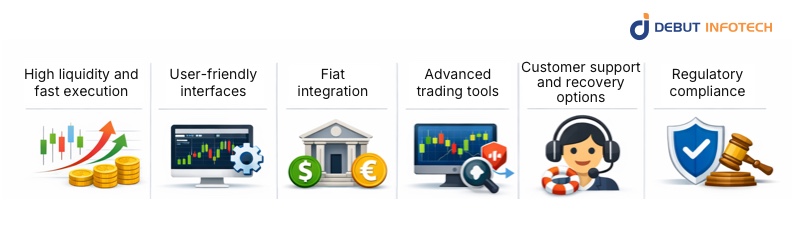
Centralized exchanges aggregate large volumes of trades, ensuring minimal slippage and quick order fulfillment even for high-value transactions.
Most CEX platforms are designed for ease of use, making them accessible to beginners with clear dashboards, charts, and guided workflows.
Users can deposit and withdraw traditional currencies such as USD and EUR, making it easy to enter the crypto market.
Features such as margin trading, futures, stop-loss orders, and analytics tools support both retail and professional traders.
Account recovery, dispute resolution, and support teams provide a safety net that decentralized systems typically lack.
Many CEX platforms follow legal requirements, which can build trust with institutional users and large investors.
Users do not control their private keys, so funds remain under the exchange’s control. This creates dependency and exposure if the platform fails.
Centralized systems are common targets for hacking, and a single breach can affect millions of users.
Identity verification and transaction monitoring reduce anonymity and may discourage privacy-focused users.
The exchange can freeze accounts, restrict withdrawals, or halt trading during periods of volatility, thereby limiting user autonomy.
A decentralized exchange (DEX) is a blockchain-based platform that allows users to trade cryptocurrencies directly with one another without an intermediary. Transactions are executed through smart contracts, and users retain full control of their funds. DEX platforms rely on blockchain networks to validate and settle trades transparently.
DEX platforms use smart contracts to automate trading processes. Instead of traditional order books, many DEXs rely on automated market makers (AMMs), where liquidity pools replace direct buyer-seller matching. Users connect crypto wallets, trade directly from their wallets, and transactions are recorded on-chain. This removes the need for a central authority while ensuring transparency.
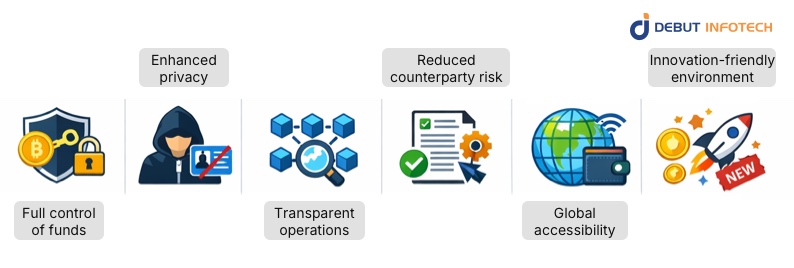
Users retain ownership of their private keys, eliminating reliance on third-party custodians.
Most DEX platforms do not require identity verification, allowing users to trade with minimal exposure of personal data.
All transactions are recorded on public blockchains, enabling anyone to verify trades and liquidity levels.
Since trades are executed via smart contracts, there is no central entity that can misuse funds.
DEX platforms are accessible to anyone with a crypto wallet and internet connection, without geographic restrictions.
New tokens and DeFi projects often launch first on DEX platforms, offering early access.
Compared to CEX platforms, some DEXs struggle with thin liquidity, which can lead to price slippage.
Wallet management, gas fees, and transaction confirmations can be challenging for beginners.
Bugs or vulnerabilities in smart contracts can lead to loss of funds if exploited.
Understanding how centralized and decentralized exchanges differ helps clarify their roles in the crypto ecosystem. Each model operates with distinct structures, which affect control, usability, security, liquidity, and the overall trading experience.
Here is a comparison table:
| Criteria | CEX (Centralized Exchange) | DEX (Decentralized Exchange) |
| Control & Ownership | Platform controls user funds and private keys; users rely on the exchange for asset security. | Users retain full control of private keys and funds through non-custodial wallets. |
| User Experience | Intuitive interfaces, guided onboarding, and customer support for easier navigation. | Requires wallet setup and blockchain knowledge; less intuitive for new users |
| Liquidity | High liquidity is supported by large user bases and market makers | Liquidity depends on pools; it can vary and cause slippage in low-volume markets |
| Security Model | Centralized security systems; vulnerable to large-scale breaches | No central point of failure; risks tied to smart contract vulnerabilities |
| Regulation & Compliance | Operates under regulatory frameworks with KYC/AML requirements | Minimal direct regulation; often operates without mandatory identity verification |
| Trading Features | Advanced tools like margin trading, futures, stop-loss orders, and analytics |
CEX platforms follow a structured listing process. Assets go through internal reviews, legal checks, and liquidity assessments before being added. This reduces exposure to unreliable tokens but limits variety. Users typically find established cryptocurrencies and vetted projects, which creates a more controlled and predictable trading environment.
DEX platforms operate without listing restrictions. Any token can be added by creating a liquidity pool, which opens access to new and experimental assets. This broad selection attracts early adopters but increases exposure to low-quality or fraudulent tokens, requiring users to perform careful due diligence before trading.
CEX platforms are governed by centralized organizations responsible for operations, upgrades, and policy enforcement. Decision-making is internal, allowing faster implementation of changes. This structure supports accountability but places significant control in the hands of a single entity, which can influence trading conditions and platform rules.
DEX platforms rely on smart contracts and decentralized governance mechanisms. Decisions are often made through community voting or protocol rules embedded in code. This removes reliance on a central authority, though it can slow down decision-making and introduce coordination challenges when updates or fixes are required.
CEX platforms integrate with banking systems and payment processors, allowing users to deposit and withdraw fiat currencies. This simplifies onboarding for new users entering the crypto market. It also enables direct trading pairs with fiat, improving accessibility and supporting broader adoption across regions.
DEX platforms typically do not support fiat transactions. Users must already hold cryptocurrency to trade. Entry into the ecosystem often requires using a separate fiat on-ramp service. This additional step can limit accessibility, especially for users unfamiliar with managing multiple platforms or wallets.
CEX platforms are designed with structured interfaces, guided onboarding, and simplified workflows. Features such as account dashboards, portfolio tracking, and integrated help systems make navigation easier. This approach supports users with limited technical knowledge and reduces the friction associated with entering the crypto market.
DEX platforms require users to connect wallets, manage private keys, and handle transaction confirmations. The process involves understanding gas fees and blockchain interactions. While experienced users adapt quickly, beginners may find the experience less intuitive and more prone to errors without proper guidance.
CEX platforms operate largely off-chain, which limits visibility into internal processes such as order matching and reserve management. Users rely on trust in the platform’s integrity and disclosures. While some exchanges publish audits or proof-of-reserves, full transparency is not always guaranteed.
DEX platforms record all transactions on public blockchains. This allows anyone to verify trades, liquidity levels, and contract activity in real time. The open nature of blockchain systems increases accountability. It reduces reliance on trust, though it requires users to interpret on-chain data effectively.
CEX platforms maintain custody of user funds by holding private keys in centralized wallets. This simplifies account management and enables features like password recovery. However, it creates dependency on the platform’s security measures and exposes users to risks if the exchange is compromised.
DEX platforms allow users to retain full control of their funds through non-custodial wallets. Private keys remain with the user at all times. This eliminates third-party custody risk but places full responsibility on users to secure their assets and manage access credentials properly.
CEX platforms require identity verification for regulatory compliance. Users must provide personal information, which is stored and monitored. This reduces anonymity but supports legal operation and fraud prevention. Privacy-conscious users may find these requirements restrictive.
DEX platforms generally allow trading without identity verification. Users interact with the platform through wallet addresses, which are not directly tied to personal identities. This enhances privacy, although transaction activity remains visible on public blockchains and can still be analyzed.
CEX platforms implement centralized security systems that include encryption, cold storage, and monitoring tools. While these measures can be strong, they create a single point of failure. A successful attack on the platform can impact a large number of users simultaneously.
DEX platforms distribute risk by removing centralized control. Funds are held in user wallets rather than a central repository. However, vulnerabilities in smart contracts can be exploited, leading to losses. Security depends heavily on code quality, audits, and ongoing protocol maintenance. That’s why it’s crucial to partner with reliable cryptocurrency exchange development companies.
CEX platforms concentrate operational control, liquidity, and custody within a single entity. This structure can create systemic risk if the platform experiences financial or technical issues. Users depend on the exchange’s stability, which can amplify the impact of failures.
DEX platforms distribute control across participants and protocols. Liquidity is spread across pools, and governance is decentralized. This reduces reliance on a single entity but introduces complexity in coordination and may fragment liquidity across multiple platforms.
CEX platforms typically offer deep liquidity supported by high trading volumes and market makers. This enables efficient trade execution with minimal price slippage. Large orders can be processed quickly, which is important for institutional and high-frequency traders.
For cex vs dex volume, DEX platforms rely on liquidity pools funded by users. Liquidity levels vary depending on the pool size and incentives. Smaller pools can lead to higher slippage, especially for large trades. However, innovations in automated market makers continue to improve liquidity efficiency.
CEX platforms have achieved widespread adoption due to ease of use, regulatory alignment, and fiat integration. They attract retail users, institutions, and enterprises. Their structured approach supports mainstream participation and consistent growth across different markets.
DEX platforms are gaining traction as decentralized finance continues to expand. Adoption is driven by users seeking control, transparency, and access to new tokens. Growth remains strong, though it is influenced by user education, network performance, and evolving regulatory conditions.
CEX platforms provide a wide range of trading features, including derivatives, margin trading, advanced order types, and analytics tools. These capabilities support diverse trading strategies and professional use cases, making them suitable for both beginners and experienced traders.
DEX platforms focus on core trading functionality, primarily token swaps and liquidity provision. While cex vs dex features are expanding, they remain less extensive compared to centralized platforms. Decentralized crypto exchange development continues to introduce new capabilities, though adoption depends on usability and network efficiency.
Running a crypto exchange involves more than enabling trades. Operators must balance revenue generation, regulatory alignment, and technical performance to ensure long-term viability, stability, and consistent user trust.
CEX platforms generate income through multiple channels, including trading fees, listing charges, withdrawal fees, and premium services such as margin trading or staking. This diversified structure supports predictable revenue growth.
DEX platforms rely on transaction fees and liquidity pool commissions, often shared with users. Profitability depends heavily on dex vs cex trading volume, token incentives, and sustained user engagement.
CEX operators must align with regulatory requirements, including KYC, AML, and licensing frameworks across jurisdictions. This involves legal oversight, reporting obligations, and operational transparency. Compliance increases credibility but raises costs and complexity.
Top decentralized exchanges operate with fewer direct requirements. However, evolving regulations may impose restrictions, making proactive legal planning necessary for long-term sustainability.
CEX platforms require high-performance infrastructure, including matching engines, secure storage systems, and scalable backend architecture to handle large trading volumes. Downtime directly impacts revenue and user trust.
DEX platforms depend on blockchain networks, where scalability is influenced by network throughput and gas fees. Efficient smart contract design and layer-2 integration can improve performance and reduce congestion.
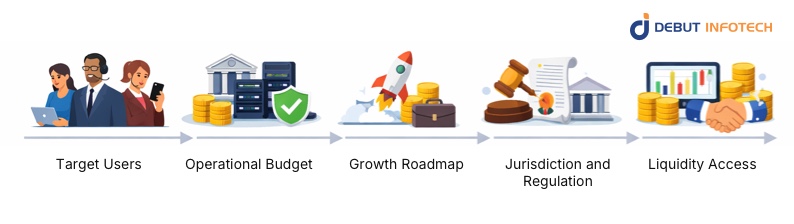
Selecting between Dex vs CEX crypto models depends on business priorities, available resources, and long-term vision. Each approach offers distinct advantages, and the right choice aligns with user expectations, compliance needs, and growth strategy.
CEX platforms are suited for onboarding retail users, institutions, and traders who prefer structured environments with support services. Their design prioritizes ease of use and accessibility.
DEX platforms attract experienced users who value control, privacy, and decentralized access. Defining the primary audience helps shape platform features, interface design, and overall operational priorities.
CEX platforms require significant capital investment in infrastructure, compliance, security systems, and staffing. Ongoing costs include maintenance, customer support, and regulatory updates.
DEX platforms reduce some overhead by leveraging blockchain networks, but still require investment in smart contract development, audits, and liquidity incentives. Budget planning with DEX development services should align with long-term operational goals and scalability expectations.
CEX platforms scale through feature expansion, partnerships, and aggressive user acquisition strategies. Growth often depends on marketing, regional expansion, and new financial products.
DEX platforms grow through ecosystem integration, token incentives, and community-driven adoption. A clear roadmap should define milestones, including user growth targets, feature releases, and strategies for maintaining competitive positioning.
CEX platforms must operate within the defined legal frameworks that vary by region. This requires ongoing monitoring of regulatory changes and adapting business models accordingly.
DEX platforms operate globally but are not immune to regulation. Authorities are increasingly focusing on decentralized systems, underscoring the need to assess jurisdictional risks and plan for potential compliance requirements.
CEX platforms secure liquidity through partnerships with market makers, institutional investors, and internal reserves. This ensures stable trading conditions and efficient execution.
DEX platforms depend on liquidity pools funded by users, supported by incentives such as yield farming. Maintaining adequate liquidity requires continuous optimization of incentives and strategies to attract and retain liquidity providers.
The CEX Vs DEX decision comes down to priorities. Centralized exchanges offer structure, liquidity, and ease of use, while decentralized platforms provide control, transparency, and flexibility. Businesses and traders must weigh these trade-offs carefully, aligning their choice with user expectations, regulatory needs, and long-term growth strategies in an increasingly competitive crypto market.
For businesses planning to build in this space, Debut Infotech provides cryptocurrency exchange development services. We also deliver tailored CEX and DEX development solutions. Their expertise covers secure architecture, scalable infrastructure, and compliance-ready systems, helping you launch reliable platforms that balance performance, user trust, and evolving market demands.
CEX vs DEX comes down to control and structure. A centralized exchange manages your funds and runs the platform. In contrast, a decentralized exchange lets you trade directly from your wallet. CEX feels easier for beginners. DEX gives you more control but expects you to handle everything yourself.
It depends on what you mean by safe. DEX platforms reduce the risk of hacks on a central server since you keep your keys. CEX platforms, though, often have stronger customer protection and recovery options. One protects control, the other offers backup when things go wrong.
Most beginners start with a CEX because it feels familiar. You get login systems, customer support, and simpler interfaces. DEX platforms can feel confusing at first, especially when it comes to wallets and gas fees. If you’re new, a CEX usually helps you get comfortable before exploring further.
CEX platforms usually require KYC, meaning you’ll submit personal details before trading. DEX platforms don’t ask for that since trades happen directly from your wallet. That privacy is appealing, but it also means you won’t get much help if you make mistakes.
Long-term users often use both. CEX platforms work well for quick trades and fiat access, while DEX platforms suit those who want full control over assets. Over time, many traders mix both depending on what they need, rather than sticking to just one approach.

Our Latest Insights
USA

2501 Chatham, Rd Suite R Springfield, IL 62704
+1-708-515-4004
info@debutinfotech.com
UK

7 Pound Close, Yarnton, Oxfordshire, OX51QG
+44-770-304-0079
info@debutinfotech.com
Canada

326 Parkvale Drive, Kitchener, ON N2R1Y7
+1-708-515-4004
info@debutinfotech.com
INDIA

Sector 101-A, Plot No: I-42, IT City Rd, JLPL Industrial Area, Mohali, PB 140306
9888402396
info@debutinfotech.com