




Cryptocurrency Exchange Development Company
RECOGNIZED BY LEADING REVIEW PLATFORMS
 Review us on Clutch - Debut Infotech
 Review us on GoodFirms - Debut Infotech
 Top Blockchain Developer on TopDevelopers - Debut Infotech
RECOGNIZED BY LEADING B2B RATING & REVIEW PLATFORMS
Review us on Clutch - Debut InfotechReview us on GoodFirms - Debut InfotechTop Blockchain Developer on TopDevelopers - Debut InfotechTrusted By




Milestones We've Achieved
50M+
Users Across Platforms We've Helped Build
$2B+
Daily Trading Volume on Platforms We've Contributed To
#2
Trusted by Teams Behind The World's Crypto Exchange
10+
Years Building Regulated Blockchain & Exchange Infrastructure
Experienced Across Key Regulatory Frameworks
MiCA
VARA
FINTRAC
FinCEN
FCA
Crypto Exchange Market Intelligence — Why Now Is the Time to Build
The global cryptocurrency market is not in a speculative cycle — it is in a structural buildout. Capital, users, and regulation are all converging on the same conclusion: crypto exchange infrastructure is the defining financial technology investment of this decade. Here is what the data shows.

800–900 Million Active Users by 2026
According to CoinGate, the global number of active cryptocurrency users is projected to reach 800 to 900 million by 2026 — approaching 1 billion worldwide as adoption accelerates across both emerging and developed markets.
Source:coingate.com

$393.45 Billion Blockchain Market by 2030
MarketsandMarkets projects the global blockchain market will expand from approximately $32.99 billion in 2025 to $393.45 billion by 2030 — a compounded growth rate that reflects the shift from blockchain pilots to full-scale production infrastructure.
Source:marketsandmarkets.com

~$2 Trillion in Stablecoins by 2028
McKinsey forecasts the total value of issued stablecoins will rise to approximately $2 trillion by 2028. A significant share of this volume flows through exchange platforms as base trading pairs and settlement rails — making exchange infrastructure inseparable from stablecoin growth.
Source:mckinsey.com

28.4% CAGR Through 2030
GrandViewResearch forecasts a 28.4% compound annual growth rate for the global cryptocurrency exchange platform market through 2030 — one of the highest growth trajectories among all financial technology categories.
Source:grandviewresearch.com
Key Market Insights for Launching a Crypto Exchange Platform
Let's have a look at the key markets and growth drivers — where demand is highest and why it matters for your exchange.
Crypto exchange demand is not evenly distributed. The highest-growth markets share common characteristics: young tech-literate populations, limited access to traditional banking, inflation-driven demand for stable digital assets, and rising remittance volumes moving on-chain. Understanding where users already are is the first step to building an exchange that serves them.
Among the top 30 economies by crypto ownership rate, Turkey and Argentina stand out as emerging market leaders, driven by inflation-hedging behaviour and high rates of digital asset engagement among younger demographics.
These markets are not waiting. They are already trading.
Debut Infotech has built exchange infrastructure for operators serving these exact user bases — compliant, scalable, and built for the transaction volumes these markets generate.

Choose the Right Crypto Exchange Model for Your Market
Cryptocurrency exchange platforms do not operate as standalone applications. They rely on trading engines, liquidity systems, custody frameworks, compliance-aware onboarding, and real-time transaction processing. Our cryptocurrency exchange development services bring these components together through structured delivery models tailored to different exchange types and market strategies.
Centralized Exchange (CEX) Development
Centralized Exchange (CEX) Development
Enterprise-grade centralized exchange development focused on high-performance trading, liquidity management, and regulatory-ready infrastructure.
- Order matching engine with real-time execution
- Liquidity aggregation and market-making integrations
- Custodial wallet infrastructure and fund management
- KYC/AML onboarding and admin control systems

Decentralized Exchange (DEX) Development
Decentralized Exchange (DEX) Development
Secure and transparent decentralized exchange development enabling peer-to-peer trading without intermediaries.
- AMM (Automated Market Maker) and liquidity pool architecture
- Smart contract-based token swaps and staking mechanisms
- Non-custodial wallet integrations
- Cross-chain and Layer-2 support

Centralized Exchange (CEX) Development
Enterprise-grade centralized exchange development focused on high-performance trading, liquidity management, and regulatory-ready infrastructure.
- Order matching engine with real-time execution
- Liquidity aggregation and market-making integrations
- Custodial wallet infrastructure and fund management
- KYC/AML onboarding and admin control systems
Decentralized Exchange (DEX) Development
Secure and transparent decentralized exchange development enabling peer-to-peer trading without intermediaries.
- AMM (Automated Market Maker) and liquidity pool architecture
- Smart contract-based token swaps and staking mechanisms
- Non-custodial wallet integrations
- Cross-chain and Layer-2 support
P2P Crypto Exchange Development
P2P Crypto Exchange Development
Custom-built P2P crypto exchange platforms enabling direct buyer-seller transactions with escrow protection.
- Escrow-based trading systems
- Multi-payment method integrations (bank, wallets, fiat)
- User reputation and dispute resolution modules
- Admin monitoring and fraud prevention tools

White Label Crypto Exchange Solution
White Label Crypto Exchange Solution
Pre-built, customizable white label crypto exchange platforms designed for faster deployment and branding flexibility.
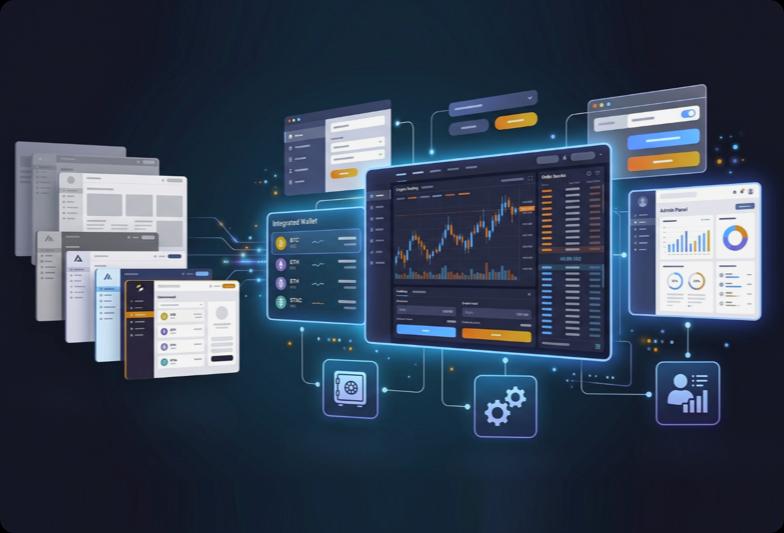
- Ready-to-deploy trading infrastructure with customization layers
- Integrated wallet, trading engine, and admin panel
- Branding, UI/UX customization, and feature extensions
- Faster go-to-market with reduced development cycles
P2P Crypto Exchange Development
Custom-built P2P crypto exchange platforms enabling direct buyer-seller transactions with escrow protection.
- Escrow-based trading systems
- Multi-payment method integrations (bank, wallets, fiat)
- User reputation and dispute resolution modules
- Admin monitoring and fraud prevention tools
White Label Crypto Exchange Solution
Pre-built, customizable white label crypto exchange platforms designed for faster deployment and branding flexibility.
- Ready-to-deploy trading infrastructure with customization layers
- Integrated wallet, trading engine, and admin panel
- Branding, UI/UX customization, and feature extensions
- Faster go-to-market with reduced development cycles
Hybrid Exchange Development
Hybrid Exchange Development
Advanced hybrid crypto exchange development combining centralized performance with decentralized control.
- Off-chain order matching with on-chain settlement
- Custody flexibility (custodial + non-custodial models)
- Enhanced security with optimized trading speed
- Multi-layer architecture balancing compliance and privacy

OTC Crypto Exchange Platform
OTC Crypto Exchange Platform
Custom OTC crypto exchange development for high-volume institutional trading and private transactions.
- Direct trade execution without public order books
- Liquidity desk integration and negotiated pricing
- Institutional-grade custody and settlement workflows
- Compliance-aware transaction monitoring

Hybrid Exchange Development
Advanced hybrid crypto exchange development combining centralized performance with decentralized control.
- Off-chain order matching with on-chain settlement
- Custody flexibility (custodial + non-custodial models)
- Enhanced security with optimized trading speed
- Multi-layer architecture balancing compliance and privacy
OTC Crypto Exchange Platform
Custom OTC crypto exchange development for high-volume institutional trading and private transactions.
- Direct trade execution without public order books
- Liquidity desk integration and negotiated pricing
- Institutional-grade custody and settlement workflows
- Compliance-aware transaction monitoring
Crypto Derivatives Exchange Development
Crypto Derivatives Exchange Development
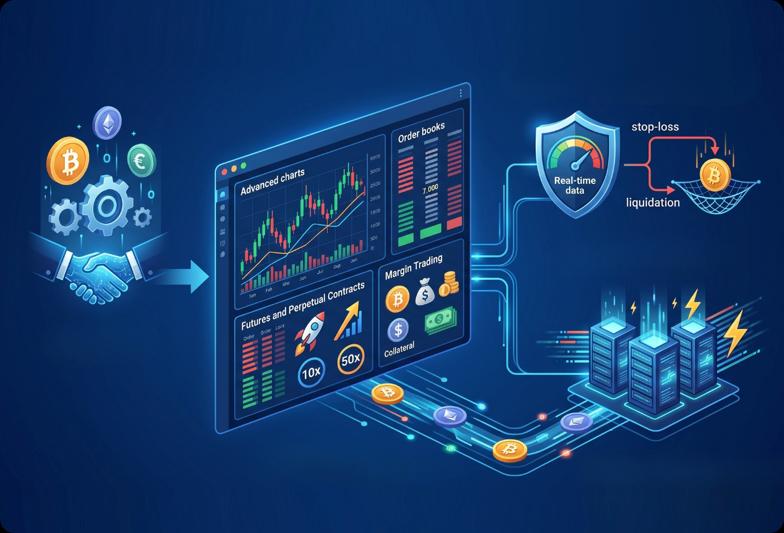
High-performance crypto derivatives exchange platforms supporting futures, options, and leveraged trading.
- Futures, perpetual contracts, and margin trading systems
- Risk management engines and liquidation logic
- Advanced charting and analytics tools
- High-frequency trading infrastructure
DeFi Exchange Development
DeFi Exchange Development
Scalable DeFi exchange development solutions enabling decentralized trading, staking, and yield generation.
- AMM-based swaps and liquidity pools
- Yield farming, staking, and governance modules
- Token launch and liquidity bootstrap mechanisms
- Integration with DeFi protocols and aggregators

Crypto Derivatives Exchange Development
High-performance crypto derivatives exchange platforms supporting futures, options, and leveraged trading.
- Futures, perpetual contracts, and margin trading systems
- Risk management engines and liquidation logic
- Advanced charting and analytics tools
- High-frequency trading infrastructure
DeFi Exchange Development
Scalable DeFi exchange development solutions enabling decentralized trading, staking, and yield generation.
- AMM-based swaps and liquidity pools
- Yield farming, staking, and governance modules
- Token launch and liquidity bootstrap mechanisms
- Integration with DeFi protocols and aggregators
Our Cryptocurrency Exchange Development Projects
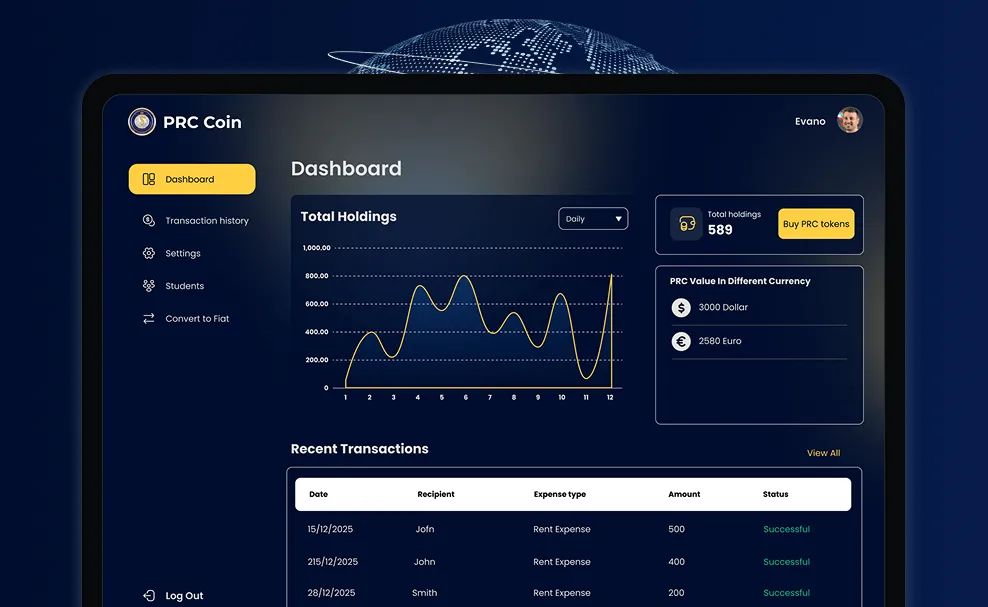
PRC – A Blockchain-Based Exchange and ICO Platform for Real Estate Finance
12K+
Registered Investors
3-in-1 Platform
ICO + Exchange + Payment Ecosystem

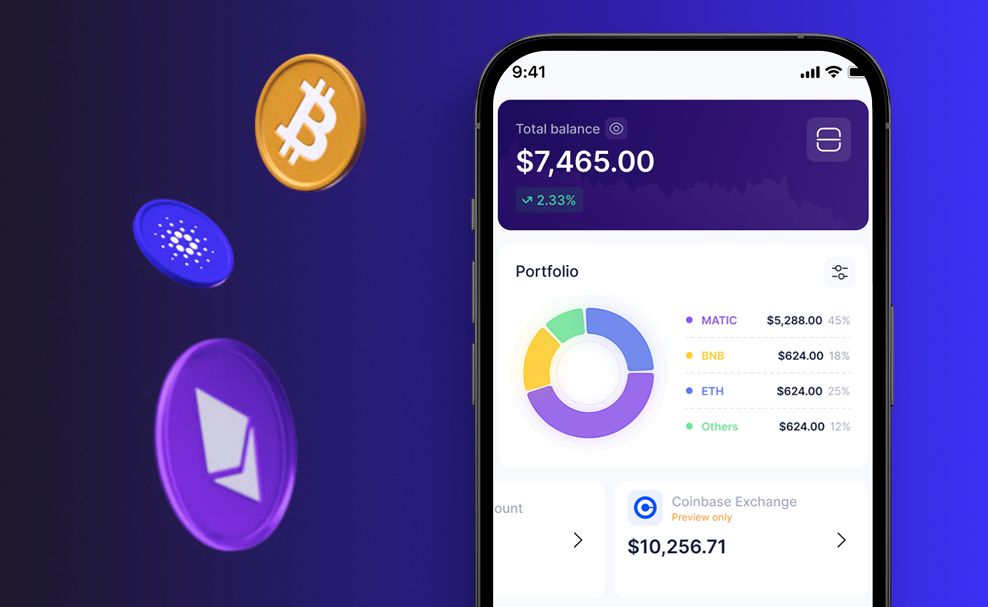
An Enterprise Crypto Suite for Secure Trading
$12B
in cumulative trading volume
2nd Largest
Canada's crypto exchange by volume


A Blockchain Based Solution For Coffee Supply Chain
$2M
Funding Received
18K+
Producers & Co-Ops



A Blockchain-Based Diamond Traceability Solution
$20M
funding received
50
Top companies worldwide


Transforming Healthcare Delivery Through Outcome-Based Blockchain Infrastructure
25K+
Patient Records Managed
50+
Healthcare Stakeholders Integrated
CEX vs DEX vs P2P vs White-Label vs Hybrid — Which Exchange Should You Build?
A centralized exchange (CEX) is best for businesses prioritizing liquidity, control, and regulatory alignment. A decentralized exchange (DEX) is ideal for platforms focused on user custody and transparency. P2P exchanges suit markets with flexible payment needs, while white label exchanges enable faster go-to-market. Hybrid exchanges combine performance with partial decentralization for balanced control and flexibility.
Choosing the right crypto exchange model depends on your target market, compliance requirements, liquidity strategy, and time to launch. The comparison below helps you evaluate each model based on real-world execution factors.
CEX
Centralized
DEX
Decentralized
P2P
Peer-to-Peer
White Label
White Label
Hybrid
Hybrid
Crypto Exchange Comparison Table
| Factor | CEX (Centralized) | DEX (Decentralized) | P2P Exchange (Peer-to-Peer) | White Label Exchange (White Label) | Hybrid Exchange (Hybrid) |
|---|---|---|---|---|---|
Custody Model | Platform-controlled custody | User-controlled (non-custodial) | Escrow-based custody | Platform-controlled (configurable) | Mixed (custodial + non-custodial) |
Speed & Performance | High-speed execution | Moderate (on-chain dependent) | Moderate | High (pre-built optimized engine) | High (off-chain + on-chain) |
Liquidity Access | High (market makers, APIs) | Depends on pools/liquidity | Limited (user-driven) | Moderate to high (integrations) | High (aggregated + internal) |
Compliance Complexity | High (KYC, AML, reporting) | Low to moderate | Moderate | Moderate (configurable) | Moderate to high |
Cost Range | $40K – $150K+ | $30K – $120K+ | $25K – $100K+ | $15K – $60K+ | $50K – $180K+ |
Time to Market | 3–6 months | 2–5 months | 2–4 months | 2–6 weeks | 4–7 months |
Best For | Enterprises, institutional platforms | DeFi ecosystems, token projects | Regional markets, fiat-heavy users | Fast launch, startups, MVPs | Scaling platforms, advanced use cases |
Why Work With Debut Infotech

Early Blockchain Adopters
Active in blockchain development since 2015, contributing to early enterprise implementations and evolving alongside the ecosystem.

IBM & Enterprise Blockchain Engagement
Hands-on participation in IBM blockchain initiatives with exposure to Hyperledger Fabric, Corda frameworks, and regulated enterprise network models.
Creators of FabDep (Fabric Deployer)
Developed FabDep, an internal framework that streamlines Hyperledger Fabric deployment and reduces enterprise network setup complexity.
Early Blockchain Adopters
Blockchain-native since 2015, with hands-on experience building early distributed systems and evolving alongside the digital asset ecosystem.
Blockchain-native since 2015, with hands-on experience building early distributed systems and evolving alongside the digital asset ecosystem.
IBM & Corda Enterprise Exposure
Practical involvement in enterprise blockchain environments with exposure to Hyperledger Fabric, Corda frameworks, and regulated network architectures used in financial systems.
Creators of FabDep (Fabric Deployer)
Developed FabDep, an internal deployment framework that simplifies Hyperledger Fabric network setup and reduces complexity in enterprise-grade infrastructure provisioning.
Production-Ready Digital Asset Systems
Delivered live platforms across:
Centralized, Decentralized, and hybrid exchange systems
DeFi protocols, yield platforms, and DEX aggregators
Tokenization and asset-backed trading infrastructure
Wallet, custody, and transaction management systems
Regulatory Awareness Across Exchange Environments
Exchange platforms operate within jurisdiction-specific regulatory conditions that directly influence how systems are designed, deployed, and scaled. Our experience spans regulatory environments across North America, Europe, and the Middle East — shaping how exchange infrastructure is architected from the ground up. This familiarity informs critical system decisions early in the build cycle, including how transaction records are structured, how custody models are implemented, and how onboarding and monitoring workflows are designed. Regulatory considerations are accounted for at the architecture stage, not introduced after deployment.
Identity verification and transaction monitoring logic embedded within system workflows
Audit trail structures designed to support traceability and reporting requirements
Access control and governance layers integrated into core system architecture
Data handling and onboarding flows aligned with regulatory expectations
Exchange Infrastructure Across the Full Stack
From trading engine logic and backend systems to user interfaces and wallet integrations, our development scope covers the complete exchange lifecycle.We design systems that bring together trading, liquidity, custody, and user management into a unified operational environment.
Long-Term Engineering Partnership
Exchange platforms require continuous evolution — from performance optimization to feature expansion and integration updates. We remain engaged post-launch to support system upgrades, infrastructure scaling, monitoring, and ongoing improvements — ensuring long-term reliability and operational continuity.
Ready to Build an Exchange That Regulators and Investors Both Trust?
If you are scoping a crypto exchange build for a regulated market, the architecture decisions made in week one determine your compliance readiness in month twelve. Start with the right foundation.

Debut Infotech's Cryptocurrency Exchange Full-Spectrum Capabilities
(Basic · Advanced · AI)
From foundational trading features to advanced exchange features and AI-powered intelligence — every capability in our cryptocurrency exchange platform is purpose-built for performance, scale, and long-term competitive advantage.

User Registration & Secure Login
Multi-step onboarding with encrypted credentials, CAPTCHA, and identity verification before account activation

Two-Factor Authentication (2FA)
SMS, app-based, or biometric second-layer verification preventing unauthorised account access

Spot Trading Module
Market, limit, stop-loss, and stop-limit order execution across all supported trading pairs

Multi-Currency Wallet
Hot and cold wallet support with multi-signature management for deposits, withdrawals, and storage

Real-Time Order Book
Live bid-ask display with trade history, depth chart, and WebSocket-powered price feed updates

Fiat On/Off-Ramp
Bank transfer, card, and payment gateway integration for fiat deposits and crypto conversions

KYC/AML Integration
Automated identity verification and anti-money laundering screening at onboarding and transaction layer

Admin Dashboard
Centralized control panel for user management, trade monitoring, balances, and real-time analytics

Liquidity API Management
Internal liquidity modules and external aggregator API support for real-time price feeds

Mobile & Web Trading Interface
Responsive web portal and native iOS/Android apps with biometric login and real-time charting

Multi-Language & Multi-Currency Support
Localised interface and currency conversion across global languages and regional trading pairs

Referral & Reward Program
Tiered referral bonuses and trading activity rewards for user acquisition and retention

High-TPS Matching Engine
Exchange engine processing thousands of transactions per second with horizontal scalability

Withdrawal & Deposit Controls
Threshold management, manual review triggers, whitelisting, and blacklisting for asset flow control

Customer Support Module
Live chat, ticketing system, and knowledge base for trading, account, and technical issue resolution

Margin & Leverage Trading
Borrowed-fund exposure with real-time margin monitoring, liquidation engine, and risk controls

Futures & Perpetual Contracts
Futures, perpetuals, and options trading for hedging and speculative positioning on price movements

P2P Trading Desk
Peer-to-peer marketplace with escrow, dispute resolution, and reputation scoring for direct trades

OTC Trading Module
Large block trade execution off the order book with bespoke pricing and settlement confidentiality

Staking & Yield Programs
Token lock-up for protocol rewards with flexible or fixed terms and validator staking integration

Crypto Loans & Collateral Lending
Crypto-backed borrowing with interest rate logic, liquidation thresholds, and margin safety controls

Grid & Algorithmic Trading
Automated grid bots and strategy execution for passive and semi-automated trading approaches

Copy Trading Suite
Mirror professional trader positions in real time with configurable allocation and risk parameters

Cross-Chain Swap
Instant cross-chain asset conversion via atomic swaps with automated price discovery and minimal slippage

Token Launchpad / IEO Platform
Token sale hosting with KYC-gated investor onboarding, escrow, allocation limits, and listing support

NFT Marketplace Integration
NFT minting, listing, and trading with royalty distribution and wallet-native asset management

AMM Liquidity Pools
Automated market maker pools with dynamic pricing for illiquid pairs and liquidity provider fee rewards

Prepaid Crypto-Fiat Cards
Branded cards enabling real-world crypto spending with automatic conversion at point of sale

Merchant Payment Gateway
E-commerce crypto payment acceptance with fiat settlement and order reconciliation infrastructure

VIP Accounts & Tiered Fee Structure
Premium tiers with reduced fees, priority support, exclusive features, and elevated trading limits

AI Fraud & Risk Detection
Machine learning monitors transaction behaviour and network patterns to flag and block fraudulent activity

Smart Order Routing Engine
AI dynamically routes orders to optimal liquidity sources reducing slippage and improving execution price

Predictive Price Analytics
Forecasting models for volatility, trend direction, and price movement to inform trading desk decisions

Personalised Trading Dashboard
AI surfaces relevant pairs, tools, and interface layouts based on individual user trading behaviour

Sentiment Analysis & News Scanner
Real-time crawl of social media, news, and forums for sentiment signals and automated trading alerts

Dynamic Fee & Liquidity Pricing
AI adjusts maker/taker fees and liquidity incentives based on market volatility, load, and usage patterns

AI Chatbot & NLP Trading Assistant
Conversational agent handling trade queries, account support, and market questions via text or voice

Portfolio Rebalancing Advisor
Automated rebalancing suggestions aligned to user risk preferences and real-time market conditions

Token Scoring & Listing Evaluation
AI assesses developer activity, liquidity depth, and tokenomics to guide safe and informed token listings

Regulatory Compliance Monitoring
NLP scans watchlists, transaction flows, and emerging regulations to flag compliance issues automatically

Anomaly Detection for API Traffic
Real-time monitoring of API usage patterns, traffic spikes, and suspicious volumes to block bot attacks

AI-Driven Customer Segmentation
Behaviour-based user segmentation for personalised offers, retention campaigns, and product recommendations

Predictive Infrastructure Monitoring
Server health, latency, and storage anomaly detection to prevent downtime before it occurs

Dynamic Risk Management System
Automated leverage limits, margin call triggers, and exposure controls during high-volatility market events

AI-Powered KYC/AML Compliance Engine
Automated risk escalation, pattern recognition, and suspicious activity flagging across the compliance stack
Security Infrastructure Built Into Every Exchange Debut Infotech Delivers
Every exchange we build is hardened at the infrastructure, custody, and protocol layer — ensuring your platform is secure before it ever goes live.

CCSS Level 3 Compliance
Full adherence to the CryptoCurrency Security Standard at its highest tier — governing key generation, storage, usage, and operational security controls across the entire exchange.

CertiK Smart Contract Audit
Every smart contract deployed undergoes independent CertiK security auditing before production — with critical and high-severity findings fully remediated and audit reports delivered to the client.

95%+ Cold Storage Architecture
The vast majority of user funds are held in offline cold storage at all times — with hot wallets maintaining only the minimum liquidity required for daily operational withdrawals.

OFAC Sanctions Screening
Every user and transaction is screened in real time against the OFAC Specially Designated Nationals list — blocking sanctioned individuals, entities, and jurisdictions at the transaction layer.

Proof-of-Reserves
Cryptographic Merkle Tree attestation verifying that all exchange liabilities are fully backed by on-chain assets — publishable on demand for user transparency and regulatory review.

AES-256 Encryption
All data at rest and in transit is protected by AES-256 encryption — the same standard used by financial institutions and government agencies for sensitive data infrastructure.

ECC Key Management
Elliptic-curve cryptography underpins all private key generation, signing, and storage operations — providing maximum cryptographic security with minimal computational overhead.

Penetration Testing on Delivery
Every exchange undergoes mandatory third-party penetration testing before launch — covering the exchange engine, API layer, frontend, and custody infrastructure with full remediation before go-live.

DDoS & Anti-Denial of Service Protection
Enterprise-grade protection against distributed and targeted denial-of-service attacks — blocking overwhelming traffic volumes to ensure the exchange remains fully operational under sustained attack.

CSRF & SSRF Protection
Cross-site and server-side request forgery defenses prevent malicious external sources and unauthorised users from executing harmful actions within authenticated sessions or compromising internal systems.

Jail Login — Brute Force Prevention
Accounts are automatically locked after repeated failed login attempts — preventing brute force attacks and blocking credential stuffing attempts at the authentication layer.

Encrypted Data Transmission
All data transmitted between users, servers, and third-party integrations is fully encrypted — protecting credentials, transaction data, and sensitive user information from interception at every point.

Escrow & Smart Contract Security
Smart contract-based escrow mechanisms ensure funds are only released under verified, agreed conditions — eliminating counterparty risk and providing cryptographic certainty for every governed transaction.

SSL/TLS Infrastructure Hardening
All exchange interfaces and APIs operate exclusively over TLS 1.3 — with strict transport security headers, certificate pinning, and enforced HTTPS across every client-facing and server-side connection.
Our All-Inclusive Cryptocurrency Exchange Development Services
End-to-end cryptocurrency exchange development — from architecture and compliance to launch, liquidity, and post-deployment growth.


Exchange Architecture & Strategy Consulting
We define the right exchange model, system architecture, and integration strategy based on your market and user segments. This supports scalable cryptocurrency exchange development and aligns with long-term operational goals from the initial planning stage.

Custom Exchange Platform Development
We deliver tailored crypto exchange development services with trading engines, wallet systems, and user management layers. Each component is engineered for real trading environments, ensuring execution consistency, system stability, and seamless interaction across web and mobile platforms

Liquidity Integration & Market Connectivity
We integrate liquidity providers and external trading systems to enable active markets. This ensures your crypto trading platform supports real-time price discovery, stable order books, and consistent execution across trading pairs and market conditions.

Security Architecture & Risk Management
We implement secure custody models, access controls, and transaction monitoring frameworks to support safe trading operations. This strengthens platform integrity while aligning with expectations for secure crypto exchange development and risk-aware system design.

Compliance-Aware Exchange Development
We design onboarding, transaction workflows, and reporting systems aligned with regulatory expectations. This supports crypto exchange compliance readiness while maintaining structured data flows, auditability, and operational transparency across jurisdictions.

Trading UI/UX & Platform Experience Design
We design trading interfaces aligned with real user behavior, improving usability and engagement. This enhances cryptocurrency trading platform development by optimizing dashboards, order flows, and portfolio visibility for both new and experienced traders.

Third-Party Integrations & Ecosystem Connectivity
We connect your exchange with payment systems, blockchain networks, and identity providers. This ensures your crypto exchange platform operates as a fully integrated ecosystem supporting seamless transactions, external connectivity, and operational continuity.

Deployment, Scaling & Infrastructure Engineering
We configure cloud infrastructure and deployment pipelines to support high availability and performance. This ensures your cryptocurrency exchange platform can scale with increasing users, transaction volumes, and evolving market activity without performance bottlenecks.

Post-Launch Support & Exchange Optimization
We provide continuous monitoring, upgrades, and performance optimization to support long-term growth. This ensures your crypto exchange development investment remains aligned with changing market conditions, user behavior, and operational demands.
Leading Blockchain Platforms We Work On
Choosing a blockchain for your exchange is not a branding decision — it is an architectural one. The wrong network choice shows up in transaction costs, settlement times, liquidity depth, and compliance overhead months after launch. We have built across every major layer of the blockchain stack, which means we select platforms based on what your exchange actually needs — not what is currently trending.


See What You're Getting — A Platform Built to Trade
A preview of core trading interfaces from our white label crypto exchange — designed for real-time execution, usability, and scale.
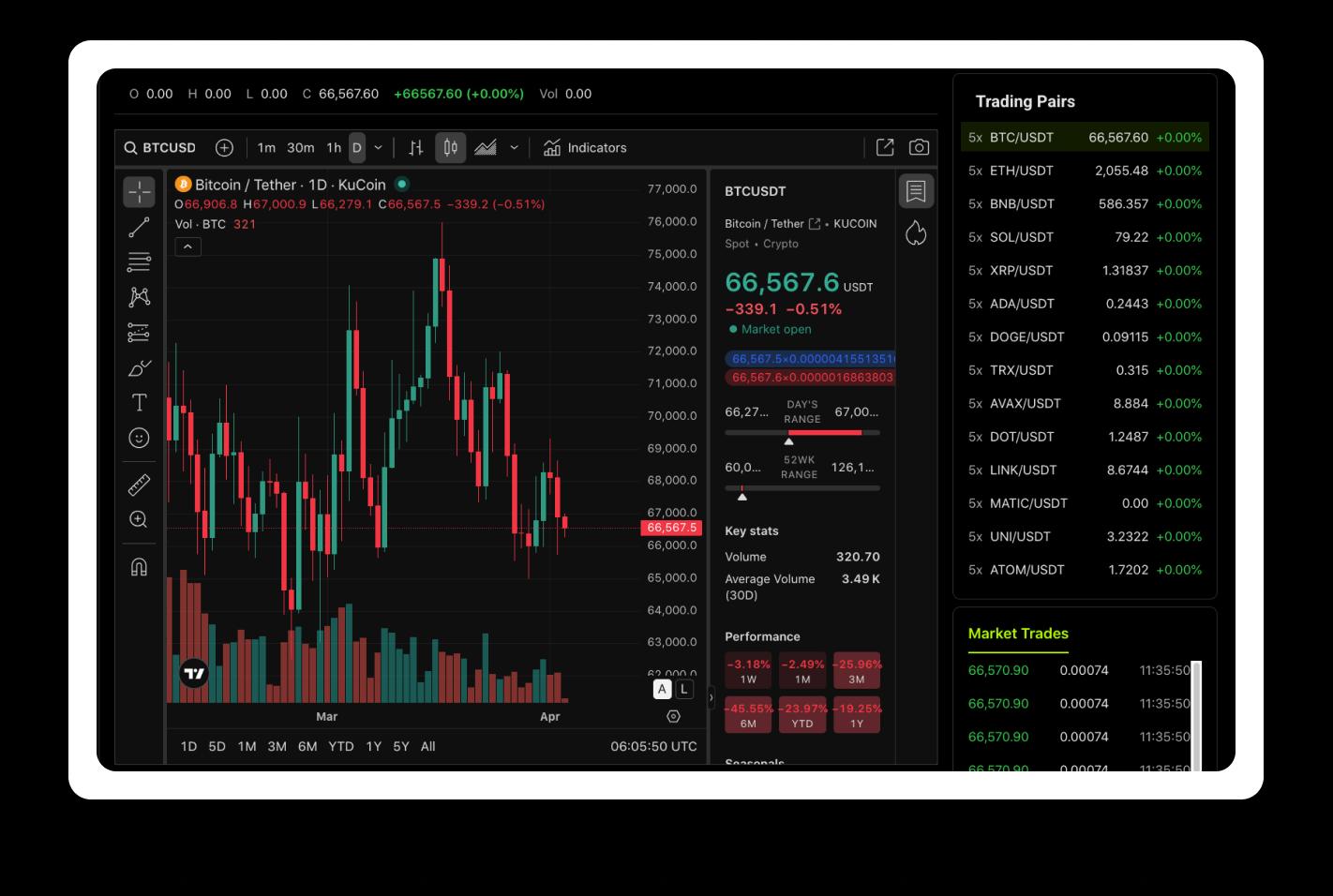
Trading Dashboard
Real-time charts, order execution, and portfolio tracking.
Order Book View
Live bid/ask depth, trade history, and liquidity visualization.
Mobile Trading App
Full-featured mobile experience for trading on the go.
Technology Infrastructure Behind Every Exchange Platform We Build
As a cryptocurrency exchange development company, every technology in our stack is selected for one reason: it has to perform under real trading conditions — high concurrency, sub-millisecond execution, regulatory audit requirements, and zero tolerance for downtime.
Exchange Engine & Order Book Architecture

Matching Engine

Order Book

FIX Protocol

WebSocket Feeds

Liquidity Aggregator

Market Maker

Derivatives Engine

Black-Scholes
Smart Contract & Settlement Layer
Wallet & Custody Infrastructure
KYC / AML & Compliance Stack
Backend & API Infrastructure
Frontend & Trading Interface
Data, Indexing & Analytics
Security Infrastructure
DevOps & Cloud Infrastructure
AI & Advanced Exchange Intelligence
Matching Engine
Order Book
FIX Protocol
WebSocket Feeds
Liquidity Aggregator
Market Maker
Derivatives Engine
Black-Scholes

Solidity

Rust

Hardhat

Foundry

OpenZeppelin

ERC20

Uniswap V3

Balancer

ERC-4337

Slither

Mythril

Certora

Echidna

MPC Wallets

HSM

Multi-Signature

Cold Storage

Hot Wallet

WalletConnect

MetaMask SDK

Ledger

Trezor

BIP32

BIP44

Sumsub

Synaps

Jumio

Onfido

Chainalysis

Elliptic

TRM Labs

OFAC Screening

TRISA

Notabene

GDPR

CCPA

Node.js

Go

Python

GraphQL

REST APIs

FIX API

WebSocket

Redis

Apache Kafka

PostgreSQL

TimescaleDB

React.js

Next.js

Vue.js

TradingView

Web3.js

Ethers.js

React Native
MetaMask SDK
WalletConnect

The Graph

IPFS

Arweave

ClickHouse

Grafana

Prometheus

Elasticsearch

MongoDB

Proof-of-Reserves

CertiK

Cloudflare

WAF

ZKP

zkSNARKs
Chainalysis Reactor
TRM Labs

AES-256

TLS 1.3

Penetration Testing

AWS

Google Cloud

Microsoft Azure

Docker

Kubernetes

Terraform

CI/CD
Load Balancer

Auto-Scaling

AI Surveillance

ML Anomaly Detection
Predictive Liquidity

AI KYC/AML

LLM Integration

On-Chain AI Agents

Fraud Prevention Models
Industries We Serve With Cryptocurrency Exchange Development
From regulated financial markets to emerging digital asset ecosystems, we build cryptocurrency exchange infrastructure that meets the compliance, performance, and liquidity demands of every sector we serve.

Financial Institutions
Banks and investment firms are offering crypto-related services directly to customers. We build cryptocurrency exchange infrastructure for banks, broker-dealers, neobanks, hedge funds, and asset managers — covering everything from retail fiat-to-crypto on-ramp products to institutional OTC desks and derivatives trading platforms.
Institutional cryptocurrency exchange with FIX API, prime brokerage, and cross-margining connectivity
Crypto derivatives exchange development — futures, options, and perpetual contracts for professional traders
White label crypto exchange integration into neobank, digital banking, and payments applications
Bank-grade AML/KYC, OFAC screening, SAR automation, and compliance-aware architecture

Payments & Remittance
Crypto-enabled payment systems are increasingly used for cross-border value transfer and settlement. We build real-time conversion and stablecoin settlement exchange infrastructure for payment operators, remittance platforms, and B2B settlement networks — reducing dependency on intermediaries while maintaining compliance.
Real-time fiat-to-crypto-to-fiat conversion corridor exchange development
Stablecoin settlement exchange for cross-border remittance and B2B payment operators
Travel Rule-compliant transaction architecture with third-party integrations
Crypto payment gateway with embedded exchange liquidity for instant merchant currency conversion

Crypto Startups & New Exchanges
New exchange platforms continue to emerge across global markets, creating a consistent pipeline for exchange development. We build custom and white label cryptocurrency exchange platforms for founders — from MVP-stage deployments to fully custom multi-chain exchange architectures built for long-term scale.
White label cryptocurrency exchange development — production-ready deployment
Custom centralized exchange (CEX) development with matching engine, liquidity, and KYC infrastructure
IDO and IEO launchpad platform development for token distribution and community fundraising
Exchange licensing and regulatory-aware architecture across multiple jurisdictions

DeFi & Web3 Protocols
Decentralized ecosystems require exchange infrastructure to support token swaps, liquidity, and on-chain trading. We build DEX platforms, AMM protocols, and composable on-chain exchange systems for Web3 founders and DeFi protocols.
Decentralized exchange (DEX) development with AMM and concentrated liquidity pool architecture
Cross-chain DEX aggregator with best-price routing across multiple networks
DAO-governed exchange architecture with on-chain voting and treasury management
DeFi yield-integrated trading platform combining exchange, lending, and staking

Gaming & NFT
Digital asset ecosystems and gaming platforms require high-frequency, low-latency trading infrastructure tailored to user behavior. We build NFT marketplaces, in-game token exchanges, and trading platforms for digital economies.
NFT marketplace with integrated exchange for token and collectible trading
GameFi cryptocurrency exchange optimized for high-frequency micro-transactions
In-game asset tokenization with secondary trading and royalty distribution
Cross-platform asset interoperability via bridge integrations

Real World Asset Tokenization
Tokenized assets require exchange infrastructure for issuance, trading, and lifecycle management. We build security token exchanges and asset-backed trading platforms that enable compliant secondary markets.
Real estate and private equity security token exchange infrastructure
Fractional asset token trading platform with automated yield distribution
Tokenized bond, treasury, and commodity trading systems
KYC-gated investor onboarding with access-controlled participation

Enterprise & Corporate Treasury
Enterprises using digital assets for treasury operations and internal settlement require private, permissioned exchange systems. We build exchange platforms that integrate with enterprise financial systems to ensure control, auditability, and reporting.
Private exchange for inter-company asset and invoice settlement
Corporate crypto treasury platform with trading and hedging capabilities
Tokenized equity and incentive trading systems
White label cryptocurrency exchange for corporate venture and digital asset initiatives

Government & Public Sector
Public sector initiatives are exploring digital asset infrastructure for regulated trading environments and national-level exchange systems. We build exchange platforms designed for transparency, auditability, and compliance across jurisdictions.
Central Bank Digital Currency exchange and distribution infrastructure
Government-issued digital asset and bond trading platforms
National digital asset exchange systems with full compliance stack
Real-time regulatory reporting and audit systems for public sector operations
Meet Our Experts

We've stepped into enough mid-crisis blockchain engagements to know exactly where things break down. Scope that was never properly defined. Architecture decisions rushed under deadline pressure. Integration dependencies nobody accounted for until they became blockers. The process we run today exists because of those lessons — and it's why our clients reach production without the chaos that derails most enterprise blockchain programs.
How Our Crypto Exchange Development Process Actually Works
We do not treat crypto exchange development as a feature delivery sprint. It is a financial infrastructure build — one where the decisions made in week one determine whether the platform survives its first liquidity crisis, passes its first regulatory audit, and holds up when trading volume spikes without warning.
1. We Start With the Exchange Model — Not the Tech Stack
2. We Design the Exchange Architecture Around Operational Reality
3. The Matching Engine Is Engineered for Institutional Load From Day One
4. Wallet Architecture and Custody Infrastructure Are Built for the Threat Model
5. Compliance Is Embedded Into the Transaction Flow — Not Layered Over It
6. Liquidity Infrastructure Is Solved Before Launch — Not After
7. Security Architecture Is Validated Before Any Production Deployment
8. Launch Is a Controlled Deployment — Not a Go-Live Event
9. Post-Launch Is Where Exchange Operations Are Actually Sustained
Before a single line of architecture is drawn, we break down how your exchange actually functions as a business
Who are your traders — retail, institutional, or both?
Which markets are you serving and what regulatory obligations does that create?
Are you taking custody of user funds, or routing through non-custodial mechanisms?
Where does your liquidity come from on day one, before organic order flow develops?
What is your revenue model — maker-taker fees, spread capture, listing fees, or a combination?
These questions determine whether you need a centralized exchange, a decentralized protocol, a hybrid architecture, or a white-label deployment adapted to your compliance environment. Getting this wrong at the model stage creates the most expensive rework possible — because the answer shapes everything downstream from custody architecture to matching engine design to fiat rail selection.
This phase also surfaces the constraints most clients underestimate: regulatory exposure in target markets, banking partner requirements, and the liquidity bootstrapping problem that kills more exchange launches than poor technology ever does.
Crypto exchange architecture is not selected from a list of options. It is engineered around the specific intersection of your throughput expectations, your user base, your compliance obligations, and your go-to-market timeline.
A high-frequency derivatives exchange serving institutional clients demands fundamentally different infrastructure than a white-label spot exchange targeting retail users in Southeast Asia. The matching engine design, order book architecture, wallet custody model, and database layer are all determined by operational requirements — not by what other exchanges have built.
Critical decisions made at this stage:
Order matching model — centralized order book, AMM-based liquidity, or hybrid
Custody architecture — full custodial, non-custodial, or MPC-based partial custody
Fiat infrastructure — banking partner selection, payment rail integration, and jurisdiction-specific settlement mechanics
Network selection — which blockchain layers the exchange settles on and why
Liquidity strategy — market maker integration, aggregator connectivity, or AMM pool seeding
This is where most exchange projects either become operationally viable or commit to architectural decisions they will spend the next two years trying to undo.
The matching engine is not a component that can be scaled later. It either handles institutional trading volume under peak conditions or it does not — and the failure mode is visible to every trader on the platform simultaneously.
We engineer matching engines for:
Sub-millisecond order execution with deterministic price-time priority
Support for market, limit, stop-loss, iceberg, and post-only order types
In-memory processing with event-driven architecture to eliminate I/O bottlenecks
Horizontal sharding by trading pair to distribute load across instrument-specific processing threads
Cross-region failover with active-active replication so a single node failure does not interrupt order flow
Every engine is stress-tested against simulated peak load conditions — including the kind of volume spikes that accompany major market events — before it processes a single live trade. An exchange that degrades under pressure does not recover easily. User trust erodes faster than engineering teams can patch it.
Exchange custody failures are existential events. The architecture reflects that.
User assets are held in a segregated hot-cold model: the majority of funds in air-gapped cold storage with multi-signature authorisation requiring geographically distributed key holders, and a controlled hot wallet pool — sized to operational withdrawal requirements, not convenience — for live transaction processing.
For institutional deployments and regulated custody environments, MPC (Multi-Party Computation) wallet architecture is implemented — eliminating single points of key compromise without the operational overhead of traditional multi-sig coordination.
Withdrawal systems include:
Automated withdrawal limits tiered by KYC verification level
Real-time screening of destination addresses against OFAC SDN lists and known threat address databases
Anomaly detection on withdrawal patterns that fall outside established user behaviour profiles
Time-locked large withdrawals requiring secondary authorisation for amounts above defined thresholds
Custody architecture is also designed with proof-of-reserve attestation in mind from day one — so when regulators or institutional counterparties request verification of asset backing, the infrastructure already supports it rather than requiring a retroactive audit process.
Compliance that operates outside the transaction pipeline creates gaps. A KYC system that approves an account but does not feed verification status into withdrawal logic is a compliance system that does not actually comply.
We build compliance into every layer of the exchange that touches user identity, fund movement, or trade execution:
KYC and AML logic integrated at the onboarding layer with tiered verification unlocking corresponding trading and withdrawal limits
Real-time OFAC sanctions screening and PEP checks running as middleware within deposit, withdrawal, and large trade flows
Travel Rule compliance for cross-VASP transfers implemented through TRISA or OpenVASP protocol integrations
Immutable audit trail infrastructure logging every account action, order event, and fund movement with cryptographic timestamps
SAR-ready transaction monitoring that flags suspicious activity patterns against jurisdiction-specific typologies
The regulatory frameworks your exchange operates under — FinCEN, FCA, MiCA, VARA, FINTRAC — each have specific technical requirements. We build to those requirements from the architecture stage, which means your compliance team is reviewing a system built for their environment rather than adapting a system built for someone else's.
An exchange with no liquidity is not an exchange. It is an empty order book with a login screen. Liquidity strategy is an engineering problem as much as a commercial one, and it is solved at the build stage.
Depending on the exchange model, liquidity infrastructure is built around one or more of the following:
Market maker API integration with institutional liquidity providers through FIX protocol or REST/WebSocket connectivity
DEX aggregator routing pulling order depth from Uniswap, Curve, KyberSwap, and 1inch simultaneously for hybrid and DeFi exchange deployments
AMM pool seeding architecture with configurable fee tiers and concentrated liquidity ranges for decentralized exchange deployments
Automated market-making bot integration for centralized exchange operators bootstrapping order book depth before organic flow develops
Liquidity design also determines how the exchange behaves under stress — when large orders hit thin markets, when arbitrageurs exploit pricing inefficiencies, and when a single asset's volatility affects the stability of adjacent trading pairs. These scenarios are modelled and tested before the platform processes live volume.
Security validation is a pre-deployment gate, not a post-launch improvement cycle. The threat model for a live exchange is aggressive and continuous — the platform is targeted from the moment it becomes publicly accessible.
Before mainnet deployment, every exchange build goes through:
Smart contract audit by CertiK or QuillAudits covering logic correctness, reentrancy vulnerabilities, integer overflow conditions, and access control weaknesses
Penetration testing across the full attack surface — API endpoints, wallet integrations, admin interfaces, and authentication flows
Load testing simulating peak concurrent user sessions, order submission rates, and withdrawal processing volumes
DDoS simulation validating that network-layer and application-layer mitigation systems hold under sustained traffic attacks
Key management review confirming that cold storage procedures, multi-sig governance, and HSM integrations meet the custody standards of the target regulatory environment
A security gap discovered during a live exchange operation costs multiples of what it costs to find and fix during pre-launch validation. The gate exists because the alternative is not acceptable.
Production deployment for a crypto exchange follows a structured sequence. Mainnet deployment happens in phases — starting with a controlled beta environment serving a limited user group under monitored conditions, before progressive rollout to the full user base.
Infrastructure established at deployment:
Real-time monitoring dashboards covering matching engine latency, order fill rates, wallet balance reconciliation, and compliance queue depth
Automated alerting for anomalous transaction patterns, infrastructure performance degradation, and security event triggers
Node configuration, validator connectivity, and blockchain indexer synchronisation validated against mainnet conditions
Rollback procedures and upgrade protocols defined before launch so operational responses to post-deployment issues follow documented processes rather than improvised ones
A live exchange is not a static system. Markets evolve. Regulatory requirements update. Trading volume grows in ways that reveal infrastructure constraints invisible during testing. Token listings expand the asset universe the matching engine must handle. User behaviour shifts in ways that create new compliance monitoring requirements.
We remain engaged post-launch to monitor and optimise:
Matching engine latency under real trading load patterns
Smart contract performance and gas optimisation as on-chain activity scales
Compliance system accuracy as typology libraries are updated with new threat patterns
Liquidity depth and spread behaviour across trading pairs as market maker relationships develop
nfrastructure scaling as user base and trading volume grow beyond initial projections
The exchange you launch is the foundation. What it becomes over the following twelve months depends on the operational discipline and technical support that sustains it.
How Much Does it Cost to Develop a Crypto Exchange
Crypto Exchange Development Timeline
Crypto exchange development takes 4–10 weeks for White-label platforms and up to 14 months for enterprise-grade exchanges, depending on feature complexity, compliance integration, and security validation cycles.
Estimated Cost by Exchange Type (Quick Comparison)
White-label exchange: $25K–$80K · 4–10 weeks
MVP spot exchange (CEX or DEX): $80K–$150K · 2–4 months
Centralized exchange (CEX): $300K–$1M+ · 6–10 months
Decentralized exchange (DEX): $120K–$500K · 4–8 months
Hybrid exchange: $500K–$1.2M+ · 7–12 months
P2P exchange: $80K–$250K · 3–6 months
OTC trading desk: $60K–$180K · 2–5 months
Derivatives exchange: $400K–$1.5M+ · 8–14 months
DEX aggregator: $150K–$400K · 4–7 months
Detailed Cost Breakdown by Exchange Type
What Drives Crypto Exchange Development Cost
Exchange model (CEX, DEX, P2P, hybrid, derivatives)
Matching engine performance and order execution complexity
Custody architecture (custodial, non-custodial, MPC-based)
Compliance requirements (KYC, AML, Travel Rule, licensing)
Liquidity strategy (market makers, aggregators, AMM pools)
Blockchain network selection and integration overhead
Security validation (audits, penetration testing, load testing)
Where the Budget Goes (Component-Level Summary)
Matching engine development: $50K–$200K
Smart contract development & audit: $20K–$150K
Wallet & custody infrastructure: $40K–$120K
KYC / AML compliance integration: $30K–$100K
UI/UX trading interface: $20K–$60K
Liquidity integration: $20K–$80K
Security audits & penetration testing: $15K–$60K
Admin panel & reporting systems: $10K–$30K
How Timeline Affects Cost
Start Your Exchange With Architecture You Can Trust
Build your crypto exchange with a clear technical, compliance, and liquidity blueprint before committing to development. Our 7-day risk-free consultation gives you a production-ready plan aligned to your market, model, and timeline.

Frequently Asked Questions
What is Cryptocurrency Exchange Development?
Cryptocurrency exchange development is the process of building a secure trading platform that enables users to buy, sell, and manage digital assets with integrated liquidity, compliance, and custody infrastructure.
What is the difference between centralized exchange development and decentralized exchange development?
Centralized exchange development builds platforms where operators manage user funds and liquidity, ensuring fast execution and high throughput. Decentralized exchange development uses smart contracts, allowing users to retain custody of assets. CEX suits scalability, while DEX supports transparency and DeFi-native trading.
Is centralized exchange development better than decentralized exchange development?
Centralized exchange development is better for high liquidity, fast transactions, and ease of use. Decentralized exchange development is preferred for transparency and user custody. The right choice depends on your business model and regulatory requirements.
What is a matching engine and why does it matter?
A matching engine is the core system that matches buy and sell orders in real time on a crypto exchange. It directly impacts execution speed, price accuracy, and system stability. A high-performance matching engine ensures low latency and reliable trading under high-volume conditions.
How does liquidity work on a new crypto exchange?
Liquidity on a new crypto exchange comes from market makers, liquidity providers, or integrations with external exchanges. It ensures active order books and tight spreads. Without liquidity, trades cannot execute efficiently, making liquidity strategy essential before launch.
What is the difference between hot and cold wallet storage?
Hot wallets are connected to the internet and used for real-time transactions, while cold wallets are offline and used for secure long-term storage. Most exchanges store the majority of funds in cold wallets and maintain limited balances in hot wallets for withdrawals.
What is MPC wallet architecture?
MPC (Multi-Party Computation) wallet architecture splits private keys across multiple parties instead of storing them in one place. This removes single points of failure and improves security, making it a preferred custody solution for institutional-grade crypto exchange platforms.
What is proof of reserves and why does it matter?
Proof of reserves is a cryptographic method that verifies an exchange holds sufficient assets to back user balances. It improves transparency, builds user trust, and ensures the platform is not operating on fractional reserves.
How does Travel Rule compliance work for exchanges?
Travel Rule compliance requires exchanges to share sender and receiver identity information for certain transactions. It is implemented using protocols like TRISA or Notabene, enabling secure data exchange between Virtual Asset Service Providers while meeting regulatory requirements.
Do I need a crypto license to launch an exchange?
Yes, most jurisdictions require a crypto license to operate an exchange legally. This includes KYC/AML compliance, transaction monitoring, and regulatory approvals. Requirements vary by region, so compliance must be built into the platform from the architecture stage.
Can I launch using crypto exchange software instead of building from scratch?
Yes, you can launch using crypto exchange software through white-label solutions. These platforms provide pre-built trading engines, wallets, and admin panels, reducing development time to 4–8 weeks and lowering costs compared to custom development.
What features are included in crypto exchange software?
Crypto exchange software includes a trading engine, wallet integration, KYC/AML compliance, liquidity integration, admin panel, and security features like 2FA and encryption. Advanced platforms also support staking, derivatives, analytics, and multi-currency functionality.
What is the difference between crypto exchange software and custom development?
Crypto exchange software uses pre-built, customizable solutions for faster deployment, while custom development builds platforms from scratch. Software reduces cost and time, while custom builds offer greater flexibility and scalability.
What is the cost of crypto exchange software?
Crypto exchange software costs typically range from $30,000 to $80,000 for white-label solutions. Fully customized platforms with advanced features, security infrastructure, and compliance capabilities can exceed $300,000 depending on complexity.
How do crypto exchange platforms make money?
Crypto exchange platforms generate revenue through trading fees, withdrawal fees, listing fees, margin trading interest, and staking services. Additional revenue comes from API access, institutional services, and white-label exchange licensing.
Do I need a mobile app for my crypto exchange?
A mobile app is not required at launch but improves user acquisition and retention. Most exchanges start with a responsive web platform and later add iOS and Android apps to expand accessibility and engagement.