ON THIS PAGE
Progress0%






Our Global Presence :





If you’re building a blockchain-based product, one question tends to come up fast: Cryptocurrency vs Token — should you create your own cryptocurrency, or launch a token on an existing blockchain?
This choice extends much beyond the technology itself. It may affect your development schedule, budget, interest of your investors, and the ease with which your product can grow in the future. Most founders are in a hurry to create a custom infrastructure when a token would suffice or take a token without thinking of future constraints.
Learning about the actual distinctions between cryptocurrencies and tokens is crucial to any person entering the Web3 space, particularly with the expansion of blockchain usage in sectors like finance, gaming, healthcare, and supply chains.
In this article, we’ll break down the cryptocurrency vs token debate with clear explanations, practical examples, and real use cases to help you decide which option best supports your startup’s goals.
A crypto token, or an existing cryptocurrency token, is developed over an already existing blockchain such as Ethereum or BNB Chain.
The network you are tapping into already manages security, validation and transactions instead of making you create a new blockchain.
Not all tokens serve the same purpose. The majority of them fall into one of the following categories:
The right type depends entirely on what your product is trying to achieve.
For teams comparing a custom cryptocurrency vs an existing token, tokens often win on practicality.
Here’s why:
When what you want to accomplish is building a product, increasing users, or experimenting with market demand, as opposed to sustaining a blockchain, then starting with a token is a more cost-effective and less risky choice.
A custom cryptocurrency is a native digital coin built at the blockchain or protocol level. It operates on its own infrastructure and uses its own rules, as opposed to running on an existing network.
This means you’re not just creating a token, you’re building the system it lives on.
Using a custom cryptocurrency, you can entirely control the way the network operates including:
This level of flexibility becomes important when smart contract development alone isn’t enough to handle your platform’s technical or economic complexity.
Custom cryptocurrencies are typically used for:
In the context of when to use a custom cryptocurrency vs existing tokens, the decision comes down to one thing:
Do you need control over the blockchain itself or just a reliable foundation to build on?
If control is mission-critical, a custom cryptocurrency may be the right path.
When deciding when to use a custom cryptocurrency vs an existing token, it really comes down to your project’s goals. Do you need speed and trust, or full control over your crypto tokenomics? Here’s a simple way to compare the two options:
| Criteria | Existing Token | Custom Cryptocurrency |
| Time to Market | Fast – launch in weeks | Slow – months of development |
| Development Cost | Low–Medium | High |
| Security Risk | Lower – built on a battle-tested chain | Higher – custom attack surface |
| Tokenomics Flexibility | Limited | Full control |
| Regulatory Exposure | Moderate | High |
| Ecosystem Trust | Instant – users already know the chain | Must be earned from scratch |
Key takeaway:
In some instances, the most intelligent choice is not to create a brand new cryptocurrency, but to leverage an existing token.
When your product is the primary value (not the blockchain), then a ready-made token can save time, money, and headaches.
Ideal Use Cases
The following are some of the situations in which an existing token would be most appropriate:
Benefits
Potential Drawbacks
Key Takeaway:
Most Web3 startups do not fail because they have the wrong token. They fail because they overbuilt their blockchain infrastructure before validating real user demand.
A utility token is a good place to start to test your product, find early users and also optimize your strategy without having to commit to a full-fledged chain yet.
Not every project needs its own cryptocurrency. Actually, the only reason why developing a tailor-made crypto would be wise would be when the blockchain is the product, and not merely a component of it. Assuming that your token is merely a feature of your application, an existing blockchain token will tend to be quicker, less expensive, and less risky.
Situations Where a Custom Crypto Makes Sense
You should consider building your own crypto if your project requires:
Real-World Insight
Most projects begin with tokens and then find themselves in need of a custom crypto. Updating old chains with new regulations is usually costly, time-consuming and complicated.
When you make your product centered on your blockchain, consider a custom crypto early on, this will save you the time and resources of working around it in the future.
Benefits
Drawbacks
Key Takeaway:
Build a custom crypto only when the blockchain itself drives your product’s value. Otherwise, a token on an existing chain is almost always the smarter, faster, and safer choice.
Knowing the financial and resource trade-offs between initiating a token or a tailor made cryptocurrency would save you time, finances and strategic pains in the future.
Below are realistic cost and timeline ranges based on current development market data.
Cost Comparison (Token vs Custom Cryptocurrency)
| Project Type | Typical Development Cost | Notes |
| Existing Token (ERC‑20, BEP‑20, etc.) | $5,000 – $50,000+ | Simple tokens often start around $5–$15K; advanced tokens with audits and integrations can go higher. |
| Security Token (STO) | $25,000 – $150,000+ | Heavily regulated tokens requiring compliance work. |
| Custom Cryptocurrency (Own Blockchain) | $30,000 – $500,000+ | Basic new chains start around $30K, but full ecosystems often exceed six figures. |
When these costs matter:
Typical Time to Market
| Project Type | Development Timeline | What to Expect |
| Existing Token | 2–8 weeks | Faster launches because you leverage existing blockchain infrastructure. |
| Custom Cryptocurrency | 4–12+ months | Building your own chain often requires consensus design, node setup, and rigorous testing. |
Decision tip: If you want speed to market and early user feedback, a token’s timelines win hands‑down. A custom coin is a long‑term play.
What Team Do You Need?
| Objective | Core Team Members | Why It Matters |
| Existing Token | Smart contract developer, security auditor, optional UI/UX | Quick turnaround; relies on established networks. |
| Custom Cryptocurrency | Blockchain engineers, cryptographers, security auditors, network devops, UI/UX | Requires deeper expertise and long‑term maintenance. |
If you don’t already have in‑house talent, be ready to hire token developers and blockchain specialists to get things right.
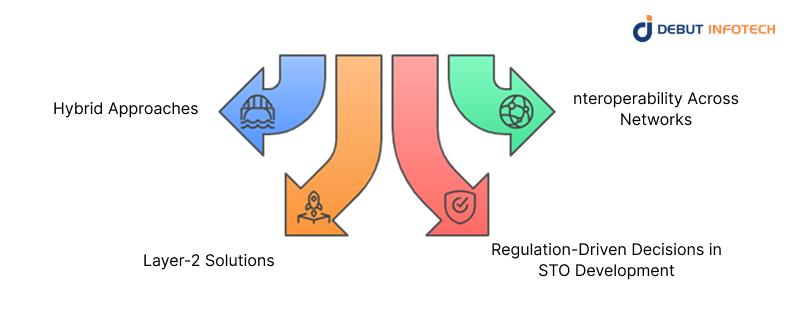
The crypto world is rapidly developing, and the choice between a custom cryptocurrency or an existing token is no longer a yes-or-no question.
Here’s a look at the key trends shaping this decision.
A significant number of projects are currently following a hybrid path. They use custom coins for core functionality and control, while also leveraging tokens on established blockchains for speed, liquidity, and ecosystem reach.
This strategy allows startups to be innovative without creating everything on their own, and also maintain control over important aspects. The hybrid strategies are gaining popularity among those teams that desire flexibility and ownership.
Tokens or coins that can operate across multiple blockchains have a major advantage. Interoperability will simplify the process of accessing users, investors, and partners and facilitate cross-chain partnerships.
It also allows your project not to get stuck into a single ecosystem, giving your startup greater room to grow in the future. Projects which put more emphasis on interoperability tend to be adopted and scaled better.
Efficiency matters. Layer-2 solutions reduce transaction costs and improve scalability without requiring a full blockchain build from scratch.
In the case of startups, it involves quicker transactions and reduced charges that help to push adoption without making infrastructure overly complex. Layer-2 solutions are becoming a practical choice for projects that need performance and cost-effectiveness.
Compliance is crucial, especially for STO development. The regulatory frameworks are changing at a significant pace, and your decision to either create your own cryptocurrency or use an existing token can have an influence on your legal requirements.
Having regulations in mind will save you the expensive changes in the future and make sure your project is legal at its core. Overlooking this aspect can place a great venture in jeopardy even before it takes off.
Choosing between a cryptocurrency vs token comes down to your goals, budget, and timeline.
When you need complete flexibility and long-term, and you are willing to be flexible enough to handle a complicated process, a custom cryptocurrency can be the way. When speed, reduced costs, and availability of an already existing ecosystem are more important, it is best to start with a token.
In most startups, a token is the quickest means of validating ideas and getting early adoption. And when you’re ready to move forward, Debut Infotech, a leading crypto token development company, helps teams build secure, scalable tokens with real-world utility.
Not sure which route fits your project? Talk to us at Debut Infotech to get expert guidance and choose the right blockchain strategy with confidence.
Security tokens are a representation of ownership of real world assets. This may involve shares of a business, property or even a share of profits. Due to this reason, security tokens are controlled as securities by bodies like the SEC.
Cryptocurrencies, like Bitcoin or Ethereum, work differently. They serve as digital currencies or utility assets to carry out transactions in a blockchain network. They are less regulated in most instances than security tokens.
Ethereum is a decentralized blockchain platform. It is most commonly known to support smart contracts and decentralized applications.
Ether (ETH) is the native cryptocurrency of the Ethereum network. It is utilized to pay transaction charges and charge applications on the platform.
According to market capitalization, Ether is the second-biggest cryptocurrency after Bitcoin. Ethereum is also open-source, which implies that its code is publicly available and constantly developed with the participation of the global developer community.

Our Latest Insights
USA
2501 Chatham, Rd Suite R Springfield, IL 62704
+1-708-515-4004
info@debutinfotech.com
UK
7 Pound Close, Yarnton, Oxfordshire, OX51QG
+44-770-304-0079
info@debutinfotech.com
Canada
154 Eden Oak Trail, Kitchener, ON N2A 0H9
+1-708-515-4004
info@debutinfotech.com
INDIA
Sector 101-A, Plot No: I-42, IT City Rd, JLPL Industrial Area, Mohali, PB 140306
9888402396
info@debutinfotech.com