ON THIS PAGE
Progress0%






Our Global Presence :





The Howey test in Web3 has become a central legal reference point for enterprises building, investing in, or deploying blockchain-based solutions. As decentralized technologies move from experimentation to enterprise adoption, regulatory scrutiny has intensified. Businesses operating in tokenized ecosystems now face growing pressure to understand how long-standing securities laws apply to decentralized networks, digital assets, and emerging Web3 business models.
Originally developed decades before blockchain existed, the Howey Test continues to influence how regulators classify digital assets today. For modern enterprises, this legal framework is no longer just a compliance concern—it directly shapes product design, tokenomics, fundraising strategies, and long-term scalability. Understanding how the test works, why it matters, and how it applies to Web3 is essential for any organization operating in this space.
Before examining how the framework applies to blockchain, it is important to clearly answer a foundational question: what is the Howey Test?
The Howey Test is a legal standard used to determine whether a transaction qualifies as an “investment contract” and therefore falls under securities regulation. It originates from a U.S. Supreme Court case and remains the primary method regulators use to identify securities beyond traditional stocks and bonds.
In simple terms, the test evaluates whether a financial arrangement involves an investment that should be regulated to protect investors. When a transaction meets this standard, it is treated as a security and must comply with applicable securities laws.
For Web3 enterprises, this classification has far-reaching implications, particularly for token issuance, decentralized finance models, and blockchain-based fundraising.
The Howey test criteria consist of four elements. A transaction is considered a security if all four are met. Understanding each component individually helps clarify how the test applies to modern digital assets.
The first criterion assesses whether participants commit value. While originally referring to cash investments, regulators now interpret this broadly. In Web3 contexts, value can include:
Most token sales and blockchain-based fundraising mechanisms easily satisfy this element.
The second requirement examines whether investor fortunes are linked together or tied to the success of a promoter. In many blockchain projects, token value depends on:
This shared dependency often leads regulators to identify a common enterprise, especially in early-stage projects.
This criterion focuses on whether participants reasonably expect financial returns. In Web3 ecosystems, profit expectations may arise from:
Marketing language, whitepapers, and public communications often play a crucial role in how regulators evaluate this aspect.
The final component considers whether profits depend primarily on the efforts of a centralized team or a third party. Even in decentralized systems, early development teams, foundation entities, or governance councils can trigger this criterion.
When token holders rely on developers to build, maintain, or expand a network, regulators may determine that this element is satisfied.
Understanding how the test operates leads to a broader question: how does it determine a Howey test security?
If all four criteria are met, the asset or transaction is classified as a security. This means it must comply with registration, disclosure, and investor protection requirements. Failure to do so may expose enterprises to enforcement actions, penalties, and reputational risk.
This classification does not depend on the label used by the issuer. Calling a token a “utility token” or “governance token” does not automatically exempt it. Regulators focus on substance rather than terminology.
As a result, many digital assets fall into gray areas where legal interpretation becomes critical.
The application of the Howey test securities framework to crypto assets has reshaped the blockchain industry. While cryptocurrencies were initially viewed as a regulatory frontier, enforcement actions have clarified that many tokens are evaluated using traditional securities principles.
Crypto assets attract regulatory attention because many projects resemble traditional investment schemes. Public token sales are often used to raise capital, while centralized teams handle development and decision-making. Marketing materials may emphasize token price growth, and project roadmaps frequently promise future utility rather than immediate functionality. Together, these factors closely mirror the conditions outlined in the Howey Test, which is why regulators increasingly apply securities laws to crypto projects.
When conducting a Howey test crypto analysis, regulators look beyond labels and focus on how tokens actually function. They assess how tokens are distributed, whether vesting schedules concentrate value with founders or early investors, and whether real utility exists at launch or is deferred to the future. Governance structures are also examined to determine who has control over the project. Tokens sold before delivering functional utility are more likely to be viewed as securities, as buyers may be relying on future development efforts for potential returns.
Projects that sell tokens before functional utility exists are particularly vulnerable to securities classification.
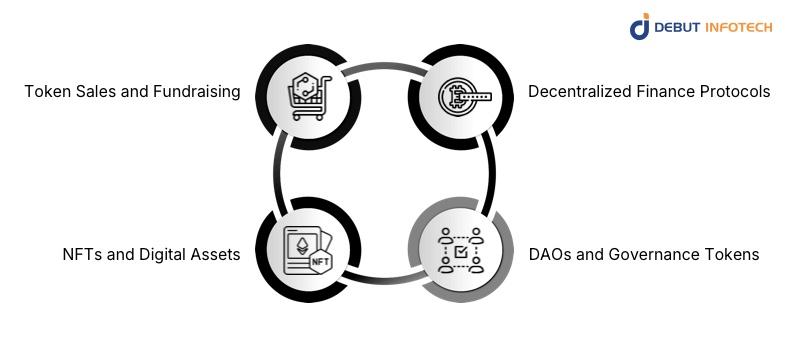
Web3 business models utilize decentralized architectures, token-based incentives, and community-driven governance, contrasting with traditional corporate structures. However, regulators still use the Howey Test to evaluate compliance with securities laws. A primary challenge for Web3 projects is striking a balance between decentralization and the need for coordinated development, which can lead to complex legal interpretations.
Token sales are heavily scrutinized in Web3 as a primary method of capital raising. What began with ICOs has evolved into IDOs & IEOs to meet different business requirements, along with presales used to fund project development and growth.
When buyers invest with the expectation of future token value increases, these transactions may be classified as securities under the Howey test. This risk intensifies if tokens have no immediate utility and depend on future milestones for value creation.
DeFi platforms introduce an additional layer of complexity by replacing traditional financial intermediaries with smart contracts. While automation and decentralization are core principles, many protocols still rely on a core team to design incentive mechanisms, adjust parameters, and guide long-term strategy. If users participate primarily because they expect profits from yields, staking rewards, or token appreciation driven by these efforts, the Howey Test may still apply. Regulators tend to examine whether financial returns depend more on protocol design choices than on user-driven activity.
NFTs are often marketed as collectibles, digital art, or access-based assets, which can place them outside the scope of securities regulation. However, certain structures increase regulatory risk. Fractionalized NFTs, pooled ownership models, or arrangements that promise revenue sharing can resemble investment contracts. Similarly, marketing NFTs as appreciating assets or emphasizing future resale value may trigger Howey test security analysis. In these cases, regulators assess whether buyers are motivated by profit expectations tied to the efforts of creators or platform operators.
DAOs are designed to distribute decision-making across a community, but in practice, many projects begin with concentrated control. Founding teams, core contributors, or foundation entities often guide early development, governance frameworks, and treasury management. During this bootstrapping phase, token holders may rely heavily on these actors to create value, raising questions under the Howey Test. As governance becomes more decentralized over time, regulatory risk may decrease, but early-stage structures remain a key focus for oversight.
Enterprises adopting blockchain technology face different considerations than consumer-focused crypto startups. Enterprise blockchain solutions often prioritize compliance, operational efficiency, and long-term stability.
Permissioned blockchain platforms reduce securities risk by limiting token trading and speculation. These systems are commonly used for:
Because tokens in these environments often lack speculative characteristics, they may fall outside the Howey Test scope.
When enterprises integrate blockchain into existing systems as part of their blockchain integration strategy, the primary objective is usually operational efficiency rather than capital raising. Use cases such as supply chain tracking, data verification, identity management, and interdepartmental record sharing rely on blockchain as a backend technology rather than an investment vehicle. Because these implementations do not involve public token sales or profit-driven participation, they are less likely to trigger securities-related concerns under the Howey Test.
This approach allows organizations to benefit from transparency, immutability, and automation without introducing speculative elements. By focusing on controlled access, defined user roles, and clear business utility, enterprises can adopt decentralized technology while maintaining regulatory clarity and reducing exposure to securities classification risks.
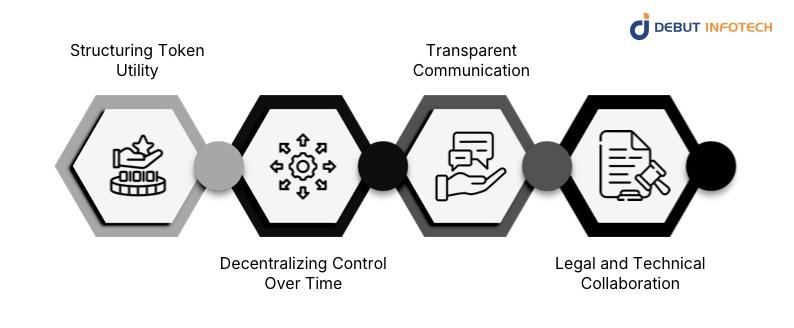
Understanding the Howey Test is only the first step. Enterprises must proactively manage legal risk through thoughtful design and governance.
Tokens that provide immediate, functional utility at launch reduce reliance on profit expectations. Examples include:
Gradual decentralization plays a critical role in mitigating reliance on a central development team. In early stages, some level of coordination is often unavoidable, but enterprises should clearly define how governance will transition to the community. Establishing transparent decision-making processes and empowering users to influence protocol changes helps reduce regulatory concerns. Over time, community-led development can demonstrate that value creation no longer depends solely on a single entity.
Public communication significantly influences how regulators interpret a project’s intent. Marketing materials, whitepapers, and announcements should emphasize functionality, use cases, and operational benefits rather than potential price appreciation. Overstating growth potential or investment returns can increase securities risk under the Howey Test. Consistent, accurate messaging aligned with actual platform capabilities helps maintain regulatory credibility.
Effective compliance requires close collaboration between legal teams and technical experts from the earliest stages of development. Blockchain consultants, developers, and system architects must collaborate to ensure that design decisions support both functionality and regulatory alignment. Legal guidance can inform token structures, governance frameworks, and deployment strategies before technical implementation begins.
Organizations that address compliance early gain strategic advantages:
These benefits extend beyond legal protection and support sustainable growth.
Navigating regulatory complexity requires specialized expertise. Web3 development companies play an increasingly important role in aligning technology with legal frameworks.
At this stage, organizations often collaborate with a custom blockchain development company that understands both decentralized architecture and regulatory expectations. These teams help design compliant token models, governance structures, and smart contract systems that reduce exposure to securities classification.
Engaging experienced professionals also allows enterprises to more accurately estimate blockchain development cost, balancing innovation with compliance obligations.
Technology choices directly affect regulatory outcomes. Selecting appropriate blockchain platforms and web3 development tools can influence decentralization, transparency, and risk.
Enterprises should evaluate platforms based on:
These decisions shape how regulators perceive the level of decentralization and the degree of investor reliance.
Many regulatory risks arise from technical decisions made too late. Enterprises that hire blockchain solution experts early in the process benefit from architecture that supports compliance from day one.
Early involvement enables teams to:
This proactive approach reduces long-term legal exposure.
As Web3 adoption accelerates, enterprises are increasingly requiring partners who understand both regulatory frameworks and decentralized technology. Debut Infotech supports organizations navigating this intersection by aligning technical execution with compliance-focused design principles.
Through tailored web3 development services, the team collaborates closely with legal and business stakeholders to ensure that blockchain solutions align with evolving regulatory expectations without compromising innovation.
The application of the Howey Test will continue to evolve as regulators refine their approach to decentralized systems. While new frameworks may emerge, the test remains a foundational reference point.
Enterprises should expect:
Staying adaptable and informed is essential.
The Howey Test remains one of the most influential legal frameworks shaping the future of Web3. For modern enterprises, understanding how this test applies to digital assets, token models, and decentralized platforms is no longer optional. It directly affects how products are designed, marketed, and governed. By breaking down the Howey test criteria and examining its application across Web3 use cases, enterprises can make informed decisions that balance innovation with regulatory responsibility.
Working with experienced partners like Debut Infotech allows organizations to approach compliance strategically rather than reactively. By combining legal awareness with deep technical expertise, Debut Infotech helps enterprises build blockchain solutions that are resilient, scalable, and aligned with evolving regulatory expectations. As Web3 continues to mature, this integrated approach will remain essential for long-term success in decentralized ecosystems.
A. The Howey Test is a legal framework used to determine whether a transaction qualifies as a security. In Web3, it is important because regulators use it to assess whether crypto tokens, digital assets, or blockchain-based fundraising models should be regulated under securities laws.
A. The Howey Test applies to crypto tokens by examining whether there is an investment of value, a common enterprise, an expectation of profit, and reliance on the efforts of others. If all criteria are met, the token may be classified as a security.
A. No, not all Web3 tokens are securities. Tokens that provide immediate utility, lack profit expectations, and operate within decentralized systems may fall outside the scope of the Howey Test.
A. Factors include selling tokens before platform functionality exists, marketing tokens as investment opportunities, centralized control over development, and promises of future value or returns.
A. Enterprises can reduce risk by designing utility-first tokens, decentralizing governance, avoiding profit-focused messaging, and involving legal and blockchain experts early in the development process.
A. In many cases, enterprise blockchain solutions face lower risk because they often use permissioned networks, focus on operational efficiency, and do not involve public token sales or speculative trading.
A. Blockchain consultants and Web3 development experts help align technical architecture with regulatory requirements, reducing legal uncertainty while enabling enterprises to innovate responsibly.

Our Latest Insights
USA
2501 Chatham, Rd Suite R Springfield, IL 62704
+1-708-515-4004
info@debutinfotech.com
UK
7 Pound Close, Yarnton, Oxfordshire, OX51QG
+44-770-304-0079
info@debutinfotech.com
Canada
154 Eden Oak Trail, Kitchener, ON N2A 0H9
+1-708-515-4004
info@debutinfotech.com
INDIA
Sector 101-A, Plot No: I-42, IT City Rd, JLPL Industrial Area, Mohali, PB 140306
9888402396
info@debutinfotech.com