ON THIS PAGE
Progress0%






Our Global Presence :





The cryptocurrency market reached a significant milestone in 2025 when it experienced for the first time ever a total of $4 trillion in value. Such expansion did not only draw in more traders and investors, but it also drew the undivided interest of regulators all over the world.
As crypto adoption accelerated, so did concerns around fraud, money laundering, and market manipulation. Add in the market’s volatility, highlighted by October’s sharp price crash, and it’s easy to see why centralized exchanges regulatory compliance has become a top priority for governments and financial watchdogs.
Regulators are no longer simply exploring the waters. Regulators in key markets are introducing much more explicit regulations on stablecoins, increasing tax reporting, enhancing efforts to enforce the regulations, and advocating more control over centralized and decentralized ecosystems.
This article is a breakdown of the major regulatory developments which emerged in 2025 and what the developments indicate on how centralized exchanges will be regulated in 2026, particularly to traders who wish to remain compliant and covered.
In 2026, the discourse regarding crypto regulation is becoming different. This is not merely a matter of introducing some new rules but reestablishing broken trust.
The failure of exchanges such as FTX and Celsius made it clear that centralized exchanges had critical flaws in the management of user funds and risk. For traders, it caused instant harm in terms of frozen payments, asset misappropriation, and protracted court cases. For regulators, these incidents helped to draw attention to previously existing vulnerabilities in the security of centralized exchanges that could no longer be ignored.
Due to the increased institutional capital flowing into the crypto market, the expectations have been high regarding safety and transparency. The institutions are used to the safeguards of conventional finance, and they are lobbying to have similar protections in crypto with the existence of clear custody regulations, independent audits, and enhanced operational controls. Regulators are reacting by bringing crypto regulation nearer to the mainstream financial systems.
The outcome is an evident change of direction. Centralized exchanges are no longer viewed as experimental platforms that exist on the fringes of finance. Rather, regulators are increasingly considering them to be important financial intermediaries. That change has brought regulation back to act rather than observation, and enforcement rather than experimentation is the new theme of 2026.
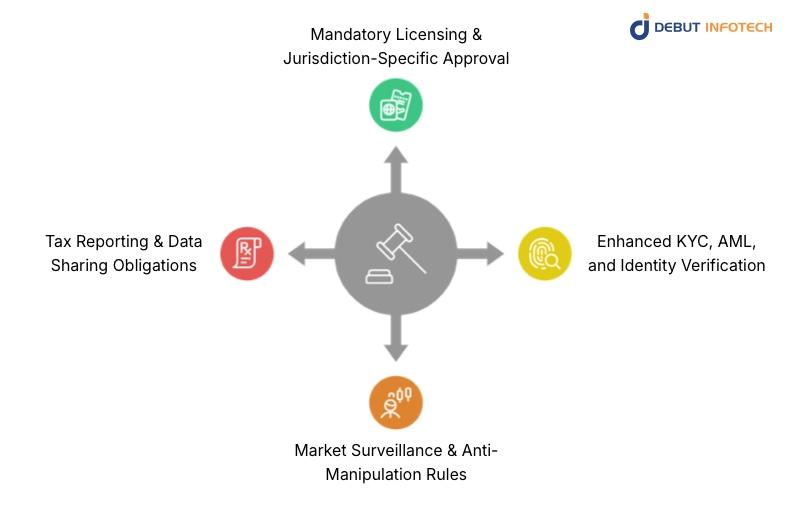
Starting in 2026, centralized exchanges won’t just be able to operate anywhere, they’ll need the right licenses in every country they serve. Think of it as exchanges needing a “passport” for each region, and the rules are tightening in the EU, UK, and APAC.
What this means for traders:
Gone are the days of simple sign-ups.
Exchanges are stepping up their game with:
Real-world example:
In January 2026, the Financial Intelligence Unit of India published new regulations that will force all crypto exchanges in the country to require selfies, government IDs, and even bank account tests before accounts can be enabled.
Exchanges will also require frequent third-party audits, segregated customer funds, on-chain and off-chain reconciliation.
Why traders should care:
Exchanges are borrowing a page from traditional finance with NASDAQ-style surveillance tools. Expect:
2026 will make it clearer than ever: every trade might be reported. Exchanges will need to:
Trader takeaway:
Assume your trades are visible to regulators by default and plan accordingly.
Crypto regulation isn’t just headlines anymore, it’s shaping the very features of centralized exchanges you use every day: what tokens you can trade, how your assets are protected, what reporting is required, and how easy it is to move money in and out. Let’s break down what’s happening around the world in a way that actually makes sense for you as a trader.
Europe – MiCA Fully in Force
In the EU, the Markets in Crypto‑Assets (MiCA) framework has moved from rollout into full enforcement. This means a single set of rules across all 27 member states and real consequences for exchanges that don’t comply.
What’s New for CEXs:
What This Means for You:
United States – Clarity and More Options
In the U.S., 2025 provided some clarity in regulation particularly on registration, custody and products such as spot trading and ETF.
Key Shifts for CEXs:
What This Means for You:
Asia & Middle East – Tailored but Evolving Rules
In Asia and the Middle East, regulators are cutting a middle ground between innovation and investor safety:
Highlights:
What This Means for You:
Emerging Markets – Access with Conditions
In Africa, LATAM, and other emerging regions, regulatory frameworks are still developing but they’re increasingly tied to fiat on/offramps and partnerships with traditional banks.
Trader Takeaways:
Regulation is no longer a side concern, it’s shaping core features of centralized exchanges, including:
There is a market trend across geographical boundaries: more transparent, safer and regulated centralized exchanges are gaining momentum. That means less guesswork but also fewer of the wild, unregulated options that once dominated crypto markets.
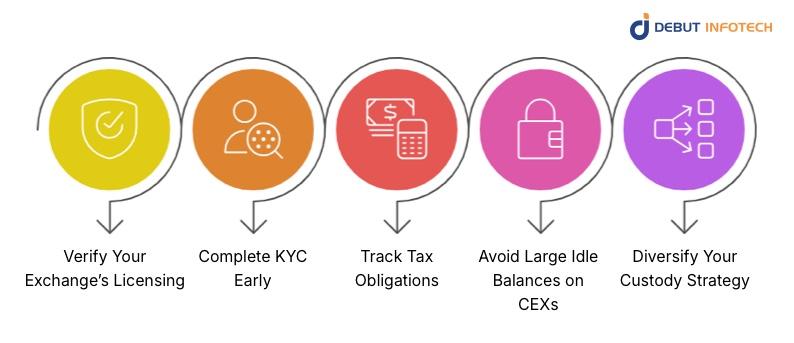
In 2026, the changes in regulations are approaching at a rapid pace. However, there is nothing to fret about, with a couple of clever moves at this point, your crypto will remain secure, and your trading will be hassle-free. Here is a basic, action-oriented checklist:
Ensure that the platform you are on is well licensed in your location. The instant check will help avoid an abrupt limitation of the account in the future.
Do not wait and have a last minute scramble. Handing in your KYC documents early will assist you to avoid lockouts in case of a tougher regulation hit.
Tax regulations differ depending on jurisdiction. Record all your transactions and remain informed of your liabilities so that you do not meet any unexpected expenses during taxing season.
It is risky to have excessive crypto on centralized exchanges. Hold only that which you are actively trading and put the rest in secure wallets.
Integrate self-custody wallets with centralized exchanges. Distributing your assets among the diverse storage solutions also provides a certain degree of protection.
Doing this, you are not merely responding to it, but you are being proactive. And when developing or using platforms, the current cryptocurrency exchange development services tend to provide compliance tools that can make these precautions even simpler to handle.
Cryptocurrency regulation has altered the game, and centralized exchanges are becoming a more developed, reliable component of the financial system. Tighter rules have been a challenge but are also providing a foundation towards long-term stability.
Centralized exchanges regulatory compliance has become a primary source of trust in pulling in institutions, safeguarding traders, and lowering uncertainty. The best thing to do is to keep up to date, be on compliant platforms, and be able to flex as rules keep on changing.
As the world becomes more interconnected, 2026 is taking shape to be less chaotic and more clear. Early adapters will be in the right place to take advantage of whatever follows.
Centralized cryptocurrency exchanges help users buy, sell, and trade digital assets.
They play a mediating role and pair buyers and sellers on one platform.
Governments control most centralized exchanges. This implies that they have to adhere to certain rules and standards of compliance.
Also, they facilitate fiat-to-crypto and crypto-to-crypto exchanges, which makes them a standard access point to both novice and serious traders.
Yes. In the United States, cryptocurrency exchanges are regulated.
Both federal and state laws provide regulation. These rules mainly focus on:
1. Anti-Money Laundering (AML)
2. Know-Your-Customer (KYC) requirements
3. Financial and security laws
There are a number of federal agencies involved:
1. The SEC regulates activities related to securities.
2. The CFTC regulates derivatives and commodities.
3. FinCEN is an organization that oversees money services and financial crimes.
Crypto exchanges are required to be registered as Money Services Businesses (MSBs) and comply with stringent compliance requirements in order to operate with legality.

Our Latest Insights
USA

2501 Chatham, Rd Suite R Springfield, IL 62704
+1-708-515-4004
info@debutinfotech.com
UK

7 Pound Close, Yarnton, Oxfordshire, OX51QG
+44-770-304-0079
info@debutinfotech.com
Canada

154 Eden Oak Trail, Kitchener, ON N2A 0H9
+1-708-515-4004
info@debutinfotech.com
INDIA

Sector 101-A, Plot No: I-42, IT City Rd, JLPL Industrial Area, Mohali, PB 140306
9888402396
info@debutinfotech.com

9001:2015
Quality Certified

ISO 27001
Security Certified

A+ Rating
Accredited Business

Certik
Security & Audit


Copyright © 2026, Debut Infotech. All rights reserved. | Privacy Policy