





What Business Challenges Can Generative AI Integration Solve?
Many enterprise AI initiatives prove technical feasibility but fail to improve daily operations. The gap is usually trusted data access, workflow integration, governance, and a clear operating model. Our generative AI integration services address these barriers and turn isolated pilots into repeatable business value.

Disconnected Business Knowledge
Problem
Employees lose time searching across documents, shared drives, CRM records, policies, and internal portals.
Business Impact
Productivity declines, decision-making becomes inconsistent, and customer responses take longer.
Solution
We connect approved knowledge sources to AI assistants that deliver relevant, traceable, and permission-aware responses.

High-Volume Manual Work
Problem
Teams repeatedly summarize documents, draft responses, classify requests, and transfer information between systems.
Business Impact
Manual effort increases operational costs, slows execution, and reduces workforce productivity.
Solution
We integrate generative AI into these workflows to automate repetitive tasks while maintaining appropriate human oversight.

Standalone AI Pilots
Problem
Many AI initiatives remain isolated from production systems after the proof-of-concept stage.
Business Impact
Business value is delayed, duplicate effort increases, and enterprise-wide adoption becomes difficult.
Solution
We transform validated pilots into secure integrations connected to enterprise applications, data platforms, APIs, and business workflows.

Inconsistent Customer Service
Problem
Support teams rely on fragmented information and manual searches to resolve customer requests.
Business Impact
Response times increase, service quality varies, and customer satisfaction declines.
Solution
We build AI assistants connected to customer history, product data, knowledge bases, and escalation workflows.

Data Privacy and Governance Risk
Problem
Public AI models used without appropriate controls can expose sensitive business information and create compliance risks.
Business Impact
Organizations face increased security exposure, regulatory challenges, and governance complexity.
Solution
We implement secure generative AI architectures with role-based access, audit trails, data protection, and policy enforcement.

Uncontrolled AI Operating Costs
Problem
Poor model selection, inefficient prompts, and unmanaged token consumption increase AI operating expenses.
Business Impact
Costs grow over time, reducing ROI and making enterprise AI deployments difficult to scale.
Solution
We optimize model routing, prompt design, caching, and monitoring to improve efficiency while controlling long-term operating costs.
Generative AI Integration Services Built Around Business Operations
We provide strategy, architecture, implementation, deployment, and continuous optimization under one delivery model. Each solution is designed around your existing systems, data controls, business processes, and measurable success criteria.
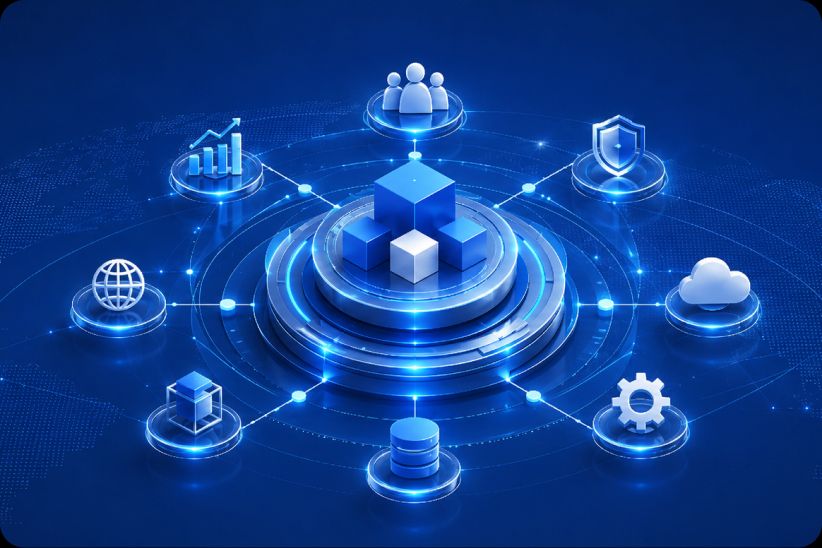

Generative AI Strategy & Consulting
We assess business readiness, identify high-value use cases, define the target architecture, evaluate build-versus-buy options, and develop a phased implementation roadmap that aligns AI initiatives with business objectives, governance requirements, and expected return on investment. Where appropriate, our approach incorporates machine learning development and ML strategy to support broader enterprise AI initiatives.

LLM & SLM Integration Services
We integrate large and small language models with enterprise applications, customer-facing platforms, and internal business systems. Our team supports commercial, open-source, private, and hybrid deployments while selecting the most appropriate models based on accuracy, privacy, latency, scalability, and cost requirements.

Retrieval-Augmented Generation (RAG) Development
We build Retrieval-Augmented Generation (RAG) solutions that connect AI models with enterprise documents, databases, knowledge bases, and business repositories. Our RAG architectures improve response accuracy, preserve source traceability, enforce data permissions, and keep business knowledge continuously up to date.

AI Copilot Development
We develop AI copilots that assist employees within the applications they already use. These copilots retrieve enterprise knowledge, generate content, summarize information, answer business questions, and support day-to-day decision-making while respecting user roles, permissions, and organizational policies.

AI Agent & Agentic Workflow Integration
We develop AI agents that execute defined business tasks across enterprise workflows. Agents retrieve approved information, interact with business applications, call authorized tools, automate multi-step processes, and escalate exceptions whenever human approval or judgment is required.

Enterprise Application Integration
We connect generative AI with CRM, ERP, CMS, collaboration platforms, customer support systems, APIs, SaaS applications, and legacy enterprise software. This enables AI capabilities to operate within existing business processes without disrupting established systems or user experiences.

AI Workflow Automation
We automate repetitive, document-intensive, and decision-support processes by combining generative AI with enterprise workflows. Where appropriate, we incorporate predictive analytics to improve forecasting, recommendations, and operational decision-making while reducing manual effort and increasing process efficiency.

AI Governance, Security & Compliance
We embed governance into every implementation through identity management, access controls, encryption, prompt-injection protection, output validation, audit logging, and compliance controls. Solutions can be aligned with organizational requirements such as GDPR, HIPAA, SOC 2, ISO 27001, and other industry regulations.

LLMOps & Continuous Optimization
We continuously monitor response quality, retrieval accuracy, latency, token consumption, operational costs, and user feedback. Prompt management, model updates, performance evaluation, and production optimization ensure AI systems remain reliable, secure, and cost-efficient. Our MLOps consulting capabilities support model deployment, monitoring, and continuous improvement across enterprise AI environments.
Is Your Business Ready for Enterprise Generative AI Integration?
Generative AI is most likely to deliver value when it addresses a defined workflow, uses reliable business data and has measurable success criteria. The following conditions typically indicate that an organization is ready to move from exploration to integration.
Your teams spend significant time searching, summarizing, drafting, classifying, or transferring information.
Your business knowledge is distributed across CRM, ERP, documents, portals, databases, and collaboration platforms.
You have an AI proof of concept that must be connected to production systems.
You need a secure internal copilot, knowledge assistant, or customer support assistant.
You want AI agents to complete controlled actions across existing tools.
You need stronger governance, cost visibility, and quality monitoring for current AI usage.
How Generative AI Integration Adapts to Different Industries
Generative AI delivers the greatest business value when it aligns with industry-specific workflows, regulatory requirements, and operational priorities. We design integration architectures, data access controls, governance frameworks, and AI workflows that reflect the way each industry operates.

Financial Services
Improve operational efficiency, strengthen compliance, and enhance customer experiences with secure, enterprise-ready AI integration.

Compliance and regulatory knowledge assistants
KYC, AML, and customer onboarding automation
Customer service copilots connected to CRM and banking systems
Financial report, policy, and correspondence generation

Healthcare
Improve clinical efficiency, reduce administrative burden, and enable faster, data-driven patient care.
Clinical documentation assistants (SOAP notes, discharge summaries)
Patient inquiry and triage copilots
Prior authorization and insurance query automation
HIPAA-compliant knowledge retrieval for clinical staff

Logistics & Supply Chain
Increase operational visibility, reduce manual coordination, and improve supply chain responsiveness.
Shipment tracking and exception management assistants
Vendor and customer communication automation
ERP, TMS, and WMS-connected operations copilots
Customs documentation and transport workflow automation

Retail & eCommerce
Deliver personalized shopping experiences while improving merchandising and customer support operations.
AI-powered shopping and product discovery assistants
Product catalog and content generation workflows
Order-aware customer support automation
Personalized merchandising and recommendation engines

Manufacturing
Improve production efficiency, reduce equipment downtime, and provide instant access to operational knowledge.
Maintenance and troubleshooting copilots
Technical documentation search and summarization
Production, quality, and safety knowledge assistants
Supplier collaboration and operations workflow automation

Enterprise Software & SaaS
Embed AI capabilities into enterprise applications to improve productivity and user experience.
Embedded AI copilots and intelligent assistants
Natural language workflows within enterprise software
AI-powered search across customer and product data
Agent-driven task automation and workflow execution

Real Estate
Accelerate property operations, simplify document management, and improve customer engagement.
Property listing and document automation
Lead qualification and CRM assistance
Contract review and due diligence summarization
AI-powered search across property knowledge repositories

Insurance
Accelerate policy operations, improve claims processing, and enhance customer service with intelligent automation.
Claims review and documentation assistants
Policy and underwriting knowledge copilots
Customer inquiry and policy support automation
Fraud investigation and compliance workflow assistance
Scale Generative AI With Greater Control, Clarity, and Confidence
Define the business case, architecture, delivery model, and governance controls needed for secure enterprise-wide adoption.
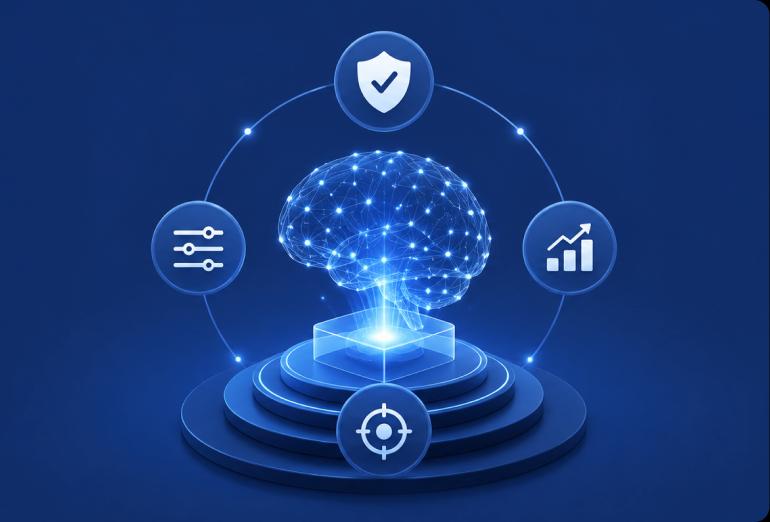
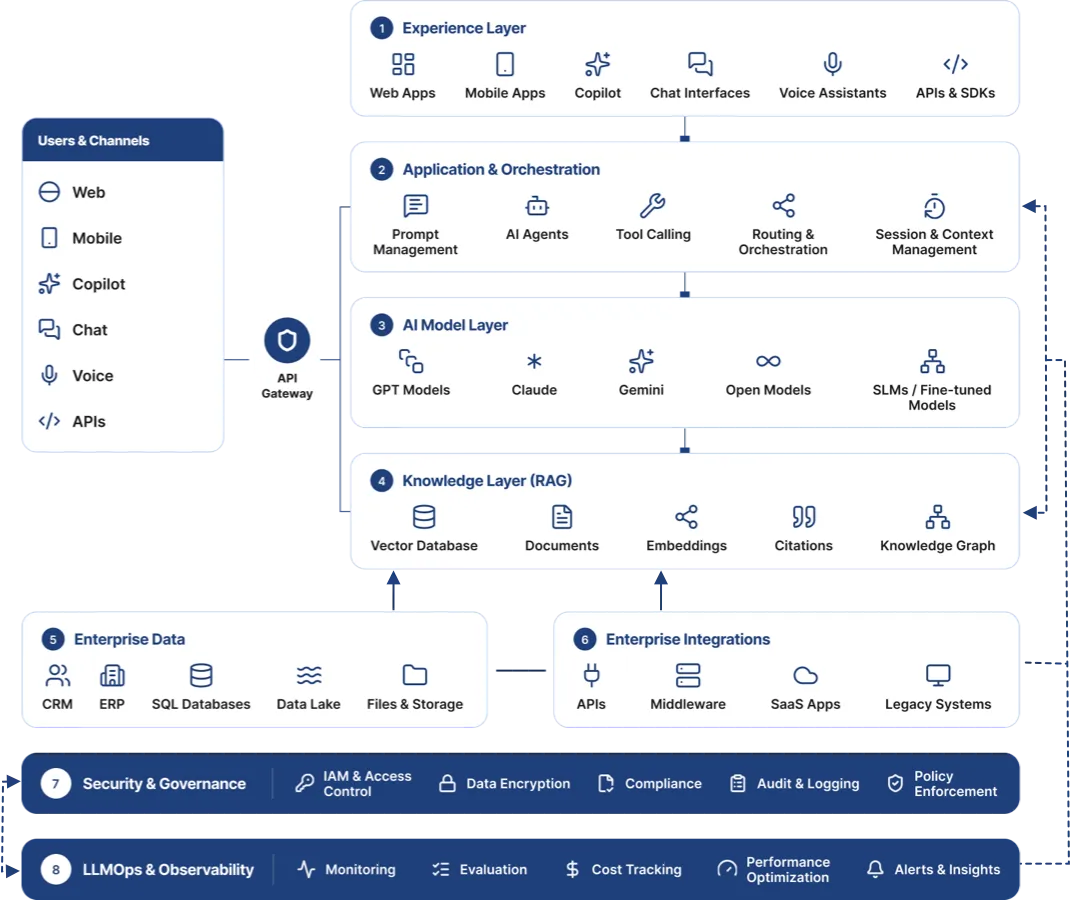
Architecture Required for Production-Grade Generative AI Integration
Generative AI Case Studies With Measurable Outcomes
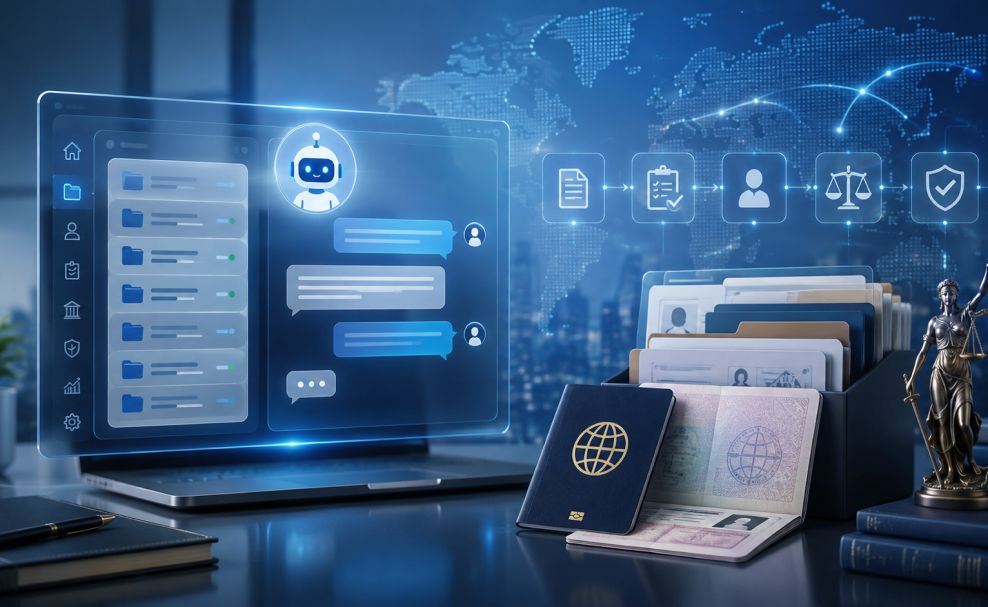
AI-Powered Legal Automation Platform for Immigration Services
40%
Reduction in Consultation Handling Time
80%+
Initial Queries Resolved Automatically
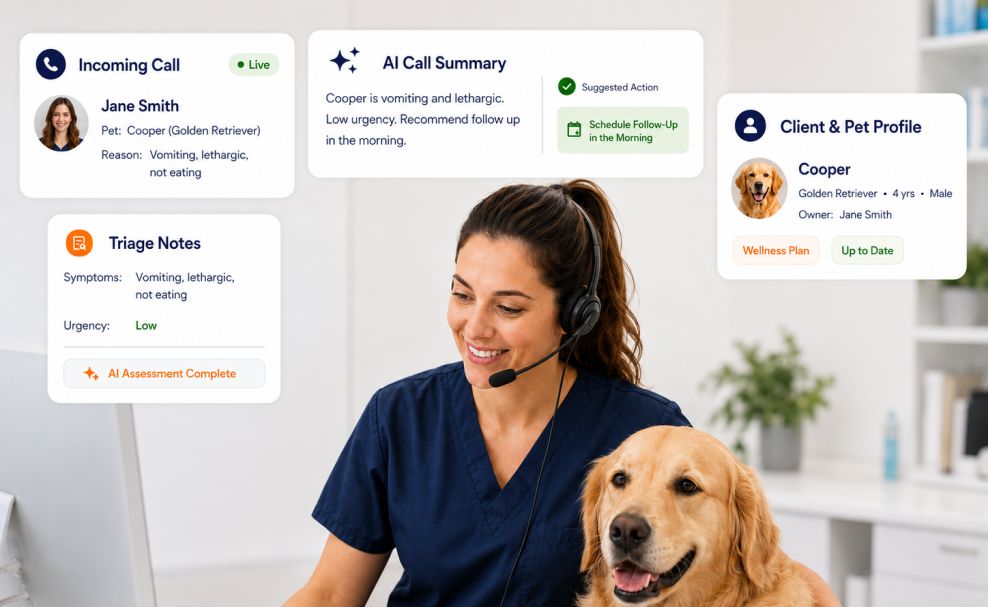
AI-Powered Call Management Solution for a Veterinary Telehealth Platform
Instant
First-Ring AI Response
100%
Inbound Calls Successfully Managed
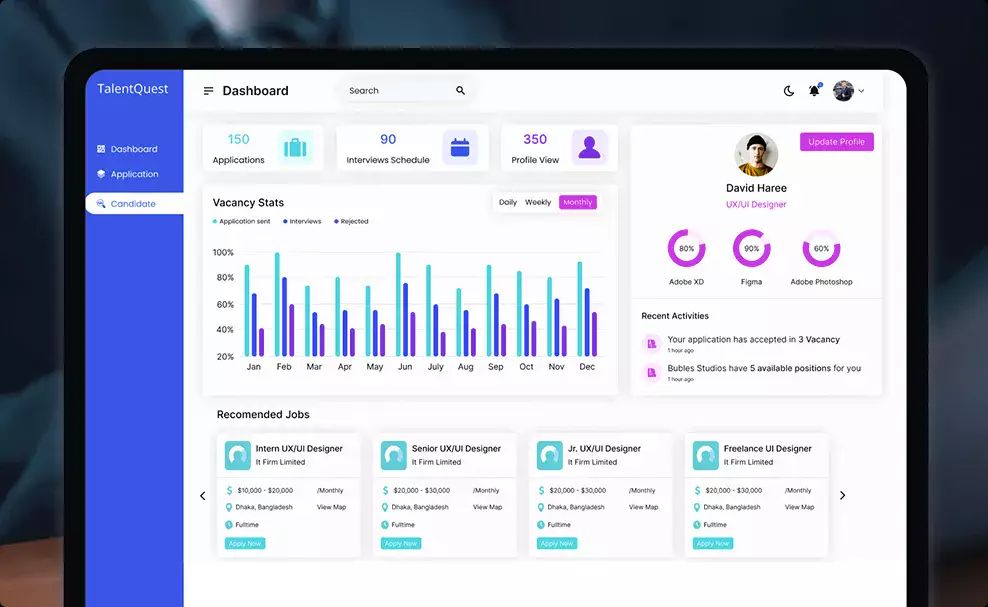
A Deep Learning Solution for Smarter Candidate Search
750,000
candidate matches facilitated
30%
Increase in recruitment efficiency
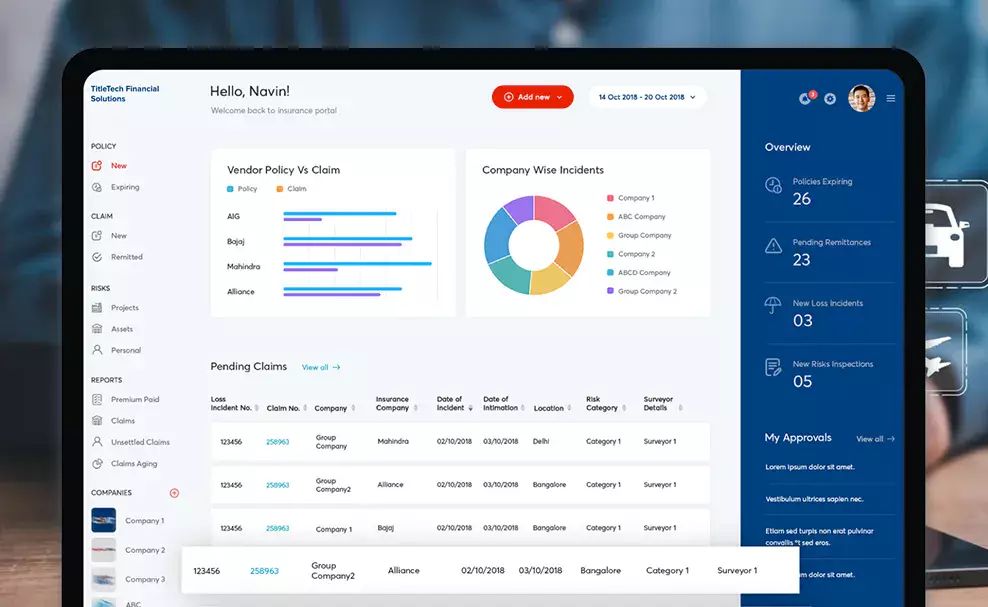
An AI-Powered Solution for Title Insurance Providers
100,000
Processed land deed documents
40%
Increase in extraction accuracy
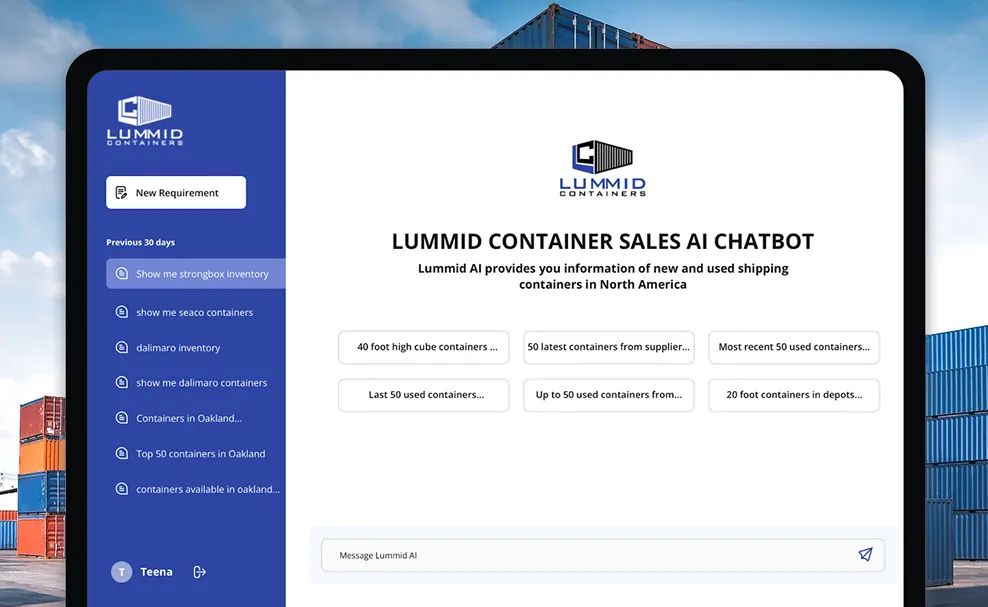
AI-Powered Inventory Automation Platform for Container Supply Networks
35%
Faster quote turnaround
50%
Lower manual workload

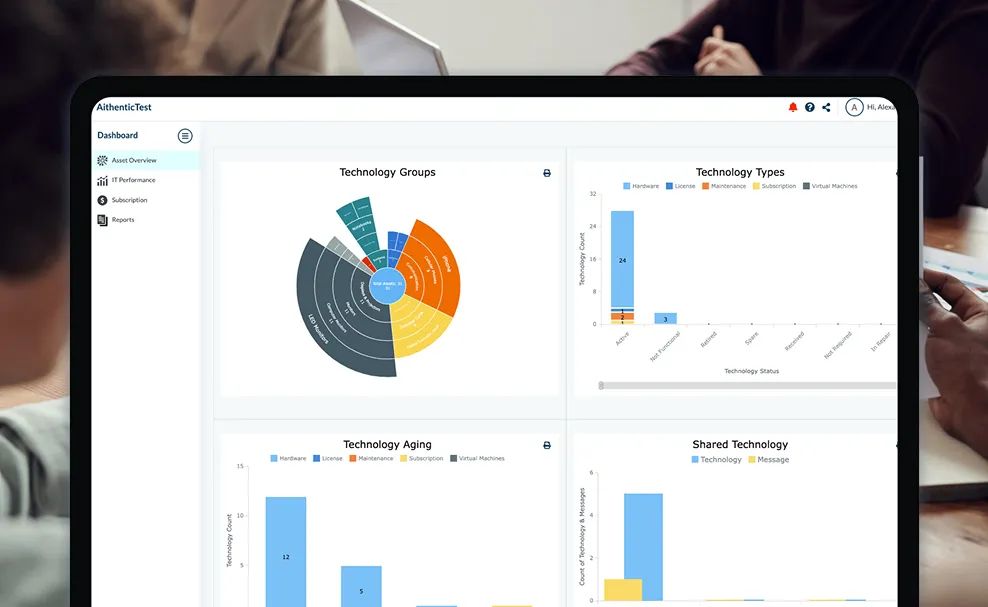
AI-Enabled IT Asset Management Solution for Global Enterprises
10,000+
Assets Managed Per Deployment
85%
Improvement in Asset Tracking Accuracy

Client Testimonials

Michale Stangel
Managing Owner, Lummid Group
Debut Infotech's AI-powered chatbot has revolutionized our sales operations. The real-time data access and automation have significantly boosted our productivity, making our processes more efficient and seamless.

CEO, Recommendy
The AI recommendation engine from Debut Infotech has greatly enhanced our customer engagement. The personalized suggestions and seamless integration have improved satisfaction and loyalty, providing a substantial boost to our overall user experience.

CEO, TechSpeak Innovations
Working with Debut Infotech has been transformative. Their spoken keyword detection technology has redefined how our users interact with mobile devices. The intuitive and efficient system has significantly improved user experience, making interaction more natural and responsive.

CEO, TalentQuest Innovations
Debut Infotech’s deep learning solution has set a new standard in HR technology. Our candidate search process is now faster and more accurate, thanks to their innovative approach. This collaboration has been a significant step forward in optimizing our recruitment operations.
Michale Stangel
Managing Owner, Lummid Group
Debut Infotech's AI-powered chatbot has revolutionized our sales operations. The real-time data access and automation have significantly boosted our productivity, making our processes more efficient and seamless.
CEO, Recommendy
The AI recommendation engine from Debut Infotech has greatly enhanced our customer engagement. The personalized suggestions and seamless integration have improved satisfaction and loyalty, providing a substantial boost to our overall user experience.
CEO, TechSpeak Innovations
Working with Debut Infotech has been transformative. Their spoken keyword detection technology has redefined how our users interact with mobile devices. The intuitive and efficient system has significantly improved user experience, making interaction more natural and responsive.
CEO, TalentQuest Innovations
Debut Infotech’s deep learning solution has set a new standard in HR technology. Our candidate search process is now faster and more accurate, thanks to their innovative approach. This collaboration has been a significant step forward in optimizing our recruitment operations.
Michale Stangel
Managing Owner, Lummid Group
Debut Infotech's AI-powered chatbot has revolutionized our sales operations. The real-time data access and automation have significantly boosted our productivity, making our processes more efficient and seamless.
CEO, Recommendy
The AI recommendation engine from Debut Infotech has greatly enhanced our customer engagement. The personalized suggestions and seamless integration have improved satisfaction and loyalty, providing a substantial boost to our overall user experience.
CEO, TechSpeak Innovations
Working with Debut Infotech has been transformative. Their spoken keyword detection technology has redefined how our users interact with mobile devices. The intuitive and efficient system has significantly improved user experience, making interaction more natural and responsive.
CEO, TalentQuest Innovations
Debut Infotech’s deep learning solution has set a new standard in HR technology. Our candidate search process is now faster and more accurate, thanks to their innovative approach. This collaboration has been a significant step forward in optimizing our recruitment operations.
Why Choose Debut Infotech As Your Enterprise Generative AI Integration Partner?
Enterprise AI succeeds when strategy, architecture, engineering, data, and governance work together. Debut Infotech helps organizations design, integrate, and scale production-ready generative AI solutions that fit existing systems, workflows, and long-term business goals.

Business-First Integration Strategy
We align every engagement with your business objectives, workflow challenges, and success metrics, ensuring AI is implemented where it delivers measurable value.

Enterprise-Scale Engineering Experience
With 15+ years of software engineering expertise and 500+ technology solutions delivered, we build enterprise systems designed for reliability and scale.

End-to-End Generative AI Integration Services
From AI strategy and architecture to RAG implementation, AI agents, deployment, governance, and optimization, we manage the complete delivery lifecycle.

Seamless Integration Across Enterprise Systems
We securely integrate generative AI into enterprise CRM, ERP, CMS, databases, SaaS platforms, APIs, collaboration tools, and legacy systems.
EXPLORE DEBUT INFOTECH | END-TO-END DELIVERY CAPABILITIES
Full-Scope Enterprise Generative AI Integration Deliverables
Enterprise AI strategy and solution architecture
Business workflow discovery and AI use case assessment
LLM, SLM, and multi-model integration architecture
Enterprise application integration (CRM, ERP, CMS, APIs)
Retrieval-Augmented Generation (RAG) pipeline implementation
AI agent and workflow orchestration
Enterprise knowledge base integration
Prompt engineering and model behavior optimization
Comprehensive testing, validation, and quality evaluation
Secure deployment with monitoring and observability
Role-based access control, governance, and audit logging
Data privacy, compliance, and security guardrails
Scalable cloud, hybrid, or on-premises deployment architecture
Performance optimization, LLMOps, and continuous improvement
How Do We Ensure Enterprise-Grade Security, Compliance & Governance?
Security and governance are designed into the architecture rather than added after deployment. We tailor controls to your data classification, user roles, operating environment, and applicable regulatory obligations.

Identity and Access Management
SSO, role-based access control, service authentication, least-privilege permissions, and user-level retrieval policies.

Data Protection
Encryption, data minimization, sensitive-data masking, retention controls, tenant isolation, and secure secret management.

Prompt and Input Security
Prompt-injection defenses, input filtering, tool restrictions, content boundaries, and validation before model processing.

Output Validation
Structured outputs, policy checks, citation requirements, confidence controls, prohibited-content checks, and human approval where needed.

Auditability and Monitoring
Prompt and response logging, access records, model and prompt version tracking, error monitoring, and reviewable decision trails.

Private and Hybrid Deployment
Private LLM, on-premises, virtual private cloud, hybrid, and controlled API architectures based on data sensitivity and infrastructure needs.

Compliance Alignment
We design solutions that support compliance initiatives and can be aligned with frameworks such as GDPR, HIPAA, SOC 2, ISO 27001, PCI DSS, CCPA, NIST AI RMF, and the EU AI Act, depending on your organization's requirements and implementation scope.

Responsible AI Governance
Defined ownership, acceptable-use policies, model and prompt approvals, risk classification, human oversight, incident response, and periodic control reviews support accountable AI operations.
Compliance Frameworks We Design For
Compliance depends on the organization, data, geography, and use case. We build technical controls that support client programs aligned with the following frameworks.

GDPR

HIPAA

SOC 2

ISO 27001

PCI DSS

CCPA
NIST AI RMF

EU AI Act Readiness
Our Enterprise Generative AI Technology Ecosystem
We use a model-agnostic approach and select technologies according to the required use case, data controls, integration environment, performance, and total operating cost.
Foundation Models
Commercial and open-source models selected for accuracy, privacy, latency, context requirements, and deployment flexibility.
OpenAI GPT
Anthropic Claude
Google Gemini
Meta Llama
Mistral AI
Microsoft Phi
Cohere
Hugging Face
AI Agent Frameworks
Frameworks for building governed AI agents, multi-step workflows, tool use, memory, and enterprise automation.
OpenAI Agents SDK
LangGraph
CrewAI
Microsoft AutoGen
Google ADK
Pydantic AI
Amazon Bedrock Agents
LLM Orchestration Frameworks
Frameworks for prompt orchestration, model routing, retrieval workflows, and enterprise AI execution.
LangChain
LlamaIndex
Semantic Kernel
Haystack
DSPy
LiteLLM
Instructor
OpenRouter
Cloud AI Platforms
Managed and private AI platforms for secure deployment, governance, and enterprise-scale AI infrastructure.
Azure AI Foundry
Amazon Bedrock
Google Vertex AI
OpenAI Enterprise
Databricks Mosaic AI
NVIDIA AI Enterprise
Vector Databases & Retrieval
Enterprise retrieval platforms for semantic search, hybrid search, metadata filtering, and scalable RAG implementations.
Pinecone
Weaviate
Milvus
pgvector
Qdrant
Chroma
Elasticsearch
Azure AI Search
Enterprise Data & Integration
Enterprise applications, APIs, databases, and integration services that connect AI with business operations.
REST APIs
GraphQL
Apache Kafka
MuleSoft
Salesforce
SAP
ServiceNow
Snowflake
Databricks
Microsoft Dynamics 365
Infrastructure & Deployment
Production infrastructure for deployment, scaling, security, and continuous delivery.
Docker
Kubernetes
Terraform
GitHub Actions
GitLab CI/CD
Jenkins
AWS Lambda
Azure Functions
Google Cloud Run
NVIDIA Triton
Evaluation, LLMOps & Monitoring
Tools for evaluating model quality, monitoring production performance, tracing AI workflows, and optimizing costs.
LangSmith
Arize Phoenix
Langfuse
MLflow
OpenTelemetry
Weights & Biases
Grafana
Prometheus
OpenAI Evals
Ragas
What Business Outcomes Can Enterprise Generative AI Integration Deliver?
The value of generative AI extends beyond automation. By integrating AI with enterprise applications, business data, and operational workflows, organizations can improve decision-making, increase workforce productivity, accelerate service delivery, reduce operational costs, and establish a scalable foundation for enterprise-wide AI adoption.

Faster Knowledge Access
Help employees find accurate information across approved documents, systems, and databases without switching between multiple tools.

Reduced Manual Work
Automate repetitive drafting, summarization, classification, extraction, routing, and information-transfer tasks.

Improved Customer Response
Provide service teams with context-aware assistance connected to customer history, product data, policies, and escalation workflows.

More Consistent Operations
Apply common knowledge, rules, templates, and approval steps across high-volume business processes.

Stronger Employee Productivity
Embed copilots into existing applications so teams can complete knowledge-intensive tasks with less friction.

Controlled AI Adoption
Replace unmanaged AI usage with governed systems that provide access control, monitoring, traceability, and cost visibility.

Faster Product Innovation
Add intelligent search, assistants, content generation, workflow automation, and agent capabilities to existing digital products.

Scalable AI Operations
Move from isolated pilots to a maintainable production architecture that supports growing users, data, integrations, and use cases.
Our End-to-End Generative AI Integration Process
We follow a governed process that connects business goals, AI readiness, data preparation, enterprise integration, validation, security, deployment, and continuous improvement.
1
Discovery & AI Readiness Assessment

2
Solution Architecture & Integration Planning

3
Data Preparation & Knowledge Engineering
4
Generative AI & Enterprise System Integration
5
Proof of Concept (PoC) & Validation
6
Security, Testing & Compliance
7
Production Deployment & Enterprise Rollout
8
Continuous Optimization & Scale
STEP 01
Discovery & AI Readiness Assessment
Every successful AI initiative begins with a clear understanding of business objectives, operational workflows, user groups, and existing technology readiness. We assess where generative AI can create measurable value and whether the organization has the right data, systems, and governance foundation to support implementation.

Which workflows consume the most manual effort or repetitive decision-making?
Which business teams and user groups will use the solution?
Which data sources, applications, and systems need to be assessed?
What security, privacy, compliance, and adoption risks must be considered?
Deliverables
Awards & Accolades


What Determines the Cost of Enterprise Generative AI Integration?
The cost of enterprise generative AI integration depends on the complexity of your business environment rather than the AI model alone. The number of enterprise systems, data quality, security requirements, workflow complexity, deployment architecture, and expected scale all influence the implementation effort. While focused AI integrations typically start around $25,000–$50,000, enterprise-wide deployments with multiple systems, RAG, AI agents, and governance frameworks commonly range from $100,000 to $500,000+.
Cost Factor
What Drives It
Systems & Integration Points
Number, type, and accessibility of CRM, ERP, SaaS, APIs, data platforms, and legacy applications.
Data Readiness
Cleansing, permissions mapping, metadata, ingestion pipelines, document processing, and content freshness.
RAG & Vector Search
Data volume, retrieval quality, citations, reranking, access filtering, and vector database configuration.
AI Agent Complexity
Number of tools, decision steps, approval workflows, error handling, and system actions.
Model & Deployment Approach
Public APIs, managed cloud models, private cloud, hybrid architecture, or on-premises deployment.
Security & Compliance
Identity controls, auditability, data residency, validation, testing, and regulatory requirements.
Performance & Scale
User volume, concurrency, response-time targets, context size, uptime, and geographic coverage.
Ongoing Optimization
Monitoring, evaluation, prompt management, model updates, incident support, and cost optimization.
How We Optimize Generative AI for Long-Term Enterprise Performance?
Production AI is not a static asset. Performance changes as users, data, prompts, models, and business requirements evolve. We therefore treat deployment as the start of a managed improvement cycle, with quality, cost, risk, and adoption reviewed over time.
Ready to Integrate Generative AI Into Your Enterprise Systems?
Share your current applications, data sources, workflow challenges, and security requirements. Our team will help you define a practical integration scope, architecture, delivery plan, and next step.
Frequently Asked Questions
How can generative AI be integrated into existing enterprise software?
The integration of generative AI into existing enterprise software can use APIs, middleware, webhooks, event streams, embedded interfaces, retrieval pipelines, and agent tools. The best method depends on the application's architecture, data access, workflow, security requirements, and performance needs.
Can generative AI be connected to Salesforce CRM and SAP ERP?
Yes. AI assistants and workflows can be connected to Salesforce, SAP, and other enterprise systems through supported APIs, middleware, integration platforms, or custom services. Access permissions, data scope, business rules, and audit requirements should be defined before implementation.
What is the difference between LLM fine-tuning and RAG pipeline integration?
LLM fine-tuning changes a model's behavior by training it on selected examples. RAG keeps enterprise knowledge outside the model and retrieves relevant information at request time. RAG is generally better for frequently changing or permission-controlled information, while fine-tuning can help with specialized behavior, format, tone, or task patterns. Some solutions use both.
How do you prevent corporate data leakage when using public LLM APIs?
Secure generative AI integration for regulated industries may include data minimization, sensitive-data masking, provider configuration, private endpoints, encryption, access policies, approved data boundaries, prompt filtering, audit logs, and contractual review. Highly sensitive workflows may require private, cloud-isolated, or on-premises model deployment.
Can a private LLM be deployed on premises?
Yes. Suitable open-source or privately hosted models can be deployed on premises, in a virtual private cloud, or in a hybrid environment. The decision depends on data sensitivity, infrastructure, model requirements, latency, scale, and total cost of ownership.
Can generative AI be integrated with legacy systems without causing downtime?
In many cases, yes. We use APIs, middleware, adapters, data services, phased releases, feature flags, and parallel validation to reduce disruption. The exact approach depends on the legacy system's interfaces, data access, and operational constraints.
How long does it take to integrate an LLM into a corporate technology stack?
A focused integration or pilot may take several weeks, while a multi-system enterprise rollout can take several months. Timeline depends on use-case complexity, data readiness, number of integrations, security review, compliance, testing, and production scale.
What is the typical ROI of enterprise generative AI integration services?
ROI depends on the workflow and adoption level. Common value areas include reduced handling time, faster knowledge access, fewer manual steps, improved employee productivity, more consistent customer service, and faster product delivery. We recommend defining baseline metrics before implementation and measuring results during the pilot.
How do you optimize token usage and API costs after launch?
We improve prompts, limit unnecessary context, optimize retrieval, cache repeated information, route tasks to suitable models, use smaller models where appropriate, compress conversation history, and monitor cost by user, feature, and workflow.
What are the common engagement models for hiring a generative AI integration company?
Common models include consulting and discovery, fixed-scope pilot delivery, time-and-materials development, dedicated AI engineering teams, team extension, and managed product delivery. The right model depends on scope clarity, internal capability, timeline, and long-term ownership.
How much does enterprise generative AI integration cost?
Cost depends on the number of systems, data quality, RAG requirements, agent complexity, model choice, private deployment, security controls, user volume, and ongoing support. A discovery and architecture assessment is the most reliable way to define a realistic range.
How do you integrate generative AI into enterprise workflows?
Enterprise generative AI integration starts by identifying high-value business use cases and connecting AI models to enterprise applications, data sources, and knowledge repositories. The solution is then integrated into existing workflows using APIs, RAG, AI agents, or orchestration tools, with security, governance, and monitoring built in for production use.
What is the main ROI of integrating generative AI?
The primary ROI comes from improving productivity, reducing manual effort, and accelerating business processes. By automating repetitive tasks, enabling faster access to enterprise knowledge, and supporting better decision-making, organizations can lower operational costs while improving employee and customer experiences.
Which steps are part of the enterprise generative AI integration process?
Enterprise generative AI integration typically follows a structured implementation process: 1) Define business objectives and identify high-value AI use cases. 2) Assess data and system readiness to evaluate existing applications, data quality, and integration requirements. 3) Design the AI architecture by selecting the appropriate models, RAG strategy, and deployment approach. 4) Integrate AI with enterprise systems such as CRM, ERP, databases, and knowledge repositories. 5) Implement security and governance through access controls, compliance measures, and monitoring. 6) Test and optimize the solution before production deployment. 7) Monitor, improve, and scale the AI system based on performance, user feedback, and evolving business needs.