



LLM Fine-Tuning Services for Custom-Trained Business AI Models
RECOGNIZED BY LEADING REVIEW PLATFORMS


Measurable Outcomes From Fine-Tuning
55%→93%
Task Accuracy
30–50%
Lower Manual Review Effort
10–15 Wk
Production Rollout
Lower
Cost Per AI Response
Faster
Domain-Specific Model Adaptation
The Business Case
General AI Is Smart. Fine-Tuned AI Is Useful.
Off-the-shelf language models are trained on the open internet — not on your proprietary product documentation, support transcripts, or sensitive clinical records. This "knowledge gap" leads to hallucinations, off-brand tone, and failure to meet regulated-industry thresholds.
Fine-tuning bridges this gap. By adapting a proven foundation model to your specific datasets, you gain the benefits of a custom-built "expert" without the massive overhead of training a model from scratch.
Accuracy
55% → 93% Task Accuracy
Domain fine-tuning consistently moves task-specific accuracy from 55–65% (general LLM baseline) to 85–93% on the same benchmarks. For customer-facing or compliance-critical use cases, this gap cannot be left unfixed.
Cost
4–8× Lower Inference Cost
A fine-tuned 7B model running on your own infrastructure costs 4–8× less per inference than routing every query to GPT-4 API at scale. For high-volume deployments, this alone pays for the fine-tuning investment within 3–6 months.
Control
Private Deployment & Model Ownership
Fine-tuned open-source models (Llama 3, Mistral) can be deployed entirely on-premise or in your private cloud. Your data does not leave your environment. You own the weights. A third-party vendor cannot deprecate the model.
Fine-Tuning vs RAG vs Prompt Engineering: A Strategic Comparison for Enterprise AI
| Approach | Best When | Limitations | Debut Recommendation |
|---|---|---|---|
| Prompt Engineering | Fast iteration, low budget, general tasks | Breaks on complex or domain-specific queries | Starting point — not a production strategy |
| RAG (Retrieval-Augmented Generation) | Large document corpora, frequently changing data | Retrieval latency, chunking errors, hallucination still possible | Right for knowledge retrieval use cases |
| Fine-Tuning | Domain-specific reasoning, tone alignment, compliance accuracy, high-volume inference | Upfront data prep and training cost | Right for precision, scale, and ownership |
| RAG + Fine-Tuning | Enterprise deployments needing both accuracy and live retrieval | Higher complexity, longer timeline | Best-in-class enterprise architecture |
What We Do
Our AI Model Training & LLM Fine-Tuning Services
Fine-tuning an LLM requires more than feeding data into a model. It needs the right architecture, clean datasets, measurable benchmarks, secure deployment, and continuous optimization. We train and fine-tune AI models for domain accuracy, structured outputs, lower review effort, and production-ready performance.

LLM Fine-Tuning Consulting Services
Strategic fine-tuning assessment covering use case feasibility, data readiness, model selection, risk evaluation, and the right path between prompt engineering, RAG, fine-tuning, or hybrid architecture.
- ✓
Fine-tuning feasibility and ROI assessment
- ✓
RAG vs fine-tuning decision framework
- ✓
Data readiness and quality evaluation
- ✓
Model, hosting, and deployment strategy

Model Selection and Architecture Design
Enterprise LLM architecture planning across GPT, Claude, Gemini, Llama, Mistral, and Hugging Face ecosystems — aligned with your accuracy, latency, cost, privacy, and deployment requirements.
- ✓
Proprietary vs open-source model evaluation
- ✓
Training pipeline and deployment architecture
- ✓
Private cloud, on-premise, or API-based model strategy
- ✓
Scalability, latency, and infrastructure planning

Domain Data Preparation and Labeling
High-quality training dataset preparation — cleaning, structuring, labeling, anonymizing, and validating business data so models learn from accurate, relevant, and secure examples.
- ✓
Data cleaning, deduplication, and formatting
- ✓
PII redaction and sensitive data anonymization
- ✓
Input-output pair creation for supervised fine-tuning
- ✓
Training, validation, and test dataset preparation

Supervised LLM Fine-Tuning Services
Task-specific fine-tuning using labeled examples — improving accuracy, structured response generation, classification, summarization, extraction, and repeatable workflow execution.
- ✓
Labeled input-output dataset training
- ✓
Classification, summarization, and extraction tuning
- ✓
Structured output and format consistency
- ✓
Benchmark-based validation against business tasks

Instruction and Behavior Tuning
Fine-tuning model behavior around business rules, tone, output structure, and workflow instructions so models respond consistently across teams, products, channels, and regulated environments.
- ✓
Brand voice and response tone alignment
- ✓
Multi-step instruction-following optimization
- ✓
Policy-aware response behavior
- ✓
Structured formatting and answer control

Domain-Specific LLM Fine-Tuning
Custom fine-tuning for industry-specific language, workflows, user intent, and operational context — enabling models to understand business terminology, product logic, and compliance vocabulary.
- ✓
Industry terminology and domain language tuning
- ✓
Product documentation and workflow adaptation
- ✓
Compliance-aware response refinement
- ✓
Support transcript and knowledge base training

Parameter-Efficient Fine-Tuning Services
Cost-conscious optimization using LoRA, QLoRA, PEFT, and open-source model adaptation — improving performance while reducing training overhead, compute, and deployment dependency.
- ✓
LoRA and QLoRA fine-tuning implementation
- ✓
Open-source LLM optimization for private deployment
- ✓
Compute-efficient model adaptation
- ✓
Cost and latency optimization for high-volume inference

LLM Evaluation and Error Analysis
Production-grade evaluation across accuracy, hallucination patterns, consistency, latency, bias, safety, and edge-case behavior — ensuring models are tested before they reach real users.
- ✓
Accuracy, consistency, and factuality testing
- ✓
Hallucination and failure-case analysis
- ✓
Bias, safety, and restricted-output checks
- ✓
Regression testing across model versions

Fine-Tuned LLM Integration Services
Seamless integration into products, business systems, APIs, dashboards, and enterprise workflows — connecting model intelligence with the systems where work actually happens.
- ✓
CRM, ERP, helpdesk, and knowledge base integration
- ✓
API, app, and dashboard integration
- ✓
RAG pipeline and vector database connectivity
- ✓
Secure deployment into existing business workflows

Post-Deployment LLM Optimization
Continuous improvement after launch — monitoring real-world outputs, capturing feedback, identifying drift, and retraining models as products, users, and workflows evolve.
- ✓
Live model monitoring and feedback collection
- ✓
Drift, latency, and performance tracking
- ✓
Edge-case discovery and retraining cycles
- ✓
Ongoing accuracy and response quality improvement
What Is LLM Fine-Tuning?
Your AI Knows Everything. Except Your Business.
Pre-trained LLMs are built on broad public and licensed data, not the internal rules, terminology, workflows, and compliance expectations that shape enterprise operations.
This gap often leads to generic, inconsistent, or contextually inaccurate outputs in production.
LLM fine-tuning narrows that gap by training the model on approved, task-specific examples and domain data. Instead of relying only on prompts, it adjusts model behavior at a deeper level, helping enterprises improve accuracy, consistency, tone, and decision quality across customer support, compliance workflows, knowledge search, and business automation.
Fine-tuning changes model behavior at the weight level, not just the prompt level. The model learns from approved domain examples so it can respond more consistently across repeated business tasks.
Where Generic LLMs Break — and What Fine-Tuning Does About It
The Production Problem
Hallucination on domain queries — The model fabricates terminology, policy figures, and regulatory references it has never been trained on
Output rewrites on every query — Every AI-generated draft requires a senior team member to correct terminology, tone, and compliance language before it can be used
Brand and compliance inconsistency — Prompt engineering produces inconsistent results; complex queries override system instructions unpredictably
Vendor dependency and deprecation risk — Your deployment is one product decision away from silent behaviour changes, forced migration, or repricing
Regulatory incompatibility — Public API models cannot be used with data governed by HIPAA, SOC 2, GDPR, or attorney-client privilege frameworks
Unsustainable inference cost at scale — GPT-4 API pricing is viable for pilots; at 1M+ tokens/day it outpaces business value within 3 months
The Fine-Tuning Resolution
Grounded in your verified internal data — clinical protocols, legal frameworks, financial filings — hallucination rates on domain tasks drop measurably
RLHF and instruction fine-tuning train the model on your accepted outputs — 70%+ draft acceptance rates are achievable on well-scoped tasks
Tone, compliance language, and output standards are internalised at the weight level — consistent across every inference without additional instruction overhead
Fine-tuned open-source models (Llama 3, Mistral) are deployed in your environment. You own the weights. No vendor can change, deprecate, or reprice your model
Training executes within your cloud account or on-premise infrastructure. Data never touches external infrastructure. Compliance frameworks maintained throughout
A fine-tuned 7B model on dedicated infrastructure handles domain queries at 4–8× lower cost per token — investment pays back within 3–6 months at volume
55% → 93%
Task accuracy improvement on domain-specific benchmarks after fine-tuning — measured on held-out evaluation sets, not training data
4–8×
Inference cost reduction when moving from GPT-4 API volume to a fine-tuned open-source model on dedicated infrastructure
73%
AI draft acceptance rate achieved by TalentQuest post fine-tuning — vs. 29% with GPT-4 baseline on the same performance review tasks
10-12 weeks
Average time from fine-tuning start to production deployment for a supervised fine-tuning project with a prepared dataset
Generic AI Creates Outputs. Fine-Tuned AI Creates Business Value.
Most LLMs can generate answers, but not every model can support customer, compliance, operational, or product workflows with confidence. We fine-tune models to your business context so AI becomes more accurate, controlled, and useful where decisions are made.
Aligned with your business rules, data, and performance benchmarks
Evaluated for accuracy, hallucination patterns, and safety risks
Integrated with enterprise systems for workflow-ready execution

Types of LLM Fine-Tuning
LLM Fine-Tuning Methods Built Around Different Business Goals
Not every use case needs the same approach. We select and execute the technique that matches your data, deployment environment, and accuracy requirements — not the one that's easiest to deliver.
Teach the model exactly what good output looks like — using your data.
Supervised fine-tuning trains the model on labelled input-output pairs from your proprietary dataset. The model learns to produce the output your business defines as correct — not what the internet considers probable. Ideal when you have structured examples and a well-defined task.
How It Works
Collect proprietary input-output examples
Clean, label, and validate training data
Run supervised training with evaluation splits
Benchmark against held-out evaluation set
Deploy checkpoint with highest task accuracy
Our Featured Case Studies

AI-Powered Legal Automation Platform for Immigration Services
40%
Reduction in Consultation Handling Time
80%+
Initial Queries Resolved Automatically
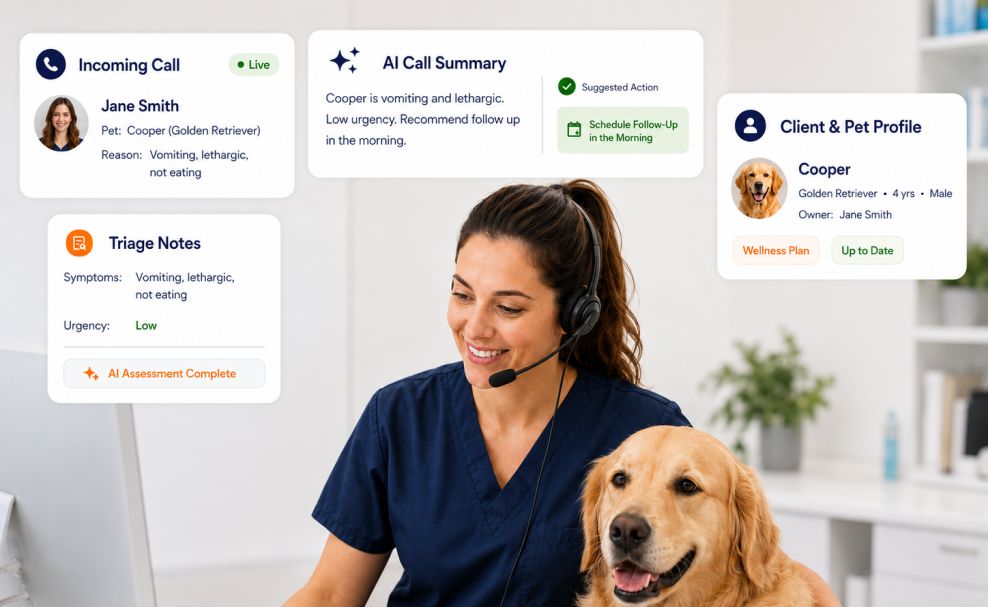
AI-Powered Call Management Solution for a Veterinary Telehealth Platform
Instant
First-Ring AI Response
100%
Inbound Calls Successfully Managed
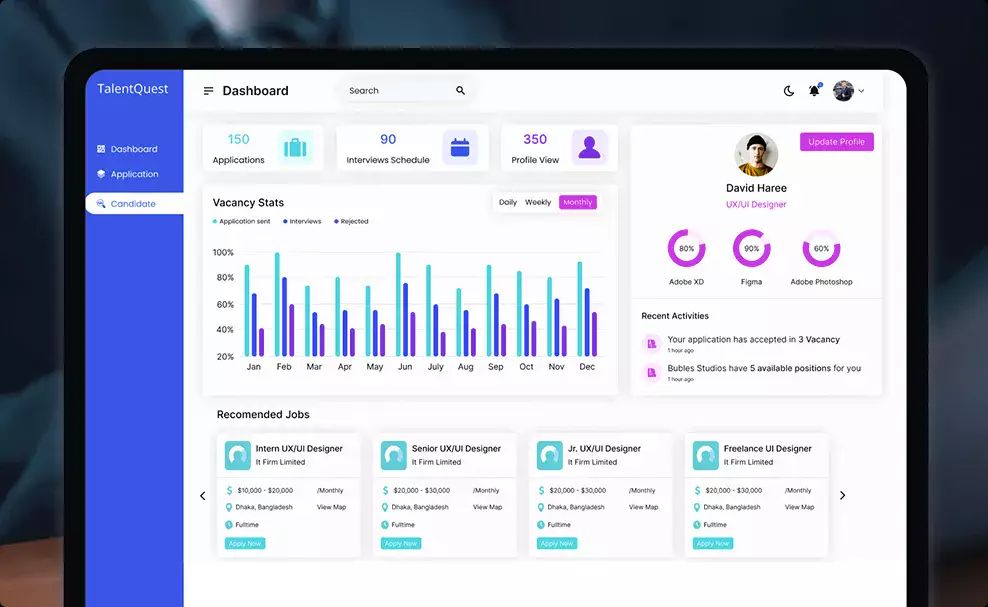
A Deep Learning Solution for Smarter Candidate Search
750,000
candidate matches facilitated
30%
Increase in recruitment efficiency
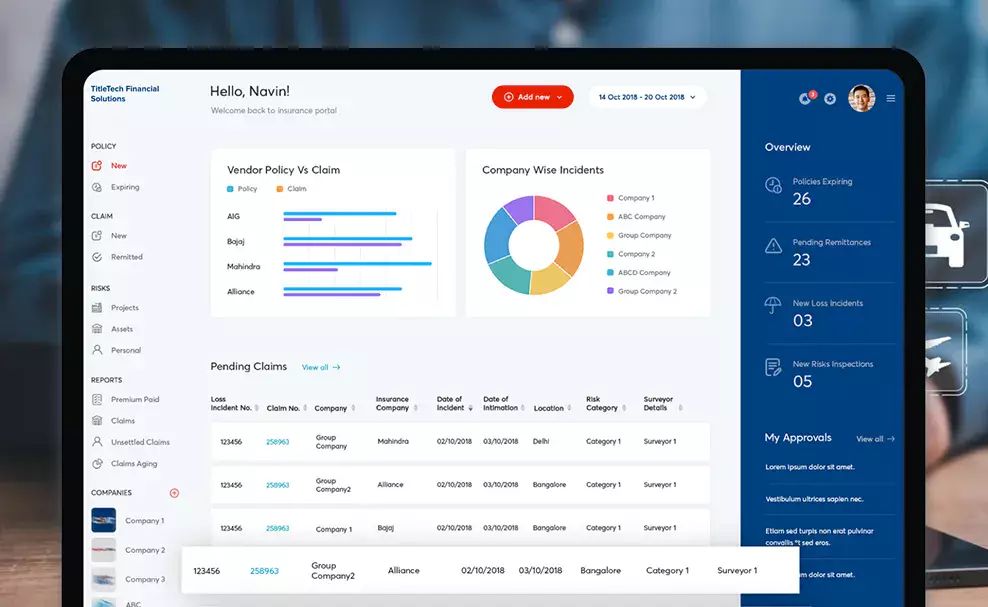
An AI-Powered Solution for Title Insurance Providers
100,000
Processed land deed documents
40%
Increase in extraction accuracy
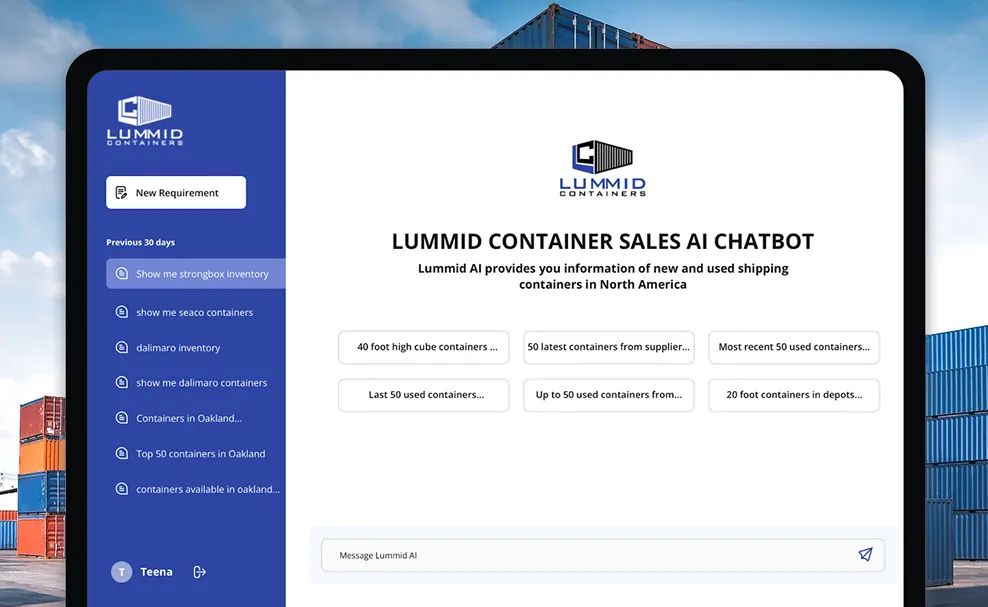
AI-Powered Inventory Automation Platform for Container Supply Networks
35%
Faster quote turnaround
50%
Lower manual workload

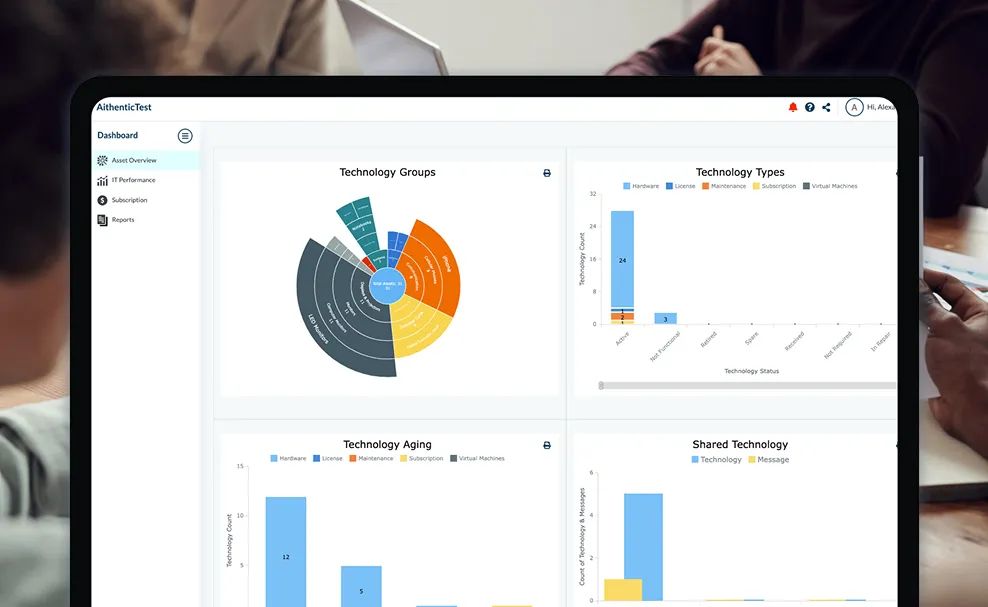
AI-Enabled IT Asset Management Solution for Global Enterprises
10,000+
Assets Managed Per Deployment
85%
Improvement in Asset Tracking Accuracy

What Our Clients Say

Alexander Barrett
Founder and CEO, iFinca
Debut Infotech played a pivotal role in bringing my vision for iFinca to life. Their blockchain expertise and innovative approach have significantly enhanced the transparency and traceability of the coffee supply chain. Thanks to them, coffee farmers now have access to a platform that not only connects them directly with buyers but also ensures they receive fair pricing.
View Project Details

Mike Rino
CTO, Integra Ledger
Working with Debut Infotech was instrumental in developing Integra Ledger, our blockchain-based digital signature platform. Their dedication to innovation and attention to detail ensured that we could create a product that rivals industry giants in both quality and affordability. The security and reliability they built into our platform have set a new standard in the e-signature landscape.
View Project Details

Oscar Jofre
CEO, KoreConX
Partnering with Debut Infotech has been a transformative experience for KoreConX. Their expertise in blockchain technology helped us create a secure and efficient ecosystem for managing private capital markets. The collaboration has enabled us to deliver unparalleled value to our clients, streamlining investor relations, compliance, and corporate governance on a global scale.

Haider Rafique
CMO, OKX
Working with Debut Infotech on our white label crypto exchange was a great experience. Their team demonstrated strong expertise in blockchain, delivering a secure, scalable, and user-friendly platform tailored to our needs. Communication was transparent and responsive, and they ensured the project was completed on time with excellent post-launch support. I highly recommend their services for anyone looking to build a crypto exchange.

Bilal Hammoud
Founder of NDAX
Working with Debut Infotech has been a game-changer for NDAX. Their unparalleled expertise in blockchain, DeFi, and crypto wallet development, allowed us to build a seamless, robust platform that enhances user experience and security. Their team's dedication, innovative approach, and attention to detail were evident throughout the project. They consistently exceeded our expectations, ensuring NDAX's position as a leading crypto trading platform.
Alexander Barrett
Founder and CEO, iFinca
Debut Infotech played a pivotal role in bringing my vision for iFinca to life. Their blockchain expertise and innovative approach have significantly enhanced the transparency and traceability of the coffee supply chain. Thanks to them, coffee farmers now have access to a platform that not only connects them directly with buyers but also ensures they receive fair pricing.
View Project Details
Mike Rino
CTO, Integra Ledger
Working with Debut Infotech was instrumental in developing Integra Ledger, our blockchain-based digital signature platform. Their dedication to innovation and attention to detail ensured that we could create a product that rivals industry giants in both quality and affordability. The security and reliability they built into our platform have set a new standard in the e-signature landscape.
View Project Details
Oscar Jofre
CEO, KoreConX
Partnering with Debut Infotech has been a transformative experience for KoreConX. Their expertise in blockchain technology helped us create a secure and efficient ecosystem for managing private capital markets. The collaboration has enabled us to deliver unparalleled value to our clients, streamlining investor relations, compliance, and corporate governance on a global scale.
Haider Rafique
CMO, OKX
Working with Debut Infotech on our white label crypto exchange was a great experience. Their team demonstrated strong expertise in blockchain, delivering a secure, scalable, and user-friendly platform tailored to our needs. Communication was transparent and responsive, and they ensured the project was completed on time with excellent post-launch support. I highly recommend their services for anyone looking to build a crypto exchange.
Bilal Hammoud
Founder of NDAX
Working with Debut Infotech has been a game-changer for NDAX. Their unparalleled expertise in blockchain, DeFi, and crypto wallet development, allowed us to build a seamless, robust platform that enhances user experience and security. Their team's dedication, innovative approach, and attention to detail were evident throughout the project. They consistently exceeded our expectations, ensuring NDAX's position as a leading crypto trading platform.
Alexander Barrett
Founder and CEO, iFinca
Debut Infotech played a pivotal role in bringing my vision for iFinca to life. Their blockchain expertise and innovative approach have significantly enhanced the transparency and traceability of the coffee supply chain. Thanks to them, coffee farmers now have access to a platform that not only connects them directly with buyers but also ensures they receive fair pricing.
View Project Details
Mike Rino
CTO, Integra Ledger
Working with Debut Infotech was instrumental in developing Integra Ledger, our blockchain-based digital signature platform. Their dedication to innovation and attention to detail ensured that we could create a product that rivals industry giants in both quality and affordability. The security and reliability they built into our platform have set a new standard in the e-signature landscape.
View Project Details
Oscar Jofre
CEO, KoreConX
Partnering with Debut Infotech has been a transformative experience for KoreConX. Their expertise in blockchain technology helped us create a secure and efficient ecosystem for managing private capital markets. The collaboration has enabled us to deliver unparalleled value to our clients, streamlining investor relations, compliance, and corporate governance on a global scale.
Haider Rafique
CMO, OKX
Working with Debut Infotech on our white label crypto exchange was a great experience. Their team demonstrated strong expertise in blockchain, delivering a secure, scalable, and user-friendly platform tailored to our needs. Communication was transparent and responsive, and they ensured the project was completed on time with excellent post-launch support. I highly recommend their services for anyone looking to build a crypto exchange.
Bilal Hammoud
Founder of NDAX
Working with Debut Infotech has been a game-changer for NDAX. Their unparalleled expertise in blockchain, DeFi, and crypto wallet development, allowed us to build a seamless, robust platform that enhances user experience and security. Their team's dedication, innovative approach, and attention to detail were evident throughout the project. They consistently exceeded our expectations, ensuring NDAX's position as a leading crypto trading platform.
Why Fine-Tuning Is No Longer Optional for Enterprise AI?
Successful fine-tuning is not about adjusting a model once and calling it production-ready. It requires a clear understanding of your business context, the right training data, disciplined evaluation, secure deployment, and continuous improvement. Debut Infotech brings AI engineering, product development, and enterprise integration expertise together to turn general-purpose LLMs into reliable, business-aligned AI systems.

Recognized AI Engineering Partner
Recognized across Clutch, GoodFirms, and SelectedFirms for software, AI, and emerging technology delivery — with a track record built around enterprise-grade execution, client feedback, and measurable digital outcomes.

Established Model-to-Product Expertise
Active in software engineering since 2011 across AI, blockchain, SaaS, fintech, healthcare, and enterprise systems — combining model optimization with secure architecture, workflow integration, and production-ready deployment.

Production-Focused LLM Delivery
We do not treat fine-tuning as a lab experiment. Our approach covers data readiness, model selection, instruction tuning, evaluation, security, integration, and post-launch optimization — so the model works inside real business systems.

Technique-Agnostic Approach
Right method selection across supervised fine-tuning, LoRA, QLoRA, RLHF, DPO, and domain adaptation — based on your data volume, accuracy requirements, and deployment constraints, not what is easiest to deliver.
What You Get
What You Get With Our LLM Fine-Tuning Engagement

Use case discovery and business goal mapping
Data quality and readiness assessment
Fine-tuning vs RAG architecture recommendation
Training dataset cleaning and structuring
Sensitive data redaction and anonymization
Model selection across suitable LLM ecosystems
Custom training pipeline design
Supervised and instruction fine-tuning setup
Domain and workflow-specific model tuning
LoRA, QLoRA, and efficient tuning implementation
Evaluation benchmark planning
Hallucination and response consistency testing
Accuracy, safety, and output quality validation
API and application integration
Enterprise system connectivity
Secure deployment planning
Access control and governance setup
Model monitoring and feedback loops
Post-launch performance refinement
Ongoing retraining and optimization support
Awards & Accolades




Industries We Serve
Industry-Specific LLM Fine-Tuning for Real Business Workflows
LLM fine-tuning delivers the strongest value where accuracy, terminology, compliance, and repeatable decision support matter. We fine-tune large language models around domain data, business workflows, internal policies, and user behavior patterns for higher relevance, consistency, and control.

Secure data handling, policy-aware responses, and stronger accuracy across customer support, compliance, reporting, and risk operations.
- ✓
KYC and AML document summarization
- ✓
Financial policy and compliance query handling
- ✓
Customer support response optimization
- ✓
Risk report summarization and review
- ✓
Transaction dispute and service request classification

Clinical terminology, sensitive data handling, and operational accuracy across intake, summarization, classification, and EHR/HL7/FHIR workflows.
- ✓
Clinical note summarization support
- ✓
Patient intake and appointment query handling
- ✓
Care plan and discharge instruction summarization
- ✓
Medical document classification and extraction
- ✓
EHR and HL7/FHIR workflow assistance

Contracts, case files, and compliance requirements — improving accuracy in clause extraction, summarization, and document-heavy legal workflows.
- ✓
Contract clause extraction and comparison
- ✓
Legal document summarization
- ✓
Client intake and eligibility workflow support
- ✓
Case note classification and retrieval
- ✓
Compliance and policy review assistance

Claims, underwriting, policy servicing, and support workflows where structured outputs and accurate terminology matter.
- ✓
Claims triage and document review support
- ✓
Policy comparison and coverage explanation
- ✓
Underwriting note summarization
- ✓
Customer query classification and routing
- ✓
Fraud investigation report assistance

Customer support, product discovery, returns, refunds, and brand-aligned, personalized engagement across digital commerce.
- ✓
Product query and recommendation response tuning
- ✓
Return, refund, and order query handling
- ✓
Customer review summarization
- ✓
Support ticket classification
- ✓
Brand-aligned customer communication

Property documentation, lease workflows, buyer queries, investment operations, and property management support.
- ✓
Lease and agreement summarization
- ✓
Property listing query handling
- ✓
Buyer and tenant support automation
- ✓
Real estate document classification
- ✓
Property management workflow assistance

Operational documentation, maintenance workflows, SOPs, safety policies, quality control, and internal knowledge support.
- ✓
SOP and technical manual assistance
- ✓
Maintenance ticket summarization
- ✓
Quality issue classification
- ✓
Safety policy query handling
- ✓
Vendor and production report summarization

Shipment workflows, route exceptions, warehouse operations, vendor communication, and supply chain documentation.
- ✓
Shipment status and exception handling
- ✓
Vendor communication summarization
- ✓
Inventory and warehouse query support
- ✓
Logistics document classification
- ✓
Delay, damage, and dispute workflow assistance

Student engagement, institutional operations, academic support, content workflows, and internal knowledge management.
- ✓
Student support and admissions query handling
- ✓
Course content summarization
- ✓
Learning assistant behavior tuning
- ✓
Academic policy query support
- ✓
Internal knowledge base automation

Media, Marketing & Communications
Brand voice, editorial rules, campaign requirements, and audience-specific communication standards across content workflows.
- ✓
Brand voice and tone adaptation
- ✓
Campaign copy generation support
- ✓
Content classification and quality review
- ✓
Social media response assistance
- ✓
Editorial workflow automation

Employee support, onboarding, hiring workflows, internal policies, and training documentation for HR teams.
- ✓
Employee policy assistant tuning
- ✓
Onboarding query automation
- ✓
Resume and candidate summary generation
- ✓
HR ticket classification
- ✓
Training and compliance document assistance

Booking support, guest communication, itinerary assistance, loyalty programs, and service workflows.
- ✓
Booking and reservation query handling
- ✓
Guest support response tuning
- ✓
Itinerary and travel policy summarization
- ✓
Loyalty program assistance
- ✓
Complaint classification and routing
Turn Generic AI Models Into Business-Ready LLM Systems
Fine-tuning helps your AI move beyond broad, generic responses. We adapt LLMs around your domain data, terminology, workflows, and performance benchmarks so they can support customer operations, internal teams, compliance workflows, and high-value automation with greater consistency.
Align model behavior with your business rules and domain language
Improve response consistency across repeated, high-volume workflows
Build secure, scalable AI systems ready for real-world deployment

LLM Fine-Tuning Stack Built for Enterprise Production
Every tool is selected against four criteria: training efficiency, deployment compatibility, data privacy requirements, and long-term maintainability. No experimental frameworks. No single-vendor lock-in.
Foundation Models

Llama 3 8B / 70B

Mistral 7B / Mixtral 8×7B

Falcon 40B

Gemma 7B

GPT-3.5 Turbo

GPT-4

Claude 3.5 Sonnet

Gemini Pro
Why we use them:
Base model selection drives every downstream decision. We select foundation models on deployment environment, data privacy, inference cost at production volume, and domain proximity — not benchmark rankings. Open-source when you need weight ownership or on-premise; commercial fine-tune APIs when speed-to-market takes priority.
Fine-Tuning Frameworks
Compute & Training Infrastructure
Evaluation & Benchmarking
Production Deployment & Serving
Monitoring & Drift Management
Llama 3 8B / 70B
Mistral 7B / Mixtral 8×7B
Falcon 40B
Gemma 7B
GPT-3.5 Turbo
GPT-4
Claude 3.5 Sonnet
Gemini Pro
Why we use them:
Base model selection drives every downstream decision. We select foundation models on deployment environment, data privacy, inference cost at production volume, and domain proximity — not benchmark rankings. Open-source when you need weight ownership or on-premise; commercial fine-tune APIs when speed-to-market takes priority.

Hugging Face Transformers

PEFT

TRL

Axolotl

Unsloth

DeepSpeed
Why we use them:
These handle the training loop, adapter injection, and memory optimization that make fine-tuning large models executable without supercomputer infrastructure. PEFT and TRL cover LoRA, QLoRA, and RLHF/DPO; Unsloth for compute-constrained environments; DeepSpeed for distributed full fine-tuning runs.

AWS SageMaker

Azure Machine Learning

Google Vertex AI

On-Premise NVIDIA A100 / H100
Why we use them:
Infrastructure is selected based on where your data must stay. For cloud residency, training executes within your AWS, Azure, or GCP account under your credentials. For complete isolation — healthcare, government, legal — we support on-premise fine-tuning on your GPU hardware. Your data does not move to our infrastructure.

RAGAS

LangSmith

Weights & Biases

Eleuther AI LM Eval Harness

Custom Benchmark Suites
Why we use them:
Evaluation is established before training begins. Every engagement starts with a baseline on your pre-trained model against a held-out set; post fine-tuning the same evaluation runs, producing a documented before/after scorecard. Weights & Biases tracks runs, loss curves, and checkpoint comparisons.

vLLM
Text Generation Inference (TGI)

AWS SageMaker Endpoints

Azure ML Managed Endpoints

Google Vertex AI Prediction

Ollama (on-premise)
Why we use them:
Fine-tuning produces a checkpoint; deployment converts it into a production system. vLLM and TGI are our primary serving frameworks for open-source models, handling high-throughput workloads via continuous batching. Cloud-managed endpoints for managed ML environments; Ollama for air-gapped, on-premise serving.

Prometheus

Grafana

Evidently AI

Arize AI
LangSmith
Why we use them:
Production LLMs degrade silently as business data drifts from the training distribution. We deploy inference monitoring at launch tracking response quality, output distribution shift, and latency. Evidently AI and Arize AI trigger retraining alerts when performance drops below agreed thresholds.
Security & Ethics We Follow
Fine-Tuned for Performance. Engineered for Trust.
Fine-tuning improves how an LLM behaves, but enterprise adoption depends on how safely that behavior is controlled. Debut Infotech builds responsible AI safeguards into every fine-tuning engagement, covering data privacy, model behavior, access control, bias review, output validation, and post-deployment monitoring.
We define clear governance rules before the model moves into production. This includes acceptable use boundaries, approval workflows, escalation logic, and human review points for sensitive outputs. The goal is to make sure every fine-tuned LLM operates within the business, legal, and ethical standards your organization expects.
Key Focus Areas
AI usage boundaries and role-based permissions
Human-in-the-loop approval for sensitive workflows
Escalation rules for uncertain or restricted responses
Governance documentation for internal teams
Compliance Frameworks Supported
Our Process
From Proprietary Data to Production-Ready LLM
A process built around measurable outcomes. We combine AI engineering, enterprise software delivery, secure architecture, and production integration expertise to build fine-tuned LLM systems that are accurate, controlled, scalable, and ready for real-world use.
1
Strategy
Data & Use Case Assessment
We assess your proprietary data and define the business task before any training starts — reviewing dataset volume, quality, labels, privacy requirements, and domain coverage, then establishing accuracy targets and evaluation criteria.
Deliverables
Deliverable
Fine-tuning feasibility report — shared with your team before work begins, at no cost. Includes dataset readiness score, recommended technique, and firm timeline.
2
Selection
Base Model Selection
We evaluate foundation models against your accuracy, privacy, deployment, cost, and ownership requirements — covering open-source and commercial options, infrastructure needs, inference cost, compliance implications, and vendor dependency.
Deliverables
Deliverable
Three-model comparison covering cost, accuracy, deployment requirements, trade-offs, and the recommended option.
3
Preparation
Data Preparation & Curation
We transform raw proprietary data into a training-ready dataset suited to the selected method — cleaning, deduplication, formatting, label review, prompt-response structuring, and privacy checks. Data stays within your approved environment.
Deliverables
Deliverable
Curated training dataset with a quality audit report for review and approval before training.
4
Execution
Fine-Tuning & Evaluation
We execute multiple training configurations and evaluate each checkpoint against the held-out benchmarks — applying LoRA, QLoRA, PEFT, or full fine-tuning. The final model is selected through reproducible accuracy results, loss analysis, and before-and-after comparisons.
Deliverables
Deliverable
Fine-tuned model checkpoint with an evaluation scorecard and documented before-and-after results.
5
Testing
Alignment & Safety Testing
We test whether the model behaves safely, consistently, and appropriately beyond accuracy benchmarks — applying DPO or RLHF where needed, then testing against adversarial prompts, sensitive topics, and compliance boundaries.
Deliverables
Deliverable
Alignment and safety report covering red-team results, failure modes, mitigation measures, and compliance validation.
6
Production
Deployment, Monitoring & Handover
We deploy the model into your chosen environment — AWS, Azure, GCP, or on-premise — configuring inference serving for required latency, throughput, and reliability, with monitoring for performance, quality, errors, and drift from launch.
Deliverables
Deliverable
Production deployment, monitoring dashboard, complete IP package, and a 30-day post-launch support window.
Pricing Transparency
How Much Does LLM Fine-Tuning Cost?
LLM fine-tuning costs range from $8,000 for small supervised projects using LoRA adapters to $150,000+ for enterprise RLHF implementations with full alignment, safety testing, and production deployment. The primary cost drivers are base model size, training dataset volume, compute infrastructure, and deployment environment complexity.
What Drives LLM Fine-Tuning Cost

Base Model Size
Fine-tuning a 7B model costs 4–8× less than a 70B+ model. PEFT/LoRA reduces this gap significantly.

Dataset Quality
Raw data requiring labelling, cleaning, or structuring adds 20–40% to project cost. Quality beats quantity.

Alignment Requirements
RLHF passes add significant compute and human-feedback overhead. DPO is a cost-efficient alternative.

Deployment Environment
Regulated-cloud deployments (HIPAA, SOC 2) and on-premise configurations add compliance engineering cost.
Service
Typical Range
Timeline
Supervised Fine-Tuning (LoRA, 7B model)
$8K–$25K
2–4 weeks
Supervised Fine-Tuning (full fine-tune, 70B+)
$20K–$60K
3–6 weeks
Domain Adaptation
$15K–$45K
3–5 weeks
RLHF / DPO Alignment
$40K–$120K
6–10 weeks
RAG + Fine-Tuning (enterprise)
$60K–$200K+
8–16 weeks
Continuous Maintenance
$2K–$8K/mo
Ongoing
Ready to Turn a Generic LLM Into a Business-Ready AI System?
Fine-tune large language models around your data, workflows, and performance goals to improve accuracy, reduce manual review, and deploy AI systems that work securely inside your enterprise environment.
FAQs on LLM Fine-Tuning
What is LLM fine-tuning?
LLM fine-tuning is the process of continuing to train a pre-trained large language model on a smaller, domain-specific dataset so that it learns your industry's vocabulary, reasoning patterns, and task requirements. Unlike prompting, which instructs a fixed model, fine-tuning modifies the model's weights — producing a domain-aware model that generates accurate, on-brand, and compliant outputs without detailed instructions on every query.
How does LLM fine-tuning work?
LLM fine-tuning works by training a pre-trained language model on a smaller, business-specific dataset. This dataset may include support tickets, documents, prompts, responses, policies, or domain examples. The model learns preferred patterns, terminology, tone, and task behavior, making it more useful for specific business workflows.
How does fine-tuning an LLM improve its performance?
Fine-tuning improves LLM performance by adapting the model to a specific domain, task, or response style. Instead of relying only on general training data, the model learns from real examples related to your business. This helps improve accuracy, consistency, structured outputs, and response relevance.
How does fine-tuning improve the performance of an LLM?
Fine-tuning improves an LLM by reducing generic responses and aligning the model with expected outputs. It helps the model understand domain language, follow instructions better, and handle repeated tasks more reliably. For enterprise use cases, this can reduce manual review and improve workflow efficiency.
When should I fine-tune an LLM instead of using RAG or prompt engineering?
Fine-tuning is the right choice when you need consistent reasoning over domain-specific concepts, when outputs must meet brand or compliance standards on every call, or when inference volume makes API-based prompting cost-prohibitive at scale. RAG is better for frequently updated document corpora. Many enterprise deployments combine both approaches for production reliability.
How long does LLM fine-tuning take?
A standard supervised fine-tuning project with a prepared dataset takes 4–6 weeks from training start to production deployment. Projects requiring data preparation, RLHF alignment passes, or regulated-environment deployment run 10–15 weeks. Our Phase 1 assessment gives you a firm timeline before any work begins.
Is my proprietary data safe during the fine-tuning process?
Your training data is processed exclusively within your cloud account (AWS, Azure, or GCP) or in an isolated private environment provisioned for your engagement. Data does not pass through shared infrastructure. For regulated industries, we support fully on-premise fine-tuning where data never leaves your network. We execute an NDA before you share any data.
Which base model is best — GPT-4, Llama 3, or Mistral?
The right model depends on your deployment requirements, not on benchmark rankings. For on-premise deployment, full data privacy, or cost-efficient inference at scale, open-source models (Llama 3 70B, Mistral 7B/8×7B) are typically the right foundation — you own the weights and control the environment. For maximum capability with API-based fine-tuning, GPT-3.5/GPT-4 is valid. We make this decision in Phase 2 with a formal cost-benefit brief.
How much training data do I need to fine-tune an LLM?
Effective supervised fine-tuning typically requires a minimum of 500–1,000 high-quality labelled examples for task-specific fine-tuning using LoRA. Full fine-tuning on a large model benefits from 10,000+ examples. Domain adaptation can be effective with as few as 200–500 representative documents. Quality consistently outperforms quantity. We assess your data readiness in Phase 1 before any training commitment.
Can I fine-tune an LLM on-premise without sending data to the cloud?
Yes. For regulated industries — healthcare, financial services, government — we offer fully on-premise fine-tuning on your GPU hardware or in an air-gapped private cloud environment. We bring the fine-tuning pipeline to your infrastructure. Training data, model weights, and evaluation results never leave your environment at any stage. Compatible with HIPAA, SOC 2, GDPR, and FedRAMP.
How do I measure whether my fine-tuned LLM is performing better?
Evaluation should start before fine-tuning begins: define your benchmark tasks, collect a held-out evaluation dataset separate from training data, and establish baseline performance on the pre-trained model. Post fine-tuning, evaluate on the same tasks using your pre-defined metrics — accuracy, F1, BLEU/ROUGE, or human evaluation for open-ended outputs. We deliver a formal evaluation scorecard at Phase 4 with before/after comparison. Production monitoring then tracks for model drift.
What is the difference between LoRA, QLoRA, and full fine-tuning?
Full fine-tuning updates all model weights — highest accuracy potential, highest compute cost. LoRA trains small adapter matrices instead — 80–90% of full fine-tuning accuracy at 10–20% of the compute cost, practical for most enterprise use cases. QLoRA combines LoRA with 4-bit quantisation, enabling fine-tuning of 70B+ models on limited compute. We recommend LoRA or QLoRA for the majority of enterprise projects unless absolute maximum accuracy is required.


