ON THIS PAGE
Progress0%






Our Global Presence :






Centralized crypto exchanges have been very important in developing the modern digital asset ecosystem. These platforms are the main way for people to access the blockchain economy. They were the first places to let people trade Bitcoin and now offer high-frequency crypto markets. Even though decentralized alternatives are becoming more popular, centralized cryptocurrency exchanges remain the most important trading platforms in the world.
Centralised cryptocurrency exchanges make trading crypto easier by acting as middlemen that facilitate the purchase, sale, and storage of digital assets. They offer fast speeds, ample liquidity, and easy-to-use interfaces, which keep regular traders, institutional investors, and businesses coming back for more. To understand why these platforms are still important, you need to learn what a centralized exchange is, how it works, and why it is so important in today’s crypto economy.
A centralized exchange is a digital platform operated by a single governing entity that enables users to trade cryptocurrencies and fiat currencies. Unlike decentralized exchanges, where users retain full custody of their assets, centralized exchanges manage user funds, execute trades, and enforce platform rules through a centralized infrastructure.
In simple terms, when users trade on a centralized exchange, they are not interacting directly with the blockchain for every transaction. Instead, trades are processed internally within the exchange’s system and later settled on-chain. This model allows centralized exchanges to deliver high transaction speeds, deep liquidity, and advanced trading features that are difficult to replicate in fully decentralized environments.
From an architectural perspective, centralized exchanges resemble traditional financial marketplaces such as stock exchanges—except they operate around the clock and support digital assets instead of equities.
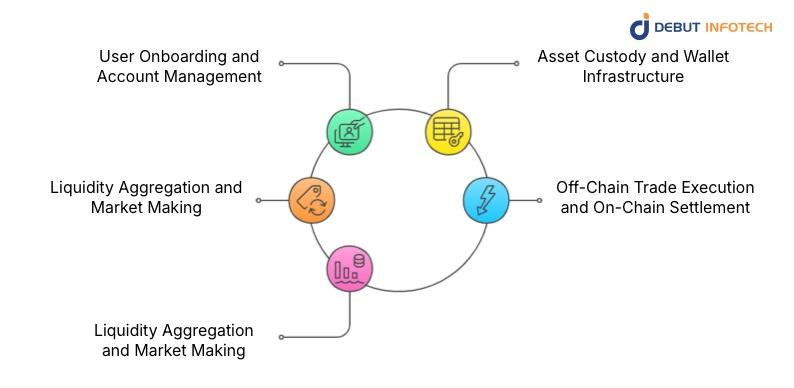
To fully understand the operational mechanics of centralized cryptocurrency exchanges, it’s helpful to break them down into key functional layers.
The journey begins with user registration. Most centralized exchanges require users to create an account using an email address or phone number. Depending on regulatory requirements, users may also need to complete Know Your Customer (KYC) and Anti-Money Laundering (AML) verification.
Once verified, users gain access to:
This custodial account model is central to how centralized exchanges operate efficiently.
Centralized cryptocurrency exchanges manage crypto assets on behalf of users through a combination of hot wallets and cold wallets.
This custodial setup allows exchanges to process trades instantly without waiting for blockchain confirmations, significantly improving performance and user experience.
One of the defining features of centralized exchanges is their order-bookmodel.
Users place:
These orders are matched by a high-performance trade-matching engine that pairs buyers and sellers based on price and time priority. This internal engine is what enables centralized exchanges to process thousands of transactions per second, a critical advantage for active traders.
Trades on centralized exchanges are executed off-chain, meaning balances are updated within the exchange’s internal ledger rather than directly on the blockchain. On-chain transactions only occur during:
This hybrid approach allows centralized exchanges to maintain speed and scalability while still leveraging blockchain security when needed.
Liquidity is a major reason why centralized cryptocurrency exchanges continue to dominate the market.
These platforms:
High liquidity ensures fair price discovery and smooth trade execution, making centralized exchanges the preferred choice for institutional and high-volume traders.
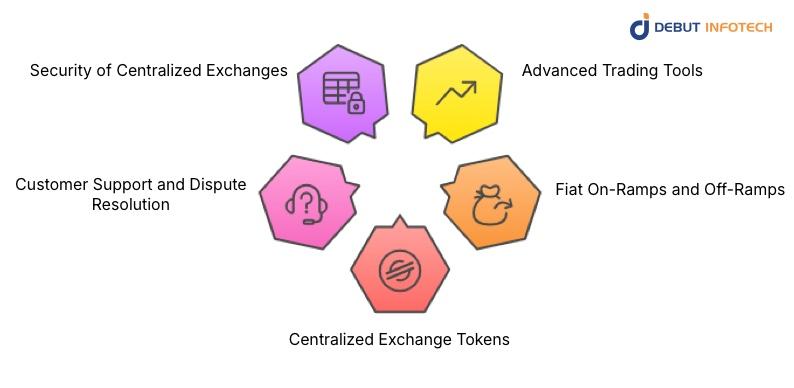
The success of centralized cryptocurrency exchanges lies in the robust feature set they offer. These features go beyond basic token swaps and cater to diverse trading needs.
Most centralized exchanges support:
These tools make centralized exchanges suitable for both beginners and professional traders.
One of the biggest advantages of centralized exchanges is seamless fiat integration.
Users can:
This functionality plays a critical role in mainstream crypto adoption and is largely absent in most decentralized platforms.
Many centralized exchanges issue native utility tokens, commonly referred to as centralized exchange tokens.
These tokens are typically used for:
Examples in the market have shown how exchange tokens can create entire ecosystems around centralized platforms, enhancing user retention and liquidity.
Unlike decentralized platforms, centralized exchanges offer:
For users entering crypto for the first time, this human support layer significantly lowers the barrier to entry.
Security remains one of the most discussed aspects of centralized cryptocurrency exchanges. While these platforms have historically been targets for cyberattacks, modern exchanges invest heavily in enterprise-grade security frameworks.
Key security measures include:
Leading platforms also maintain insurance funds and reserve proof mechanisms to enhance transparency and trust.
While no system is completely risk-free, the security of centralized exchanges today is far more mature and regulated than in the early days of crypto.
Despite growing interest in decentralized finance, centralized cryptocurrency exchanges continue to play a dominant role for several strategic reasons.
Centralized exchanges are designed with usability in mind. Clean interfaces, guided onboarding, and intuitive dashboards make them ideal for beginners and non-technical users.
Most institutional investors rely on centralized exchanges due to:
This makes centralized exchanges essential infrastructure for enterprise-level crypto participation.
Centralized exchanges are better positioned to comply with evolving global regulations. Licensing, KYC, AML, and tax reporting frameworks allow them to operate legally across multiple jurisdictions, ensuring long-term sustainability.
For most users, the first interaction with crypto happens through a centralized exchange. These platforms serve as the primary on-ramp, connecting traditional finance with blockchain networks.
The continued relevance of centralized cryptocurrency exchanges has fueled demand for centralized exchange development, particularly among startups, fintech companies, and enterprises exploring crypto markets.
Modern centralized exchange software is no longer built from scratch. Businesses can choose from:
Each approach offers different levels of flexibility, scalability, and cost efficiency depending on business goals.
The centralized exchange development cost depends on factors such as:
Working with an experienced centralized exchange development company helps businesses optimize costs while ensuring regulatory readiness and security.
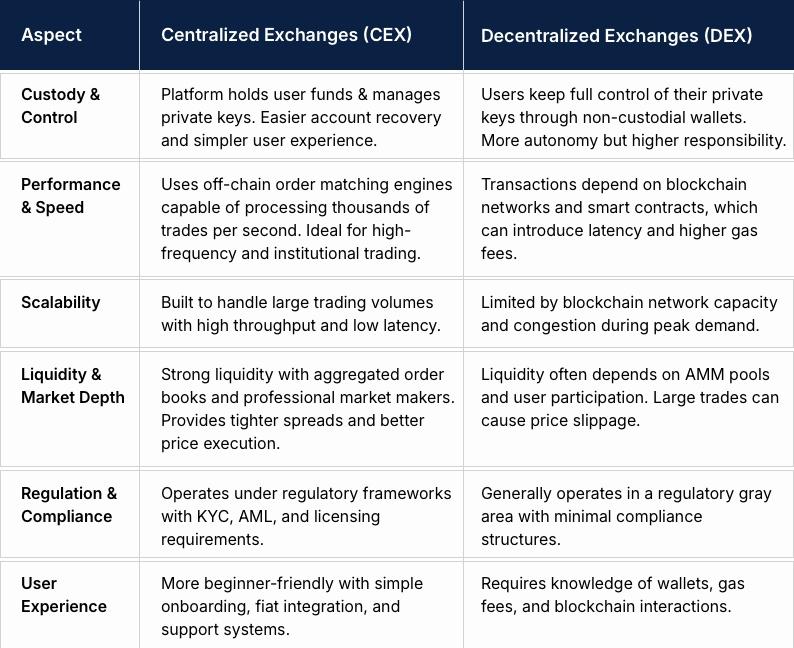
As blockchain technology matures, the debate between centralized and decentralized trading platforms continues to intensify. While decentralized exchanges have gained attention for their trustless architecture, centralized cryptocurrency exchanges still outperform in several mission-critical areas.
Centralized exchanges operate on a custodial model, meaning the platform manages private keys and user funds. This enables faster trade execution, improved account recovery, and a streamlined user experience.
Decentralized platforms, by contrast, rely on non-custodial wallets where users retain full control of assets. While this enhances autonomy, it also introduces complexity and user responsibility—particularly for newcomers.
Centralized exchanges leverage off-chain order matching systems capable of processing thousands of transactions per second. This makes them ideal for:
Decentralized exchanges depend on blockchain networks and smart contracts, which can suffer from congestion, latency, and higher transaction costs during peak demand.
Liquidity remains one of the strongest advantages of centralized cryptocurrency exchanges. With aggregated order books, professional market makers, and global user bases, centralized exchanges ensure tighter spreads and better price execution.
While top decentralized exchanges are improving liquidity through automated market makers (AMMs), they still struggle to match the consistency and depth offered by centralized platforms—especially for large-volume trades.
Centralized exchanges are built with regulatory compliance in mind. Licensing, KYC, AML, and transaction monitoring allow them to operate legally in multiple jurisdictions.
Decentralized platforms operate in a regulatory gray area, which may limit long-term enterprise adoption and institutional trust.
Behind every successful centralized exchange is a sophisticated technology stack designed for performance, security, and scalability.
A production-grade centralized exchange software typically includes:
Each component must be carefully integrated to ensure reliability, uptime, and security.
Businesses entering the crypto exchange market often choose between two development approaches.
A centralized exchange script is a pre-built solution that includes essential exchange functionalities. It offers:
However, scripts may limit customization and scalability for long-term growth.
Custom centralized exchange development provides full control over:
This approach is ideal for enterprises aiming to build a differentiated, scalable exchange platform.
White label crypto exchange solutions have become increasingly popular among startups and fintech companies. These ready-made platforms allow businesses to launch under their own brand while leveraging proven infrastructure.
White label solutions are often supported by a centralized exchange development company that handles ongoing maintenance, upgrades, and scalability.
Launching a centralized exchange requires more than just software. End-to-end cryptocurrency exchange development services typically include:
Choosing the right centralized exchange development company is critical to ensuring long-term success, operational stability, and regulatory alignment.
Centralized exchange tokens play a strategic role in platform growth and user retention. These native tokens are designed to create incentives and strengthen ecosystem participation.
When designed effectively, centralized exchange tokens can enhance liquidity, reduce churn, and create additional revenue streams for platform operators.
Security concerns have historically shaped public perception of centralized cryptocurrency exchanges. However, the industry has evolved significantly.
Today’s leading exchanges implement:
From a development perspective, security-first architecture is now a standard requirement in centralized exchange development—not an afterthought.
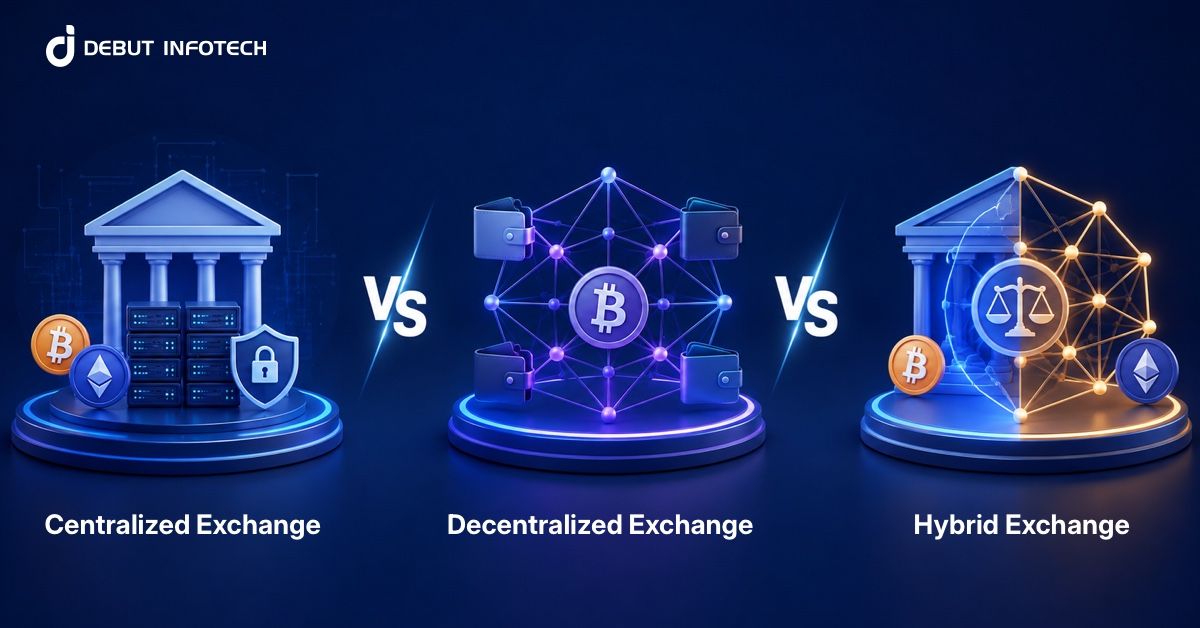
Rather than competing directly, centralized and decentralized platforms are increasingly converging.
Hybrid exchanges combine:
These models aim to balance user control with performance, signaling that centralized exchanges will continue to evolve rather than become obsolete.
Centralized cryptocurrency exchanges are not isolated platforms. They play a foundational role in supporting the broader blockchain economy.
They enable:
Without centralized exchanges, onboarding new users into decentralized finance would remain a significant challenge.
While p2p crypto exchange development has gained popularity in regions with limited banking access, peer-to-peer platforms cater to a different use case.
P2P exchanges:
However, they lack the scalability, liquidity, and advanced trading features that centralized exchanges provide. As a result, both models coexist rather than compete directly.
The growth of DEX development has expanded the crypto trading landscape, but it hasn’t diminished the importance of centralized exchanges.
In practice:
Many exchange operators now invest in both centralized and decentralized crypto exchange development to diversify offerings and hedge against regulatory uncertainty.
Centralized cryptocurrency exchanges are far from declining. Instead, they are evolving to meet market, regulatory, and technological demands.
Key trends shaping the future include:
As blockchain adoption accelerates, centralized exchanges will remain the backbone of global crypto markets.
Centralized cryptocurrency exchanges remain important because they solve real-world problems at scale. From liquidity and usability to compliance and performance, these platforms provide the infrastructure necessary for widespread crypto adoption.
While decentralized alternatives bring innovation and autonomy, centralized exchanges remain the most practical entry point for users, institutions, and enterprises alike. Their ability to adapt—through improved security, hybrid models, and advanced exchange development—ensures they will remain a cornerstone of the digital asset economy for years to come.
For businesses exploring crypto opportunities, investing in robust centralized exchange development is not just relevant—it is strategic.
A. Centralized cryptocurrency exchanges are digital platforms operated by a central authority that enable users to buy, sell, and trade cryptocurrencies. They manage user accounts, custody assets, and execute trades through internal systems rather than directly on the blockchain.
A. A centralized exchange works by matching buy and sell orders through an order book managed by the platform. User funds are held in custodial wallets, trades are executed off-chain for speed, and blockchain transactions occur during deposits and withdrawals.
A. The security of centralized exchanges has improved significantly over time. Modern platforms implement cold storage, multi-factor authentication, regular audits, and real-time monitoring. However, users should still choose reputable exchanges and follow security best practices.
A. Common features of centralized exchanges include high liquidity, fast trade execution, advanced trading tools, fiat on-ramps, customer support, and native centralized exchange tokens that offer utility and incentives.
A. Centralized exchange development cost depends on factors such as feature complexity, security architecture, compliance requirements, liquidity integrations, and whether a custom or white label crypto exchange solution is used.
A. Centralized exchanges are custodial, faster, and more user-friendly, while decentralized exchanges allow peer-to-peer trading without intermediaries. Both models coexist, often serving different user needs within the crypto ecosystem.
A. Working with an experienced centralized exchange development company ensures secure architecture, regulatory readiness, scalable infrastructure, and access to end-to-end cryptocurrency exchange development services, reducing risk and time to market.

Our Latest Insights
USA
2501 Chatham, Rd Suite R Springfield, IL 62704
+1-708-515-4004
info@debutinfotech.com
UK
7 Pound Close, Yarnton, Oxfordshire, OX51QG
+44-770-304-0079
info@debutinfotech.com
Canada
154 Eden Oak Trail, Kitchener, ON N2A 0H9
+1-708-515-4004
info@debutinfotech.com
INDIA
Sector 101-A, Plot No: I-42, IT City Rd, JLPL Industrial Area, Mohali, PB 140306
9888402396
info@debutinfotech.com