ON THIS PAGE
Progress0%

Our Global Presence :



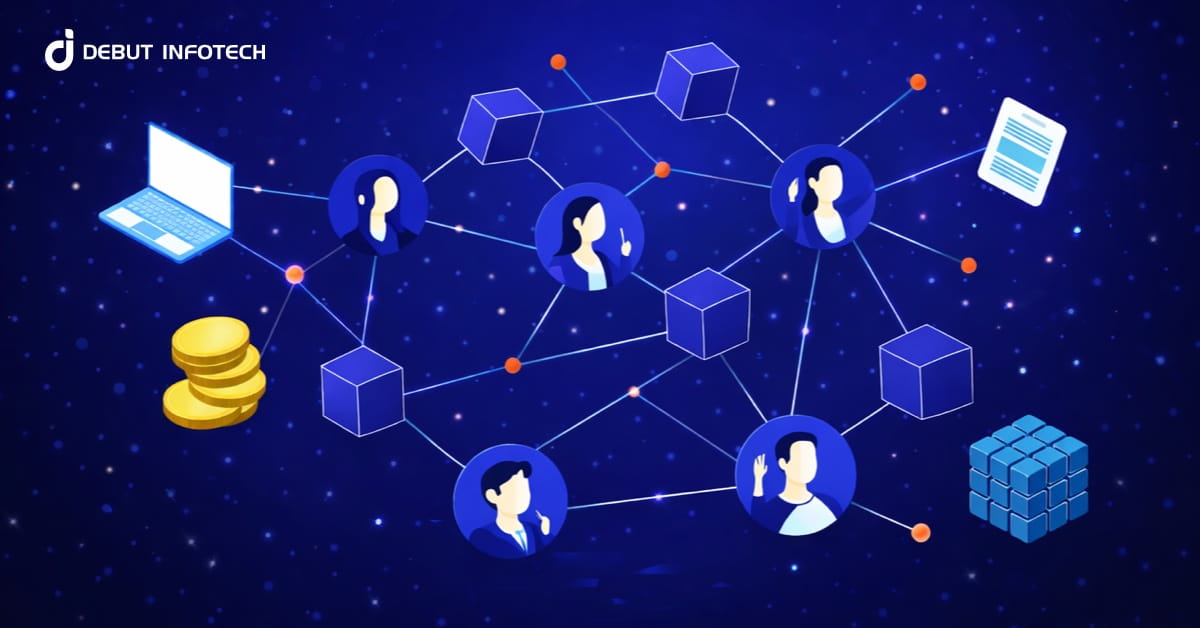


DAOs, or Decentralized Autonomous Organizations, are changing how communities, corporations, and digital initiatives operate in the Web3 ecosystem. DAOs don’t use centralized leadership or typical management structures. Instead, they work according to clear rules stored on the blockchain. This change has made the question “What is DAO development?” an essential topic for startups, businesses, and blockchain innovators who want to build platforms owned and run by the community.
As more people use blockchain, DAO development has become more than just a trend; it’s a useful way to govern decentralized decision-making. DAOs provide a structured yet flexible framework for managing protocols, controlling the treasury, implementing voting systems, and defining contributor incentives. In this article, we talk about what DAO development is, how it works, and the steps you need to take to establish a successful DAO.
To understand DAO development, it helps to break the concept into two parts: the organization itself and the process of building it.
DAO development is the process of designing, building, and deploying a decentralized autonomous organization (DAO) that operates via smart contracts on a blockchain network. These smart contracts define how decisions are made, how funds are managed, and how members participate in governance. Once deployed, the DAO operates autonomously based on predefined rules, reducing the need for intermediaries or centralized control.
Unlike traditional organizations, DAOs are transparent by default. All proposals, votes, and treasury transactions are recorded on-chain, making DAO development on the blockchain particularly appealing to communities that value openness and accountability. DAO development solutions typically combine smart contract engineering, governance design, and community infrastructure to create a fully functional decentralized system.
DAO adoption has grown steadily over the past few years, but its importance in 2025 is driven by real-world use cases and maturing blockchain infrastructure.
One of the main reasons organizations explore DAO platform development is transparency. Every rule and transaction is visible on the blockchain, which helps build trust among participants. This transparency is especially valuable in global, digital-first communities where traditional oversight mechanisms are limited.
Another key factor is collective decision-making. DAO software development enables token holders and contributors to propose changes, vote on initiatives, and influence the project’s future. This governance structure aligns incentives and encourages long-term participation rather than top-down control.
Automation also plays a critical role. Through smart contracts, DAOs can execute decisions automatically once voting conditions are met. This reduces operational friction and removes human bias from routine processes. As the DeFi ecosystem, NFT platforms, and Web3 startups continue to expand, DAO development offers a scalable way to efficiently manage decentralized communities.
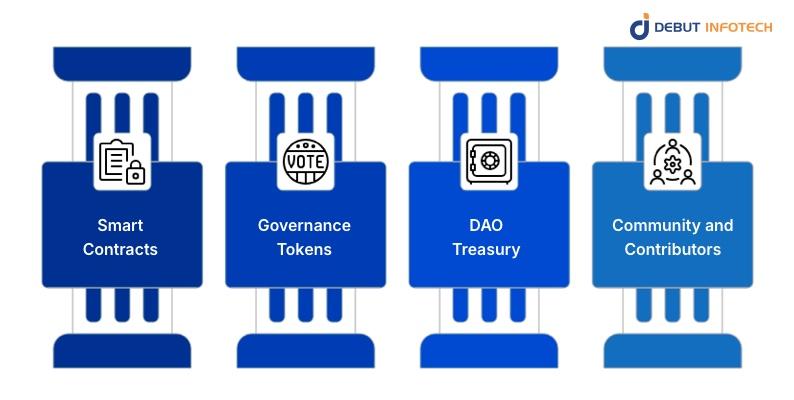
Successful DAO development requires more than writing smart contracts. A well-designed DAO is built on several interconnected components that work together to ensure stability, participation, and security.
Smart contracts form the backbone of DAO blockchain development. These self-executing programs define how proposals are submitted, how voting works, and how treasury funds are released. Once deployed, smart contracts operate autonomously, ensuring DAO rules are enforced consistently.
In DAO software development, smart contracts must be carefully audited and tested, as vulnerabilities can lead to governance manipulation or fund loss. This is why many organizations rely on professional DAO development services to handle this critical layer.
Governance tokens represent voting power within a DAO. Token holders can participate in proposal creation, vote on decisions, and influence the organization’s direction. Depending on the DAO Governance model, voting power may be proportional to token holdings or based on alternative mechanisms such as reputation or quadratic voting.
During DAO platform development, token design plays a major role in aligning incentives and preventing centralization of power.
The treasury holds the DAO’s financial assets, including cryptocurrencies, tokens, and other digital assets. Treasury management is a core part of DAO development solutions, as it determines how funds are allocated for development, grants, or ecosystem growth.
Most DAOs use multisignature wallets or smart contract-controlled treasuries to ensure secure and transparent fund management.
A DAO is only as strong as its community. Active participation, clear communication, and fair incentives are essential for long-term success. DAO software development often includes tools for onboarding members, managing discussions, and rewarding contributors.
There is no single DAO structure that fits every use case. Depending on the purpose and governance requirements, different DAO models can be developed to support specific goals. Understanding the types of DAOs helps organizations choose the right structure when they develop DAO systems.
Protocol DAOs govern blockchain protocols and decentralized applications. Token holders vote on upgrades, parameter changes, and ecosystem decisions that impact how the protocol operates.
Grant DAOs focus on funding projects within a specific ecosystem. Community members submit proposals, and funding decisions are made through transparent voting processes.
Venture DAOs pool capital from members to invest in early-stage startups or Web3 projects. Investment decisions are governed collectively rather than by a centralized investment committee.
Social DAOs are built around shared interests, communities, or memberships. These DAOs prioritize collaboration, networking, and community-driven initiatives.
Collector DAOs are formed to acquire and manage digital assets such as NFTs or tokenized collectibles. Members jointly decide which assets to purchase and how they are managed.
Media DAOs manage content creation, publishing, and distribution platforms. Contributors are rewarded based on participation, and editorial decisions are governed by the community.
SubDAOs operate as smaller, autonomous units within a larger DAO. They allow teams or departments to function independently while remaining aligned with the parent organization.
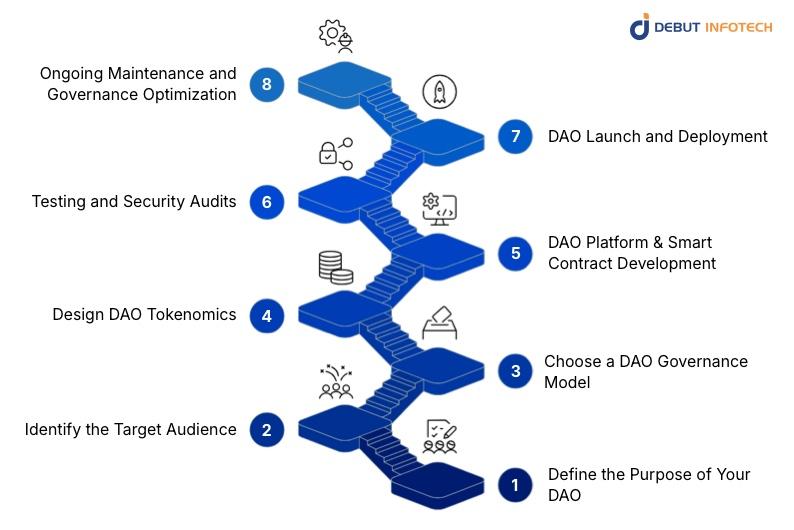
DAO development is a structured process that combines strategic planning with technical execution. From defining the organization’s purpose to deploying smart contracts and governance mechanisms, each step plays a critical role in ensuring the DAO operates effectively and sustainably. The following steps outline how a decentralized autonomous organization is typically designed, built, and launched.
Every successful DAO begins with a clear purpose. This includes defining the problem the DAO aims to solve, the value it offers, and how decentralization improves the solution. Without a well-defined mission, governance decisions can become fragmented and ineffective.
A clearly articulated purpose also helps guide long-term decision-making and community alignment. When members understand why the DAO exists and what it aims to achieve, they are more likely to participate actively and support proposals that align with the organization’s goals.
The next step in DAO development is understanding who will participate. This could include developers, investors, creators, or community members. Clear participation criteria help shape governance rules and token distribution strategies.
Defining the target audience early also influences the overall design of the DAO, including onboarding processes and communication channels. A DAO built for developers, for example, may prioritize technical governance, while community-focused DAOs often emphasize accessibility and engagement.
Selecting the right DAO Governance Model is one of the most important decisions in DAO platform development. Common models include token-based voting, quadratic voting, and reputation-based governance. Each model involves trade-offs among fairness, efficiency, and decentralization.
The governance model should align with the DAO’s purpose and audience to ensure balanced decision-making. Choosing an unsuitable model can lead to power concentration or low participation, underscoring the importance of carefully evaluating governance structures during the planning phase.
Tokenomics is a critical element of DAO development, as it defines how value and influence are distributed within the organization. This includes determining the total token supply, the allocation model, vesting schedules, and the token’s utility within the DAO.
Well-structured tokenomics encourage long-term participation and reduce the risk of governance manipulation. In many DAO development solutions, tokens are used not only for voting but also to incentivize contributors, reward participation, and fund ecosystem initiatives. Poorly designed tokenomics can lead to centralization or low engagement, making this step essential when organizations develop DAO frameworks.
This stage focuses on the technical implementation of the DAO. DAO platform development typically includes building and deploying smart contracts, developing a user interface for governance participation, and integrating wallets and voting tools.
DAO blockchain development must be compatible with the chosen blockchain platforms and scalable enough to support future growth. In addition to smart contracts, frontend dashboards and governance portals play an important role in user experience. Many businesses rely on professional DAO development services or hire professional blockchain developers to ensure secure and efficient implementation.
Security is non-negotiable in DAO software development. Before launch, all smart contracts and governance mechanisms must undergo rigorous testing and third-party audits.
Testing helps identify logical flaws, voting loopholes, and potential attack vectors. Security audits are especially important for DAOs managing large treasuries or operating within the DeFi ecosystem. A strong testing phase reduces risks and increases confidence among early participants and investors.
Once testing is complete, the DAO is deployed on the selected blockchain network. This includes activating smart contracts, distributing governance tokens, and opening participation to the community.
The launch phase is also when documentation, onboarding guides, and governance rules are made publicly available. A transparent and well-structured launch helps build trust and encourages early adoption. Many DAO development companies assist with deployment strategies to ensure a smooth transition from development to live operation.
Launching a DAO is not the end of the development process. Ongoing maintenance is essential to ensure the DAO remains secure, functional, and aligned with its original goals. This includes monitoring smart contracts, addressing bugs, and updating governance mechanisms as the community evolves.
Regular governance reviews, proposal refinements, and community feedback help improve participation and decision-making over time. Continuous optimization allows the DAO to adapt to technical changes, regulatory considerations, and growing community needs.
Building a DAO is an ongoing process rather than a one-time event. One best practice is to start with a simple governance structure and evolve it over time based on community feedback. Overly complex systems can discourage participation, especially in early stages.
Transparency is another essential principle. Clear documentation, open discussions, and visible treasury activity help establish trust. Regular updates and well-defined proposal processes also improve governance efficiency.
Security should always remain a priority. Regular audits, upgrades, and monitoring are essential for long-term stability. Organizations offering DAO development services often recommend continuous improvement cycles to adapt to changing governance needs and regulatory environments.
Despite their advantages, DAOs face several challenges. Low voter participation is a common issue, particularly in large communities. Without proper incentives, governance decisions may be controlled by a small group of active members.
Regulatory uncertainty is another concern, as DAO legal frameworks vary across jurisdictions. Additionally, smart contract vulnerabilities and treasury mismanagement can pose serious risks if left unaddressed.
Understanding these challenges helps organizations plan better DAO development solutions and implement safeguards that support sustainable growth.
Building a DAO requires a combination of technical expertise, governance design, and a clear understanding of blockchain ecosystems. Debut Infotech supports organizations at every stage of DAO development, from concept planning to deployment and long-term optimization.
Our team provides end-to-end DAO development solutions, including governance model design, smart contract development, tokenomics planning, and secure treasury setup. By leveraging proven blockchain platforms and industry best practices, we help businesses develop DAO frameworks that are scalable, transparent, and aligned with their operational goals.
Whether you are launching a new decentralized organization or upgrading an existing governance system, Debut Infotech offers the technical guidance and development support needed to build reliable, future-ready DAOs.
The future of DAO development is closely tied to advancements in blockchain infrastructure and governance tooling. As DAO platforms become more modular and user-friendly, adoption is expected to increase across industries.
Emerging trends include AI-assisted governance, cross-chain DAO operations, and improved compliance frameworks. These innovations are likely to make DAO blockchain development more accessible to enterprises and mainstream users.
As decentralized governance continues to evolve, DAOs are expected to play a key role in shaping the next phase of Web3 innovation.
Understanding what is DAO development is essential for organizations exploring decentralized governance models. DAOs provide a transparent, automated, and community-driven approach to decision-making that aligns well with the principles of blockchain technology.
From defining governance rules to deploying secure smart contracts, DAO development requires careful planning and technical expertise. When executed correctly, DAOs can support scalable collaboration, efficient fund management, and long-term community engagement.
As blockchain adoption continues to expand, DAO development will remain a foundational element of decentralized ecosystems, offering businesses and communities a new way to organize, govern, and grow.
A. DAO development is the process of creating a decentralized autonomous organization using blockchain technology and smart contracts. It involves setting up governance rules, voting mechanisms, treasury management, and community participation so decisions are made transparently without centralized control.
A. A DAO operates through smart contracts that define how proposals are created, voted on, and executed. Members participate in governance by voting on decisions, and once conditions are met, actions are automatically carried out on the blockchain.
A. DAO development is commonly built on blockchain platforms such as Ethereum, Polygon, and other EVM-compatible networks. The choice depends on factors like scalability, transaction costs, security, and ecosystem support.
A. The main components of a DAO include smart contracts, governance tokens, a treasury, voting mechanisms, and an active community. Together, these elements enable transparent governance and decentralized decision-making.
A. Common types of DAOs include Protocol DAOs, Grant DAOs, Venture DAOs, Social DAOs, Collector DAOs, Media DAOs, and SubDAOs. Each type is designed to support specific goals such as governance, funding, investment, or community collaboration.
A. DAO development can be secure when smart contracts are thoroughly tested and audited. Implementing clear governance rules and strong treasury controls also helps reduce risks and vulnerabilities.
A. Businesses adopt DAO development to enable transparent governance, automate decision-making, and engage communities more effectively. DAOs provide a flexible framework for building trust-driven and decentralized digital ecosystems.
Our Latest Insights
USA
2501 Chatham, Rd Suite R Springfield, IL 62704
+1-708-515-4004
info@debutinfotech.com
UK
7 Pound Close, Yarnton, Oxfordshire, OX51QG
+44-770-304-0079
info@debutinfotech.com
Canada
154 Eden Oak Trail, Kitchener, ON N2A 0H9
+1-708-515-4004
info@debutinfotech.com
INDIA
Sector 101-A, Plot No: I-42, IT City Rd, JLPL Industrial Area, Mohali, PB 140306
9888402396
info@debutinfotech.com