ON THIS PAGE
Progress0%






Our Global Presence :


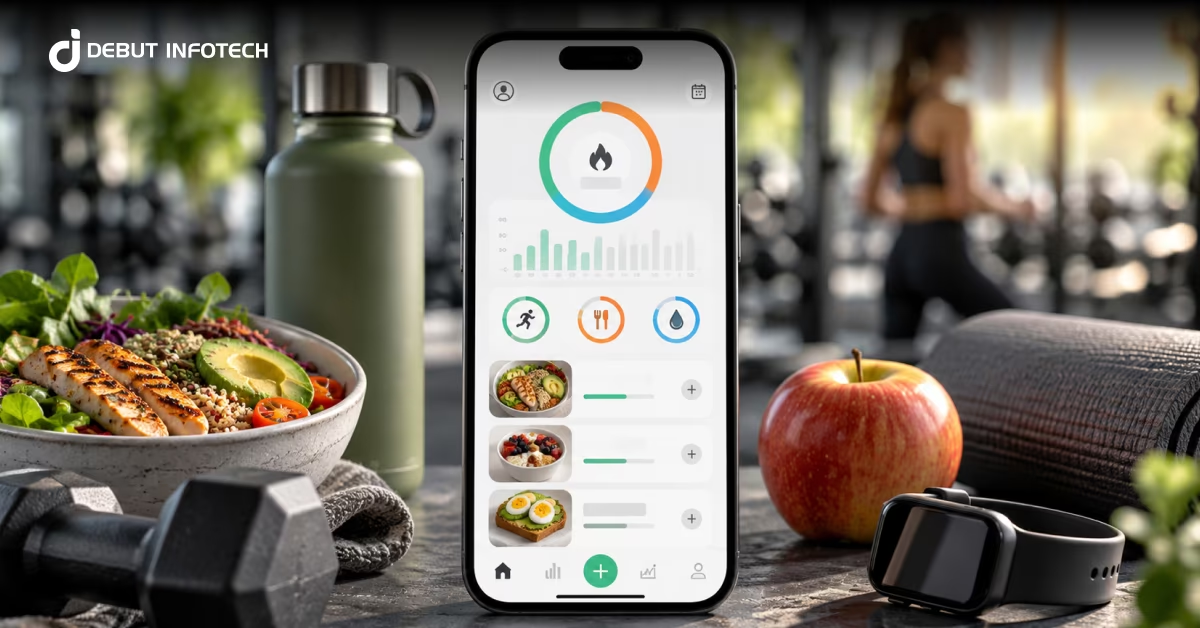


Budgeting for a nutrition-tracking app starts with deciding what users need at launch. The cost to develop a fitness app like MyFitnessPal could range from $60,000 to $100,000 for a focused MVP under this guide’s illustrative model: 1,200–2,000 delivery hours at $50 per hour. That covers the initial build, with contingency and ongoing expenses budgeted separately.
Your estimate will depend on food-data requirements, platform choices, integrations, and personalization features. You must know what each proposal entails and which features are worth the price before committing. This guide offers a clear overview of the budget, a plan for prioritizing launch features and questions to ask your development partners. It also shows you operating costs you will need to cover after the app launches.
Not every fitness app needs the full range of features available on MyFitnessPal from day one. Some businesses may prefer to launch with calorie tracking, meal logging, and basic nutrition insights before introducing more advanced capabilities. Others may require wearable connectivity, personalized recommendations, and subscription management from the outset.
These differences influence the development team’s workload, particularly when it comes to backend architecture, third-party integrations, user experience design, and testing. The table below compares three possible development scopes, using estimated project hours and a blended development rate of $50 per hour.
| Release scope | What the estimate includes | Estimated effort | Illustrative build cost |
| Focused MVP | Shared iOS/Android codebase, accounts, food search and logging, calorie and macronutrient totals, basic goals, progress tracking, and basic admin tools | 1,200–2,000 hours | $60,000–$100,000 |
| Connected commercial release | Expanded food workflows, barcode lookup, selected health-data integrations, subscriptions, and richer analytics | 2,000–3,600 hours | $100,000–$180,000 |
| Advanced platform | Additional integrations, evaluated AI assistance, coaching or deeper personalization, and broader operational tools | 3,600–6,000+ hours | $180,000–$300,000+ |
Each development scope accounts for the design, engineering, testing, and release activities needed to deliver the specified functionality. The figures are illustrative planning estimates rather than industry averages or fixed vendor quotations, and the three scopes represent alternative builds rather than costs to be added together.
An advanced application would not necessarily replicate MyFitnessPal’s extensive food database, feature depth, or operating scale. Requirements such as custom AI model training, clinical functionality, and region-specific nutrition databases would need additional evaluation before a reliable project estimate could be prepared.
Before you build an app like MyFitnessPal, you need to clearly identify the typical day-to-day task that your product will need to address. Users should be able to add meals, view what they’ve eaten, and track their progress without having to do anything complicated. Select other features based on some of your users’ habits and some of the assumptions in your business that you want to test.
Use the following matrix to establish a starting scope. For a subscription based pilot, payment handling may be a requirement from the start, whereas with a coach-led service, the need for shared progress views may come before auto syncing of activities.
| Priority | Feature group | What determines its place in the release? |
| Launch | Accounts, profiles, editable goals, and account controls | Users need to manage their preferences and information. |
| Launch | Food search, manual entries, portion adjustments, and nutrient totals | These functions complete the core meal-logging task. |
| Launch | Logging history and basic progress views | Users need an understandable record of their entries. |
| Launch | Admin tools and food-record corrections | The team needs to investigate problems and maintain data quality. |
| Validate | Barcode lookup and saved meals or recipes | Prioritize according to packaged-food consumption and repeated meals. |
| Validate | Health-data connections | Include when automatic activity syncing supports the main use case. |
| Validate | Subscriptions and paid-access controls | Include when the launch must test willingness to pay. |
| Defer unless central | AI meal recognition, coaching portals, and community features | Confirm demand before accepting their additional testing and support requirements. |
Food-data quality belongs within the core scope. Users need recognizable entries, clear serving units, and a way to record something missing. A larger database alone does not establish whether the product can support the audience’s daily eating patterns. Data-source selection, covered next, should follow those requirements.
When it comes to custom fitness app development, a feature name like “food logging” leaves important behavior unspecified. Establish whether or not users can modify sections, edit earlier entries, and whether totals reflect accurately. Additionally, create a protocol for what to do if the app gets interrupted while saving; this is so that users can catch up without having to create an extra record.
Reuseable recipes might be more valuable than wearable syncing in the case of an illustrative home cooking pilot. Test that priority through prototype sessions and early usage. Expand the release when there is evidence that the next feature is appropriate, and the criteria for acceptance are agreed prior to beginning development.
Two applications with the same screen can have different budgets depending on the data they are based on. The food coverage, licensing terms, and synchronization rules are all factors that impact fitness platform development. Prior to asking for a price, determine what information the app wants, where it will be provided, and who will keep each connection.
The nutrition data is published by USDA FoodData Central under CC0, which means there is no commercial data license required. However, API access requires a key and is subject to request limits. Your budget will also need to include the engineering required to collect, arrange and update those records.
Compare potential sources, with representative foods from your target audience. The size of the database doesn’t necessarily indicate if it contains the brands, regional dishes, and serving information your product needs.
| Approach | Check before committing | Budget implications |
| Public food data | Relevant coverage, record structure, and update process | Data mapping, search setup, unit normalization, and refresh workflows |
| Commercial nutrition API | Coverage, usage limits, caching rights, and contract terms | Integration work plus quoted licensing and usage charges |
| Curated regional additions | Gaps in local foods and reliable sources for nutrient values | Research, specialist review, duplicate handling, and continued maintenance |
Barcode scanning introduces another dependency: the scanned identifier must match a usable product record. Include a coverage test and a fallback for missing matches in the estimate. If multiple datasets are combined, specify how conflicting nutrient values and duplicate products will be resolved.
Any requirement that involves “connect to wearables” is too vague to make a solid estimate. Label the supported connections, required data types, and the direction of information flow into or out of the app. These choices determine the implementation and testing scope.
Google’s current guidance directs developers toward Android Health APIs, including Health Connect, as Google Fit APIs are being deprecated. Health Connect supports permission-controlled data exchange on Android; its device-based model should inform the integration design.
For fitness tracking, budget for delayed updates, revoked permissions, and duplicate activity records. An illustrative example is a workout received through two connected sources: the app needs a reconciliation rule to avoid counting it twice. Request a separate estimate for each integration, including failure handling, compatibility testing, and maintenance ownership.
The technology stack should mirror the way the app should work, such as which platforms it will be available on, what it needs to be able to do without internet connectivity, and how closely it will be integrated with the device hardware. For fitness mobile app development, compare these requirements with your team’s skills before choosing a framework.
| Approach | Suitable starting point | What to estimate |
| Flutter or React Native | iOS and Android products with largely shared interfaces and workflows | Shared development, native extensions, and testing on both platforms |
| Swift for iOS and Kotlin for Android | Products requiring substantial platform-specific behavior | Separate mobile implementations, specialist skills, and ongoing updates |
Cross-platform frameworks can accommodate native functionality. Flutter’s platform channels, for example, connect shared application code with Swift or Kotlin. The cost advantage thus depends in part upon the amount of platform specific work your product needs.
If it’s an illustrative architecture, then you should implement access rules and process requests using a backend API, store profiles and logs in a database, and translate external records using a food-data adapter. Maintain scope of monitoring to allow investigation of failures after launch. This describes a possible design, not MyFitnessPal’s underlying stack.
Before committing, prototype the most demanding workflow. If users must log meals offline, test local saving and later synchronization. Use those findings to refine the estimate and confirm who will maintain each component.
AI becomes valuable in the budget because it can deliver a tangible benefit to a given job. When it comes to approving the use of AI fitness app development, you need to establish your definition of success, whether it’s providing better meal suggestions, no longer logging meals, or more pertinent entry information. Test a modified version of the proposed feature against an easier version, to ensure that the desired functionality has been achieved.
First, it’s important to understand that AI is not personalization. Rules can be used to offer a customized experience using saved preferences, reusable meals, and scheduled reminders. For more complicated automation, there has to be a clear benefit over that basic automation.
| Proposed feature | Value to validate | Additional costs to assess |
| Photo-assisted food logging | Faster entry after users review and correct suggestions | Image evaluation, portion confirmation, model usage, and fallback workflows |
| Personalized recommendations | Suggestions users find more useful than rule-based options | Evaluation data, preference controls, output review, and ongoing monitoring |
MyFitnessPal’s Meal Scan feature recommends meals based on a picture and allows the user to edit portion sizes. This is a good example to follow to ensure that users’ feedback is included in an automated logging process.
When testing an AI-powered fitness app, try out typical food items and scenarios. Evaluate the frequency of the measurement corrections, response time, and the cost of a successful log. If it takes longer to fix a fast prediction, then it is not really helpful.
Budget for evaluation and support alongside inference charges. Keep manual logging available, require confirmation of uncertain portions, and expand the feature only when pilot results support the added expense.
A fitness app collects more than meal records and calorie counts. Depending on its features, it may also store users’ weight history, dietary preferences, activity data, and information received from connected health platforms. Protecting this information requires appropriate security measures during development and continued oversight after launch.
For example, an app that synchronizes activity data from a wearable device should request only the permissions necessary for its features. Developers should also implement encryption, secure authentication, restricted administrative access, and clear procedures for retaining or deleting user information.
Third-party integrations introduce additional responsibilities. Nutrition databases, analytics tools, and AI services may process or store information outside the application’s core infrastructure. Reviewing their data-handling practices, access permissions, and contractual terms can help businesses identify privacy and security risks before integration.
Once the application is live, operating expenses will depend on infrastructure usage, external services, maintenance requirements, and the level of technical support provided.
| Operating expense | What It Covers | Factors Affecting Cost |
| Cloud Hosting and Storage | Application servers, user data storage, database operations, backups, and performance monitoring. | Active users, data volume, traffic patterns, and uptime requirements. |
| Nutrition Data and AI Services | Food database access, nutrition APIs, and AI-powered features such as meal recognition or personalized recommendations. | Licensing agreements, API requests, usage allowances, and AI processing volume. |
| Application Maintenance | Bug fixes, operating system compatibility, security patches, and updates to third-party integrations. | Application complexity, update frequency, and changes to external services. |
| Customer Support and Security Operations | User assistance, administrative access reviews, security monitoring, incident response preparation, and recovery testing. | Support hours, user activity, operational responsibilities, and security requirements. |
These expenses should be evaluated separately from the initial development budget. Businesses can request a monthly operating forecast based on expected active users, anticipated API usage, storage needs, and support requirements.
It is also worth confirming which maintenance activities are covered by the development agreement and which require a separate support contract. This provides a clearer picture of the resources needed to keep the application reliable as its user base grows.
When you develop an app like MyFitnessPal, attach the spending to distinct delivery milestones. Each stage should take care of uncertainty before you commit to the next stage. Discuss and decide what the team should demonstrate, who will evaluate the outcome, and what remaining matters would halt the project.
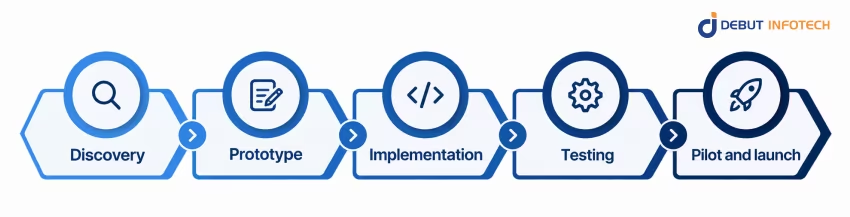
| Stage | What the team should demonstrate |
| Discovery | A feasible release scope with documented requirements, dependencies, and budget assumptions |
| Prototype | Intended users can complete the proposed onboarding and meal-logging flows |
| Implementation | Working increments meet agreed acceptance criteria |
| Testing | Core workflows, integrations, security controls, and supported devices pass release checks |
| Pilot and launch | Real users can use the product with monitoring and support in place |
Design the schedule based on the availability of team and external factors. Phase durations may not be added together; they can overlap with design, development and testing. Have the delivery partner list the dependencies that might slow down launch and how that will impact the estimate.
Identify experience gaps with the pilot. Monitor meal log completion, failed food searches, re-use, and the accuracy of the sync and support requests. Where subscriptions are included, review paid conversion alongside continued use. Establish the measurement for each metric prior to data collection.
During an illustrative pilot, if there were repeated unsuccessful searches, it would make sense to investigate food coverage or search relevance before introducing new engagement features. Interview users to determine cause, and then test the proposed solution to see if it improves completion.
If budget becomes more constrained, delay features that are yet to be proven. Maintain the data quality checks, testing and user protections necessary to run the agreed release.
Examine proposals in a written scope and select a delivery team based on the comparison. When you hire fitness app developers, each candidate should be able to go through the details of what they have estimated, the evidence they have for their plan, and the assets you will be in control of. Any variation must be clearly understood and discussed prior to signing.
| Review area | What the proposal should establish |
| Deliverables | Included workflows, effort assumptions, exclusions, and acceptance criteria |
| Relevant experience | Approved project examples identifying the team’s actual contribution |
| Data dependencies | Provider selection, licensing assumptions, integration access, and recurring fees |
| Testing | Device coverage, security checks, and responsibility for resolving defects |
| Ownership | Rights to custom code and data, repository access, and third-party restrictions |
| Support | Handover documentation, warranty coverage, response commitments, and maintenance pricing |
Validate team’s logic with a requirement from your brief. Ask how it would investigate poor food-search results or estimate an unfamiliar integration. Find an explanation for assumptions, trade-offs, and steps towards validation that can be evaluated.
Continuity of delivery is also important for a fitness app development company for startups. Verify access to cloud services, app-store accounts and deployment credentials. Record details on how another team can take over, including access, instructions, and any exit fees.
If the workflows are typical, compare a configurable product prior to commissioning custom work. Look at its licensing, customisation restrictions and data-export capabilities. A custom build requires a clear rationalization of what capabilities or control your business is looking for.
A useful estimate starts with what you want the first release to achieve. Share who the app will serve, the problem it will solve, and the budget you have available. If some requirements are undecided, identify them early so they can be investigated before development commitments are made.
We combine mobile consulting, design, development, testing and support services at Debut Infotech. From a basic idea to a defined scope of release, we can help you understand how these services are applicable to your custom fitness app development.
Present the feature list, desired launch time, and any designs you already have. Together, we can examine the delivery requirements and clarify which decisions need to be resolved for a project-specific estimate.
No. You can integrate an existing nutrition database to provide food information, calorie values, and macronutrient details without building one from scratch. However, you’ll still need to develop reliable food search, serving-size calculations, and meal-logging functionality. Before choosing a provider, evaluate its regional food coverage, data accuracy, licensing terms, and ongoing maintenance requirements.
A reliable timeline requires an agreed scope, staffing plan, and confirmed dependencies. Delivery hours cannot simply be converted into calendar weeks because design, development, and testing overlap, while some tasks depend on earlier decisions. When you build an app like MyFitnessPal, request a milestone schedule that identifies integration access, review cycles, and release preparation.
A nutrition-focused release should let users find or enter foods, adjust portions, review nutrient totals, and access their logging history. Include account controls and basic administrative tools. Beyond these foundations, priorities depend on the business model: a paid pilot needs subscription handling, while a coaching service may need shared progress views from the start.
Yes. USDA FoodData Central publishes its data under CC0, allowing commercial use without a paid data license. Its API requires an access key and applies request limits. You still need to budget for integration, updates, and data-quality work. Assess relevant food coverage before choosing it, and review separate terms for any additional datasets.
Start with preferences users provide directly, such as selected goals, favorite meals, and reminder times. Use configurable rules to tailor the experience and let users change those settings. Introduce more complex automation only after identifying a task these methods cannot adequately support. This gives you a simpler baseline against which to evaluate AI’s additional value.
Our Latest Insights
USA
2501 Chatham, Rd Suite R Springfield, IL 62704
+1-708-515-4004
info@debutinfotech.com
UK
7 Pound Close, Yarnton, Oxfordshire, OX51QG
+44-770-304-0079
info@debutinfotech.com
Canada
154 Eden Oak Trail, Kitchener, ON N2A 0H9
+1-708-515-4004
info@debutinfotech.com
INDIA
Sector 101-A, Plot No: I-42, IT City Rd, JLPL Industrial Area, Mohali, PB 140306
9888402396
info@debutinfotech.com