



Table of Contents
Home / Use Case / Generative AI
Generative AI in Hospitality Industry: Transforming Guest Experiences and Operations


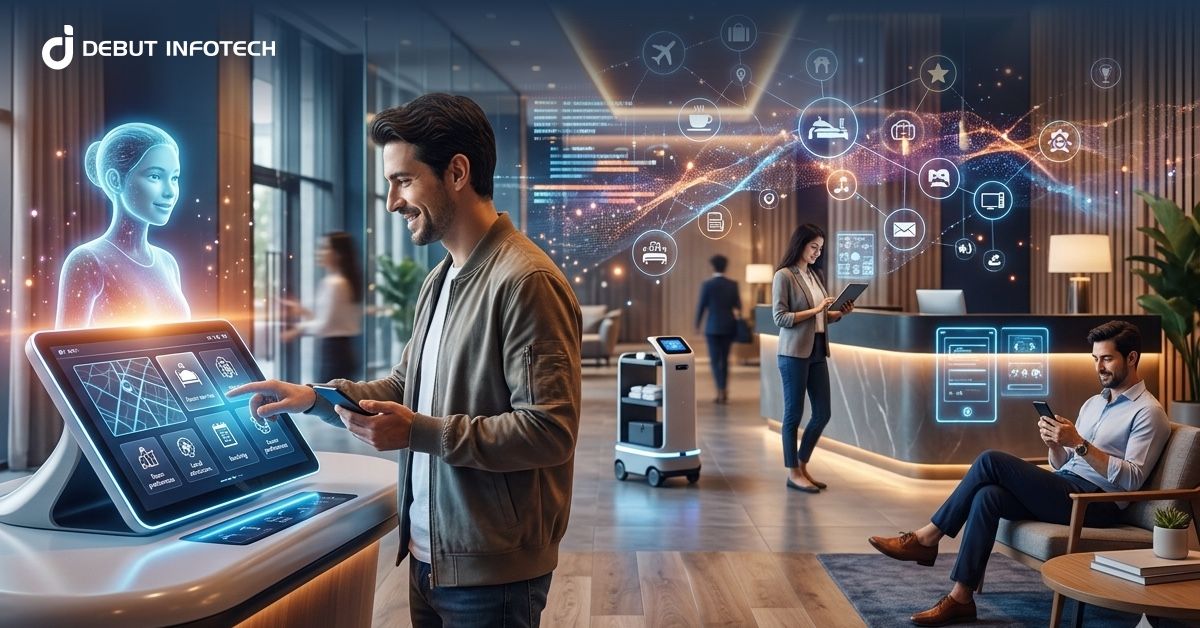
Generative AI in hospitality is transforming how hotels and travel brands serve guests and run operations. The global market for generative AI solutions in hospitality is set to grow from about $34 billion in 2025 to $138.45 billion in 2029, driven by personalization and automation. Nearly 68% of hospitality companies expect significant improvements in guest experience through AI within 5 years.
The technology is also reducing operational costs, with more than half of hotel operators reporting cost savings of at least 15 % after adopting AI tools. As adoption expands, generative AI in hospitality industry is becoming essential for efficiency, revenue growth, and competitive differentiation.
In this piece, we will examine the impact of generative AI on the hospitality industry for both businesses and employees, including challenges, real-life examples, use cases, and what to watch out for in the future.
Build Smarter Guest Experiences
Design generative AI systems that personalize every guest interaction, from booking to checkout, without adding pressure on your staff.
What Is Generative AI in Hospitality?
Generative AI in hospitality refers to AI systems that generate responses, content, and recommendations based on real-time data and guest behaviour. It supports hotels, resorts, OTAs, and travel platforms by automating conversations, personalizing experiences, and optimizing operations. These systems learn continuously from bookings, preferences, and feedback to improve service accuracy and operational decision-making.
Related Read: Generative AI in Hospitality: Exploring Benefits, Challenges and Trends
Benefits of Generative AI in Hospitality for Companies
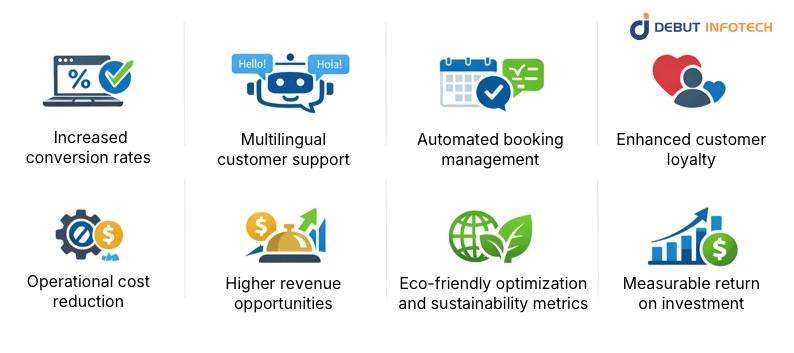
For hospitality businesses, generative AI delivers value beyond automation by improving conversions, reducing costs, and enabling data-driven decisions that directly impact revenue, efficiency, and guest satisfaction.
1. Increased conversion rates
Generative AI for business analyzes visitor behavior, search intent, and past bookings to personalize room suggestions, pricing, and add-ons in real time. By presenting relevant options at the right moment, it reduces decision fatigue and booking friction, leading to higher completion rates across websites, apps, and OTA platforms.
2. Multilingual customer support
AI-powered multilingual assistants respond instantly to guest inquiries in multiple languages and across time zones. This improves accessibility for international travelers, shortens response times, and ensures consistent service quality without scaling human support teams for every market or language in which the business operates.
3. Automated booking management
Generative AI in travel and hospitality automates reservations, modifications, cancellations, and availability updates across connected systems. It minimizes manual errors, keeps inventory accurate in real time, and reduces staff workload during peak periods. This creates smoother booking operations while maintaining reliability across direct and third-party channels.
4. Enhanced customer loyalty
By remembering guest preferences, stay history, and interaction patterns, generative AI enables more consistent personalization across touchpoints. Guests receive familiar, relevant experiences each time they interact with the brand, which strengthens trust, increases repeat bookings, and improves long-term brand affinity.
5. Operational cost reduction
Generative AI handles repetitive tasks such as FAQs, booking updates, and basic service requests without constant human involvement. This lowers staffing costs, reduces overtime during demand spikes, and allows hospitality teams to focus on complex guest needs that require human judgment and empathy.
6. Higher revenue opportunities
AI models identify upsell and cross-sell opportunities based on guest profiles, travel context, and historical behavior. This enables smarter recommendations for room upgrades, dining, experiences, and extended stays, helping hospitality businesses grow revenue without aggressive sales tactics or manual analysis.
7. Eco-friendly optimization and sustainability metrics
Generative AI supports sustainability efforts by forecasting occupancy, energy use, and resource demand. Hotels can adjust heating, lighting, staffing, and supply usage more accurately, reducing waste while tracking measurable sustainability metrics that align operational efficiency with environmental responsibility goals.
8. Measurable return on investment
Generative AI platforms provide clear performance tracking by linking automation, personalization, and pricing decisions to revenue growth, cost savings, and guest satisfaction. This allows hospitality companies to evaluate AI initiatives using concrete metrics rather than assumptions, making investment decisions more defensible.
Benefits of Generative AI in Hospitality for Employees
Generative AI supports hospitality teams by simplifying daily tasks, improving training, and providing real-time guidance that helps employees perform better without increasing workload or operational pressure.
1. Improved workflows
Generative AI automates repetitive operational tasks such as responding to common guest inquiries, updating reservations, and managing internal requests. This reduces context switching for employees, shortens task completion times, and creates smoother day-to-day workflows that help staff operate more efficiently during both peak and off-peak periods.
2. AI avatars improve hospitality training
AI-powered avatars simulate realistic guest interactions for onboarding and ongoing training. Employees can practice service scenarios, conflict resolution, and communication skills in a controlled environment. This shortens learning curves, improves confidence, and ensures more consistent service delivery across teams and locations.
3. Knowledge base copilots
Generative AI copilots give employees instant access to policies, procedures, guest profiles, and service guidelines through natural language queries. This eliminates time spent searching multiple systems, reduces errors caused by outdated information, and supports faster, more accurate decision-making during live guest interactions.
4. Real-time feedback and performance insights
AI systems analyze guest interactions, response times, and service outcomes to provide immediate performance insights and reports. The best AI for report generation in hospitality provides employees with actionable feedback that highlights strengths and areas for improvement. This supports continuous learning, helps managers coach more effectively, and drives consistent service standards across the organization.
5. Higher job satisfaction
By reducing repetitive work and providing intelligent support tools, generative AI allows employees to focus on meaningful guest engagement. Clear guidance, faster problem resolution, and reduced workload pressure contribute to lower burnout levels and improved morale across frontline and operational hospitality roles.
Use Cases of Generative AI in Hospitality
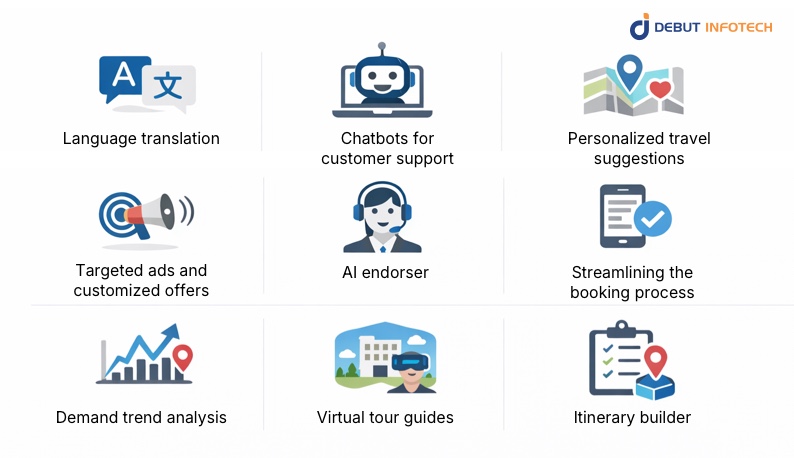
Across the hospitality value chain, generative AI powers guest interactions, marketing, planning, and operations, enabling smarter services that adapt in real time to changing guest needs. Here are some generative AI use cases in hospitality:
1. Language translation
AI-powered language translation enables real-time communication between guests and staff across spoken and written channels. It supports front-desk interactions, chat conversations, and service requests without delays. This improves service accuracy, reduces misunderstandings, and allows hospitality brands to serve international guests consistently without hiring multilingual staff for every location.
2. Chatbots for customer support
AI chatbots manage booking inquiries, cancellations, service requests, and FAQs across websites, apps, and messaging platforms. They operate continuously, reduce wait times, and escalate complex issues to human agents when required. This ensures faster resolutions, lower support costs, and consistent service quality throughout the guest journey.
3. Personalized travel suggestions
Generative AI analyzes guest preferences, travel history, budget, and real-time context to recommend rooms, activities, dining options, and local attractions. These suggestions adjust dynamically as plans change, creating tailored experiences that feel relevant rather than generic, improving satisfaction while increasing the likelihood of upsells and repeat bookings.
4. Targeted ads and customized offers
AI helps hospitality brands design targeted marketing campaigns by segmenting audiences based on intent, behavior, and timing. Offers are customized across channels to match guest interests and travel stages. Best AI for lead generation in hospitality improves ad efficiency, reduces wasted spend, and increases engagement rates without relying on broad, untargeted promotions.
5. AI endorser
An AI endorser acts as a consistent digital brand representative across websites, apps, and social platforms. It promotes services, answers questions, and guides guests through offerings using approved messaging. This ensures brand consistency, improves engagement, and supports marketing teams without relying solely on human-led interactions.
6. Streamlining the booking process
AI simplifies the booking journey by optimizing search results, pricing logic, availability display, and payment flows. It reduces friction caused by complex choices or slow responses. By guiding users step by step, AI lowers abandonment rates and helps guests complete bookings faster with greater confidence.
7. Demand trend analysis
Generative AI analyzes historical data, seasonal patterns, and external factors to forecast demand more accurately. Hotels and travel platforms use these insights to adjust pricing, staffing, inventory, and promotions. This improves revenue planning, reduces overbooking risks, and supports smarter operational decisions across peak and low-demand periods.
8. Virtual tour guides
AI-powered virtual tour guides provide interactive property and destination walkthroughs before and during stays. Guests can explore rooms, amenities, and nearby attractions digitally. This improves decision-making before booking and enhances on-site experiences, especially for first-time visitors unfamiliar with the location or property layout.
9. Itinerary builder
AI itinerary builders create flexible travel plans based on guest preferences, time availability, weather, and location data. These itineraries update automatically as conditions change, helping guests make the most of their stay. This reduces planning effort, improves experience flow, and positions hospitality brands as proactive travel partners.
Read More: Generative AI Security Essentials: What Must Know Before Adoption
Challenges and Ethical Considerations of Implementing Generative AI in Hospitality
Adopting generative AI in hospitality industry introduces technical, legal, and ethical challenges that require careful planning, governance, and oversight to protect guests, employees, and brand trust.
1. Guest Consent and Transparency
Hospitality businesses often collect large volumes of personal and behavioral guest data. When generative AI uses this data without clear disclosure, guests may feel they are being monitored or misled. Poor transparency increases privacy concerns, weakens trust, and can damage brand credibility across digital and in-person interactions.
Recommendations
Clearly communicate how AI systems collect, process, and use guest data at every touchpoint. Provide simple consent options and let guests easily adjust their preferences. Transparent data practices build trust, reduce complaints, and support long-term adoption of AI-driven services across hospitality operations.
2. Global Regulatory Compliance in Cross-Border Data
Hospitality brands operating internationally face inconsistent data protection laws across regions. Generative AI systems processing guest data across borders can unintentionally violate local regulations. This creates legal exposure, operational complexity, and compliance risks that increase as AI systems scale globally.
Recommendations
Design AI architectures with region-specific data handling, storage, and access controls. Work closely with legal and compliance teams or generative AI consultants to align AI operations with applicable regulations. Proactive governance reduces regulatory risk and enables safer global deployment without disrupting guest-facing services.
3. Human Override Mechanisms
Over-reliance on generative AI can lead to poor outcomes when systems make incorrect assumptions or lack situational awareness. Without clear human override options, staff may struggle to intervene during sensitive guest interactions, service failures, or high-impact decisions requiring judgment and empathy.
Recommendations
Implement clear escalation paths that allow employees to override AI decisions instantly. Define scenarios where human intervention is mandatory, such as disputes or safety concerns. This balanced approach preserves service quality while ensuring AI remains a support tool rather than an unchecked decision-maker.
4. Continuous Monitoring and Risk Controls
Generative AI models can drift over time, producing biased, outdated, or inaccurate outputs. Without ongoing monitoring, these issues may go unnoticed, leading to service inconsistencies, reputational damage, or operational errors that directly affect guest experience and brand reliability.
Recommendations
Establish continuous monitoring processes to regularly review AI outputs, performance metrics, and guest feedback. Apply periodic model updates, audits, and safeguards to correct issues early. Active risk controls ensure AI systems remain accurate, fair, and aligned with business and service standards.
Real-Life Case Studies of Companies Leveraging Generative AI in Hospitality
1. Marriott International
Marriott applies generative AI to personalize guest communications, pricing strategies, and digital experiences across its global portfolio. AI-driven insights help tailor offers based on booking behavior and preferences, improving conversion rates while maintaining consistency across regions, brands, and customer touchpoints.
2. Hilton
Hilton uses AI-powered concierge and service tools to support guest requests, room selection, and local recommendations. These systems improve response speed and service accuracy while reducing staff workload. The result is a more reliable, scalable guest experience across Hilton’s worldwide properties.
3. Booking.com
Booking.com integrates generative AI into search, recommendation engines, and customer support workflows. AI helps travelers refine choices, discover relevant options, and resolve issues faster. This improves trip-planning efficiency, reduces support friction, and increases booking confidence among a diverse global user base.
4. Airbnb
Airbnb uses generative AI to support hosts with listing optimization, pricing guidance, and automated guest communication. For travelers, AI enhances search relevance and experience discovery. This dual-sided application improves platform efficiency, strengthens trust between hosts and guests, and supports consistent service quality.
Future of AI in Hospitality
Here are some generative AI trends shaping the future of hospitality:
1. OTA transformation
Online travel agencies will shift from static listing platforms to AI-driven trip planners. Generative AI will guide travelers through discovery, comparison, booking, and post-booking support, creating more intuitive planning experiences while helping OTAs differentiate through smarter recommendations and personalized journey management.
2. Agentic AI
Agentic AI systems will autonomously manage complex hospitality workflows such as itinerary coordination, rebooking during disruptions, and guest service escalation. These agents act with defined goals and safeguards, reducing operational delays while still allowing human oversight for sensitive or high-impact decisions.
3. Fully automated hotel operations
Hotels will increasingly adopt AI-driven automation across check-in, room assignments, service scheduling, and billing. This reduces wait times, improves operational consistency, and lowers staffing pressure during peak demand while maintaining service quality through clearly defined human override mechanisms.
4. IoT and smart rooms
AI integrated with IoT devices will enable smart rooms that adapt lighting, temperature, entertainment, and services to guest preferences. These environments respond in real time, improving comfort, reducing energy waste, and supporting personalized experiences without requiring manual input from guests or staff.
5. AR/VR in pre-arrival experience
AR and VR powered by generative AI will enhance pre-arrival experiences through immersive property tours and destination previews. Guests gain clearer expectations before booking, leading to higher confidence, fewer surprises, and stronger alignment between guest preferences and the chosen accommodation.
A Practical Partner Behind Scalable AI Hospitality Systems
Debut Infotech is a top-rated gen AI development company that works with hospitality brands to design and deploy generative AI systems that fit real operational needs. Our focus stays on practical outcomes, from guest-facing AI assistants to internal automation, data governance, and analytics.
With experience across AI platforms, integrations, and compliance-ready architectures, we help hospitality companies adopt generative AI responsibly, scale it efficiently, and measure impact across customer experience, operations, and revenue performance.
Find the Right AI Partner for Hospitality
Partner with specialists who can design, deploy, and scale generative AI solutions across your hospitality ecosystem.
Read Also: Top 10 Generative AI Development Companies of 2026
Conclusion
Generative AI in hospitality industry is more than a trend; it’s reshaping guest engagement, operational workflows, and long-term business strategy.
As hotels and travel brands adopt AI-driven personalization, automated bookings, and data insights, they unlock better service quality and measurable outcomes.
Organizations that invest thoughtfully in generative AI boost efficiency, elevate guest satisfaction, and strengthen their competitive position while aligning technology with human oversight and ethical practices. Robust implementation will define the next era of hospitality.
FAQs
Q. Is generative AI safe to use in hospitality businesses?
A. Generative AI is safe when built with proper data security, access controls, and compliance standards. Hospitality businesses must protect guest data, limit AI access to sensitive systems, and regularly audit outputs. A well-designed solution reduces risk instead of introducing it into daily operations.
Q. What’s the difference between generative AI and traditional AI in hospitality?
A. Traditional AI focuses on rules, predictions, and classifications, such as forecasting occupancy or detecting patterns. Generative AI actually creates content, conversations, and recommendations. In hospitality, this means moving from static automation to systems that interact naturally with guests and adapt to context.
Q. How long does it take to develop a generative AI solution?
A. Developing a generative AI solution usually takes 8 to 16 weeks, depending on complexity. Simple chatbots take less time, while custom systems with integrations, training, and compliance checks take longer. Planning, data preparation, testing, and iteration account for most of the timeline.
Q. How much does it cost to develop generative AI systems?
A. The cost to develop generative AI systems typically ranges from $30,000 to $150,000+. Pricing depends on features, model customization, integrations, data volume, and security requirements. Enterprise-grade hospitality solutions with ongoing support and scaling usually sit at the higher end.
Q. What are the challenges of adopting generative AI in hospitality?
A. Common challenges include data quality issues, integration with legacy systems, staff training, and managing AI output accuracy. Hospitality brands also need clear governance rules. Without proper planning, AI responses can feel off-brand or create confusion rather than improve guest interactions.
Talk With Our Expert
Free 30-min consultation. No commitment.
Our Related Insights



Talk With Our Expert
LET'S WORK TOGETHER
Your Vision.
Our Engineering.
Debut Infotech works as a strategic co-creator — from concept to production-ready platform. We deliver blockchain, AI, enterprise, & mobile solutions that scale.

15+ Years · 500+ Platforms Delivered
Across blockchain, AI, fintech, mobile, and enterprise verticals

NDA Signed on Day One
Your IP and project details are protected before any conversation begins

48-Hour Scoped Estimate
A real technical estimate — not a generic template or sales pitch

Dedicated Account Managers
Available across key global time zones
 +1 708-515-4004 (USA)


