ON THIS PAGE
Progress0%






Our Global Presence :




The cost to build an app like Speechify ranges from $25,000 to $60,000 for a basic MVP, $60,000 to $150,000 for a mid-level app, and $150,000 to $350,000 or more for an advanced platform.
Development timelines depend on feature complexity and platform coverage, with a mid-level application estimated to take 12–24 weeks when development stages overlap.
Features such as OCR, offline playback, and voice cloning increase development costs, with OCR estimated at $4,000–$12,000 and voice cloning at $15,000–$60,000 or more.
Choosing between managed text-to-speech APIs, self-hosted models, and custom voice engines requires comparing upfront development costs, usage fees, infrastructure needs, privacy, and maintenance.
Ongoing expenses include hosting, TTS API usage, storage, customer support, and maintenance, with annual maintenance estimated at 20–30% of the initial development cost.
Voice licensing, copyright restrictions, data protection, accessibility, and subscription requirements should be considered during planning to reduce compliance risks and costly changes before launch.
A realistic budget should include team rates, marketing, app store fees, and hidden expenses, while a phased MVP and suitable monetization model help businesses validate demand before expanding features.
The cost to build an app like Speechify typically ranges from $25,000 to $60,000 for a basic MVP, $60,000 to $150,000 for a mid-level app, and $150,000 to $350,000 or more for an advanced platform. Your final budget depends on the features, voice technology, supported platforms, and development team.
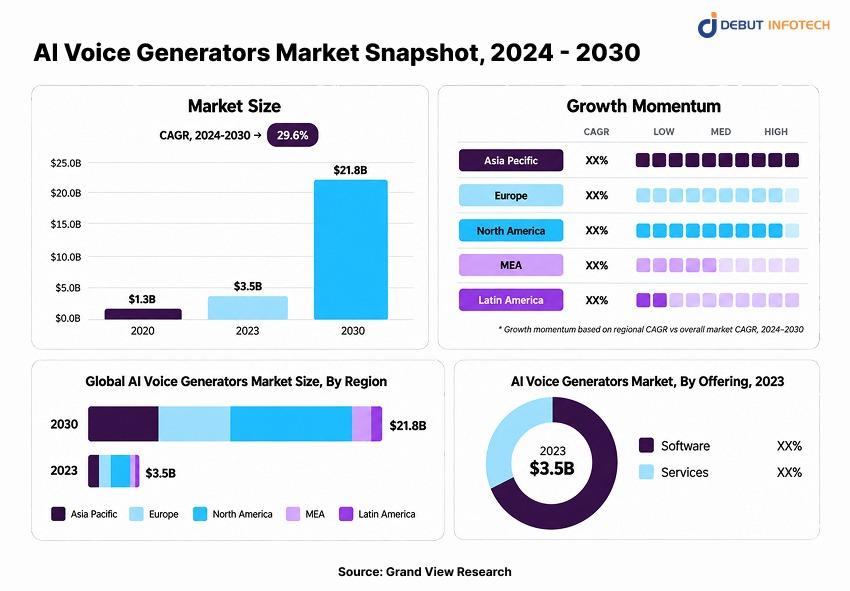
Demand for voice technology also points to a growing market. Grand View Research valued the global AI voice generators market at $3.6 billion in 2023 and projects it will reach $21.8 billion by 2030. Speechify itself reported reaching more than 50 million users in its August 2025 product announcement.
However, building a competitive text-to-speech app involves more than connecting a voice engine. You also need document import, playback controls, accessible design, secure data handling, and a plan for recurring operating costs.
This guide breaks down Speechify-like text to speech app development costs by stage and feature, major cost factors, hidden expenses, and ways to control your budget. It also covers the development process, monetization models, and legal requirements to help you plan a realistic investment.
The cost to build an app like Speechify depends on the work required at each stage of development. Discovery defines the product requirements, UI/UX design shapes the reading experience, and development connects the frontend, backend, and voice engine. The following estimates represent a mid-level application with standard document import, playback, user accounts, and subscription features.
| Development stage | Estimated cost (USD) | Timeline | Why it matters |
| Discovery and requirements | 2,000–6,000 | 1–3 weeks | Defines the target audience, core features, technical requirements, and project scope before development begins |
| UI/UX design | 4,000–10,000 | 2–4 weeks | Creates an accessible, user-friendly interface for document uploads, playback, and reading controls |
| Backend development | 10,000–25,000 | 3–7 weeks | Handles accounts, subscriptions, document storage, playback progress, and data synchronization. |
| TTS integration | 5,000–15,000 | 2–4 weeks | Connects the application to voice engines that convert text into natural-sounding speech |
| Frontend and playback features | 12,000–30,000 | 4–8 weeks | Builds the screens, audio controls, text highlighting, and interactions users rely on. |
| Testing and quality assurance | 4,000–10,000 | 2–4 weeks | Identifies playback errors, compatibility issues, security weaknesses, and usability problems |
| Launch and deployment | 2,000–5,000 | 1–2 weeks | Prepares the application for release, configures production environments, and supports app store submissions |
| Total | 39,000–101,000 | 12–24 weeks | Provides an estimated budget and timeline for planning the initial release. |
These stages often overlap, so their individual timelines should not be added together. Costs for Speechify-like app development also vary by platform coverage, team rates, and integration complexity. A web app that uses a single managed TTS provider usually requires less work than separate native mobile apps that support offline playback, cloud synchronization, and advanced voice processing.
Before approving a budget, define the document formats, supported languages, expected listening volume, and subscription limits. Ask your development team to identify assumptions and exclusions in its estimate. This provides a clearer basis for estimating the work and helps prevent expensive changes during AI-powered voice application development.
The features you choose have a direct impact on the cost to build an app like Speechify. Basic text-to-speech playback is relatively straightforward when you use an existing API. Features such as OCR, offline listening, and voice cloning require more development, testing, or computing resources.
The estimates below cover typical implementation costs, not ongoing API usage or maintenance.
| Feature | Estimated development cost (USD) | Why it matters |
| Text-to-speech integration | 3,000–12,000 | Provides the core function of converting written content into spoken audio |
| PDF and EPUB import | 2,000–7,000 | Allows users to listen to books, reports, and other digital documents. |
| OCR for scanned documents | 4,000–12,000 | Extracts readable text from scanned PDFs and images so users can listen to it. |
| Word highlighting during playback | 3,000–8,000 | Helps users follow spoken content and improves reading accessibility |
| Playback speed controls | 1,000–3,000 | Lets users adjust narration speed to suit their preferences and listening habits. |
| Offline voice models | 8,000–25,000 | Enables speech generation without a continuous internet connection, but adds storage and device requirements |
| Voice cloning | 15,000–60,000+ | Supports personalized voices but requires consent controls, safeguards, and additional technical work |
| Multilingual speech support | 4,000–15,000 | Expands the app’s audience by supporting more languages and voice options. |
| Cloud synchronization | 4,000–12,000 | Keeps documents, settings, and listening progress consistent across devices. |
| Google Docs integration | 3,000–10,000 | Lets users access or process supported documents with fewer manual steps. |
| Kindle-related integration | 5,000–15,000+ | May improve access to reading content, subject to platform permissions and technical restrictions |
Actual costs depend on the number of platforms, licensing conditions, API requirements, and the extent of custom engineering each feature requires. Some third-party services may also charge separately for usage.
Prioritize AI voice generator app features that solve your target users’ main problems. A first release might include document imports, natural-sounding speech, speed controls, and saved playback progress. Add expensive capabilities only after testing demand and confirming that their mobile app development services and operating costs align with your business model.
The cost to build an app like Speechify depends on technical choices, product scope, and expected usage.
The following factors can change both the initial AI voice application development budget and the cost of running the app after launch.
| Cost factor | Main budget impact | Why it matters |
| Voice engine choice | API fees, hosting, or model development | Determines upfront engineering costs, speech quality, infrastructure needs, and ongoing charges |
| Voice cloning | Voice training, consent, security, and inference | Requires additional safeguards and may involve specialized models, licensing, and computing resources |
| Offline listening | Model integration, storage, and device optimization | Adds complexity because speech models must work within device memory, storage, and processing limits |
| Document formats | File parsing, rendering, and compatibility testing | Each format handles text, layout, and embedded content differently, which affects import reliability |
| OCR requirements | Text extraction, image processing, and correction tools | Scanned files require additional processing to turn images into readable, listenable text. |
| Languages and accents | Voice licensing, localization, and testing | Each language may need different voices, pronunciation rules, and quality checks. |
| Platform coverage | Separate builds, testing, and maintenance | Supporting iOS, Android, and web can increase development effort and ongoing support requirements. |
| UI/UX and accessibility | Design, usability testing, and accessible controls | Ensures users can navigate documents, control playback, and use assistive technologies effectively |
| Backend and scalability | Hosting, storage, and data processing | Affects performance, reliability, synchronization, and the ability to support more users. |
| Third-party integrations | API implementation and compatibility work | Adds dependencies on external services, their pricing, permissions, and future updates |
| Team structure and location | Hourly rates and project coordination | Influences total labor costs, delivery speed, communication, and the amount of rework required. |
| Privacy and security | Encryption, access controls, testing, and compliance | Helps protect documents, account information, listening history, and voice recordings. |
Your voice engine affects AI text to speech app development and operating costs. Managed TTS APIs typically cost less to implement, with integration estimates of 3,000–12,000, but charge for usage. Self-hosted models may cost 15,000–50,000, while custom-trained engines can exceed 50,000–200,000. Compare voice quality, licensing, privacy, scalability, and projected usage before making a choice.
Voice cloning can add 15,000–60,000 or more, depending on whether you integrate an existing service or build a custom pipeline. Costs include voice processing, consent verification, secure sample storage, and safeguards against impersonation. Personalized voices may also incur recurring inference fees. If cloning is not essential, launch with licensed standard voices and add it later.
Offline voice functionality may cost 8,000–25,000 to implement. When you hire AI voice app developers, they must integrate models, manage local storage, optimize performance, and test supported devices.
Larger models need more memory and storage, which can limit compatibility with older phones.
Downloadable audio files offer a simpler alternative when users need offline playback without generating speech directly on their devices.
Supporting PDF, EPUB, DOCX, and web pages requires file parsing, text extraction, and compatibility testing. Common document imports may cost 2,000–7,000, with higher expenses for complex layouts or protected content. Prioritize formats your audience uses most, and test files from different sources to prevent missing text, broken formatting, and playback errors.
OCR enables users to listen to scanned PDFs, photographs, and printed pages. Implementation may cost 4,000–12,000, depending on the service, image quality, and correction tools. Processing also creates potential API or computing charges. Test blurry images, tables, and multiple columns, and let users review extracted text to catch recognition errors before playback.
Multilingual support can cost 4,000–15,000, depending on language coverage, voice availability, and integration complexity. Additional languages may require localization, pronunciation testing, and suitable text-processing rules. Choose languages based on audience demand, verify commercial licensing, and test with native speakers. Expanding gradually helps avoid paying to develop and maintain features users rarely need.
Supporting iOS, Android, and web increases development, testing, and maintenance costs. Cross-platform frameworks such as Flutter or React
Native can reduce duplicated work, potentially lowering custom AI voice generator app development costs by 20–30% compared with separate native builds. Savings depend on scope, however. Test background playback, audio interruptions, permissions, and accessibility across every supported platform.
UI/UX costs increase with custom illustrations, animations, complex reading views, and onboarding flows. Accessibility also requires screen-reader compatibility, readable text, sufficient contrast, and predictable controls. Include these requirements in the initial design and test them with real users. Early accessibility planning improves usability and reduces the risk of expensive redesigns after launch.
Backend development may cost 10,000–25,000 for accounts, subscriptions, document storage, and synchronization. Hosting expenses depend on active users, listening volume, file storage, and data transfer. Estimate expected usage before choosing infrastructure, then configure monitoring and spending alerts. This helps control bills and scale services as demand grows.
Integrations with cloud storage, payment providers, document platforms, or browser extensions may cost 3,000–15,000 or more each. Expenses depend on authentication, API limits, permissions, and testing. Review provider pricing, documentation, and commercial-use restrictions before custom AI voice app development. Prioritize integrations that meet clear user needs to limit complexity and ongoing maintenance.
Team costs depend on hourly rates, experience, and project scope. A typical team may include a project manager, designer, frontend or mobile developers, backend engineer, QA tester, and AI specialist.
Compare portfolios, deliverables, testing plans, and support terms rather than rates alone. A lower hourly rate may not save money if rework delays delivery.
A TTS app may store documents, account details, listening history, and voice samples. Security work includes encryption, access controls, secure backups, deletion workflows, and testing.
Costs increase when handling sensitive information or serving regulated markets. Collect only necessary data, define retention periods, and build privacy controls early to avoid expensive architectural changes later.
Speechify-like text to speech app development requires a mix of product, design, engineering, and testing skills.
The table below shows indicative hourly rates for budgeting. Actual rates vary by seniority, engagement model, and project complexity; specialist machine-learning engineers may charge more than general application developers.
| Role | Typical hourly rate (USD) |
| Project manager | 25–80 |
| UI/UX designer | 20–70 |
| Mobile or frontend developer | 25–90 |
| Backend developer | 30–100 |
| AI/ML engineer | 40–150 |
| QA engineer | 20–60 |
| DevOps engineer | 35–110 |
Regional rates also influence the total Speechify-like text to speech app development cost. Teams in North America and Western Europe often charge more than teams in South Asia or Eastern Europe, although rates vary considerably within each region.
| Development region | Indicative hourly rate (USD) |
| North America | 80–180 |
| Western Europe | 60–130 |
| Eastern Europe | 35–90 |
| South Asia | 20–60 |
| Southeast Asia | 25–65 |
A lower hourly rate does not automatically mean a lower final bill if communication gaps, weak planning, or rework extend the schedule.
When requesting proposals, ask each team to estimate the same feature set and deliverables. Confirm whether project management, testing, deployment, and post-launch support are included. This makes it easier to compare the full cost to develop an app like Speechify rather than choosing a provider based only on the lowest hourly rate.
Development is only the initial expense. After launch, the app needs hosting, voice generation, storage, maintenance, security updates, customer support, and performance monitoring.
A useful planning benchmark is to reserve 20–30% of the initial AI voice generator app development cost annually for maintenance, with API usage and infrastructure budgeted separately where possible.
| Ongoing expense | Indicative cost | Frequency | Why it matters |
| Maintenance and updates | 20–30% of build cost annually | Annual | Covers bug fixes, compatibility updates, dependency upgrades, and feature improvements. |
| Cloud hosting and database | 200–2,000+ per month | Monthly | Keeps the backend, user accounts, and application services available as usage grows. |
| TTS API usage | Depends on characters or audio generated | Usage-based | Usually varies with listening volume, voice quality, provider pricing, and text processed. |
| File storage and data transfer | 50–1,000+ per month | Monthly | Supports uploaded documents, stored audio, backups, and data delivery to users. |
| Monitoring and analytics | 50–500+ per month | Monthly | Helps track crashes, performance, user behavior, and unexpected resource consumption |
| Customer support | 500–5,000+ per month | Monthly | Helps resolve account, billing, document import, and playback issues |
| Security checks and compliance reviews | Depends on scope and frequency | Periodic | Helps protect user data and identify security or compliance gaps before they become costly problems |
A small app with few users may run at the lower end, while a high-volume service can spend much more on speech generation and data transfer. Review provider pricing and estimate costs using expected listening minutes, text volume, storage, and monthly active users.
Track cost per active user and cost per listening hour from the start. Add usage limits, alerts, caching where appropriate, and clear subscription allowances. Review infrastructure bills monthly and test whether each paid feature generates enough revenue or retention to justify its operating cost.
A working app still needs a plan to reach users. Initial marketing may cost 5,000–25,000 for launch content, landing pages, app store optimization, and small paid campaigns. Actual spending depends on the audience, competition, and acquisition channels.
App store fees also affect revenue. Apple and Google apply developer account requirements and transaction fees in accordance with their current policies and program rules. Review the Apple Developer Program and
Google Play service fee information before finalizing subscription prices.
Set aside a test budget for acquisition rather than spending heavily before measuring conversion. Track installs, trial starts, paid subscriptions, churn, and customer acquisition cost. Increase spending only when the numbers show that users stay long enough and generate enough revenue to support growth.
Some Speechify-like text to speech app development estimates focus only on design and development, leaving out costs that appear during launch or expansion.
These expenses can affect the cost to develop an app like Speechify even when the feature list remains unchanged.
| Hidden expense | Why it matters |
| Voice licensing | Commercial use may require paid plans or additional permissions. |
| API overages | High listening volume can exceed usage assumptions. |
| Content and document restrictions | Some platforms restrict access, extraction, or redistribution |
| Accessibility fixes | Testing may reveal issues that require design and code changes. |
| Refunds and chargebacks | Payment disputes create administrative costs and lost revenue. |
| App store revisions | Rejected submissions may require changes and another review cycle |
| Backups and recovery | Reliable restoration requires storage, monitoring, and testing |
| Legal review | Terms, privacy notices, and licensing agreements may need specialist advice |
The size of these expenses depends on the product and market. Voice licensing and API consumption can become recurring costs, while legal review and launch fixes may be occasional expenses. Include them in the estimate rather than treating them as exceptions.
Keep a contingency reserve of around 10–15% of the planned build budget. This is a budgeting recommendation, not a universal rule. Revisit the reserve after discovery, when the team understands the technical risks, provider terms, and compliance requirements more clearly.
To reduce the cost to develop an AI voice generator app like Speechify, start with essential features such as text-to-speech playback, document import, speed controls, and saved progress. Avoid building every advanced capability before confirming user demand.
Define a clear first-release scope and move lower-priority features into later phases. This helps control initial spending while giving you real user feedback to guide future investment.
A managed TTS API can eliminate the expense of training and operating a custom speech model. Compare voice quality, language coverage, latency, usage fees, and commercial licensing before choosing a provider.
Estimate costs at different usage levels, not just during development. You can reconsider self-hosting if AI voice API charges rise enough to justify the added infrastructure and maintenance responsibilities.
Cross-platform frameworks can reduce duplicated development when launching on iOS and Android. They still require device testing and may need native code for background audio, accessibility, or specialized playback functions.
Start on the platform your target audience uses most if the budget is limited. Expand after validating demand, or use cross-platform development when reaching both mobile audiences is important from the beginning.
Features such as voice cloning, offline model support, and extensive integrations can increase the cost to build an AI voice generator app like Speechify. Launching without them lets you first test whether users will pay for the core listening experience.
Use usage data, support requests, and subscription conversion to prioritize upgrades. A phased roadmap reduces the risk of investing in costly features that attract little demand or add ongoing expenses without improving retention.
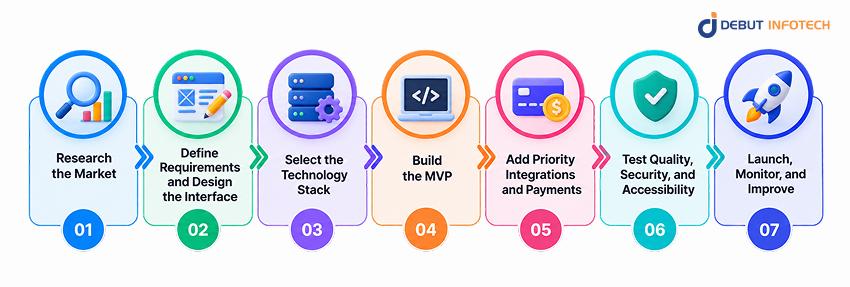
Identify your target users, their preferred documents, accessibility needs, languages, and listening habits. Review competing products and interview potential customers. This work helps establish which features belong in the first release and gives the team a clearer basis for estimating the cost to build an app like Speechify.
Turn research findings into a feature list, user flows, and technical requirements. Create wireframes and clickable prototypes for importing documents, starting playback, changing speed, and saving progress. Test the design with potential users before development begins to avoid expensive changes later.
Choose your frontend framework, backend architecture, database, hosting provider, and TTS engine. Compare managed APIs with self-hosted models based on speech quality, supported languages, privacy, and projected usage. Document these decisions and confirm the AI voice generator app development cost assumptions before committing to the implementation.
Develop the essential experience: accounts if required, document uploads, text extraction, voice playback, speed controls, and playback progress. Connect the app to the selected speech engine and implement error handling for unsupported or corrupted files. Keep the scope focused so the team can deliver a usable product before adding advanced features.
Connect the services needed for launch, such as subscriptions, cloud synchronization, or selected document sources. Configure billing rules, trial periods, usage limits, and account entitlements. Test payment success, failed transactions, cancellations, and renewals so users can manage their subscriptions without confusion.
Test speech accuracy, playback interruptions, document imports, performance, and compatibility across supported devices. Check screen-reader support, privacy controls, and secure data handling.
Invite a small group of target users to test the application and use their feedback to fix practical problems before public release.
Prepare app store listings, onboarding, support documentation, analytics, and crash monitoring.
After launch, measure activation, listening time, subscription conversion, retention, and operating costs. Use these results to prioritize improvements and determine whether features such as OCR, offline playback, or personalized voices justify their added expense.
The right monetization model helps cover speech generation, hosting, maintenance, and customer support. Choose a model that fits how frequently users listen and which features they value.
| Model | How it works | Best suited for | Pros | Cons |
| Freemium | Offers basic features for free, with paid upgrades for premium voices or higher usage limits | Consumer apps targeting a broad audience | Lowers the barrier to entry, encourages product trials, and creates opportunities to convert free users into paying customers | Many users may remain on the free tier, even as speech generation and storage still incur operating costs. |
| Subscription | Charges users monthly or annually for access to premium features. | Regular listeners, students, professionals, and accessibility-focused users | Provides recurring revenue and makes it easier to forecast income when retention is stable. | Requires ongoing value to reduce cancellations and may face competition from other subscription apps |
| Pay-as-you-go | Charges users according to usage, such as characters processed or audio generated | Occasional users and customers with variable listening needs | Aligns charges more closely with consumption and can help cover variable API costs. | Spending can be unpredictable for users, making pricing harder to communicate and forecast. |
| B2B licensing or API | Charges businesses for embedding TTS capabilities in their own products or workflows. | Publishers, education providers, SaaS businesses, and enterprise customers | Can generate larger contracts and support long-term business relationships | Often requires more integration work, technical support, service commitments, and business development. |
Subscriptions provide recurring revenue, while usage-based pricing can align charges with processing costs. Business licensing may offer larger contracts but often requires additional support and service commitments.
Test pricing with real users before committing to a model. Make usage limits, renewal terms, and cancellation options clear. Track revenue per user against AI voice generation and infrastructure costs to ensure each pricing tier remains financially sustainable.
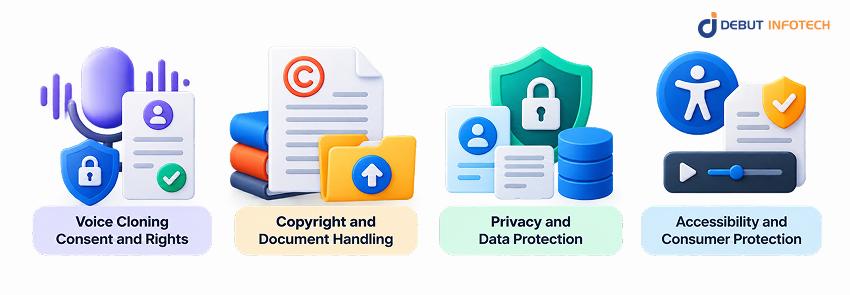
Voice cloning requires careful handling of consent and identity rights. Obtain permission before creating or using a recognizable person’s voice, and confirm that the provider’s terms allow your intended use.
Budget for consent records, reporting tools, and safeguards against impersonation. Legal requirements vary by jurisdiction and use case.
Users may upload books, articles, and other protected material. Your app should define who is responsible for uploaded content and how it is processed, stored, and deleted.
Review copyright rules, provider licensing terms, and restrictions on copying or distributing protected works. Legal advice may be necessary for commercial distribution or partnerships.
Documents, account details, listening history, and voice recordings may contain personal information.
Depending on your users and markets, laws such as the GDPR or applicable US state privacy laws may impose requirements for consent, access, deletion, security, and disclosure. Budget for privacy notices, retention controls, and legal review before launch.
A TTS app should make its core controls usable by people with different access needs. Budget for screen-reader testing, keyboard navigation where relevant, readable text, and accessible playback controls. Also review subscription disclosures, automatic renewals, refunds, and cancellation processes. Meeting applicable accessibility and consumer-protection requirements early can reduce costly fixes later.
The cost to build an app like Speechify depends on your features, voice engine, platform strategy, and long-term operating needs. Start with a focused MVP, choose technology that fits your budget, and validate demand before adding expensive capabilities.
Debut Infotech helps businesses turn AI voice app ideas into reliable, user-friendly products.
From integrating natural-sounding voice engines and document-reading features to developing personalized voice experiences, our team can support your project from planning through deployment. Our AI Development Services cover custom AI solutions, system integration, and scalable application development tailored to your business goals.
Even if you’re launching an MVP or expanding an existing platform, we help you choose suitable technologies, manage development costs, and prepare for future growth.
AI voice app development cost depends on features such as voice quality, language support, real-time speech generation, offline playback, voice cloning, and audio downloads. User accounts, subscriptions, and accessibility tools also add to the budget. Advanced features like custom AI voice models and multilingual support usually require more development time and resources.
Running a text-to-speech app can cost between $500 and $5,000 per month for a small to mid-sized platform. Larger apps may spend $10,000 or more monthly. Your actual expenses depend on the number of users, audio generation volume, cloud hosting, API usage, storage, maintenance, and customer support requirements.
Using a third-party text-to-speech API is usually cheaper for a new app because you avoid the cost of training and maintaining your own model. Building a custom voice model offers greater control over voice quality and performance, but requires more data, computing resources, AI expertise, and ongoing maintenance.
Developing a Speechify-like text-to-speech app typically takes three to six months for a standard version with text conversion, playback controls, user accounts, and basic subscriptions. A more advanced app with voice cloning, multiple languages, offline support, and custom AI models may take six to twelve months or longer to develop.

Our Latest Insights
USA
2501 Chatham, Rd Suite R Springfield, IL 62704
+1-708-515-4004
info@debutinfotech.com
UK
7 Pound Close, Yarnton, Oxfordshire, OX51QG
+44-770-304-0079
info@debutinfotech.com
Canada
154 Eden Oak Trail, Kitchener, ON N2A 0H9
+1-708-515-4004
info@debutinfotech.com
INDIA
Sector 101-A, Plot No: I-42, IT City Rd, JLPL Industrial Area, Mohali, PB 140306
9888402396
info@debutinfotech.com