ON THIS PAGE
Progress0%






Our Global Presence :






DeFi app development cost typically ranges from $30,000 to $500,000+, depending on the complexity of your project, including whether you’re building a basic MVP, a smart contract-based application, or a comprehensive DeFi ecosystem with liquidity pools, wallet integration, oracles, audits, governance, and multi-chain compatibility.
As a founder or fintech team, your true question is not “How much will it cost?”, but rather, “What level of product risk, security, and scalability are we creating for?”. A simple staking dashboard or token swap app can have a narrow feature scope, minimal smart contract logic and a single blockchain network. A lending protocol or decentralized exchange, however, would need to be more complex in terms of contract architecture, liquidity management, price feeds, user permissions, admin controls, and more in-depth security reviews.
The cost will also vary depending on the blockchain you select, the number of integrations needed, the audit process, and whether you hire freelancers, an in-house team, or a specialized DeFi development company.
This guide explores DeFi development cost by project type, core features, blockchain network, timeframe, security requirements, and hiring model which will assist you in creating a realistic budget before starting development.
Businesses are still investing in DeFi in 2026 because decentralized finance is no longer limited to crypto-native projects. It is now being used to solve real financial infrastructure problems and create new business models. The major reasons include:
Businesses are using DeFi to solve practical financial challenges. It can support digital payments, asset management, automated transactions, lending services and new ownership models. This makes it useful for fintech startups, enterprise platforms and companies looking for modern financial infrastructure.
Stablecoins are one of the major reasons businesses are still interested in DeFi. They allow companies to process digital settlements and cross-border payments more quickly. For businesses dealing with international customers, suppliers or partners, stablecoins can reduce delays and improve transaction efficiency.
DeFi also allows businesses to bring real-world assets onto the blockchain. Assets such as bonds, funds, invoices, private credit and other financial instruments can be tokenized. This helps companies create digital investment products, improve asset transparency and make ownership easier to track.
DeFi lending protocols allow users to lend and borrow assets through automated systems. Borrowers can provide collateral, while repayments, interest and liquidation rules can be managed by smart contracts. This reduces manual processing and makes credit products easier to scale.
Businesses are also investing in DeFi because decentralized exchanges provide access to liquidity without relying on traditional brokers. Users can swap tokens directly, while platforms can use liquidity pools to support trading and asset movement.
DeFi is becoming more practical because blockchain infrastructure has improved. Layer 2 networks help reduce transaction fees and increase speed, while cross-chain tools allow assets to move between different blockchain networks. These improvements make DeFi more attractive for business use.
Smart contracts allow financial rules to run automatically. They can manage interest calculations, collateral checks, rewards, settlements and repayments. This creates programmable finance, where financial products operate with less human intervention.
A fintech company, for example, can build a tokenized lending platform where users deposit stablecoins, borrowers provide collateral and repayments are handled automatically. This kind of product can improve speed, transparency and operational efficiency.
Although DeFi creates strong opportunities, it also comes with serious responsibilities. Businesses must manage user wallets, liquidity pools, smart contracts, oracle feeds, compliance requirements and security risks. Poor planning can expose a platform to financial and technical problems.
Not all DeFi products cost the same to build. A basic staking platform is usually less expensive because it has fewer features and lower integration requirements. However, a lending protocol, decentralized exchange or asset tokenization platform is more complex and requires stronger audits, deeper security checks and more advanced development.
Cost planning is one of the most important steps before starting a DeFi development project. A DeFi product involves financial transactions, blockchain infrastructure, user assets, liquidity systems, and security-sensitive operations. Because of this, founders and product leaders must understand the full cost structure before development begins.
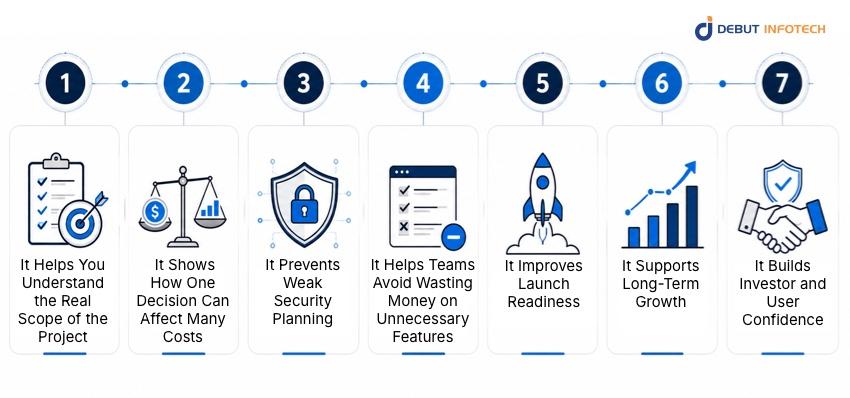
A DeFi application is not just a website or mobile app. It combines several technical and financial components that must work together correctly.
The budget usually covers:
Without clear cost planning, it becomes difficult to know how much the project will truly require.
In DeFi development, one technical decision can influence several other parts of the project.
For example, choosing to add lending, staking, or trading features may also require:
This means that a feature may look simple to users but require serious technical work behind the scenes.
Security is one of the biggest cost areas in DeFi development. Since DeFi platforms manage digital assets, weak security planning can expose users and the business to serious risks.
Proper cost planning ensures that enough resources are allocated for:
Reducing security costs may seem cheaper at first, but it can become far more expensive if vulnerabilities appear after launch.
Many DeFi projects fail because they try to build too many features too early. A clear budget helps teams separate essential features from optional ones.
For an MVP, the team may focus first on:
Advanced features can be added later after the product has been tested with real users.
Good cost planning helps the team prepare for a smooth launch. It ensures that the product is not only built, but also tested, monitored, secured, and ready for users.
A strong launch budget should include:
This reduces delays and helps the product enter the market with fewer technical problems.
DeFi development does not end after launch. The platform will need updates, monitoring, bug fixes, user support, and possible feature expansion.
A realistic budget helps companies plan for:
This makes the product more scalable and sustainable.
A well-planned DeFi budget shows that the team understands the technical, financial, and security demands of the project. This can improve confidence among investors, partners, and early users.
When the budget is clear, the project appears more professional, reliable, secure, scalable, investment-ready, and market-focused.
Overall, DeFi development cost planning matters because it helps teams control expenses, reduce risks, build the right MVP, protect users, and create a product that can grow successfully after launch.
Before estimating DeFi development cost, the most important factor is project scope. A simple proof-of-concept is much cheaper than a complete DeFi ecosystem, audits, compliance tools, cross-chain capabilities, and institutional level infrastructure. The table below provides some helpful benchmarks for planning different DeFi project types in 2026.
| DeFi Project Scope | Estimated Cost | Estimated Timeline | Best For |
| Prototype / Proof of Concept | $15,000–$35,000 | 3–6 weeks | Testing feasibility, validating an idea, or preparing for investor discussions before major investment |
| Basic DeFi MVP | $30,000–$80,000 | 6–12 weeks | Startup validation, early user testing, single-chain deployment, and basic DeFi functionality |
| Mid-Level DeFi Application | $80,000–$180,000 | 12–20 weeks | Projects needing token staking, wallet connection, user dashboard, admin panel, and basic liquidity features |
| Full-Scale DeFi Platform | $180,000–$500,000+ | 20–40 weeks | DEX, lending protocol, yield farming, liquidity pools, governance, oracle integration, and cross-chain functions |
| Enterprise / Institutional DeFi Ecosystem | $500,000–$1M+ | 40+ weeks | Institutional DeFi, compliance-driven platforms, multi-chain infrastructure, advanced analytics, and enterprise security |
For instance, a simple DeFi MVP could consist of wallet connectivity, token staking, basic smart contracts, a basic dashboard, a limited admin panel, and single-chain deployment. This is appropriate for startups looking to gauge market demand prior to investing in a larger product.
On the other hand, a full-scale DeFi platform can feature a DEX or a lending protocol, liquidity pools, governance modules, oracles, multi-wallet support, cross-chain features, compliance tools, smart contract audit and monitoring, role-based admin system and advanced analytics.
Note: All ranges are planning benchmarks. The real cost of developing DeFi applications varies according to the scope, smart contract complexity, blockchain selection, depth of the audit, compliance needs, and selected features. Contact Debut Infotech for a project-specific estimate.
A DeFi development budget isn’t just for screens or to connect to a basic wallet. The actual cost will be determined by the amount of financial logic that the product will control. A basic DeFi interface might show only your balances, connect your wallet and enable basic token interactions. However, a comprehensive protocol controls all aspects of the funds, liquidity, governance, price feeds, cross-chain transfers, and security risks. The table below shows the main components buyers are usually paying for.
| Component | What It Does | Cost Impact | Buyer Decision |
| Smart Contracts | Automate lending, staking, swaps, token logic, rewards, and governance rules. | High | Keep logic simple for an MVP; complex fund-handling contracts increase cost and audit needs. |
| User Interface | Provides web or mobile dashboards for users, admins, traders, or liquidity providers. | Medium | Decide whether you need a basic dashboard or advanced analytics and role-based views. |
| Wallet Integration | Connects wallets such as MetaMask, WalletConnect, Coinbase Wallet, and Trust Wallet. | Medium | More wallet support improves access but adds testing and compatibility work. |
| Token System | Supports utility tokens, governance tokens, staking tokens, or reward tokens. | Medium-High | Use only the token functions needed at launch to reduce complexity. |
| Liquidity Pools | Enables swaps, lending, staking, yield farming, or liquidity provision. | High | Pools increase cost because they directly manage user assets and protocol economics. |
| Oracle Integration | Brings external price or market data into the protocol. | Medium-High | Required for lending, derivatives, stablecoins, and price-sensitive DeFi products. |
| Cross-Chain Layer | Enables multi-chain asset movement, liquidity routing, or bridge interaction. | High | Add only when necessary; cross-chain features increase technical and security risk. |
| Admin Console | Manages settings, monitoring, reports, roles, fees, and protocol controls. | Medium | Important for operations, but features should match the team’s management needs. |
| Security & Audit | Reviews smart contracts, detects vulnerabilities, and reduces exploit risk. | High | Essential for any product that controls funds or liquidity. |
| Compliance Layer | Adds KYC/AML, access controls, permissioned pools, and reporting features. | Medium-High | Useful for institutional, enterprise, or regulated DeFi models. |
The vast majority of DeFi cost increases occur when a product goes from being just an interface to a complete protocol, managing assets, liquidity, governance, and cross-chain interactions. When planning costs, buyers should differentiate between “nice-to-have” interface functionality and “fund-handling protocol” functionality as the latter typically takes more effort, testing, audits and controls to engineer.
The DeFi development cost is not shaped by one fixed price tag. This depends on the type of build you are creating, the monetary logic behind the product, the network you choose and the level of security and compliance required before launch.
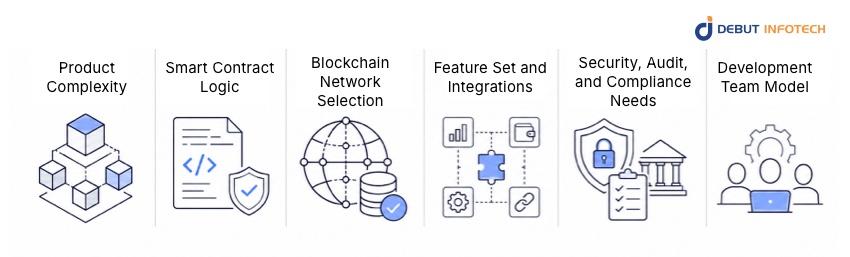
The average cost of a simple staking dApp will be less than a lending protocol, as there are fewer moving parts. When it comes to managing deposits, borrowing, collateral, interest rates, liquidation rules, risk limits, and user balances in real-time, a lending platform must be capable of doing so. A DEX or cross-chain liquidity platform is even more complicated as it might involve automated market maker logic, liquidity routing, token swaps, bridge integrations, and slippage management.
For instance, if a founder is developing a staking product with just a single token, it could require only wallet connection, staking contracts, rewards distribution, and a simple dashboard. The key components a fintech team will need to build a lending protocol are collateral management, oracle pricing, repayment logic, admin controls, audit preparation, and better risk monitoring.
Smart contracts are the backbone of any decentralized finance platform. The more rules they have control of, the more time developers have to allocate to architecture, coding, testing and security review. All of these features, including calculating yield, governance voting, token vesting, liquidity pools, automated market making, and liquidation triggers, add to engineering efforts.
This is why it is crucial to keep the scope of smart contracts defined beforehand during development. Small changes in contract logic can affect the backend, frontend, audit process, and even the legal structure of the product.
Blockchain choice also affects cost. Ethereum may require deeper gas optimization and mature security planning. Solana may need developers with Rust experience. While Layer 2 networks offer potential savings in transactions fees for users, they must be carefully integrated with wallets, bridges, block explorers, and infrastructure providers
The right chain should be in harmony with your product goals, transaction volume, user numbers, security requirements and liquidity strategy.
All features contribute to the development hours. Logins with wallets, analytics dashboards, administration panels, staking options, referral programs, governance sites, token vesting, and KYC, liquidity pools, and reporting options are added to scope.
Third party tools also impact cost. The integration and testing of oracles, custody providers, wallet SDKs, fiat payment APIs, compliance platforms, bridges and analytics systems are all required, as these systems must be maintained.
DeFi products handle user assets directly, so security cannot be treated as a final add-on. Code reviews, automated testing, testnet deployment, threat modeling, and external audits should be planned from day one. The DeFi audit cost will depend on contract complexity, codebase size, number of protocols involved, and the audit firm’s depth of review.
Compliance also can lead to higher costs, particularly for institutional DeFi, tokenized assets, permissioned pools, or products addressing fintech. KYC/AML checks, data protection controls, reporting workflows, and jurisdiction-specific rules may require extra product, legal, and engineering work.
Your team structure affects both budget and delivery risk. Freelancers may reduce upfront cost but can create continuity challenges. In-house teams are under control, but they need to be hired and managed. DeFi audit cost will vary based on the complexity of the contracts, size of the codebase, number of protocols involved and the audit firm’s depth of review. A dedicated DeFi development agency can cost more to set up initially, but it may well come with a product strategy, blockchain architecture, security experience and quicker execution all in one.
The best choice depends on your timeline, internal technical capacity, funding stage, and risk tolerance.
The price of any DeFi product varies significantly based on the project type, feature size, security needs, integration requirements, and compliance requirements. The ranges given below provide an idea of the likely development cost that buyers should expect if they want a custom quotation.
| DeFi Project Type | Estimated MVP Cost | Estimated Full Build Cost | Estimated Timeline | Key Cost Driver |
| DeFi Staking Platform | $30,000–$70,000 | $70,000–$160,000 | 8–18 weeks | Reward logic, lock periods, tokenomics |
| DeFi Lending Platform | $70,000–$150,000 | $150,000–$400,000+ | 16–36 weeks | Collateral logic, liquidation engine, oracle integration |
| Decentralized Exchange | $80,000–$180,000 | $180,000–$500,000+ | 20–40 weeks | AMM/order book model, liquidity pools, swap engine |
| Yield Farming Platform | $60,000–$120,000 | $120,000–$300,000 | 14–30 weeks | Pool logic, APY calculation, rewards, security |
| DeFi Wallet App | $50,000–$120,000 | $120,000–$300,000 | 12–28 weeks | Multi-wallet support, swap, staking, multi-chain features |
| Token Launch Platform | $40,000–$90,000 | $90,000–$220,000 | 10–24 weeks | Token creation, vesting, launchpad logic, KYC |
| DAO Governance Platform | $50,000–$100,000 | $100,000–$250,000 | 12–26 weeks | Voting logic, treasury control, governance token |
| Cross-Chain DeFi Platform | $120,000–$250,000 | $250,000–$700,000+ | 28–52 weeks | Bridge integration, liquidity routing, security architecture |
| Institutional DeFi Platform | $250,000–$500,000 | $500,000–$1M+ | 40+ weeks | Compliance, permissioned access, reporting, audit requirements |
Buyers should not only focus on the name of the platform when comparing the cost of DeFi development. A “DEX,” for instance, can be an easy token exchange interface or a highly high volume liquidity protocol that incorporates advanced routing, analytics, liquidity incentives, admin controls and institutional-grade security. The real cost is not based on the product category but scope.
To request a development quote, buyers should clearly specify all desired features, supported chains, complexity of the smart contract, third-party integrations, audit requirements, admin controls, and compliance requirements to get a more accurate estimate.
DeFi development quotes are typically determined by the amount of features, the complexity of the protocol, and the level of security required. Simple features like wallet connection or simple token creation are less costly, but any functionality related to liquidity, lending, borrowing, asset movement or cross-chain activity will require more engineering, testing, and audit preparation.
| Feature | Estimated Cost Range | Why It Affects Cost | Security/Planning Note |
| Wallet Integration | Estimated: $5,000–$20,000 | Cost depends on how many wallets and blockchains the app supports. | Plan for secure connection handling and smooth user login. |
| Token Development | Estimated: $5,000–$30,000 | Basic token creation is cheaper, while vesting, burning, tax, minting, and governance rules increase cost | Tokenomics should be finalized before development starts. |
| Smart Contract Development | Estimated: $10,000–$100,000+ | Cost depends on the protocol rules, transaction logic, asset handling, and contract complexity. | Requires detailed testing because smart contracts control on-chain actions. |
| Staking Module | Estimated: $15,000–$60,000 | Reward calculations, lock periods, withdrawal penalties, and claim rules increase development work. | Reward logic must be tested carefully to avoid payout errors. |
| Liquidity Pool | Estimated: $25,000–$100,000+ | Pool logic, AMM design, fee structure, slippage handling, and liquidity rules affect the quote. | Requires strong validation because liquidity errors can expose user funds. |
| Lending/Borrowing Module | Estimated: $50,000–$180,000+ | Collateral rules, liquidation logic, interest models, oracle feeds, and risk controls make this feature complex. | One of the most security-sensitive DeFi modules. |
| DEX Swap Engine | Estimated: $60,000–$200,000+ | Cost depends on swap logic, AMM or order-book design, routing, liquidity depth, and price-impact controls. | Needs testing for slippage, failed swaps, routing errors, and manipulation risks. |
| Oracle Integration | Estimated: $8,000–$30,000 | Price feeds, data validation, fallback logic, and provider setup influence development time. | Critical for lending, trading, synthetic assets, and price-based automation. |
| Cross-Chain Integration | Estimated: $40,000–$200,000+ | Bridge architecture, supported chains, message validation, and cross-chain asset movement increase complexity. | Requires extra security review because bridges are common attack targets. |
| Admin Dashboard | Estimated: $15,000–$60,000 | Cost depends on permissions, analytics, user controls, reporting, and protocol management tools. | Role-based access should be included to prevent misuse. |
| KYC/AML Integration | Estimated: $10,000–$50,000+ | Cost depends on the provider, verification process, jurisdictional rules, and data flow. | Important for regulated, institutional, or fiat-connected DeFi products. |
| Analytics & Monitoring | Estimated: $10,000–$40,000 | Protocol health tracking, transaction monitoring, alerts, and dashboards add development work. | Helps teams detect abnormal activity and performance issues early. |
| Smart Contract Audit | Estimated: $10,000–$100,000+ | Audit cost depends on contract size, complexity, asset risk, and audit firm depth. | Should be treated as a launch requirement, not an optional extra. |
The most expensive DeFi features are typically ones that directly control user funds, or put the protocol in financial danger. Liquidity pools, lending modules, DEX engines, and cross-chain integrations typically take longer to develop as errors could result in the loss of funds, price manipulation, or security flaws. To ensure a leaner launch, the wallet integration, token development, core smart contracts and a simple dashboard can be developed first, followed by more advanced modules in the subsequent phases.
Apart from transaction fees, the cost of developing DeFi solutions is influenced by various other factors like the complexity of smart contracts, audits, developer skill sets, infrastructure setup, wallet support, bridging and integrations with the ecosystem. The table below comes with relative cost-impact estimates to assist buyers in deciding which blockchain is the most practical for their project stage.
| Ethereum | High | Mature product / institutional launch | Lending protocols, DEXs, derivatives, liquidity-heavy DeFi, blue-chip protocols | Advanced gas optimization, multiple audits, complex composability, higher security expectations | Choose Ethereum when credibility, liquidity, and institutional trust are more important than keeping development cost low |
| Polygon | Low–Medium | MVP / growth-stage product | Staking apps, DeFi wallets, gaming-finance apps, low-cost retail DeFi | Bridge setup, third-party integrations, multi-chain expansion | Choose Polygon when you want EVM compatibility and a more affordable development path |
| BNB Chain | Low–Medium | MVP / retail launch | Token platforms, staking, farming, high-volume low-fee DeFi | Security hardening, anti-exploit design, liquidity planning | Choose BNB Chain for retail-focused DeFi where low transaction fees are important |
| Solana | Medium–High | Performance-focused build | Trading platforms, order-book DeFi, fast settlement apps, high-throughput products | Rust/Solana expertise, custom program design, specialized testing | Choose Solana only when speed and throughput are central to the product’s value |
| Avalanche | Medium | Custom network / enterprise build | Subnet-based DeFi, private or institutional DeFi ecosystems, custom blockchain environments | Subnet/L1 design, infrastructure planning, validator setup, custom architecture | Choose Avalanche when flexibility and custom network control justify extra planning |
| Arbitrum | Medium | Scaling-stage EVM product | Ethereum-compatible DEXs, lending apps, trading tools, scalable DeFi platforms | Bridging, liquidity migration, L2 deployment strategy | Choose Arbitrum when you want Ethereum alignment with lower user transaction costs |
| Optimism | Medium | Scaling-stage EVM product | Ethereum L2 apps, DeFi extensions, scalable protocol launches | L2 integrations, ecosystem strategy, bridge/user-flow planning | Choose Optimism for EVM DeFi projects that need scalability without moving away from Ethereum tooling |
| Base | Medium | Consumer-facing product | Wallet-connected DeFi, payment-style DeFi, mainstream Web3 finance apps | Wallet UX, onboarding flow, ecosystem integrations, compliance-sensitive user journeys | Choose Base when your priority is consumer adoption and simple user access |
| Cosmos | Medium–High | Advanced custom architecture | App-chain DeFi, interoperable protocols, sovereign DeFi networks | Chain design, validator economics, IBC/interoperability setup, specialist engineering | Choose Cosmos when your product needs its own chain or deep cross-chain functionality |
Polygon, BNB Chain, Arbitrum, Optimism, and Base are more practical options for a cost-conscious DeFi MVP, as they can facilitate the adoption of EVM-based development and minimize engineering friction. Ethereum is more suitable for high-trust, liquidity-centric, institutional DeFi, but can lead to higher audit and optimization costs. Solana is a good choice for fast-paced DeFi projects, while Avalanche and Cosmos excel with custom architecture or app-chain flexibility.
A proper DeFi budget should be more than just the initial build. The visible portions of the project are smart contracts, wallet integration, frontend screens, admin dashboards, and protocol logic. Security, infrastructure, liquidity, compliance, and post-launch operations are other significant costs associated with the real DeFi development.
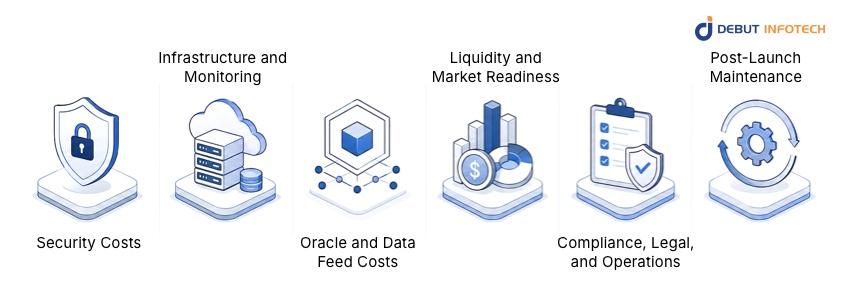
The first typically overlooked big cost is security. The cost of a smart contract audit varies widely between $10,000 and $150,000+, depending on the complexity of the protocol, supported chains, size of codebase and user funds on the line.
The audit fee is not the only expense. The majority of audits result in issues that need to be resolved prior to launch. Buyers should always budget an additional 10% to 25% of the development cost for audit remediation, retesting, gas optimization, as well as contract hardening.
A successful DeFi platform should have a reliable infrastructure to keep it operational and responsive. This can include services such as RPC providers, cloud hosting, indexers, APIs, analytics, backend services and secure access.
Typical infrastructure hosting can range from $500 to $10,000+ per month, and monitoring and alert systems can cost $200 to $3,000 per month. These tools enable teams to identify failed transactions, abnormal activity, downtime, liquidity problems, and smart contract events before they impact the users.
Numerous DeFi products rely on external data. Lending platforms require collateral values. Market data may be needed for DEXs. Yield products may need rate feeds. The cost of these oracle services range from $500 to $10,000+ per month, depending on the type of feed, frequency of updates, and scale of use.
Liquidations, collateral ratios, or automated pricing can all lead to increased financial risk if the oracle isn’t structured properly.
Technical completion doesn’t necessarily translate into a product that sells. Liquidity bootstrapping, incentive design, treasury planning and market making support are frequently required during the token launches, DEXs, lending pools, and yield platforms.
For instance, a lending protocol can be launched with working smart contracts but if the initial liquidity pool is too shallow, users will not be able to borrow and lend effectively.
Compliance solutions including KYC/AML systems can range anywhere from $500 to $5,000+ per month. Depending on the jurisdiction, legal review can be different, particularly in the instances of tokens, lending, yield, and cross-border users.
Teams also need to allocate resources for bug bounty programs that can cost from $10,000 to $100,000+, plus moderation, admin support, governance functions and user support.
Maintenance costs range from 15% to 30% of the initial build cost per year after launch. These include updates, security fixes, protocol enhancements, scaling the infrastructure, analytics, and new feature releases.
A realistic quote from a DeFi development company should separate build costs from launch and operating costs. That gives founders, CTOs, and product teams a clearer view of what it takes to build, launch, secure, and maintain a DeFi product properly.
The best method to decrease DeFi development cost is to manage scope, not lessen security. To start with, you need an MVP that meets one specific use case, whether it be token swapping, yield management, lending, or staking, and gradually build up from there until you have a complete DeFi ecosystem.
Pick one blockchain to use for version one. Multi-chain features, bridges, and complicated liquidity routing can result in longer development times, more testing and risk exposure. The example of a lending MVP with a smaller range of assets that can be used as collateral is easier to build, audit and improve than a cross-chain platform with many assets and integrations.
Apply existing frameworks, audited libraries and known smart contract standards as applicable. Finalise tokenomics, fee logic, governance rules, reward models, oracle dependencies, and access permissions before development begins. Late changes in these areas can increase smart contract development cost and delay launch.
Simplicity and functionality are key in the first interface. Implement advanced analytics, dashboards, automation and governance features in subsequent phases.
Most importantly, do not reduce your budget by skipping audits, testing, access control reviews, oracle risk checks, or economic attack analysis. Security is an integral component of DeFi products.
Talk to Debut Infotech and create a realistic budget from the beginning. Our expert team can assist you in determining what features should be included in the MVP, its priority, and the requirements for an audit and development roadmap before you invest a lot of resources.
DeFi development cost in 2026 usually ranges from $30,000 for a basic MVP to $500,000+ for a full-scale DeFi platform. The final cost depends on the project type, smart contract complexity, blockchain choice, wallet integration, audit requirements, and compliance needs.
A basic DeFi app with wallet connection, staking, token interaction, and a simple dashboard can cost $30,000-$80,000. A more advanced DeFi application with lending, borrowing, liquidity pools, governance, and multi-chain support can cost $150,000-$500,000+.
Smart contract development for DeFi can cost $10,000-$150,000+ depending on contract complexity. Basic token or staking contracts cost less, while lending, DEX, AMM, liquidation, and cross-chain contracts cost more because they require deeper testing, security review, and audit preparation.
A decentralized exchange usually costs $80,000-$180,000 for an MVP and $180,000-$500,000+ for a full-scale platform. The cost depends on whether the DEX uses AMM, order book, liquidity pools, multi-token swaps, governance, analytics, and cross-chain routing.
Polygon, BNB Chain, Arbitrum, Optimism, and Base are often cost-effective choices for EVM-compatible DeFi platforms because they offer lower transaction costs and faster development paths than building entirely from scratch. Ethereum may cost more but offers strong composability and ecosystem trust, while Solana can be efficient for high-throughput DeFi but requires specialized engineering.

Our Latest Insights
USA
2501 Chatham, Rd Suite R Springfield, IL 62704
+1-708-515-4004
info@debutinfotech.com
UK
7 Pound Close, Yarnton, Oxfordshire, OX51QG
+44-770-304-0079
info@debutinfotech.com
Canada
154 Eden Oak Trail, Kitchener, ON N2A 0H9
+1-708-515-4004
info@debutinfotech.com
INDIA
Sector 101-A, Plot No: I-42, IT City Rd, JLPL Industrial Area, Mohali, PB 140306
9888402396
info@debutinfotech.com