ON THIS PAGE
Progress0%






Our Global Presence :






Choosing a blockchain development company is not a minor procurement decision. It directly affects system reliability, long-term costs, and how well your solution performs under real-world pressure. Blockchain systems are harder to modify after deployment compared to traditional applications. That makes early decisions more consequential. A capable partner reduces technical debt, aligns architecture with business goals, and avoids avoidable redesign later.
Blockchain development demands deep knowledge of distributed systems, consensus algorithms, and smart contract architecture. A skilled blockchain development company understands how to design efficient transaction flows, select the right protocol, and prevent common vulnerabilities. This expertise reduces costly experimentation and avoids structural flaws that are difficult to fix after deployment. It also ensures your solution is built on proven practices that support long-term reliability and performance in real-world use cases.
Cost efficiency depends on how well the project is planned and executed, not just the initial quote. A reliable blockchain development company minimizes rework, avoids unnecessary complexity, and structures development in manageable phases. This approach controls spending and prevents budget overruns. Efficient coding practices and clear scope definition also reduce hidden costs, ensuring that your investment delivers measurable value without compromising on quality or long-term sustainability.
Scalability determines how well your blockchain solution performs as usage grows. A competent development company plans for increased transaction volumes, user activity, and data processing needs from the start. They evaluate suitable consensus mechanisms, layer-2 solutions, or hybrid models to support growth. This prevents performance bottlenecks and costly system redesigns later, ensuring your application remains responsive and reliable even as demand expands over time.
Compliance plays a critical role in blockchain adoption, especially in finance, healthcare, and enterprise use cases. A capable development partner providing enterprise blockchain development services understands regulatory frameworks and ensures your platform meets legal and data protection requirements. This reduces the risk of penalties, operational disruptions, or reputational damage. Proper compliance also strengthens user trust and positions your solution for wider adoption across regulated markets and industries.
Timely delivery affects your ability to launch, compete, and capture market opportunities. An experienced blockchain development company follows structured workflows, sets realistic timelines, and manages resources effectively. Clear communication and milestone tracking help prevent delays and scope creep. Delivering on schedule ensures faster market entry, reduces opportunity costs, and enables your business to start generating value from the solution without unnecessary delays.
Security is a non-negotiable aspect of blockchain development because vulnerabilities can lead to irreversible losses. A strong development company applies secure coding practices, conducts rigorous testing, and performs smart contract audits. They also design systems that limit attack surfaces and handle threats proactively. This level of attention protects user assets, maintains system integrity, and ensures your platform operates safely in environments where trust and reliability are critical.
Choosing the right blockchain platform has long-term implications for performance, cost, and maintenance. A dependable company evaluates your business needs and recommends suitable blockchain infrastructure and technologies, whether public, private, or hybrid chains. This alignment ensures your system avoids unnecessary complexity and operates efficiently. Proper technology selection also simplifies future upgrades, integrations, and scaling efforts, helping your solution remain relevant as requirements evolve.
Post-deployment support ensures your blockchain solution continues to perform reliably after launch. A capable development company provides ongoing monitoring, maintenance, and updates to address issues and improve functionality. This support helps adapt the system to changing user demands and emerging technologies. Continuous assistance also reduces downtime risks and ensures your platform remains stable, secure, and aligned with business objectives over time.
Blockchain applications often need to connect with existing enterprise systems, APIs, and external services. A skilled development company ensures seamless blockchain integration without compromising performance or data consistency. They design interoperability layers that allow smooth communication between blockchain and traditional systems. This capability enhances operational efficiency and enables your solution to function as part of a broader digital ecosystem rather than as an isolated platform.
A company’s track record provides practical evidence of its ability to deliver successful blockchain projects. Reviewing past work, client feedback, and case studies helps assess reliability and technical competence. Proven experience reduces uncertainty and increases confidence in project outcomes. A reputable partner is more likely to follow best practices, meet deadlines, and maintain quality standards throughout the development lifecycle, ensuring consistent and dependable results.
Blockchain development costs vary widely because projects differ in complexity, technical scope, and compliance requirements. Understanding the primary cost drivers helps set realistic budgets and avoid unexpected overruns.
Project size is one of the most direct cost drivers in blockchain development. Larger applications involve more features, user roles, integrations, and testing requirements, which increase development time and resource allocation. A basic smart contract or token project is far less demanding than a full-scale DeFi platform or enterprise blockchain system. Clearly defining scope early helps control costs, avoid unnecessary expansion, and ensure resources are used efficiently throughout the development lifecycle.
Geographical location influences development costs due to differences in labor rates, operational expenses, and market demand. Companies in North America and Western Europe typically charge higher fees than those in Asia or Eastern Europe. However, lower cost does not always mean better value. Businesses should weigh cost against expertise, communication efficiency, and time zone alignment to ensure smooth collaboration and consistent project delivery.
Developer experience has a strong impact on both cost and overall project quality. Highly experienced blockchain professionals charge higher rates, but they bring proven expertise that reduces errors, improves system architecture, and accelerates development timelines. This often results in lower long-term costs by minimizing rework and maintenance issues. Choosing experienced developers ensures your project benefits from reliable execution and industry best practices from the beginning.
Additional services beyond core development can significantly increase the total project cost. These include UI/UX design, smart contract audits, legal compliance consultation, cloud hosting, and third-party integrations. While these elements may appear optional, they are critical for building a production-ready blockchain solution. Ignoring them can lead to functional gaps or security risks. Planning for these extras early ensures a more accurate budget and a more complete final product.
Incorporating advanced blockchain technologies increases both complexity and cost. Features such as layer-2 scaling, cross-chain interoperability, and zero-knowledge proofs require specialized expertise and extended development time. These technologies improve performance, reduce transaction costs, and enhance privacy, but they demand careful implementation. Businesses must evaluate whether these capabilities align with their goals to avoid unnecessary spending while still achieving required performance standards.
Blockchain systems require continuous maintenance to remain secure, efficient, and compatible with evolving technologies. Costs after deployment include performance monitoring, bug fixes, security patches, and feature upgrades. Without a structured maintenance plan, small issues can escalate into larger operational problems on blockchain platforms. Investing in ongoing support ensures system stability, protects user trust, and allows your platform to adapt effectively to new requirements and industry developments.
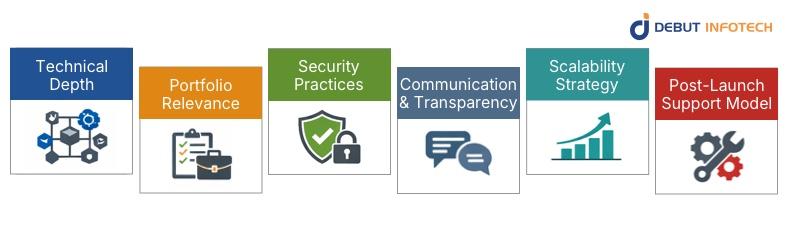
Selecting a blockchain development company requires a structured evaluation. The following criteria help assess both technical capability and business reliability.
Technical depth reflects how well a company understands blockchain architecture, smart contract development, and network design. This includes knowledge of consensus mechanisms, gas optimization, and security best practices. A technically strong team can design efficient systems that minimize errors and performance issues. Evaluating their approach to architecture and problem-solving helps ensure your project is built on a solid, scalable, and reliable technical foundation.
A company’s portfolio should closely match your project requirements in both complexity and industry focus. Reviewing similar implementations provides insight into how they handle challenges, deliver features, and maintain quality standards. Relevant experience reduces onboarding time and improves execution accuracy. It also shows the team’s ability to adapt solutions to real-world business needs, increasing confidence in their ability to deliver measurable results for your specific use case.
Security practices should be embedded throughout the entire development lifecycle, not treated as a final step. A reliable blockchain company conducts code reviews, automated testing, and independent smart contract audits to identify vulnerabilities early. They also follow established security standards and maintain strict access controls. Strong security practices protect user data and digital assets, ensuring your platform operates safely in environments where risks can have significant consequences.
Clear communication ensures alignment between your business goals and the development process. A dependable company provides regular progress updates, detailed documentation, and structured reporting on milestones. Transparency in timelines, costs, and potential risks helps prevent misunderstandings and delays. Effective communication also improves collaboration, enabling stakeholders to make informed decisions and maintain control over the project’s direction and quality.
A well-defined scalability strategy ensures your blockchain solution can handle growth without performance degradation. This includes planning for increased transaction volumes, user activity, and data processing demands. Blockchain business development companies should demonstrate how they use techniques such as layer-2 solutions, sharding, or optimized consensus models. A strong scalability approach prevents system bottlenecks and supports long-term usability as your platform expands and evolves.
Post-launch support is critical for maintaining system stability and performance over time. A strong support model includes continuous monitoring, timely updates, and proactive issue resolution. It ensures your platform remains secure and responsive as user demands change. Ongoing support also enables the integration of new features and improvements, helping your blockchain solution stay relevant, efficient, and aligned with evolving business objectives.
The table below outlines estimated cost ranges for different types of blockchain projects in 2026. These ranges vary depending on features, region, and technical complexity.
| Project Type | Estimated Cost Range (USD) | Key Inclusions |
| Basic Smart Contract Development | $5,000 – $20,000 | Contract logic, testing, and basic deployment |
| Token Development (ERC-20/BEP-20) | $10,000 – $40,000 | Token creation, wallet integration, basic UI |
| NFT Marketplace | $30,000 – $120,000 | Minting, trading, user dashboard, wallet support |
| DeFi Application | $80,000 – $300,000+ | Liquidity pools, staking, and governance mechanisms |
| Enterprise Blockchain Solution | $100,000 – $500,000+ | Private chain, integrations, compliance features |
| Cross-Chain Platform | $150,000 – $600,000+ | Interoperability, bridges, and advanced security layers |
Cost estimates offer a starting point, but informed decisions require deeper evaluation. These insights explain how to interpret pricing, plan effectively, and align blockchain investment with long-term business outcomes.
Cost ranges only make sense when tied to expected outcomes. A lower blockchain development cost build may limit scalability or security. At the same time, a higher investment can support long-term growth and reliability. Decision-makers should evaluate what the project needs to achieve, then align the budget with those outcomes rather than focusing solely on pricing.
Many blockchain projects start with a Minimum Viable Product to validate ideas before committing to full development. MVPs reduce upfront investment and allow testing of core features in real environments. This staged approach helps refine requirements, gather user feedback, and avoid overbuilding features that may not deliver practical value.
Cost estimates often exclude elements like transaction (gas) fees, third-party APIs, node infrastructure, and compliance adjustments. These can accumulate quickly after deployment. A transparent cost plan should account for operational expenses alongside development to avoid budget strain and ensure smoother long-term system management.
Blockchain development firms typically offer fixed-price, time-and-material, or dedicated team models. Each has implications for cost control and flexibility. Fixed pricing works well for clearly defined projects, while time-and-material suits evolving requirements. Understanding these models helps businesses choose a structure that matches their project scope and risk tolerance.
Indecision during development can increase costs through rework, extended timelines, and resource inefficiencies. Frequent scope changes or unclear requirements often disrupt workflows and inflate budgets. Clear planning and timely approvals help maintain momentum and keep costs within expected ranges.
Blockchain investments should be evaluated based on long-term returns, not just upfront cost. Benefits such as transparency, reduced intermediaries, improved security, and automation can deliver sustained value over time. A well-built solution can offset its initial cost through operational efficiency and new revenue opportunities.
Certain scenarios justify higher spending, such as handling financial transactions, managing sensitive data, or building multi-chain systems. In these cases, investing more in security, performance, and reliability reduces future risks. Strategically scaling the budget ensures the system meets critical operational and regulatory demands.
Comparing your estimated costs with industry benchmarks helps validate whether your budget is realistic. Significant deviations may indicate under-scoping or overpricing. Benchmarking also provides insight into typical resource allocation, helping you negotiate better and ensure your project is competitively positioned in the market.
A. Costs vary a lot, depending on what you’re building. A simple MVP might start around $20,000, while complex platforms can cross $150,000 or more. Things like features, security layers, integrations, and team location all affect pricing, so it’s rarely a one-size-fits-all quote.
A. Start with their past work. Ask for real projects, not just ideas. Dig into their tech stack, security approach, and how they handle smart contracts. Also check timelines, communication style, and post-launch support. If they dodge specifics or overpromise, that’s usually a red flag.
A. It depends on the scope, but most projects take anywhere from 3 to 9 months. A basic product can move faster, while something more advanced with custom features, audits, and integrations will take longer. Rushing it usually leads to bugs, so solid testing time matters.

Our Latest Insights
USA
2501 Chatham, Rd Suite R Springfield, IL 62704
+1-708-515-4004
info@debutinfotech.com
UK
7 Pound Close, Yarnton, Oxfordshire, OX51QG
+44-770-304-0079
info@debutinfotech.com
Canada
154 Eden Oak Trail, Kitchener, ON N2A 0H9
+1-708-515-4004
info@debutinfotech.com
INDIA
Sector 101-A, Plot No: I-42, IT City Rd, JLPL Industrial Area, Mohali, PB 140306
9888402396
info@debutinfotech.com