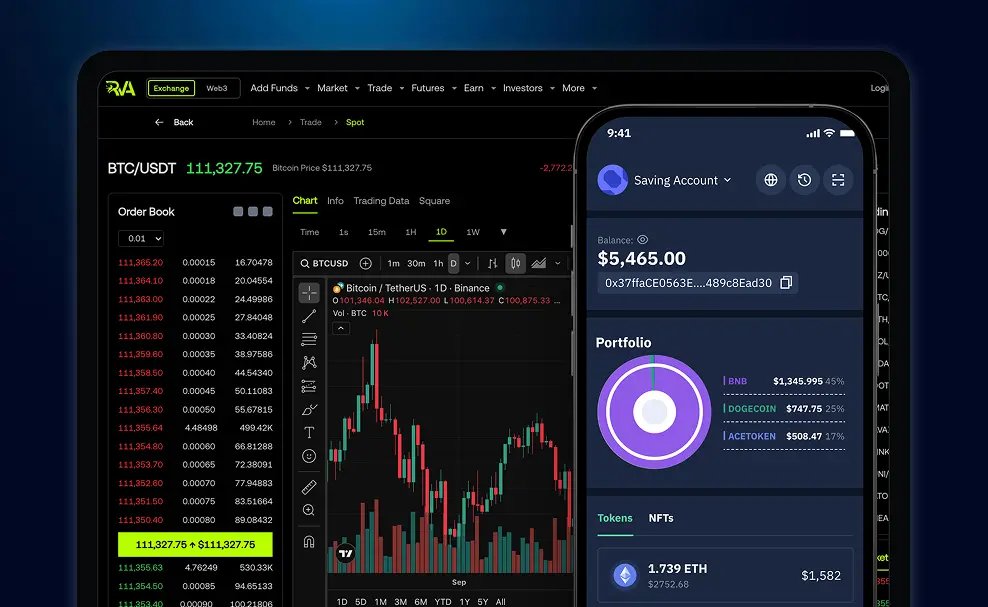
 Real Estate
RVA
Permissioned ERC-3643 Tokenization for Property-Backed Assets
$250M+
Assets safeguarded through audited token contracts
10K+
Investor wallets secured by permissioned access
Our Global Presence :


Turn real-world assets into new capital-raising opportunities with Debut Infotech's asset tokenization development services. We help financial institutions and asset managers launch investment platforms that broaden investor participation and enable fractional ownership. Our solutions support compliant asset issuance and efficient lifecycle management.
10+
RWA Tokenization Projects
7,000+
Property Units Tokenized
90%
Less Paperwork in a Client Project
500+
Digital Solutions Delivered
150+
Engineers & Technology Specialists
CertiK
Audited Project Delivery Experience
From asset feasibility to issuance and ongoing investment management, our RWA tokenization development services help businesses create new capital-raising opportunities and bring real-world assets to digital investment markets. We develop solutions that expand investor access, simplify asset operations, and support the regulatory requirements of institutional investment products.

Before investing in tokenization, you need a clear business case and a viable path to market. Our RWA tokenization consulting services help you assess asset suitability and choose the right investment structure. You receive a defined platform scope with cost estimates and an implementation roadmap to support informed decisions.

Build an investment business around your assets and ownership model through custom asset tokenization platform development. Get a dedicated platform for launching differentiated offerings and managing investor participation, with flexibility to introduce new asset products as your business grows.

A faster launch can help you pursue investment opportunities while market demand is developing. Our white-label asset tokenization platforms offer configurable issuance and investor management functionality, reducing initial development effort while giving your business a branded investment platform.

Private fund managers can spend substantial time coordinating subscriptions and maintaining investor records. Fund tokenization development services bring these activities into a digital operating environment, supporting easier capital calls and distributions while reducing the administrative burden of managing eligible fund interests.

Offer eligible equity, debt, and fund interests through digital securities platforms designed for regulated investment markets. Our tokenized securities platform development services help issuers establish digital ownership records and manage investor eligibility. This creates a more efficient framework for capital raising while supporting restrictions tied to each offering.

Capital raising becomes easier to manage when investor subscriptions and offering activity are organized in one place. A dedicated tokenized asset launchpad gives issuers a digital fundraising channel with controlled participation, helping turn qualified investor interest into documented commitments.

Give qualified investors a dedicated destination to discover and participate in tokenized investment opportunities. Our tokenized asset marketplace development services cover asset listings and digital subscriptions within a controlled trading environment. Businesses can expand investment distribution and introduce authorized secondary-market transactions where regulations permit.

Reduce manual intervention in asset transactions through programmable investment rules. Our RWA smart contract development services support controlled ownership transfers and automated financial distributions. Issuers benefit from more consistent execution of approved asset terms while maintaining the safeguards required for investment operations.

Managing several tokenized investment products requires a platform that can support different entities and investor groups. Our institutional asset tokenization platform development services help banks and asset managers operate multiple offerings within a shared environment. Centralized administration improves portfolio visibility and reduces duplicated operational effort.

A lengthy verification process can delay investor participation and increase administrative work. Integrated KYC and AML verification for tokenization supports a more efficient onboarding experience, allowing issuers to manage investor eligibility and maintain appropriate controls throughout the subscription process.

Asset issuance is only the beginning of an investment's operating lifecycle. Our token lifecycle management solutions help issuers administer income distributions and ownership changes after launch. By reducing manual recordkeeping and repetitive servicing tasks, businesses can support a growing investor base more efficiently.

Your existing financial systems should remain useful as you introduce tokenized investment products. Our enterprise asset tokenization solutions connect issuance platforms with banking and business applications. This enables consistent data exchange and reduces duplicate administrative work without requiring a complete replacement of established systems.

An outdated investment platform does not always need to be replaced. We help businesses introduce new tokenization capabilities into existing systems while preserving useful operational processes. Our modernization services improve platform security and maintainability while supporting the launch of additional investment products.

A tokenization platform must remain dependable as investor activity increases and business requirements change. Ongoing maintenance protects platform availability and supports security improvements, helping issuers preserve their technology investment while introducing new capabilities without unnecessary disruption to existing operations.

Have an Asset Tokenization Project in Mind?
From initial feasibility to full-scale platform development, our experts can help you identify the right solution for your investment model.
Real EstateRVA
$250M+
Assets safeguarded through audited token contracts
10K+
Investor wallets secured by permissioned access
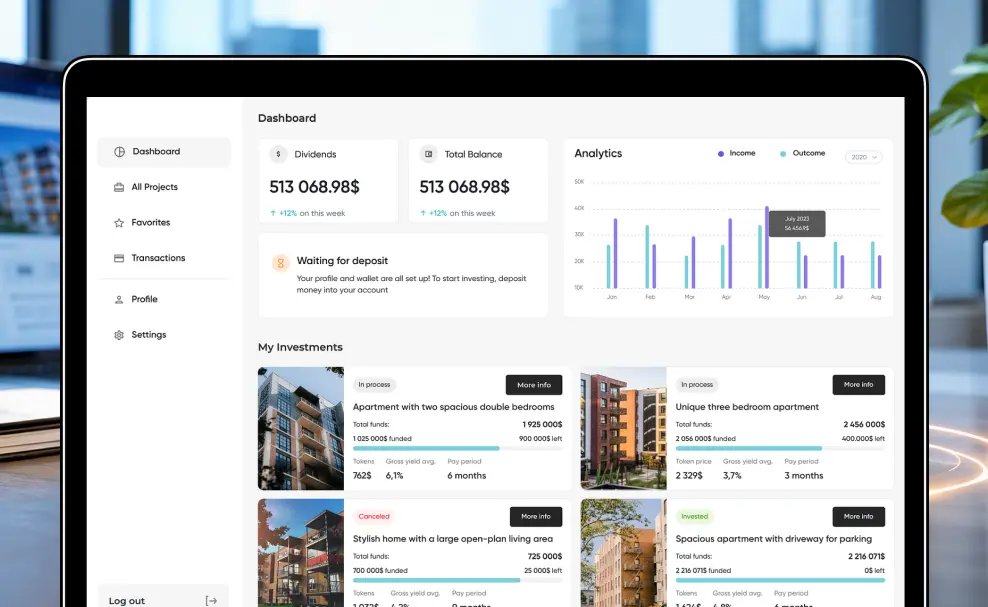 Real Estate
AlFahim Group
7,000+
Property units tokenized with ERC-3643 and ERC-20
90%
Less paperwork through digital ownership transfers
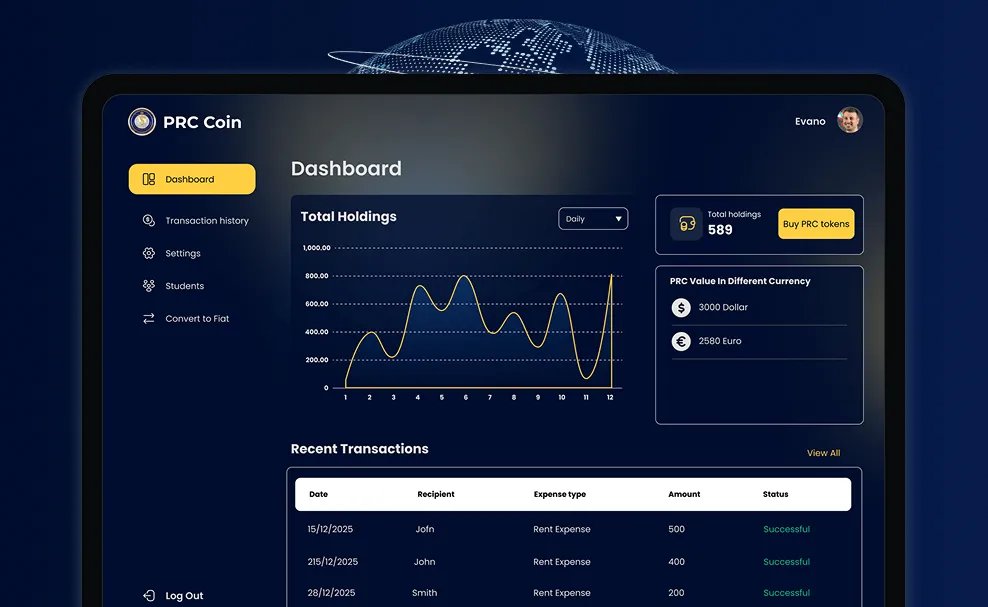 Real Estate
PRC
12K+
Registered Investors
3-in-1 Platform
ICO + Exchange + Payment Ecosystem
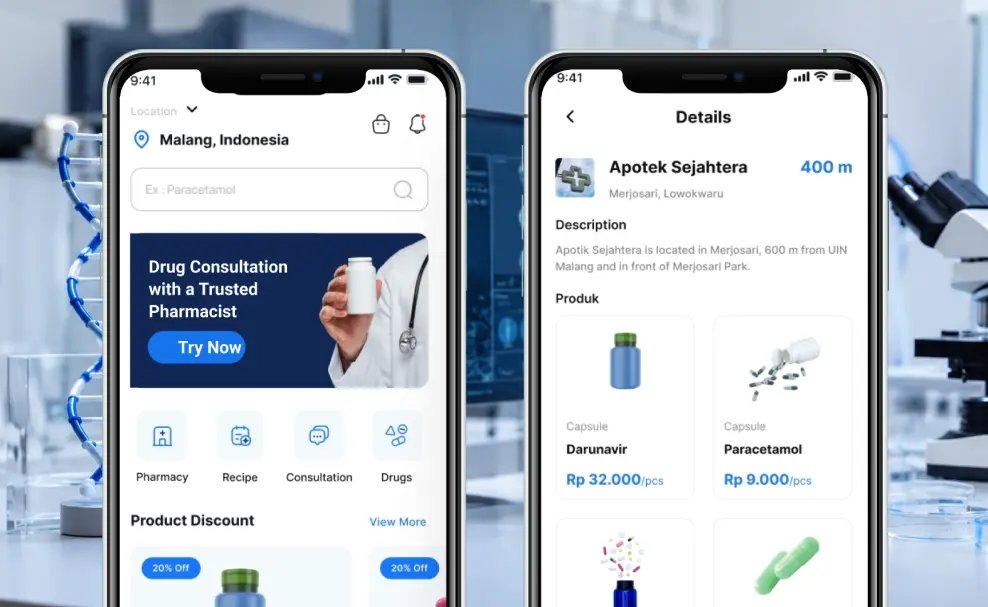 Intellectual Property
The Econophy Group LLC
ERC-3643
Permissioned standard securing the patent tokens
INX
Exchange hosting the regulated primary offering
"Working with Debut Infotech has been a game-changer for NDAX. Their unparalleled expertise in blockchain, DeFi, and crypto wallet development, allowed us to build a seamless, robust platform that enhances user experience and security. Their team's dedication, innovative approach, and attention to detail were evident throughout the project."

 Video Testimonial
"Debut Infotech played a pivotal role in bringing my vision for iFinca to life. Their blockchain expertise and innovative approach have significantly enhanced the transparency and traceability of the coffee supply chain. Thanks to them, coffee farmers now have access to a platform that not only connects them directly with buyers but also ensures they receive fair pricing."

"Partnering with Debut Infotech has been a transformative experience for KoreConX. Their expertise in blockchain technology helped us create a secure and efficient ecosystem for managing private capital markets. The collaboration has enabled us to deliver unparalleled value to our clients, streamlining investor relations, compliance, and corporate governance on a global scale."

 Video Testimonial
"Working with Debut Infotech was instrumental in developing Integra Ledger, our blockchain-based digital signature platform. Their dedication to innovation and attention to detail ensured that we could create a product that rivals industry giants in both quality and affordability. The security and reliability they built into our platform have set a new standard in the e-signature landscape."

From real estate and private equity to Treasury securities and commodities, Debut Infotech helps businesses develop tokenization platforms for eligible real-world assets. Our solutions support digital investment offerings and more efficient asset administration.








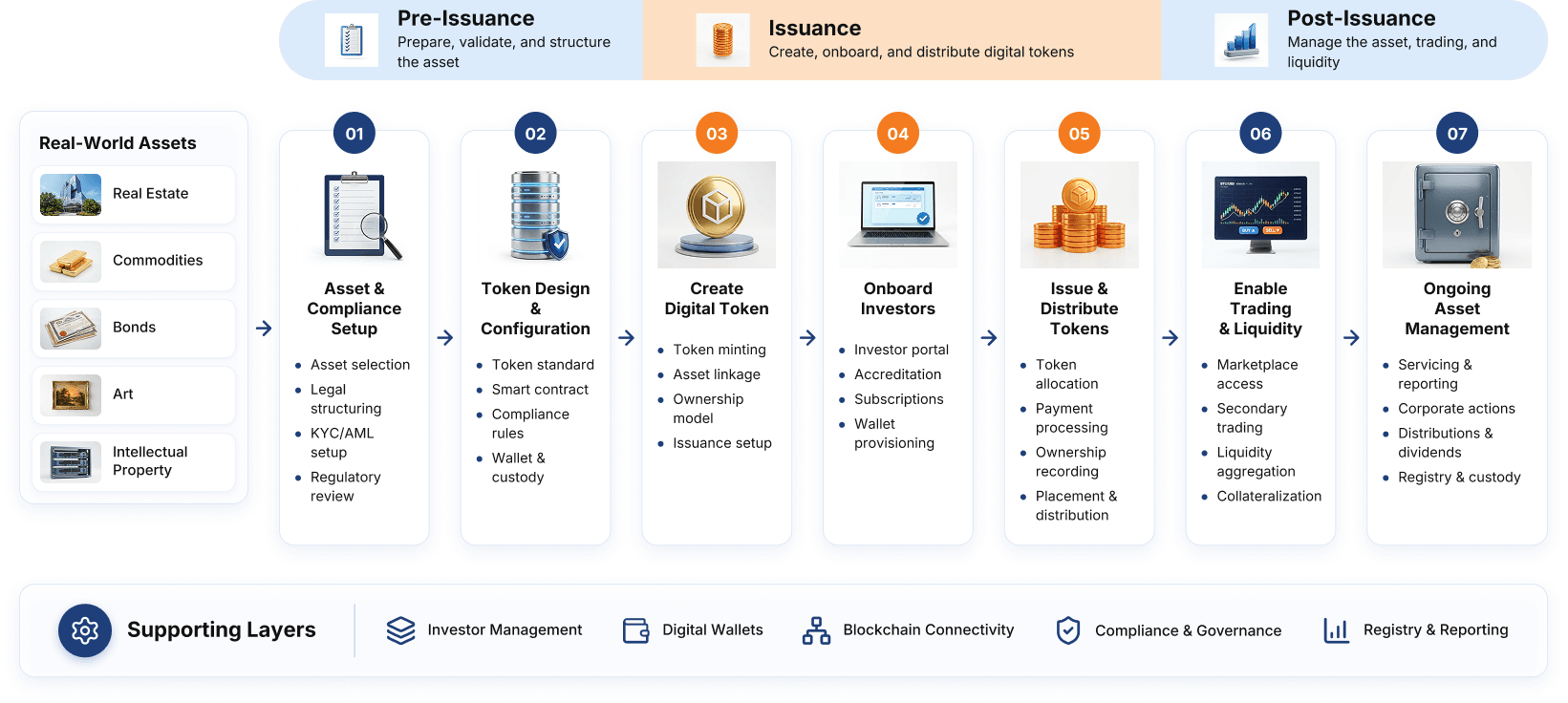
Our asset tokenization platforms include essential features with the flexibility to build custom capabilities around your business needs.

Have a specific feature in mind?
Our asset tokenization platforms come with essential capabilities and can be customized to support your investment goals.
Selecting an enterprise asset tokenization development company requires evaluating more than blockchain knowledge. The partner must understand how product architecture, regulatory workflows, custody, financial infrastructure, data management, and enterprise integrations work together within a production tokenization platform. Debut Infotech combines blockchain engineering with end-to-end product development to support custom platforms, tokenized securities platform development, and configurable white-label asset tokenization platform initiatives.
The appropriate architecture depends on the asset class, ownership structure, investor model, jurisdiction, transfer rules, and administrative responsibilities. Using a standard technical blueprint without considering these factors can create operational limitations later.
We design platform architecture around the client’s business processes before selecting blockchain networks, token standards, custody models, data structures, and deployment infrastructure.

Smart contracts govern token behavior, but they do not provide the applications, workflows, integrations, and operational tools required to run a tokenization business.
Our delivery scope can include issuer portals, investor dashboards, compliance systems, administrative controls, APIs, cloud infrastructure, wallets, custody integrations, reporting, and token lifecycle management. This broader capability supports both custom solutions and a configurable white-label asset tokenization platform.

Compliance decisions influence who can invest, which wallets can receive tokens, how transfers are approved, and what records must be retained. Addressing these requirements after development can lead to costly architecture changes.
We incorporate investor verification, KYC and AML processes, wallet permissions, transfer restrictions, approval workflows, case reviews, and audit records into the platform design from the beginning.

A tokenization platform often needs to exchange information with custodians, payment providers, banking systems, identity services, accounting platforms, CRMs, ERPs, and reporting tools. Poorly planned integrations can create manual work and fragmented records.
We design API and data integration layers that connect tokenization workflows with the systems already supporting the client’s financial and operational processes.

Token security depends on more than smart contract testing. Wallet authorization, administrative permissions, key management, API protection, infrastructure controls, transaction approvals, and recovery procedures all affect platform risk.
Our security-focused delivery approach applies controls across smart contracts, applications, cloud infrastructure, integrations, administrative access, and digital asset operations.

An MVP may prioritize validation, limited asset coverage, and essential workflows. An institutional implementation may require multiple jurisdictions, custody providers, asset classes, integrations, and approval structures.
We adjust the delivery model to the program’s maturity, helping clients validate concepts quickly while preserving a practical path toward enterprise implementation.

Organizations that need to hire blockchain developers may require more than individual blockchain engineers. Effective delivery often depends on coordinated expertise across product strategy, architecture, smart contracts, frontend and backend development, DevOps, quality assurance, and integration engineering.
Debut Infotech provides flexible team structures that can work as a dedicated delivery unit or extend an existing internal engineering team.

Tokenization platforms continue to evolve after deployment as new assets, investors, integrations, regulations, and operational requirements are introduced. A one-time development model can leave internal teams managing complex systems without sufficient technical support.
We provide post-launch engineering for maintenance, security updates, feature expansion, integration changes, performance improvements, and continued platform development.

Independent recognition across blockchain, tokenization, smart contracts, Web3, AI, and software development.

SelectedFirms
Top Healthcare Software Development Company
Clutch
Top Web3 Development Company

GoodFirms
Top Blockchain Development Companies
RightFirms
Software Development

SelectedFirms
Top AI Development Company
TechBehemoths
AI Excellence Award
TechReviewer
Top Software Developers
ITRate
Top Web Development Company
MobileAppDaily
Top App Development Companies in Chicago
RightFirms
Blockchain Technologies
RightFirms · Software Development · Global · 2026
Our asset tokenization solutions can be developed using established blockchain networks and token standards selected around asset ownership structures and investment requirements.
01 / Foundation
 Ethereum
 Polygon
 Avalanche
 BNB Chain
 Arbitrum
 Optimism
 Base
 Solana
 Hyperledger Besu
 Hedera
 Stellar
 Algorand
 Tezos
 Cardano
 Aptos
 Sui
 Private EVM Networks
 Polkadot
02 / Token Framework
 ERC-20
 ERC-721
 ERC-1155
 ERC-3525
 ERC-6909
 ERC-1363
 ERC-4907
 ERC-5192
 ERC-2981
03 / Token Framework
 ERC-3643
 ERC-1400
 ERC-1404
 ERC-7518
 ERC-7943
 ERC-3475
 ERC-7765
 ERC-7208
 CMTAT
04 / Token Framework
 ERC-4626
 ERC-7540
 ERC-7575
05 / Token Framework
SPL TokenSolana Token-2022BEP-20Hedera Token Service (HTS)Algorand Standard Assets (ASA)Stellar Native AssetsStellar SEP-41Tezos FA2 (TZIP-012)Cardano Native AssetsAptos Fungible Asset StandardSui Coin & Token FrameworksPolkadot Asset Hub
Need a different network or token standard?
Our experts can help you develop a custom integration that meets your platform requirements.
Regulatory compliance is critical to bringing tokenized assets to market. Debut Infotech builds RWA tokenization platforms with investor eligibility checks and secure transfer controls, supporting regulatory requirements and giving financial institutions greater control over asset issuance and ownership.
 SEC Requirements
 Securities Act of 1933
 Regulation D
 Regulation S
 Regulation A
 KYC
 KYB
 AML
 OFAC Sanctions Screening
 Investor Accreditation
 FATF Recommendations
 MiFID II
 EU DLT Pilot Regime
 MiCA (Where Applicable)
 EU AML Requirements
 GDPR
 UK GDPR
 CCPA/CPRA
 PIPEDA
 SEC Custody Requirements (Where Applicable)
 Bank Secrecy Act (BSA)
 FinCEN Requirements
 Applicable Custody Rules
Go beyond digital asset issuance with AI-powered asset tokenization solutions built to support smarter investment operations. Debut Infotech integrates artificial intelligence into real-world asset tokenization platforms to improve asset evaluation and reduce manual compliance workloads, helping financial institutions and asset managers gain better visibility into tokenized portfolios while managing investment operations at scale.
Analyze market trends and asset performance data to support pricing decisions and investment evaluations.
Forecast potential asset performance using historical data and relevant market indicators.
Accelerate investor verification through AI-assisted document review and identity validation workflows.
Flag KYC/AML exceptions and support ongoing regulatory monitoring with human review.
Monitor asset exposure and performance indicators to support portfolio management decisions.
Identify unusual transaction patterns and potential asset-related risks for further investigation.
Streamline investor reporting and income distribution workflows to reduce administrative effort.
Help eligible investors access offering details and understand portfolio information through natural-language interfaces.
We select technologies based on your asset structure and platform requirements. Our technology stack supports secure token issuance and investor management across the asset lifecycle.
 React.js
 Next.js
 Angular
 TypeScript
 Tailwind CSS
 Node.js
 NestJS
 Python
 Django
 Java
 Spring Boot
 Solidity
 Rust
 Vyper
 OpenZeppelin
 Foundry
 Hardhat
 Ethers.js
 Web3.js
 Wagmi
 PostgreSQL
 MongoDB
 Redis
 IPFS
 Amazon S3
 MetaMask
 WalletConnect
 Fireblocks
 Safe
 Ledger
 Sumsub
 Jumio
 Chainalysis
 TRM Labs
 AWS
 Microsoft Azure
 Docker
 Kubernetes
 Terraform
 Slither
 Echidna
 Tenderly
 Prometheus
 Grafana
Building an asset tokenization platform requires careful planning across investment structures and technical systems. Our development process helps financial institutions and asset owners move from initial feasibility to a production-ready platform with the controls needed for secure issuance and ongoing asset management.
We assess your business goals and target asset classes to define the platform's functional requirements. This includes identifying your investor audience and determining the ownership structure needed to support your investment model.
The next step establishes the legal and operational requirements for issuing tokenized assets. We work with your legal and compliance stakeholders to translate applicable regulations into platform controls.
Our engineers define the technical architecture and select suitable networks and token standards. These decisions account for asset characteristics and anticipated transaction activity while establishing the foundation for future integrations.
We design the interfaces used by asset issuers and investors. Interactive prototypes help validate the subscription process and administrative workflows before full-scale development begins.
Our development team builds the core platform and configures smart contracts around your approved asset structure. This stage connects issuance functionality with ownership records and investor management systems.
We connect the platform with the external services required for investor verification and investment transactions. Integrations are configured around your preferred providers and operational requirements.
Before deployment we test the platform's functionality and security controls. Smart contracts undergo technical review while transaction workflows are evaluated against the approved requirements and compliance rules.
Following testing and approval we deploy the platform to the selected production environment. Our team configures the infrastructure and supports the initial issuance process.
After launch we help maintain platform reliability and introduce improvements as business requirements change. Ongoing support can address new asset offerings and additional integrations.

Ready to Turn Your Asset Tokenization Plans Into a Real Project?
Share your investment goals and platform requirements with our experts. We'll help you define the development scope and identify the next steps toward launch.
Asset tokenization platform development costs depend on the scope and complexity of the solution. Basic MVPs may cost $15,000–35,000 while enterprise platforms can exceed $50,000–2,00,000. Custom smart contracts and institutional custody integrations can increase the investment. Regulatory requirements also affect development costs. A detailed estimate should account for platform functionality and security testing alongside ongoing infrastructure expenses.
Development timelines vary according to platform requirements and technical complexity. A basic MVP may take 8–12 weeks, while enterprise-grade platforms commonly require several months. Projects involving multiple asset classes or specialized integrations can take longer. Legal structuring and external approvals may also affect launch schedules. Defining the initial scope helps establish a realistic development roadmap and avoid unnecessary delays.
Real estate and private equity are common candidates for asset tokenization. Businesses can also tokenize bonds and investment funds alongside commodities and intellectual property rights. The suitability of each asset depends on its legal ownership structure and transferability. Before development begins, issuers should evaluate asset valuation requirements and investor rights to determine the appropriate tokenization model.
Regulatory requirements depend on the asset's legal classification and the jurisdictions involved. Tokenized securities may be subject to securities laws and investor disclosure obligations. Platforms may also require KYC and AML controls alongside investor eligibility verification. Asset issuers should work with qualified legal advisers to determine applicable licensing requirements and ensure the platform's operational controls reflect those obligations.
White-label platforms are suitable for businesses seeking faster deployment with established functionality. Custom asset tokenization development offers greater flexibility over investment workflows and technical architecture. The better choice depends on your budget and operating model. Organizations with specialized compliance requirements or multiple asset classes may benefit from custom development, while simpler offerings may be supported by configurable white-label solutions.
Evaluate potential development partners based on relevant project experience and technical expertise. Review their understanding of token standards and investor management requirements. Security practices and third-party integration capabilities are equally important. Ask for relevant case studies and clearly defined project deliverables. A suitable asset tokenization development company should also explain its testing approach and post-launch support arrangements.
Yes. A custom asset tokenization platform can support multiple asset classes within a shared operating environment. Each asset may require different ownership records and investment rules. The platform architecture should accommodate these differences without disrupting existing offerings. Centralized administration can help investment firms manage multiple issuers and track portfolios while maintaining appropriate controls for each investment product.
Ownership rights depend on the legal arrangement connecting tokens to the underlying asset. A token may represent equity or a contractual claim rather than direct asset ownership. Offering documents should clearly define investor entitlements and transfer conditions. The platform can maintain ownership records and enforce approved transaction rules, but legal enforceability depends on the structure and applicable laws.
Tokenized assets may be traded on authorized secondary markets when applicable regulations and investment terms permit. Platforms can support eligible investor verification and restricted asset transfers through marketplace integrations. However, tokenization does not guarantee liquidity or continuous trading activity. Businesses should evaluate market demand and trading venue requirements before introducing secondary-market functionality into their asset tokenization platform.
The appropriate network and token standard depend on your asset type and compliance requirements. Transaction costs and custody compatibility also influence the decision. ERC-3643 supports permissioned transfers and investor eligibility controls for regulated assets. Other standards may suit different ownership models. A technical assessment should compare available networks against your platform’s security requirements and long-term operational needs.
August 26th 2026
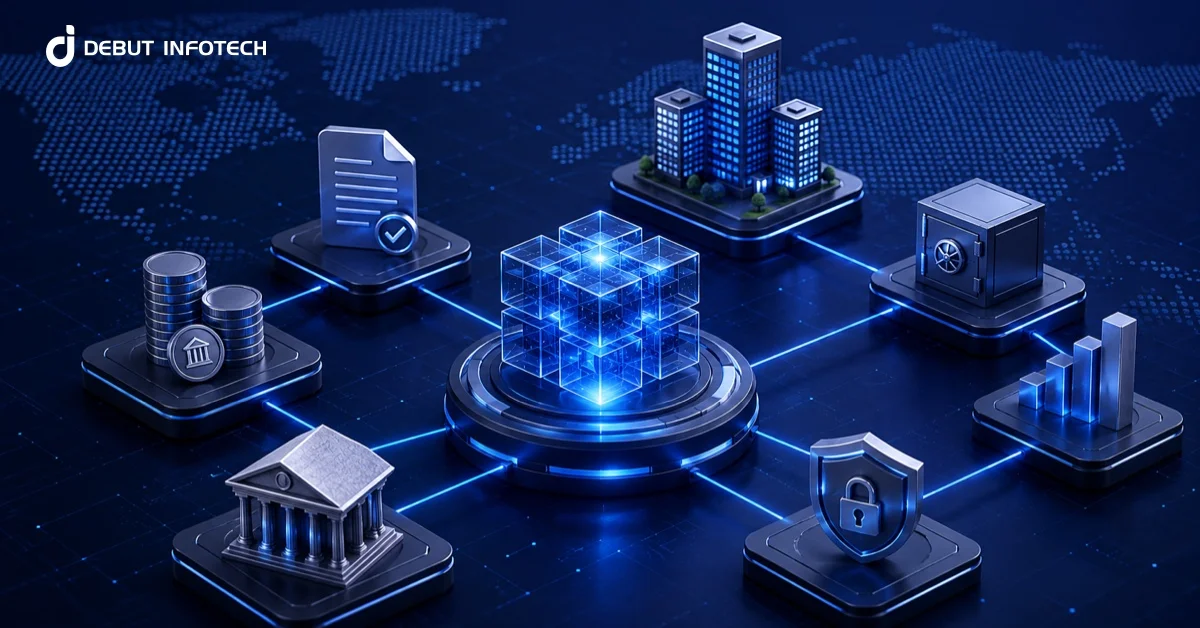
Enterprises are adopting blockchain to fix specific infrastructure problems, not to recreate open crypto markets. Blockchain without DeFi enables banks, fintechs, and other institutions to coordinate records, automate specific workflows, and enhance payment or settlement processes within a specific governance and access management environment. It can be tokenized or can be implemented without tokens, since […]
August 24th 2026
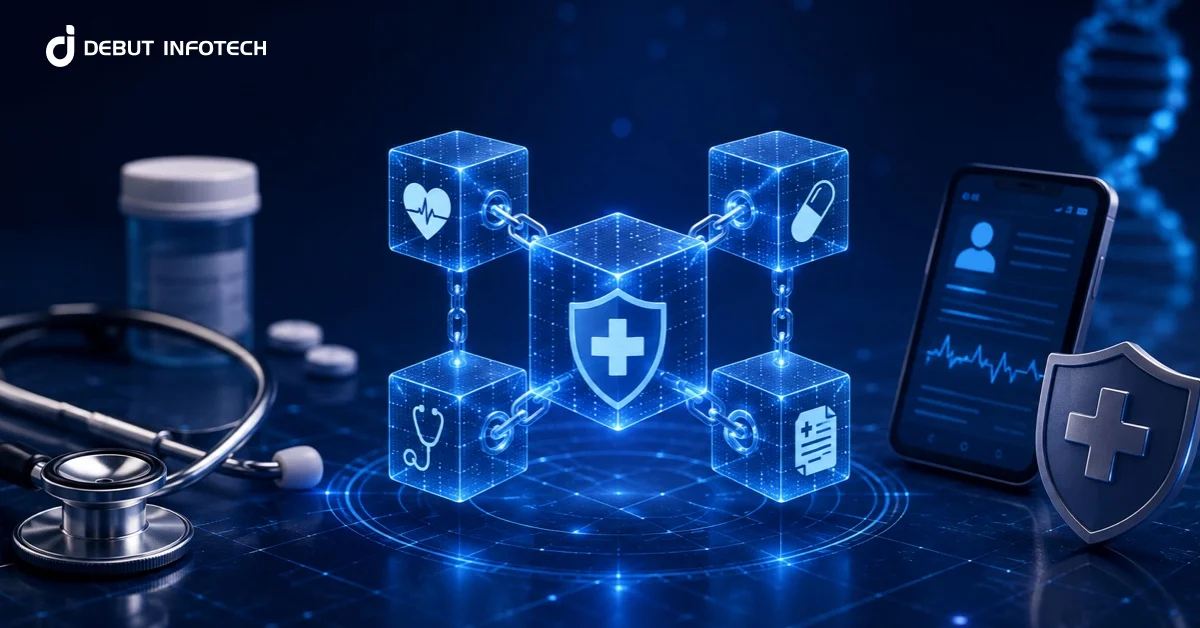
Healthcare organizations generate and exchange enormous amounts of sensitive information across hospitals, laboratories, pharmacies, insurers, medical devices, and research institutions. Yet this information often remains fragmented across systems, making it difficult to verify, share, and reconcile efficiently. Data breaches, inconsistent records, and limited visibility across pharmaceutical supply chains add to these challenges. Blockchain in healthcare […]
July 30th 2026
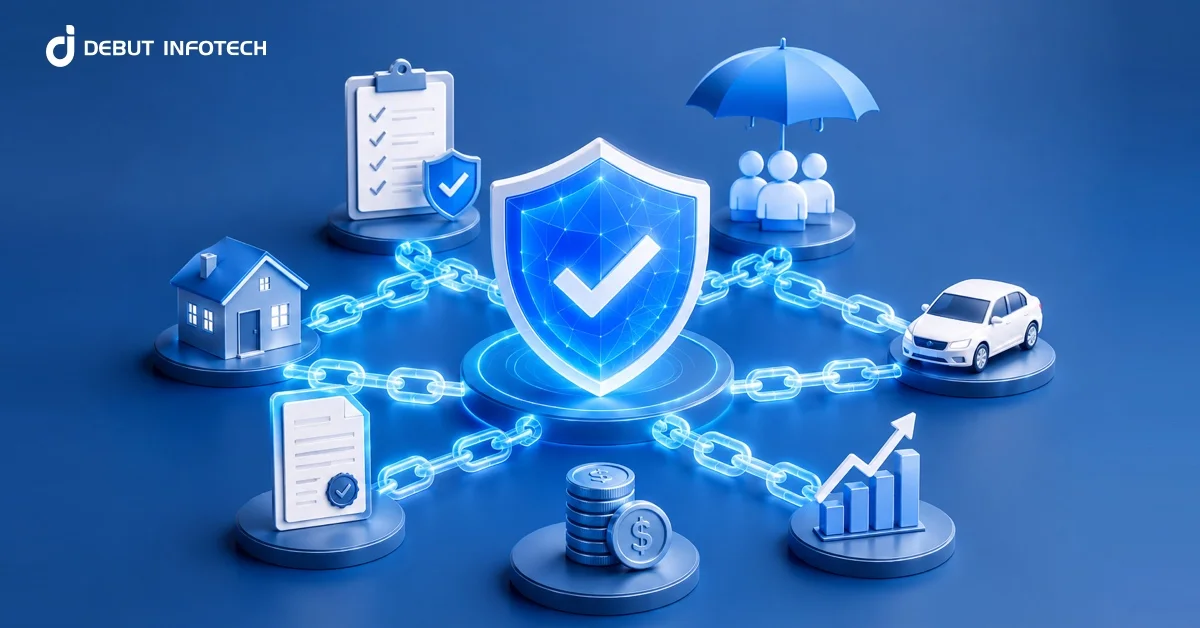
Insurance companies are under growing pressure to modernize how they issue policies, process claims, detect fraud, and share data with partners. Customers expect faster service, regulators demand stronger compliance, and insurers must manage increasing operational costs while improving trust. Blockchain has emerged as a practical technology that addresses many of these challenges by creating a […]
USA
2501 Chatham, Rd Suite R Springfield, IL 62704
+1-708-515-4004
info@debutinfotech.com
UK
7 Pound Close, Yarnton, Oxfordshire, OX51QG
+44-770-304-0079
info@debutinfotech.com
Canada
154 Eden Oak Trail, Kitchener, ON N2A 0H9
+1-708-515-4004
info@debutinfotech.com
INDIA
Sector 101-A, Plot No: I-42, IT City Rd, JLPL Industrial Area, Mohali, PB 140306
9888402396
info@debutinfotech.com